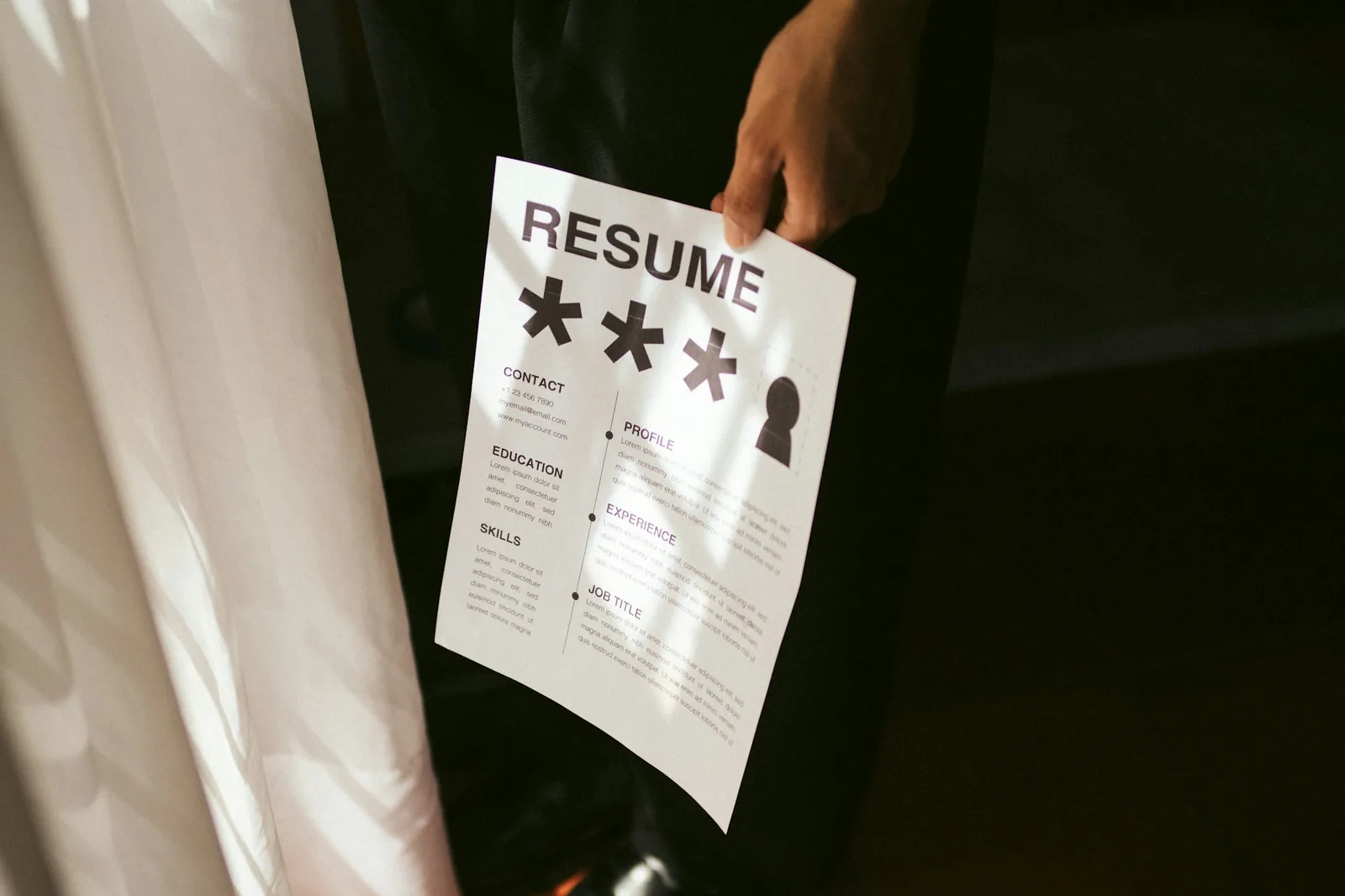
The Legitimate Instinct Behind the Request
At KiTalent, we do not send them. Blind CVs can be fabricated, cannot be verified properly, and rarely prove whether the firm can actually run the real search.
Instead, we offer Proof-First™ Search , a validated shortlist of real, interview-ready candidates delivered in seven to ten working days, with the interview fee invoiced only if the shortlist is approved.
The legitimate question
The client asking for sample CVs is not wrong. The instinct is rational: boards, founders, HR leaders, and procurement teams want proof that the search firm can reach the right level of talent, understands the brief, and is active in the relevant market.
We agree with that instinct completely. We disagree with the format the industry usually offers to satisfy it.
An anonymised CV looks like diligence, but it does not prove candidate reality, candidate interest, candidate availability, or the firm's ability to run the mandate under real conditions.
Anonymised sample
Four failure modes
Four Reasons Blind CVs Tell You Nothing
They are unverifiable by construction
Once names and employers are stripped out, the client cannot confirm whether the person exists, whether the role is real, or whether the profile is current. In the age of generative AI, producing convincing fake anonymised profiles is trivial.
They are systematically misleading
The CVs chosen for samples are often the most impressive-looking profiles on paper, not the executives who are realistically available for your brief, salary range, location, or timing.
They disrespect the candidate
Even anonymised, the candidate's career becomes a marketing asset for the firm without the candidate's knowledge or consent. That is not how trust with senior talent should be built.
They waste time instead of proving capability
Reviewing blind CVs delays the real work. In the same seven-to-ten-day window, a properly prepared search firm can build a real shortlist with real interview output.
What we send instead
What We Do Instead: Proof-First Search
Rather than sending a theoretical sample, we run Proof-First Search and deliver the real shortlist before the primary invoice is issued.
The process is simple. There is no upfront payment. We activate parallel market mapping, directly headhunt the relevant leaders, screen them through our methodology, and deliver a shortlist with names, current employers, full CVs, compensation expectations, motivations, relocation readiness, and detailed interview reports.
The interview fee is invoiced only if the shortlist is validated. On successful placement, it is absorbed into the final fee. That is why Proof-First Search is proof, not theatre.
The underlying principle
The Underlying Principle
A blind CV proves that a firm can format a document. A Proof-First Search proves that a firm can run a search.
In executive search, trust should be established by doing the work, not by displaying samples of hypothetical work.
A firm confident in its methodology should be willing to demonstrate that methodology on the actual mandate, under real conditions, at its own risk. Blind CVs are usually a workaround for firms that either cannot move quickly enough to provide real proof or do not want to place their process at commercial risk.
That is why our answer to the blind-CV request is not a document. It is a validated shortlist delivered through Proof-First Search.
Evaluate before committing
How to Evaluate KiTalent Before You Commit
References
More than 200 organisations have worked with us, with an average relationship length of over eight years. Named clients include Zurich Insurance, Generali, BNP Paribas, Bulgari, and IVECO Group.
Transparent Methodology
Our methodology is published openly. We explain how we map markets, approach passive talent, screen candidates, and deliver decision-ready shortlists.
Documented Case Studies
You can review how the process works in practice through our insurance case study , our finance case study , and our facility-management case study .
Proof-First Search Itself
Most importantly , Proof-First Search itself. Within seven to ten working days of brief alignment, the question shifts from "can this firm do it?" to "which candidate should we interview first?"
Frequently Asked Questions
Why doesn't KiTalent send anonymised sample CVs?
Because anonymised CVs are weak evidence. They are unverifiable, easy to fabricate, often misleading, and poor reflections of whether a firm can run a real mandate.
Can blind CVs be verified?
Not properly. Once names and employers are removed, the client cannot independently confirm whether the profile is real or relevant.
Is a sample CV a reasonable way to evaluate an executive search firm?
The instinct is reasonable; the format is not. A real demonstration is a real shortlist built on the real mandate.
What does KiTalent send instead of blind CVs?
A validated shortlist of real, interview-ready candidates with full profiles and interview reports, delivered in seven to ten working days through Proof-First Search.
What happens if the shortlist does not meet the client's standard?
No invoice is issued. The mapping, outreach, interviews, and reporting stay at KiTalent's cost.
Next step
Move from commercial logic to a real mandate
Choose the route that fits your next step and we will respond against the actual search, not a generic contact request.
Request a market feasibility review
Executive Search Procurement Guide
What Is a Validated Shortlist?
Author
Chief Executive Officer, KiTalent
Written by Alessio Montaruli. Based on primary market sources and KiTalent's market-intelligence process.
Explore More Articles
How to Choose an Executive Recruiting Firm: What Separates Elite Search Partners from the Rest
Learn how to evaluate executive recruiting firms with a strategic framework covering methodology, sector expertise, fee structures, and the red flags...
Why Executive Searches Fail: What Goes Wrong Inside the Firm You Hired
The mechanisms that make executive searches fail before anyone is interviewed: database dependency, retainers before evidence, the junior hand-off, opaque process, weak referencing. What to ask a search firm before you sign.
The True Cost of a Bad Executive Hire: Why Getting Leadership Recruitment Wrong Can Set Your Organization Back Years
A bad executive hire can cost over 200% of the role's annual salary. Learn the financial, cultural, and strategic costs , and how to protect your...
8+ years average partnership
★★★★★
200+ organizations trust us
8+ years average partnership
KiTalent
, a brand of
Talent Acquisition Partners
Via Alessandro Filippa 14, 10139 Turin, Italy · info@kitalent.com
#### Financial Services and Professional Services
#### AI, Technology & Digital Infrastructure
#### Industrial Manufacturing & Robotics
#### Energy, Natural Resources & Infrastructure
#### Mobility, Aerospace & Defense
#### Healthcare & Life Sciences
#### Consumer, Retail & Hospitality
#### Real Estate & Built Environment
#### Global Presence
© 2026 KiTalent. All rights reserved. See the KiTalent Entity Profile for the canonical company facts, hubs, and leadership links. · Privacy Policy · Terms & Conditions