Ann Arbor Life Sciences: Record Research, Zero Lab Space, and the Hiring Crisis That Follows
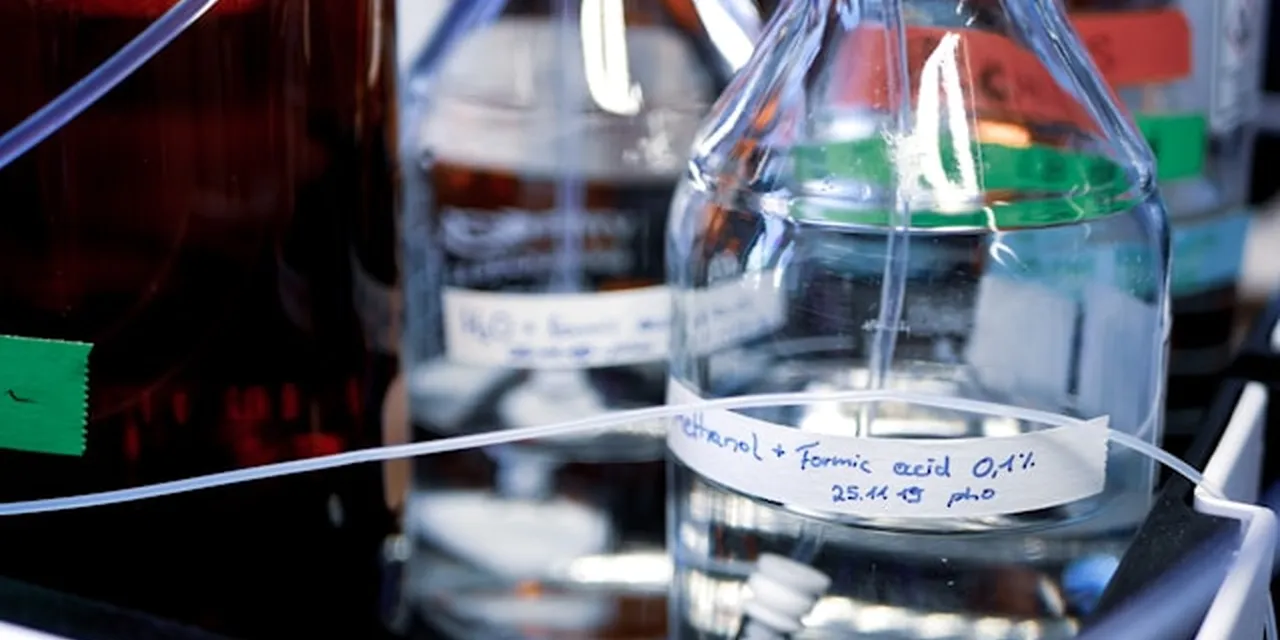
The University of Michigan spent $1.86 billion on research in fiscal year 2024, ranking fourth among public universities nationally for federally financed R&D. Its Office of Innovation Partnerships reported 454 new invention disclosures, 147 new US patents, and 22 startup companies formed in a single fiscal year. By every measure of scientific output, Ann Arbor is one of the most productive life sciences clusters in the United States.
None of that productivity has solved the hiring problem. The cluster's laboratory vacancy rate sat at 0.9% as of late 2024, functionally zero for Class A wet lab facilities. Asking rents had climbed 23% year-over-year to $48 to $52 per square foot. Companies that cannot find physical space cannot hire staff to fill it. Ann Arbor SPARK, the region's economic development organisation, estimated that 400 to 600 potential jobs were lost to out-migration in 2024 alone because the companies that would have created those roles moved to Research Triangle Park or the coasts instead. The cluster is producing world-class science and watching its commercial potential leave.
What follows is a ground-level analysis of where Ann Arbor's life sciences talent shortages are most acute, what structural forces are driving them, why the market's apparent strengths are masking deep vulnerabilities, and what organisations hiring into this cluster need to understand before launching a search.
The Paradox Powering Ann Arbor's Talent Market
Ann Arbor's life sciences sector supports approximately 22,400 jobs across the metropolitan statistical area, representing 8.2% of total regional employment and generating $4.1 billion in direct economic output as of 2023. Michigan Medicine alone employs 27,000 people on its Ann Arbor campus, with roughly 8,500 engaged in research, clinical trials, or biomedical engineering. The institution runs over 2,100 active clinical trials with 4.8 million patient visits annually.
This is the kind of institutional foundation that most mid-tier biotech clusters would envy. It provides immediate access to Phase I through Phase III trial infrastructure. It reduces startup costs for local biotechs. It creates a steady flow of physician-scientist hybrid roles unavailable in purely commercial markets.
Yet the commercial layer built on top of this foundation remains remarkably thin. Strip out Michigan Medicine and the university itself, and the private employer base is dominated by Cayman Chemical, a stable privately held biochemicals manufacturer with roughly 550 employees, alongside a scattering of clinical-stage startups with headcounts in the dozens. The gap between institutional research strength and commercial employment depth is the defining feature of this market. It shapes every hiring decision, every compensation negotiation, and every retention risk that organisations operating here must manage.
The cluster's other frequently cited anchor tells a different story entirely. According to its 10-K filing from March 2024 and a subsequent NYSE notification letter, Zomedica Corp. executed a 1-for-100 reverse stock split in 2024 to maintain listing compliance, with cumulative net losses exceeding $40 million over the preceding three fiscal years. Its headcount had fallen to approximately 65, down from 120 in 2022, and CoStar Group data from Q3 2024 showed the company listing its Ann Arbor facility for sublease. A company shrinking by 45% while subleasing its headquarters is not an anchor. It is a warning sign about the fragility of the commercial base.
This tension between institutional strength and commercial fragility is not an abstract observation. It is the single most important factor shaping executive hiring in Ann Arbor's life sciences sector today.
Where the Shortages Are Most Severe
The Michigan Department of Labor projected 6.8% growth for the Ann Arbor life sciences sector in 2026, translating to roughly 1,520 net new jobs concentrated in clinical research coordination, regulatory affairs, and biomanufacturing technician roles. Job postings for Regulatory Affairs Specialists in the Ann Arbor MSA increased 34% year-over-year through late 2024, while qualified applicant pools decreased 18%, according to EMSI Burning Glass Labor Insights data.
Three categories of senior talent are now functionally unavailable through conventional recruitment.
Regulatory Affairs for Advanced Therapies
The most acute shortage sits in regulatory affairs professionals with cell and gene therapy experience. Average time-to-fill for Director-level regulatory affairs roles in Ann Arbor stands at 142 days, compared to 89 days nationally, according to GattiHR's 2024 Talent Market Report. The gap is not merely about volume. It is about the specificity of what these roles require: BLA submission experience, CMC regulatory strategy for autologous cell therapies, and familiarity with FDA Breakthrough Therapy designation pathways.
A pattern documented by GattiHR and confirmed in reporting by Crain's Detroit Business illustrates the difficulty. A Plymouth Road-based immuno-oncology firm maintained a Senior Director of Regulatory Affairs search for 14 months. The firm interviewed 12 candidates. Nine declined offers to remain in Boston or San Diego. Three accepted counteroffers from their current employers. This is not an isolated incident. It is the typical pattern for senior specialist searches in a market where 90% of qualified regulatory affairs professionals at director level and above are passive candidates who hold stable positions at Michigan Medicine, Cayman Chemical, or remote roles with coastal firms.
Clinical Research Associates
The second severe shortage affects Clinical Research Associates with oncology monitoring experience. Retention payments of $10,000 to $15,000 at 12-month and 24-month intervals have become standard, making CRAs reluctant to move. An estimated 75% of qualified CRAs in this market are passive.
The competitive dynamics are sharp. According to data compiled from the IQVIA Institute's 2024 talent trends reporting and local compensation benchmarking by Aerotek's Life Sciences Division, CROs supporting Michigan Medicine's oncology and cardiology trials have resorted to offering 35 to 40% base salary premiums plus guaranteed remote work to poach Lead CRAs from Indianapolis-based competitors. One documented pattern involved moving a candidate's base from $92,000 to $128,000 with relocation assistance. The cost of acquiring a single experienced CRA now exceeds what many organisations budget for the role's first full year.
Bioinformatics and Computational Biology
The third critical gap is in bioinformatics and AI-driven drug discovery. An estimated 85% of qualified candidates are passive, often holding faculty positions at the University of Michigan or remote roles with Bay Area firms. Recruiting them requires what local search professionals describe as multi-year courtships, sometimes involving co-inventorship opportunities as part of the value proposition.
When Cayman Chemical expanded its bioinformatics unit in 2024, the company reportedly relocated a Senior Manager of Computational Biology from Boston with a total compensation package exceeding $400,000, including a $75,000 relocation stipend and equity-equivalent profit-sharing. Based on Radford Global Life Sciences Survey data for equivalent roles in Tier 2 markets, this represented a 45% premium over local market rates. The cost of filling one senior bioinformatics role equalled roughly three years of compensation for a manufacturing supervisor in the same cluster.
The Lab Space Crisis and Its Direct Effect on Hiring
The physical constraint underlying all of these shortages is laboratory space. Ann Arbor's 0.9% vacancy rate for lab facilities, documented by CBRE's Q3 2024 Life Sciences Report, represents the tightest market in the Midwest. Total life sciences inventory stands at just 1.2 million square feet, with negative net absorption indicating existing tenants are holding space rather than expanding. No speculative Class A wet lab delivery was expected before Q2 2026.
Approximately 180,000 square feet of new lab space is now entering the market in 2026, primarily through the conversion of the former Kerrytown district office complex and the Arbor Labs development on State Street. But 60% of this supply was pre-leased before completion, meaning vacancy rates will likely remain below 5% even after delivery. The conversion cost for office-to-wet-lab space runs $350 to $500 per square foot, according to JLL's Life Sciences Research Outlook, a figure that is prohibitive for pre-revenue startups without anchor tenant pre-commitment.
The hiring implication is direct and measurable. Companies that cannot secure lab space either do not form, do not expand, or leave. A Series B gene therapy developer and several University of Michigan spinouts have already located clinical operations in Plymouth, Michigan, or relocated entirely to Research Triangle Park, as documented in Ann Arbor SPARK's 2024 annual report. Every company that leaves takes its job openings with it. Every job opening that relocates to the coasts makes the local talent pipeline thinner for the companies that remain.
The Plymouth-Ann Arbor corridor has emerged as a functional sub-cluster, housing CDMOs and other firms priced out of Ann Arbor proper. But this geographic fragmentation creates its own hiring complications. Candidates evaluating roles weigh commute times, the prestige differential between an Ann Arbor address and an exurban location, and the practical question of whether a Plymouth-based employer has the same long-term stability as one operating within walking distance of Michigan Medicine.
Why Ann Arbor Functions as a Farm System for Boston
Here is the analytical claim that the aggregate data supports but that no single data point states directly: Ann Arbor is not failing as a research cluster. It is succeeding brilliantly at research and then exporting the commercial value of that research to other markets. The cluster functions as an R&D farm system for Boston and San Francisco.
The evidence is systemic. The University of Michigan formed 22 startups in fiscal year 2024 and reported record invention disclosures. Yet local venture capital density is a fraction of what coastal markets offer. Michigan life sciences companies raised $380 million in 2023, compared to $12.4 billion in Massachusetts, according to PitchBook data. That is not a gap. It is a different category. The capital ratio is roughly 1 to 33.
The consequence is predictable. Ann Arbor startups that reach Series B funding face intense pressure to relocate sales and business development functions to the coasts, where their investors are based. This creates what local economic development leaders describe as executive leadership fragmentation: a company's scientific team may remain in Ann Arbor, but its CEO, Chief Commercial Officer, and VP of Business Development operate from Cambridge or South San Francisco. The C-level talent that would otherwise anchor the local market is pulled away by gravity.
The University of Michigan's own data confirms the downstream effect. Fifty-eight percent of U-M life sciences graduates leave Michigan within five years, citing lack of late-stage biotech career paths, according to a 2023 alumni association survey. The university produces the talent. The market cannot retain it. Approximately 40% of U-M biomedical PhD graduates move to Boston annually, according to the university's Career Center Graduate Outcomes Report.
For hiring leaders, this means Ann Arbor searches are competing not just against local conditions but against the structural pull of markets that offer deeper career trajectories, more abundant capital, and the density of peer institutions that makes job changes less risky. A passive candidate currently working at Michigan Medicine is not merely comfortable. They are making a rational calculation that staying in Ann Arbor limits their future options unless they are willing to move to the coasts eventually.
The Compensation Arithmetic That Defines Every Offer
Ann Arbor's compensation dynamics are more complex than a simple discount to coastal markets. The numbers require a cost-of-living adjustment that changes the calculation materially.
A Vice President of Regulatory Affairs with cell and gene therapy focus commands $375,000 to $450,000 in base salary in Ann Arbor, with total cash compensation reaching $450,000 to $600,000 including bonus. According to Radford's Global Life Sciences Survey executive compensation module, this represents a 15 to 20% discount to Boston and Cambridge benchmarks. But the Council for Community and Economic Research's Cost of Living Index shows Ann Arbor's cost of living is approximately 35% lower than greater Boston. On a purchasing-power basis, the Ann Arbor offer is often superior.
The challenge is that purchasing power is not the only variable candidates weigh. A Senior Director of Clinical Operations earns $285,000 to $340,000 base in Ann Arbor, with total cash reaching $340,000 to $420,000. A Principal Scientist in Bioinformatics with a PhD and eight-plus years of experience earns $165,000 to $210,000 base, with total compensation of $195,000 to $260,000 including equity. These are competitive numbers for a Tier 2 market. They are not competitive against a Boston offer that includes the implicit career insurance of operating in a market with hundreds of alternative employers.
This is where the counteroffer problem becomes especially acute. When nine of twelve regulatory affairs candidates decline an Ann Arbor offer to stay in Boston or San Diego, they are not necessarily choosing more money. They are choosing optionality. The density of employers in a coastal hub means a bad hire or a company failure does not require a geographic move. In Ann Arbor, if your employer contracts or your role is eliminated, the next equivalent opportunity may require relocation. That asymmetry of career risk shapes every salary negotiation in this market.
For hiring organisations, the implication is that compensation alone cannot close Ann Arbor searches. The offer must address the candidate's career risk calculus directly, through guaranteed severance structures, contractual remote-work provisions, or explicit career pathway commitments that reduce the perceived cost of geographic concentration.
What the Great Lakes Innovation Engine Changes
The most consequential development in Ann Arbor's life sciences cluster is the establishment of the Great Lakes Innovation Engine. Awarded $15 million in initial NSF funding in 2024 with the potential for $160 million over ten years, GLIE targets cell and gene therapy manufacturing and is projected to add 800 specialised jobs by 2027.
This matters for hiring because it addresses the structural gap between research and commercialisation more directly than any previous initiative. GLIE coordinates a 12-institution consortium and is establishing its headquarters in Ann Arbor. The Michigan Strategic Outreach and Attraction Reserve Fund allocated $50 million in 2024 for life sciences manufacturing infrastructure, with Ann Arbor expected to capture roughly 30% of these funds for GLIE-related buildout.
The talent implications are immediate. Cell therapy manufacturing requires a workforce that barely exists yet: Manufacturing Supervisors earning $95,000 to $120,000 base (with shift differentials and retention bonuses pushing total cash to $110,000 to $140,000), cGMP bioprocessing technicians, and quality assurance managers with advanced therapy manufacturing experience. These roles sit at the intersection of pharmaceutical manufacturing discipline and academic research culture. Candidates with the right profile are scarce nationally. In Ann Arbor, where zoning constraints in the city proper force cell therapy manufacturing to exurban locations, the challenge is compounded by infrastructure gaps in steam supply and wastewater treatment for biologics production.
GLIE also introduces a new competitive dynamic. As the initiative scales, it will compete directly with Cayman Chemical and Michigan Medicine for the same local talent pool. A senior quality assurance manager choosing between a stable role at a private manufacturer and a federally funded consortium with a ten-year horizon faces a genuinely novel career decision. The organisations that approach these candidates first, with clearly articulated propositions, will have a decisive advantage.
What This Market Demands From Hiring Organisations
The hiring challenges in Ann Arbor's life sciences cluster are not solvable through better job postings. In a market where 85 to 90% of qualified senior talent is passive, where average time-to-fill for director-level roles runs 60% longer than the national average, and where the physical infrastructure constrains both company formation and talent retention, the approach to executive search must be fundamentally different from what works in deeper markets.
Three factors define successful searches here.
First, speed matters more than it does in Boston or San Diego because the candidate pool is smaller and every delay increases the probability that a target candidate accepts a counteroffer or decides the career risk of moving is not worth it. A search that takes 142 days in this market is not merely slow. It is one where the best candidates have already been approached and lost.
Second, the ability to reach passive candidates through direct outreach rather than job advertising is not a luxury. It is a prerequisite. The active candidate market in Ann Arbor's life sciences sector is dominated by entry-level laboratory technicians and manufacturing associates with inconsistent quality. The senior professionals who fill the roles that determine whether a clinical programme advances or stalls are not looking. They must be found, engaged, and presented with a proposition that addresses their specific career calculus.
Third, market intelligence about compensation, mobility patterns, and retention triggers in this specific cluster is essential. A search firm that benchmarks against national averages will consistently misoffer. Ann Arbor candidates evaluate total compensation differently from their coastal peers because the career risk differential is real and they know it.
KiTalent delivers interview-ready executive candidates within 7 to 10 days through AI-powered talent mapping that identifies the passive professionals who represent the majority of this market's senior talent. With a 96% one-year retention rate across 1,450-plus executive placements, the methodology is designed precisely for markets like Ann Arbor, where the candidates who matter most are the least visible.
For organisations hiring regulatory affairs, clinical operations, or bioinformatics leadership in the Ann Arbor cluster, where a 14-month search is the documented norm rather than the exception, speak with our executive search team about how we approach this market differently.
Frequently Asked Questions
Why is Ann Arbor life sciences hiring so competitive in 2026?
Ann Arbor's life sciences sector combines 22,400 jobs, $1.86 billion in university research spending, and a laboratory vacancy rate below 1%. This concentration of demand against constrained physical infrastructure creates acute competition for senior talent, particularly in regulatory affairs, clinical research, and bioinformatics. The Great Lakes Innovation Engine is adding further demand for cell therapy manufacturing specialists. With 85 to 90% of qualified senior professionals classified as passive candidates, organisations relying on job postings consistently fail to reach the talent they need. Firms using direct headhunting for life sciences roles gain access to professionals who are not actively on the market.
What life sciences roles are hardest to fill in Ann Arbor?
Three role categories face the most severe shortages: Senior Directors and VPs of Regulatory Affairs with cell and gene therapy experience (142-day average time-to-fill versus 89 days nationally), Lead Clinical Research Associates with oncology monitoring specialisation, and Senior Bioinformatics Scientists with machine learning and drug discovery expertise. Each category has passive candidate ratios exceeding 75%, meaning the vast majority of qualified professionals are not actively seeking new roles.
How does Ann Arbor life sciences compensation compare to Boston?
Base salaries in Ann Arbor run 15 to 20% below Boston and Cambridge benchmarks for equivalent roles. A VP of Regulatory Affairs commands $375,000 to $450,000 base in Ann Arbor versus $430,000 to $540,000 in Boston. However, Ann Arbor's cost of living is approximately 35% lower, making the purchasing-power-adjusted compensation often equivalent or superior. The real competitive disadvantage is career optionality: Boston's density of employers provides implicit career insurance that Ann Arbor cannot match.
What is the Great Lakes Innovation Engine and how does it affect life sciences hiring?
The Great Lakes Innovation Engine is an NSF-funded initiative with $15 million in initial funding and potential for $160 million over ten years. Headquartered in Ann Arbor, it targets cell and gene therapy manufacturing and is projected to create 800 specialised jobs by 2027. The initiative intensifies competition for cGMP manufacturing talent, quality assurance professionals, and bioprocessing technicians in an already constrained market.
Why do Ann Arbor biotech startups struggle to retain executive talent?
Ann Arbor's venture capital density is roughly one-thirtieth of Massachusetts. This capital gap forces startups reaching Series B to relocate commercial functions to the coasts, fragmenting executive leadership. Fifty-eight percent of University of Michigan life sciences graduates leave the state within five years, citing limited late-stage career paths. For hiring executives, this means searches must address the candidate's long-term career trajectory, not just immediate compensation. Firms that build a proactive talent pipeline for future leadership needs gain a material advantage in this environment.
How can organisations improve executive search outcomes in Ann Arbor's life sciences market?
Success in this market requires three capabilities: speed (delivering qualified candidates before counteroffers close the window), passive candidate access (reaching the 85 to 90% of senior professionals not visible on job boards), and precise local market intelligence on compensation, retention triggers, and mobility patterns. KiTalent's AI-enhanced methodology delivers interview-ready candidates within 7 to 10 days, with a pay-per-interview model that eliminates upfront retainer risk. This approach is particularly effective in constrained Tier 2 markets where the hidden cost of a failed or delayed executive hire compounds rapidly.