Berkeley's Clean Energy Sector Runs on World-Class Research. It Cannot Retain the Talent That Research Produces.
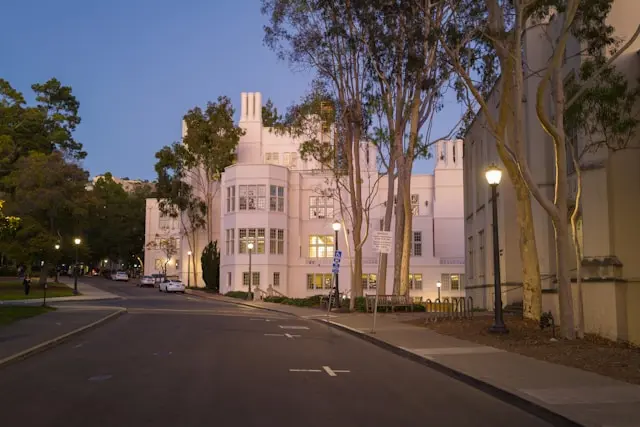
Berkeley, California, hosts one of the most concentrated clean energy research ecosystems in the United States. Lawrence Berkeley National Laboratory alone employs 4,200 people and operates on a $1.1 billion annual budget. The university's commercialisation pipeline, through programmes like Cyclotron Road and Bakar Labs, feeds a steady stream of battery chemists, electrochemists, and grid engineers into a West Berkeley industrial corridor where 35 to 40 hardware ventures occupy nearly every available square foot. The raw inputs for a dominant clean energy talent market are all present.
Yet the market is leaking. Berkeley's clean energy employment contracted 12% from its 2021 peak, and while IRA manufacturing credits drove a partial recovery through 2024, the city's most experienced battery engineers and power electronics specialists are leaving for Austin, Boston, and Reno at rates of 35 to 40% annually. The paradox is stark: Berkeley produces the researchers, incubates the ventures, and prototypes the hardware. Then it watches the talent walk out the door when the ventures try to scale. The problem is not a shortage of qualified people entering the pipeline. It is an ecosystem designed for discovery that structurally cannot support production.
What follows is an analysis of the forces creating this gap: the physical, financial, and competitive constraints that make Berkeley one of the most productive and simultaneously one of the most frustrating clean energy hiring markets in the country. For any senior leader trying to build or retain a hardware engineering team in this corridor, understanding these dynamics is not optional. It is the difference between a team that holds together through commercialisation and one that disperses the moment a competitor offers a lower cost of living and a higher base salary.
The Research Engine That Defines Berkeley's Clean Energy Identity
Berkeley's clean energy sector is not structured like Austin's or Boston's. It does not revolve around a single large manufacturer or a cluster of software platforms. Its centre of gravity is federal research funding, channelled primarily through Lawrence Berkeley National Laboratory and the University of California, Berkeley.
LBNL's Advanced Light Source and Energy Storage Center are the primary drivers. The laboratory's pending partnership agreements under the Department of Energy's Energy Earthshots Initiative are projected to add 400 to 600 research positions by late 2026, focused on long-duration energy storage and green hydrogen. UC Berkeley's Energy Biosciences Institute, Haas Energy Institute, and Berkeley Energy & Climate Institute collectively transition approximately 180 clean energy postdocs and research scientists into local industry each year.
Cyclotron Road and the Commercialisation Pipeline
Cyclotron Road, housed within LBNL, hosts 12 to 15 fellowship teams annually. Its alumni include ventures in chemical recycling, smart metering, and advanced battery architectures. The programme functions as a bridge between federally funded research and venture-backed commercialisation. It is, in effect, one of the most reliable sources of early-stage clean energy founders and senior technical hires in the western United States.
This matters for hiring leaders because it means Berkeley's talent pool is disproportionately concentrated in early-stage R&D. The city produces electrochemists, materials scientists, and battery cell engineers at a rate few markets can match. But the pipeline's output is calibrated for research and prototyping. The moment a venture needs to move from lab bench to pilot production, it enters a different market entirely, one where Berkeley's advantages thin out rapidly.
What the Public Perception Gets Wrong
A common assumption positions venture-backed platforms like Aurora Solar and Mosaic as anchors of Berkeley's clean energy ecosystem. The data says otherwise. Aurora Solar is headquartered in San Francisco's Mission District. Mosaic operates from Oakland. Major solar installers such as Sunrun and SunPower, along with EV manufacturers and software platforms, maintain Bay Area offices in San Jose, San Francisco, or Oakland rather than Berkeley. The city's actual employer base is built on national laboratory culture and academic spinouts, not consumer fintech or SaaS. This distinction shapes everything about how hiring works here: the pace, the compensation structures, the candidate expectations, and the cultural fit required.
West Berkeley's Hardware Corridor: Full Buildings, No Room to Grow
The Fifth Street corridor and the former Pacific Steel site in West Berkeley host an estimated 35 to 40 climate-tech hardware ventures. These firms work in battery recycling, electrolyser manufacturing, and advanced materials. They occupy 680,000 square feet of industrial space at a vacancy rate of 3.2%, according to CBRE's Bay Area Industrial Market Report, well below the Bay Area industrial average of 6.8%.
This is not a market with room to absorb growth. Berkeley's 2022 Industrial Protection Policy and the Design Review requirements that accompany it add 8 to 14 months to facility permitting compared to adjacent Emeryville or Oakland. The city's 2024 zoning enforcement and Industrial Zone Preservation Ordinance have further limited conversion of manufacturing space to R&D offices.
The practical consequence is measurable. Portfolio companies graduating from Bakar Labs and Cyclotron Road report 18 to 24 month timelines to secure manufacturing space in Berkeley. The same venture can find equivalent space in Portland or Austin in 6 to 9 months. For a Series B startup burning $800,000 per month, the difference between a 6-month and an 18-month facility timeline is existential.
This is the origin point of a pattern the Bay Area Council Economic Institute has described as "innovation without production." Intellectual property development occurs in Berkeley. Pilot manufacturing relocates to Solano County, Vallejo, or Reno. And when the production facility relocates, a meaningful share of the engineering team relocates with it. The physical infrastructure constraint is inseparable from the talent retention problem.
The Talent Market in Numbers: Where the Gaps Are Deepest
Berkeley's clean energy sector employs approximately 2,400 people directly within city limits, with an estimated 4,800 indirect and induced jobs. These numbers reflect a 4% rebound from 2023 troughs, driven by IRA manufacturing incentives, but remain 12% below the 2021 peak.
The shortages are concentrated in three specialisms: electrochemical engineering, battery management system firmware architecture, and grid interconnection. Senior electrochemistry PhDs in the Bay Area operate at effectively zero unemployment. Senior power electronics roles sit at 0.8% unemployment against a general professional unemployment rate of 3.4% in Alameda County, according to Bureau of Labor Statistics data from late 2024.
The Passive Candidate Problem
The candidate pool that Berkeley firms need is overwhelmingly passive. Approximately 78% of qualified candidates for roles requiring eight or more years of battery-specific experience are currently employed and not actively applying to posted vacancies. The comparable figure for general engineering roles is 45%. This gap, documented in LinkedIn's Passive Candidate Index for the clean energy sector, means that conventional job advertising reaches less than a quarter of the viable talent for Berkeley's most critical roles.
These candidates are typically reached through LBNL alumni networks or through targeted approaches to engineers at Rivian, Tesla, or established chemical companies. A job board listing for a Principal Battery Engineer in Berkeley will generate applications from candidates who are available. The candidates who are qualified are, almost without exception, already employed and not looking.
Vacancy Duration and the 3x Multiplier
A typical Principal Battery Engineer search in this market runs 6 to 9 months. That is roughly three times longer than an equivalent software engineering search. The extended timeline reflects the combination of a tiny qualified pool, a predominantly passive candidate base, and the compensation challenges that Berkeley's cost structure creates for startups. For firms operating on venture capital timelines, a 9-month vacancy in a role critical to product development is not merely inconvenient. It can delay a funding milestone by an entire quarter.
IRA-driven demand is projected to push hiring for interior electricians, electrochemists, and power systems engineers up by 22% year-over-year through 2026, according to Burning Glass Institute workforce projections. The supply side shows no corresponding acceleration. The pipeline from PhD programme to qualified battery engineer with eight years of experience cannot be compressed by policy incentives.
The Compensation Mismatch Driving Talent Out of Berkeley
Here is the analytical claim that the aggregate data points toward but that no single source states directly: Berkeley's clean energy talent crisis is not primarily a recruitment problem. It is a business model problem. The city's ecosystem is optimised for federally funded research and pre-revenue ventures. Neither funding source can sustain the compensation levels required to retain senior hardware engineers in a market where median home prices reached $1.45 million by December 2024.
The numbers make this concrete. A Senior Battery Cell Engineer in Berkeley commands $165,000 to $205,000 in base salary, plus 0.1 to 0.25% equity in a venture-backed firm. The same engineer at Tesla's expanding Austin operations earns 18 to 22% more in base compensation, in a city where the cost of living is approximately 35% lower. The total economic advantage of relocating to Austin for an experienced electrochemist is not marginal. It is transformational to their household finances.
At the executive level, the gap persists. A VP of Battery Engineering in Berkeley earns $280,000 to $350,000 base with 0.5 to 1.2% equity and a 35% performance bonus. But the equity is in a pre-revenue startup that may not reach liquidity for seven to ten years. A comparable role at an established manufacturer in Austin, Boston, or Nevada offers equity that is closer to realisable value and a cost environment that does not consume the salary premium.
The Junior Hiring Crisis
The cost spiral is most acute at the entry level. Entry-level battery engineer roles in Berkeley pay $95,000 to $115,000. At those salary levels, Berkeley's housing market is functionally inaccessible. Startups have responded by filling these roles with remote workers in Sacramento, Portland, or Spokane. This solves the compensation problem but creates a different one: hybrid culture friction in a hardware-focused environment where physical presence in the lab matters. You cannot debug a battery management system firmware issue over Zoom.
The result is a bifurcated workforce. Senior researchers and founders remain in Berkeley for LBNL proximity. Junior and mid-level engineers increasingly work remotely. The team cohesion required to move a hardware product from prototype to pilot production frays under this arrangement.
Geographic Competition: Austin, Boston, and the Talent Drain
Berkeley does not compete for clean energy talent in isolation. It competes against three specific markets, each of which offers a distinct advantage that Berkeley cannot match.
Austin, Texas represents the primary threat for mid-level engineering talent. Tesla's Gigafactory and Redwood Materials' Nevada campus offer 15 to 25% salary premiums for equivalent hardware engineering roles. Cyclotron Road's own alumni tracking data reveals the career trajectory tension: candidates seeking fundamental R&D stay in Berkeley. Those seeking production scale-up and higher compensation migrate south. Approximately 40% of Series B or later clean tech firms in Berkeley have established satellite offices in Austin or Denver specifically to access talent unwilling to pay Bay Area housing costs.
Boston and Cambridge compete for electrochemists and materials scientists at comparable salaries, within 5% of Berkeley levels. The East Coast advantage lies in proximity to battery OEMs such as Form Energy and SES AI. Berkeley retains an edge in grid integration and solar-storage hybrid expertise, but that advantage narrows as Massachusetts' own clean energy manufacturing incentives mature.
San Jose and the South Bay draw firmware and software talent from Berkeley with 12 to 15% compensation premiums and hybrid work arrangements that Berkeley's hardware-centric culture does not readily accommodate. For a BMS firmware architect who could work three days a week from home in a San Jose role, a five-day lab requirement in West Berkeley is a material lifestyle concession.
The combined effect is a talent centrifuge. Berkeley generates the early-career researchers. Austin, Boston, and San Jose extract them as they reach their peak productive years. The city retains the laboratory. It loses the laboratory's graduates.
Regulatory Friction and the Scaling Paradox
Berkeley's regulatory environment simultaneously supports clean energy demand and constrains clean energy supply.
On the demand side, California's pending 2025 updates to Title 24 building energy efficiency standards will mandate solar-plus-storage on most new commercial construction. This could increase local demand for Berkeley's BMS and inverter technologies by 15 to 20%. The regulatory tailwind is real.
On the supply side, Berkeley's own Commercial Energy Efficiency Ordinance creates compliance costs of $8,000 to $15,000 per small manufacturing tenant. The city's planning department data indicates these costs were cited as a factor in 12% of industrial lease non-renewals in 2024. For an early-stage hardware venture operating in a 5,000-square-foot industrial unit, a $15,000 annual compliance cost is not trivial. Combined with the 8 to 14 month permitting premium over adjacent cities, the regulatory stack creates a perverse incentive. Berkeley's policies accelerate the demand for the products its firms build while simultaneously making it harder for those firms to build them locally.
The Supply Chain Dimension
Physical infrastructure constraints extend beyond zoning. Berkeley's hardware startups rely on the Port of Oakland, four miles away, for lithium-ion cell and rare earth mineral inputs. Port congestion and ILWU labour negotiations in 2024 created 6 to 8 week delays in prototyping cycles. Some firms now maintain duplicate inventory in Austin or Phoenix as a hedge. This is not merely a logistics issue. It is another thread in the same pattern: Berkeley is optimised for ideation and prototyping, not for the throughput required at production scale.
For senior leaders building teams in this market, the regulatory and infrastructure picture carries a direct hiring implication. Any candidate evaluating a Berkeley role is also evaluating the probability that the company will still be operating in Berkeley in three years. If the answer is uncertain, the candidate's calculation shifts.
What This Means for Hiring Leaders in 2026
The Berkeley clean energy market in 2026 presents a specific strategic problem for any organisation trying to recruit or retain senior hardware engineering talent. The research pipeline will continue to produce world-class electrochemists and materials scientists. LBNL's Energy Earthshots positions will add 400 to 600 researchers. UC Berkeley's annual output of 180 clean energy postdocs will not diminish. The supply of early-career talent entering the top of the funnel is secure.
The problem sits in the middle of the funnel. The 8-to-15-year experienced engineer, the person who has moved from PhD research through first-generation product development and into production leadership, is the profile Berkeley firms need and cannot reliably retain. This professional is not reading job boards. They are not attending career fairs. They are employed, productive, and fielding direct approaches from Austin, Boston, and Reno on a quarterly basis.
Reaching this candidate requires a fundamentally different method than posting a role on LinkedIn and waiting. It requires identifying the specific individuals within LBNL alumni networks, Tesla's Fremont facility, and Rivian's engineering teams who have the precise technical profile the role demands. It requires understanding what will move a passive candidate: not just compensation, but the research problem, the equity structure, the commute, and the realistic timeline to production. And it requires speed. In a market where the best candidates cycle off the market within weeks of being approached, a search process that takes three months to produce a shortlist will consistently arrive too late.
KiTalent works with organisations facing exactly this dynamic: markets where the talent is concentrated, passive, and being actively pursued by multiple competitors simultaneously. Our AI-enhanced direct search methodology maps the specific candidate populations that matter for a given role, reaches them before they enter any public process, and delivers interview-ready candidates within 7 to 10 days. With a 96% one-year retention rate across 1,450 executive placements, the approach is built for markets where getting the right person matters more than getting a long list of available people.
For organisations building leadership teams in Berkeley's clean energy hardware sector, where a single Principal Battery Engineer vacancy can stall a product roadmap for two quarters and the cost of a wrong hire compounds faster than in any software market, start a conversation with our executive search team about how we approach this specific talent pool.
Frequently Asked Questions
What is the average salary for a senior battery engineer in Berkeley in 2026?
A Senior Battery Cell Engineer or Electrochemist in Berkeley commands $165,000 to $205,000 in base salary, with additional equity of 0.1 to 0.25% in venture-backed firms. At the executive level, a VP of Battery Engineering earns $280,000 to $350,000 base plus 0.5 to 1.2% equity and performance bonuses averaging 35% of base. These figures reflect the premium required to recruit in one of the highest cost-of-living markets in the country. Competing markets such as Austin offer 18 to 22% higher base compensation with substantially lower living costs.
Why is it so hard to hire clean energy hardware engineers in Berkeley?
Three factors converge. First, senior electrochemistry PhDs operate at effectively zero unemployment in the Bay Area. Second, 78% of qualified candidates with eight-plus years of battery experience are passive and not actively seeking new roles. Third, Berkeley's cost of living, with median home prices at $1.45 million, creates a compensation burden that pre-revenue startups cannot match against offers from Tesla, Redwood Materials, or East Coast manufacturers. The result is vacancy periods of 6 to 9 months for principal-level battery engineering roles, roughly three times longer than equivalent software searches.
How does Lawrence Berkeley National Laboratory shape the local clean energy talent market?
LBNL is the single largest employer in Berkeley's clean energy ecosystem, with 4,200 direct employees and 800 visiting researchers. Its Energy Earthshots partnerships are projected to add 400 to 600 positions by late 2026. The laboratory's postdoctoral programme and Cyclotron Road fellowship serve as the primary feeder for local startups. However, this creates a market skewed toward early-stage research talent. LBNL produces world-class researchers. Converting them into production-ready engineering leaders requires a different talent pipeline strategy.
What roles are hardest to fill in Berkeley's clean energy sector?
The three most acute shortages are in electrochemical engineering, battery management system firmware architecture, and grid interconnection specialists. Solid-state battery manufacturing experience, BMS functional safety certification (ISO 26262), and high-voltage power electronics design are the specific skills that generate the longest vacancy durations. Candidates with these profiles are overwhelmingly passive and typically must be identified through direct search rather than job advertising.
How does Berkeley compare to Austin for clean energy hiring?
Austin offers 18 to 22% higher base compensation for equivalent hardware engineering roles, combined with a cost of living approximately 35% lower than Berkeley. Tesla's Gigafactory and the surrounding manufacturing cluster provide production-scale career opportunities that Berkeley's startup ecosystem cannot match. Berkeley retains its advantage in fundamental battery chemistry research, LBNL proximity, and early-stage R&D culture. The practical split is clear: candidates prioritising discovery stay in Berkeley; those prioritising production scale and financial stability migrate to Austin.
What is the best approach to recruiting passive clean energy executives in Berkeley?
With 78% of senior battery engineers classified as passive candidates, job board advertising reaches less than a quarter of the qualified pool. Effective recruitment in this market requires direct identification of specific individuals within LBNL alumni networks, Tesla and Rivian engineering teams, and established chemical companies. KiTalent's executive search methodology uses AI-enhanced talent mapping to identify and engage these candidates before they enter any public hiring process, delivering interview-ready shortlists within 7 to 10 days for roles that typically take 6 to 9 months to fill through conventional channels.