Can Tho's Cold-Chain Expansion Is Outpacing the People Who Can Run It
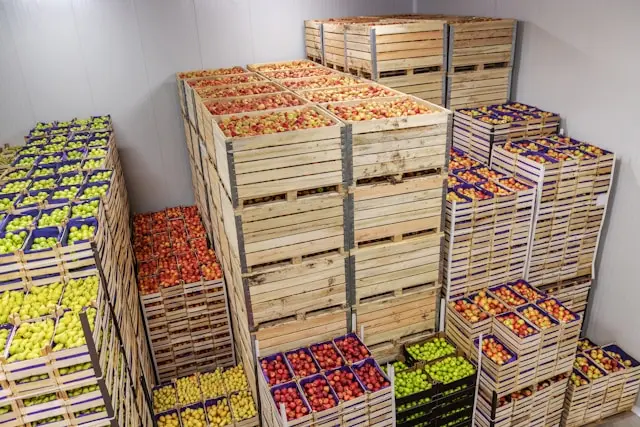
Can Tho's logistics sector processed 18.7 million tonnes of cargo in 2024, generating VND 12.4 trillion in direct revenue. Cold-chain operations accounted for 28% of that figure, fuelled by the Mekong Delta's USD 6.2 billion agricultural export economy. The physical infrastructure is scaling fast. Tan Cang - Cai Cui Port expanded in 2022. The Mekong Delta Expressway cut truck transit to Ho Chi Minh City from eight hours to four and a half. A new international transshipment port is under construction. Refrigerated warehousing capacity is on track to reach 180,000 pallet positions by the end of this year.
The problem is not capacity. The problem is that the people qualified to operate, manage, and lead these facilities are not arriving at the same pace as the concrete and steel. Job vacancies in the sector rose 34% between 2022 and 2024. The average time to fill a technical role reached 67 days. For the most critical positions, the market is worse than those averages suggest: cold-chain operations managers with HACCP certification saw demand increase 89% year-over-year, with only 0.4 qualified candidates per vacancy across the entire Mekong Delta. At the most senior level, 94% of qualified cold-chain directors are not actively looking for new roles.
What follows is a ground-level analysis of why Can Tho's logistics and cold-chain sector is becoming one of the most challenging hiring markets in Southeast Asia. It maps the forces driving the gap between physical infrastructure and human capital, identifies the specific roles where the pressure is greatest, and examines what organisations operating in this market need to do differently to secure the leadership talent their expansion plans depend on.
The Bifurcated Port System and What It Means for Talent
Can Tho's logistics operations run through two distinct port facilities with fundamentally different profiles. Tan Cang - Cai Cui Port, operational since 2010 and expanded in 2022, is the anchor. It sits on 48 hectares with six berths, integrated customs clearance, and the only dedicated container terminal in the Mekong Delta capable of receiving 20,000 DWT vessels. In 2023, Cai Cui handled approximately 12.5 million tonnes. Ninh Kieu Port, established in 2003 and closer to the city centre, processed 3.2 million tonnes in the same year and now functions primarily as a feeder and intra-delta distribution node, constrained by urban encroachment and bridge height limitations.
This bifurcation has a direct talent implication. The skill sets required at each facility are materially different. Cai Cui demands container terminal management expertise, port automation knowledge, and the ability to coordinate multimodal operations across river, road, and increasingly digital systems. Ninh Kieu's operations are simpler but physically constrained. The professionals who run modern container terminals are not interchangeable with those managing traditional general cargo berths.
Saigon Newport Corporation, the dominant terminal operator at Cai Cui, employs 850 staff in Can Tho. Gemadept Corporation runs barge services connecting Cai Cui to Cat Lai in Ho Chi Minh City and Cai Mep in Ba Ria-Vung Tau with 320 local employees. ITL Corporation maintains a regional headquarters in Can Tho for multimodal freight forwarding and customs brokerage with 180 staff. These are material employers. But combined, the three anchor operators account for fewer than 1,400 direct employees in a sector that directly employs 14,200 workers and supports an additional 8,500 indirect positions.
The gap between anchor employer headcounts and total sector employment reveals a fragmented ecosystem of smaller operators. These smaller firms are where the talent pipeline is weakest and the cost of a failed hire is felt most acutely.
The Infrastructure Surge Meeting a Human Capital Ceiling
The Can Tho International Transshipment Port
The most consequential infrastructure development for Can Tho in 2026 is the Can Tho International Transshipment Port, a joint venture between Military Commercial Joint Stock Bank and DP World. Phase one targets 600,000 TEU annual capacity with a 14.5m draft capability. That draft figure is critical: it would make the CITP the first facility in the Mekong Delta capable of handling Panamax-class vessels directly, eliminating the lighterage operations that currently affect 30% of container movements during dry season months.
But building a deep-water terminal and staffing it are separate problems. The Vietnam Maritime Administration's licensing data shows a shortage of 180 or more professionals in the Mekong Delta capable of managing barge operations, river navigation safety, and seasonal draft optimisation. The CITP will need terminal operating system administrators, port automation engineers, and logistics planners with international transshipment experience. These are roles that barely exist in Can Tho today.
Cold-Chain Expansion Without Proportional Talent Growth
The refrigerated warehousing sector tells a similar story. Can Tho's cold-chain capacity reached approximately 145,000 pallet positions across 23 facilities as of 2024, representing 34% of the Mekong Delta's total cold storage. The major facilities include Emergent Cold Southeast Asia with 35,000 pallet positions, Konoike Vina with 18,000 pallet positions specialising in pharmaceutical and agricultural cold chain, and Phuong Dong Cold Storage with 12,000 pallet positions focused on delta fruit consolidation.
The Vinafco Cold Storage Complex is adding 18,000 pallet positions with completion targeted for Q2 2026. Airport cargo terminal upgrades will accommodate refrigerated aircraft containers. Physical capacity is growing toward 180,000 pallet positions by year-end. Yet the Vietnam Cold Storage Association's 2024 Human Capital Survey found demand for cold-chain operations managers with HACCP certification increased 89% year-over-year, against a qualified candidate pool of 0.4 per vacancy.
This is the original analytical claim that runs through every section of this analysis: Can Tho's capital investment has moved faster than its human capital could follow, and the gap is widening at exactly the seniority level where operational competence matters most. Physical infrastructure can be built on a two-year construction timeline. Developing a cold-chain operations director with ten years of refrigerated logistics experience, HACCP and ISO 22000 audit capability, and Mekong Delta agricultural product expertise cannot be compressed. The 40% expansion in physical capacity projected through 2026 meets an estimated 8 to 12% growth in qualified human capital. New facilities risk launching underperforming, not because the demand is absent but because the people who know how to run them are.
Where the Talent Gaps Are Sharpest
Cold-Chain Operations Directors
The most acute shortage sits at the VP-equivalent level. Cold-chain operations directors carry P&L responsibility for 100,000 or more pallet positions across multiple sites. The critical requirements combine ten years of refrigerated logistics experience, HACCP and ISO 22000 audit capability, and specific knowledge of Mekong Delta agricultural products and their handling requirements.
According to Navigos Group's 2024 Executive Search Vietnam data, 94% of qualified candidates at this level are currently employed and not actively seeking new roles. This is a market where the hidden majority of senior talent cannot be reached through job advertisements. Standard recruitment methods reach at most 6% of the viable candidate pool.
Compensation reflects the scarcity. Market range sits at VND 80 to 120 million per month (USD 3,200 to 4,800) in base salary, plus performance bonuses of two to four months. Can Tho commands a 15 to 20% premium above the national average due to scarcity and relocation requirements. Top employers like Emergent Cold and Konoike add housing allowances of VND 15 to 25 million per month. The total cost of a senior cold-chain hire in Can Tho now exceeds what many employers initially budget, and that gap between expectation and reality is where searches stall.
According to Vietnam Investment Review reporting from January 2025, Emergent Cold Southeast Asia maintained an open Operations Director vacancy for its Mekong Delta region for 11 months. The firm ultimately filled the role through internal promotion from its Ho Chi Minh City facility, offering a 45% salary premium and housing allowance relocation package after failing to identify qualified local candidates who combined cold-chain technical expertise with P&L management experience above USD 10 million.
Inland Waterway Fleet Managers and Digital Integration Specialists
The second critical shortage category is inland waterway fleet management. Vietnam's inland waterway system demands specific certifications: a Class 1 inland master license, hazardous cargo handling credentials, marine engineering qualifications, and the practical experience to manage draft optimisation during the dry season when river depths at Cai Cui have declined from 8.5 metres in 2010 to 6.8 metres by 2023.
The fleet manager market is mixed: 70% of candidates are active, largely recent graduates. But only 15% of that active pool possess the seven or more years of experience required for senior roles, according to Vietnam Maritime University's Career Office. The veteran specialists with a decade of river navigation experience and the ability to manage 20-vessel fleets are 82% passive, with average tenure of 6.2 years and virtually no job board presence.
The challenge compounds when digital skills enter the picture. According to Saigon Newport Corporation's 2024 Sustainability Report and interviews published in Logistics Vietnam magazine in August 2024, SNPL's Can Tho operations attempted to hire a Digital Logistics and Fleet Optimisation Manager to implement IoT tracking across their 45-vessel river fleet. The search stalled after six months because no candidates combined maritime logistics knowledge with data analytics capability. The firm restructured the role into two separate positions at a 30% combined cost premium, recruiting the IT component from Ho Chi Minh City with a weekly commuting arrangement.
That restructuring pattern is telling. It suggests the hybrid roles that modern logistics infrastructure demands do not yet exist as a recognisable career path in this market. Organisations are either paying premium prices for talent from outside the region or splitting roles at higher total cost.
Customs and Trade Compliance Specialists
EVFTA and RCEP regulatory complexity has created demand for 340 or more trade compliance specialists in Can Tho, against a local qualified candidate pool of approximately 120, according to Vietnam Customs 2024 Broker License Registry data. Candidates with specific EU trade compliance certification command a 25 to 30% premium over general customs brokers. Base salary range for customs and compliance managers runs VND 35 to 50 million per month (USD 1,400 to 2,000).
Unlike the two previous categories, customs brokers are a relatively active market: 55% active, with average tenure of only 2.8 years due to certification portability. But portability cuts both ways. The ease of moving to a higher-paying role means retention is a chronic problem, and the counteroffer dynamic is particularly intense for EVFTA specialists who can apply their credentials anywhere in the delta or in Ho Chi Minh City at higher base rates.
The Gravity Pull of Ho Chi Minh City
Every talent challenge in Can Tho exists in the shadow of a larger one. Ho Chi Minh City draws 60 to 70% of senior logistics talent from the Can Tho market, according to the General Statistics Office's 2024 Internal Migration Survey. The reasons are concrete: 25 to 35% higher base salaries, clearer career trajectories toward regional ASEAN roles at global 3PLs such as DHL, Kuehne+Nagel, and CEVA, and materially better infrastructure for international schooling and healthcare.
The result is a specific demographic void. Can Tho's logistics employers face particular difficulty retaining talent aged 28 to 35. This cohort, experienced enough to add value but young enough to be mobile, frequently migrates to HCMC for multinational corporation exposure. The Can Tho Department of Labor's 2024 Skills Gap Analysis identifies a pronounced "experience gap" in the eight to twelve year tenure bracket: plenty of early-career workers, some long-tenured veterans, and a thin middle layer.
Hai Phong also competes specifically for cold-chain engineering talent. The northern port city offers compensation at parity with Can Tho but at a lower cost of living, with a higher density of deep-sea cold-chain logistics operations due to proximity to China and established seafood processing clusters.
For Can Tho, the retention equation is asymmetric. Hiring a senior logistics professional into Can Tho often requires a location premium, housing allowance, and a role scope that HCMC competitors need not offer. The total cost of attracting and retaining executive talent in Can Tho is higher per-hire than in HCMC, even though base salary figures appear lower. The hidden costs sit in relocation packages, retention bonuses of three to six months salary that have become standard against poaching by industrial real estate developers, and the simple reality that a passive candidate currently in HCMC faces a lifestyle adjustment that money alone does not resolve.
Climate Risk as a Talent Multiplier
One factor rarely discussed in hiring strategy but central to Can Tho's logistics future is hydrological risk. The Mekong Delta faces saline intrusion that reached 15 to 20 kilometres inland during the 2024 dry season. Upstream dam regulation through the Lancang-Mekong hydropower cascade may reduce dry season flows by 20 to 25% by 2026, according to the Mekong River Commission's State of the Basin Report. The practical consequence: further decline in river depths during the January-to-April dry season, restricting vessel drafts and increasing logistics costs by 12 to 15% for river-dependent shippers.
This creates a talent implication that is often overlooked. Hydrological risk management is becoming a core competency for anyone running inland waterway operations in the Mekong Delta. The professionals who can manage draft optimisation, lighterage scheduling, and alternative routing during low-water periods are the same professionals already in critically short supply. Climate risk does not create a new talent shortage so much as it intensifies the existing one, adding a required competency to roles that are already difficult to fill.
Regulatory pressure compounds the challenge. Decree 42/2023/ND-CP requires USD 8 to 12 million in fleet upgrades for inland waterway container transport by 2026. The VNACCS/VCIS customs modernisation system demands 24/7 digital connectivity from logistics providers. Smaller operators without IT infrastructure face compliance costs that squeeze their capacity to compete on compensation for the specialists who could solve their problems.
Meanwhile, 40% of Mekong Delta agricultural collection points remain inaccessible by container truck during flood season, requiring expensive transshipment at Can Tho consolidation centres. Only 35% of the city's cold storage capacity is integrated with port facilities at Cai Cui. The majority requires truck transfer, breaking temperature continuity. These structural gaps, documented in the World Bank's 2024 Vietnam Agriculture Logistics Report and JICA's Mekong Delta Logistics Study, are not problems that physical infrastructure alone can solve. They require operational leaders who understand the full chain from farm gate to foreign port, and those leaders are the scarcest resource in the market.
What This Market Demands From a Hiring Strategy
The data in this analysis points to a consistent pattern. Can Tho's logistics and cold-chain sector is not experiencing a generic hiring slowdown. It faces a specific mismatch between the seniority and specialisation of roles being created and the seniority and specialisation of talent available locally. New infrastructure generates demand for experienced operational leaders. Those leaders are overwhelmingly passive. The ones who exist locally are already employed by anchor operators who match any external offer. The ones in HCMC or Hai Phong require relocation packages that smaller operators cannot fund.
Traditional recruitment methods are structurally unsuited to this market. Job postings reach the 6% of cold-chain directors who are actively looking. Even for customs brokers, where the active market is larger, certification portability means that any candidate sourced through advertising is simultaneously visible to every other employer running the same search. Speed matters enormously. A senior cold-chain specialist search in the Mekong Delta typically runs 45 days longer than a comparable role in a developed logistics market. Organisations relying on inbound applications find that by the time a shortlist is ready, the strongest candidates have already accepted elsewhere.
What works is direct headhunting that maps the passive candidate market before a role is formally posted. In a market where 94% of VP-level cold-chain talent is not visible on any job board, the only viable method is to identify them through industry networks, alumni associations from institutions like Vietnam Maritime University, and AI-powered talent mapping that tracks career progression across the sector. The search must be proactive, not reactive.
KiTalent's approach to markets like Can Tho's logistics sector is built precisely for this dynamic. Through AI-enhanced direct search methodology and a pay-per-interview model that eliminates upfront retainer risk, KiTalent delivers interview-ready candidates within 7 to 10 days. In a market where the average technical role takes 67 days to fill and the most senior positions have taken 11 months, that speed differential is not incremental. It is the difference between securing a qualified operations director and watching them accept a competing offer while your shortlist is still being assembled.
KiTalent has completed over 1,450 executive placements globally with a 96% one-year retention rate. That retention figure matters particularly in a market like Can Tho, where the wrong senior hire costs more than the search itself and replacement timelines stretch into months.
For organisations building or operating cold-chain and logistics infrastructure in Can Tho's rapidly expanding market, where the candidates you need are passive, regionally scarce, and targeted by every major employer in the delta simultaneously, start a conversation with our executive search team about how we approach this sector and this geography.
Frequently Asked Questions
What are the most in-demand logistics roles in Can Tho in 2026?
The three most critical shortage categories are cold-chain operations directors with HACCP certification and multi-site P&L experience, inland waterway fleet managers with Class 1 inland master licenses and seven or more years of experience, and customs and trade compliance specialists with EVFTA rules-of-origin expertise. Cold-chain operations manager demand rose 89% year-over-year in 2024, with only 0.4 qualified candidates per vacancy across the Mekong Delta. Inland waterway fleet management faces a shortage of over 180 professionals, and EVFTA-driven compliance roles outnumber qualified local candidates by nearly three to one.
Why is it so difficult to hire senior cold-chain talent in the Mekong Delta?
Ninety-four percent of qualified cold-chain operations directors in Vietnam are not actively seeking new roles. The candidate pool is further constrained by Ho Chi Minh City's gravitational pull, which draws 60 to 70% of senior logistics professionals from Can Tho with 25 to 35% higher base salaries and clearer regional career paths. Hiring at this level requires proactive direct search methods that identify and engage passive candidates through industry networks and AI-powered talent mapping rather than job advertising.
What do cold-chain operations directors earn in Can Tho?
Base salary for cold-chain operations directors at VP-equivalent level ranges from VND 80 to 120 million per month (USD 3,200 to 4,800), with performance bonuses of two to four months. Can Tho commands a 15 to 20% premium above the national average due to talent scarcity and relocation requirements. Leading employers add housing allowances of VND 15 to 25 million monthly. Total compensation packages for senior hires frequently exceed initial employer budgets, and that expectation gap is a common cause of search failure.
How does the Mekong Delta Expressway affect Can Tho's logistics talent market?
The completion of the Trung Luong to My Thuan to Can Tho expressway section in 2024 reduced truck transit time to Ho Chi Minh City from eight hours to four and a half. This improves multimodal connectivity and reduces logistics costs as a percentage of export value from 18.5% in 2024 toward a projected 16.2% by 2026. For talent, however, the expressway is a double-edged development. Faster connections to HCMC make Can Tho more viable as a logistics hub, but they also make it easier for senior professionals to commute or relocate to the larger city.
What is KiTalent's approach to executive search in emerging logistics markets?
KiTalent uses AI-enhanced direct headhunting to identify and engage passive senior candidates who are not visible on job boards. In markets like Can Tho where over 90% of VP-level talent is passive and regionally scarce, KiTalent's methodology maps the full candidate pool before a search begins, delivers interview-ready candidates within 7 to 10 days, and operates on a pay-per-interview model with no upfront retainer. The firm maintains a 96% one-year retention rate across over 1,450 executive placements.
How does climate risk affect logistics hiring in the Mekong Delta?
Declining dry-season river depths at Cai Cui Port, from 8.5 metres in 2010 to 6.8 metres in 2023, restrict vessel drafts and increase logistics costs by 12 to 15% for river-dependent shippers during peak months. This makes hydrological risk management a core competency for inland waterway operations roles. The professionals who can manage draft optimisation and seasonal routing are the same professionals already in critically short supply, meaning climate adaptation intensifies the existing talent shortage rather than creating a new one.