Chicago Built the Infrastructure. Now It Cannot Find the People to Run It.
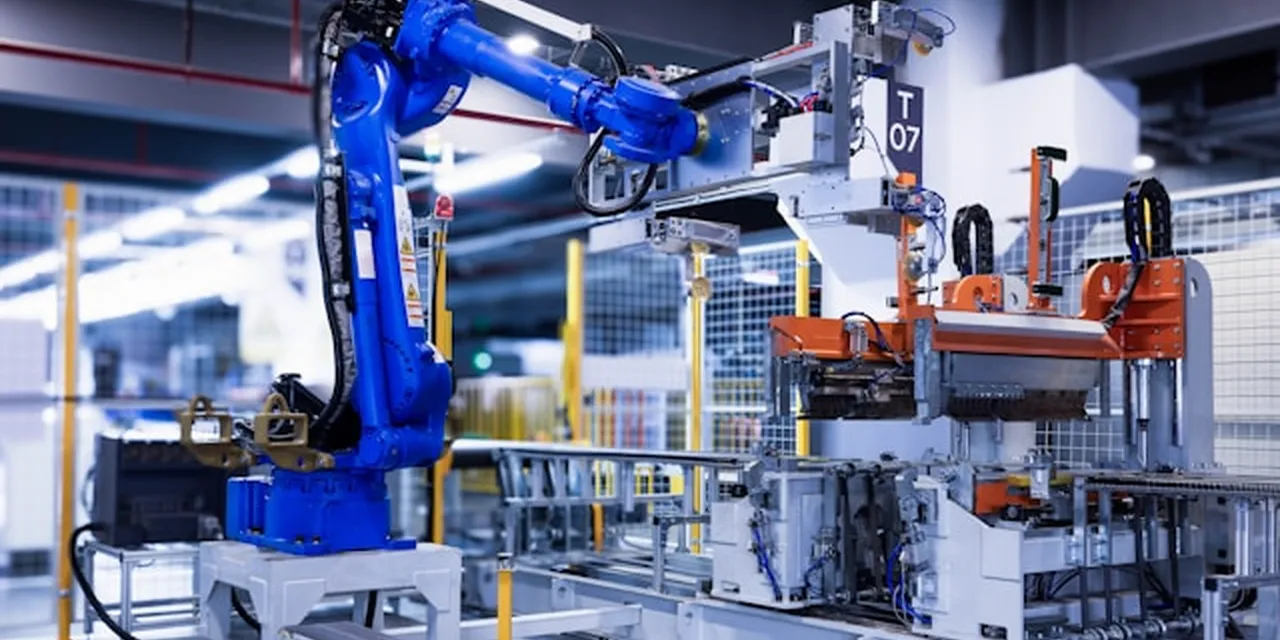
The Chicago metropolitan area processes a quarter of all U.S. freight rail traffic. Its intermodal yards handle millions of container lifts annually. An $8.5 billion airport modernisation programme is adding nearly half a million square feet of automated cargo handling capacity. Ford has invested $400 million to retool its South Side assembly plant for hybrid electric production. Abbott runs a medical device manufacturing operation across Lake County that employs over 12,000. Amazon has deployed more than 5,000 robotic drive units across 24 regional fulfilment centres. By any capital investment measure, Chicago's advanced manufacturing and logistics sector is expanding at pace.
The problem is not capital. It is people. Vacancy durations for technical manufacturing roles in the Chicago MSA have extended 40% compared to 2022 baselines. Automation engineer postings are up 47%. Robotics maintenance technician demand has surged 52%. IoT systems architect demand has grown 61%. In every case, the supply of qualified professionals has not kept pace, and in some categories, it is moving in the opposite direction as retirements accelerate and out-of-state competitors pull talent away with salary premiums and remote flexibility that Chicago's legacy manufacturing culture struggles to match.
What follows is a detailed analysis of where the shortages are most acute, which roles carry the greatest risk of prolonged vacancy, and why the conventional response of raising compensation is failing to close the gap. The core argument is specific: Chicago's infrastructure investment has created a capacity ceiling that only human capital can lift, and the region is running out of time to lift it.
The Capital-Versus-Talent Paradox Defining Chicago's Manufacturing Sector
The analytical claim at the centre of this article is one that the headline investment figures obscure. Chicago is not experiencing a general labour shortage. It is experiencing a precise mismatch between the speed at which it has automated its infrastructure and the speed at which it can produce, attract, or retain the technicians and engineers required to operate that infrastructure at designed throughput.
The region's freight system was built for volume. BNSF Railway's Logistics Park Chicago in Joliet and Elwood functions as the largest inland container port in North America, handling 3.5 million TEUs with direct connections to Western Pacific ports. Union Pacific's Proviso Rail Yard and Global IV intermodal facility process over 3.5 million lifts annually. Six Class I railroads converge here, creating a density of intermodal transfer capacity without parallel on the continent. According to the CMAP Freight Outlook, these expansions and the O'Hare cargo modernisation together create theoretical capacity for 40% volume growth through 2026.
But the same regional data shows a 35% deficit in certified automation technicians required to operate these facilities at their designed throughput. The result is not economic congestion. It is something arguably worse: underutilised infrastructure. Billions in capital sitting partially idle because the human systems required to activate it do not exist in sufficient quantity.
This is the paradox that hiring leaders across industrial and manufacturing sectors must confront. The money has been spent. The machines have been installed. The people have not arrived. And every month the gap persists, the return on that capital investment erodes.
Five Roles That Are Stalling Chicago's Manufacturing Growth
Not all shortages are equal. Chicago's manufacturing and logistics sector faces acute scarcity in five distinct technical categories. Each operates with different passive-to-active candidate ratios, different competitive geographies, and different timelines to resolution. Understanding these differences matters because the recruitment strategy that works for one will fail for another.
Industrial Automation Engineers: An 85% Passive Market
Job postings for industrial automation engineers in the Chicago metro area increased 47% between early 2023 and the third quarter of 2024, with approximately 1,400 active vacancies monthly. Senior specialists with PLC programming and SCADA integration expertise command $128,000 to $156,000 in base salary, with total compensation reaching $165,000 at medical device manufacturers. At the VP level, leadership of the automation function at anchor employers like Abbott and Ford reaches $310,000 to $380,000 including long-term incentives.
The problem is not that compensation is uncompetitive. The problem is that 85% of qualified candidates in this category are passive. They average 4.2 years of tenure and rarely apply to posted vacancies. They move through recruiter relationships and direct competitor approaches, which means that any organisation relying on job advertising or inbound applications for these roles is fishing in a pond that contains roughly 15% of the available talent.
The competitive geography makes matters worse. Detroit's EV battery manufacturers typically offer 18 to 22% base salary premiums plus relocation packages. Milwaukee's Rockwell Automation cluster draws candidates with deep expertise in Allen-Bradley systems. Austin's Tesla Gigafactory ecosystem is pulling senior automation talent from the Midwest with equity packages that legacy manufacturers cannot replicate.
A typical pattern among Tier 1 automotive suppliers in the Calumet region tells the story clearly. Senior automation engineer roles remain unfilled for 140 to 180 days despite above-market compensation premiums and $25,000 signing bonuses. According to the Illinois Manufacturer's Association, 34% of automation engineering searches in Cook and Will Counties stalled for over six months in 2024 due to candidate scarcity rather than qualification mismatches.
The failure is not at the offer stage. It is at the identification stage. Firms that cannot reach the 80% of qualified professionals who are not actively looking for work will not fill these roles regardless of what they are willing to pay.
Robotics Maintenance Technicians: Below 1.2% Unemployment
This is the category with the most extreme supply constraint. The deployment of autonomous mobile robots and articulated arm systems across Amazon's fulfilment network and Ford's assembly operations drove a 52% increase in demand for multi-craft maintenance technicians with robotics certification. Unemployment in this specific cohort sits below 1.2%.
Senior technicians earn $82,000 to $110,000 in base salary, with overtime premiums at 24/7 operations pushing total earnings to $125,000 to $140,000. Maintenance managers overseeing robotics and automation functions command $130,000 to $168,000 in base, with performance bonuses tied to uptime metrics.
The candidate pool is 90% passive. Professionals with FANUC or KUKA certification and Allen-Bradley PLC troubleshooting capability are universally employed. They are not browsing job boards. They are not updating their CVs. They are being called directly by recruiters or poached by competitors who know their names.
Along the I-55 corridor in Will County, maintenance technician roles requiring these precise qualifications remain vacant for 160 or more days despite $10,000 to $15,000 signing bonuses and relocation packages. The Will County Center for Economic Development documented that 28% of industrial maintenance postings in the county exceeded 180 days of active duration in the second quarter of 2024. General labour positions in the same geography fill in 45 days.
Detroit, Pittsburgh, and Dallas all compete for this talent. Detroit offers specialised automotive robotics experience that commands 10 to 12% wage premiums. Pittsburgh's proximity to Carnegie Mellon's Robotics Institute creates a gravitational pull for technicians who want to work at the frontier. The implication for Chicago employers is clear: waiting for these candidates to appear is not a strategy.
The IoT Convergence Gap: Where Manufacturing Meets Cybersecurity
Smart manufacturing initiatives and EPA emissions monitoring requirements drove 61% growth in demand for IoT systems architects and industrial network security specialists. This is the category where the talent shortage is least visible and most consequential.
Senior specialists command $118,000 to $148,000 in base salary, but professionals with cybersecurity-hardened manufacturing IoT skills push past $160,000. At the director and VP level, total compensation at medical device startups reaches $400,000 when equity participation is included. Legacy Chicago manufacturers that cannot offer equity face a systemic disadvantage against Boston's medical device IoT cluster, San Jose's industrial IoT platform companies, and Austin's smart manufacturing startups.
The candidate pool is 88% passive. Professionals who hold both operational technology and IT convergence experience average 5.1 years of tenure and move exclusively through executive search networks and direct headhunting. The conventional job posting is invisible to them.
What makes this category particularly dangerous for employers is the convergence requirement itself. A decade ago, manufacturing IT and operational technology were separate domains with separate career paths. Today, the facilities that Abbott, Ford, and Amazon operate require professionals who understand both. These professionals are not the product of any single training pipeline. They assembled their skill sets over years of cross-functional exposure, which means you cannot accelerate their production through certification programmes or boot camps.
For organisations investing in AI-enabled manufacturing and technology-driven operations, the IoT convergence gap represents a constraint that compensation alone cannot resolve. The talent does not exist in the volume required. Hiring faster helps. Hiring smarter helps more.
Supply Chain Data Analysts and CNC Machinists: Two Shortages With Different Structures
Supply Chain Data Analysts: The Remote Work Fault Line
Demand for supply chain data analysts with Python, SQL, and TMS expertise grew 38% year-over-year, driven by e-commerce optimisation and rail intermodal efficiency projects. Senior specialists earn $105,000 to $135,000 in base salary, with specialised demand planning roles at anchor employers reaching $148,000. At the Chief Supply Chain Officer track, total compensation exceeds $280,000 for roles overseeing multi-modal logistics networks.
This role category is 70% passive at the senior level, but the competitive dynamic differs from automation engineering. The threat here is not primarily compensation. It is flexibility. Dallas-Fort Worth, Atlanta, and Memphis compete aggressively, and Dallas employers in particular frequently offer remote arrangements that Chicago's legacy manufacturing culture restricts.
According to a World Business Chicago talent migration study, Dallas captures 12 to 15% of senior analyst outflow from the Chicago market. The active candidates in the pipeline are often professionals transitioning from adjacent finance or IT roles rather than experienced supply chain operators making lateral moves. This distinction matters for hiring leaders: the candidate who applies is rarely the candidate you need.
The implications for search methodology are direct. A firm that posts a supply chain data analyst role in Chicago will receive applications. Many will be technically qualified on paper. Few will bring the specific combination of TMS platform expertise and multi-modal logistics experience that the role actually requires. The gap between what the job posting attracts and what the role demands is where traditional recruiting approaches consistently fail.
CNC Machinists: The Retirement Clock
Despite the automation narrative, demand for precision CNC machinists with 5-axis milling and Swiss turning capability increased 22%, driven by medical device and aerospace component manufacturing. There are 2,800 active vacancies regionally. Specialised medical device machinists earn up to $102,000 at Abbott and Medtronic suppliers. Manufacturing engineering managers overseeing CNC operations command $115,000 to $145,000 in base, with profit-sharing at precision shops reaching $165,000 in total compensation.
The candidate market splits sharply by experience level. At entry and mid-level, approximately 60% of candidates are active. At the master machinist level, with 20 or more years of experience, the pool inverts to 75% passive. This is the stratum where retirement risk exceeds recruitment success.
The poaching dynamics are fierce. According to data from the Illinois Manufacturing Extension Center, 41% of precision machining firms in the metro area lost at least one senior machinist to out-of-state competitors in the past 18 months. Competitors typically offer 25 to 30% hourly premiums for CNC programmers with FDA-regulated manufacturing experience. Average replacement time: 120 days.
Rockford, 40 miles northwest, offers competitive wages with materially lower cost of living. Milwaukee's machine tool sector and Greenville, South Carolina's BMW supplier network draw experienced machinists with $10,000 to $15,000 relocation incentives. The senior machinist talent pool is shrinking through retirement faster than training programmes can replenish it. Every hire in this category is a race against a clock that will not stop.
The Automation Displacement Paradox: Why More Robots Mean More Hiring Problems
The conventional narrative about automation is that it eliminates jobs. In Chicago's manufacturing and logistics sector, the data tells a more complex story.
CMAP projects that automated sorting systems, autonomous mobile robots, and AI-driven inventory management will displace approximately 30,000 manual warehouse labour positions in the metro area by 2030, with 8,000 positions at high risk by the end of 2026. This is the figure that makes headlines. It is also the figure that obscures the deeper problem.
The replacement ratio runs at roughly 3:1 in the wrong direction. Each automation technician supports systems that replace 10 to 15 manual roles, but technician availability constraints limit deployment velocity. The new technical roles are filling at three times slower than the manual positions they replace are being eliminated. The region is simultaneously shedding roles it can fill and creating roles it cannot.
This is not a temporary adjustment period. It is a systemic mismatch between the skills the manufacturing sector is retiring and the skills it is demanding. The 30,000 displaced warehouse workers cannot, in any realistic timeframe, become the robotics maintenance technicians and IoT systems architects the sector needs. The certifications alone take 18 to 24 months. The practical experience takes years beyond that.
For hiring executives, this paradox has a direct strategic consequence. Delaying automation because of labour costs is rational. Delaying automation because you assume the technical talent pipeline will catch up by the time the machines arrive is not. The pipeline is not catching up. The deficit is widening. Every capital investment in robotic systems should be accompanied by a parallel investment in securing the maintenance and engineering talent required to operate them, and that parallel investment must begin before the machines are delivered, not after.
Regulatory Pressures and Competitive Threats Compounding the Shortage
The talent shortage does not exist in isolation. It is being compressed by regulatory requirements and interstate competition that raise both the cost and the specificity of the skills required.
Trade Tariffs and Margin Pressure
The Chicago manufacturing sector faces acute exposure to potential 25% tariffs on steel and aluminium, alongside 10 to 25% tariffs on Chinese-made electronic components and medical device subassemblies. Ford's Chicago Assembly Plant sources 15 to 20% of its electronic control modules from Chinese Tier 2 suppliers. Margin pressure from tariff escalation could force workforce reductions in some areas even as technical roles remain critically understaffed.
This creates a disorienting dynamic for hiring leaders. The same facility may simultaneously be cutting manual labour positions and desperately seeking automation engineers. From the outside, the layoffs look like weakness. From the inside, the engineering vacancies are the actual crisis.
Environmental Compliance as a Hiring Filter
The Chicago metropolitan area remains in non-attainment status for the 2015 ozone National Ambient Air Quality Standards, requiring Title V operating permits and Best Available Control Technology implementation for major manufacturing facilities. New automated manufacturing facilities face $2 to $4 million in additional emissions control capital costs.
According to EPA regulatory documentation, this non-attainment designation adds a layer of compliance expertise to every manufacturing leadership hire. Six Sigma Black Belt certification is required for 67% of senior process engineering roles at anchor institutions. ISO 14001 Environmental Management Systems certification appeared in 34% of manufacturing engineering postings by the third quarter of 2024, up from 12% in 2021. Sustainable manufacturing knowledge has moved from a preference to a prerequisite.
The implication is not simply that roles take longer to fill because the requirements are more demanding. It is that adjacent markets in attainment areas, including parts of Wisconsin and Indiana, face lower compliance burdens and can attract manufacturing investment with fewer regulatory prerequisites. Chicago's talent pool must be more specialised than its competitors' pools, at the precise moment when that specialised pool is shrinking.
Energy Costs and the Automation Speed Limit
ComEd industrial electricity rates averaged $0.089 per kilowatt-hour in 2024, with projected increases of 12 to 15% through 2026. Manufacturing facilities with high robotic density face 20 to 25% energy cost increases. For facilities running 1,200 or more industrial robots, as Ford's assembly plant does, the energy cost trajectory could slow further automation adoption even where the labour economics otherwise justify it.
This creates a paradox within a paradox. The region needs automation to compensate for the labour shortage. But the energy cost of running that automation is rising fast enough to suppress the investment case. The technical talent required to optimise energy consumption in automated facilities, including IoT engineers who can reduce per-unit energy costs through system-level efficiency, becomes not just operationally important but financially essential.
What This Means for Organisations Hiring in Chicago's Manufacturing Sector
The data in this analysis converges on a single operational reality. Chicago's advanced manufacturing and logistics sector has invested in physical infrastructure at a pace that has outstripped its ability to staff that infrastructure with qualified technical talent. The gap is not closing. In the highest-priority categories, including robotics maintenance, IoT systems architecture, and senior automation engineering, it is widening.
For hiring executives, the consequences are specific and immediate.
First, time-to-hire is now a competitive variable, not an administrative metric. When 85% of automation engineers and 90% of robotics maintenance technicians are passive, the organisation that reaches them first has a structural advantage. A search process that takes six months in a market where qualified candidates change employers within weeks is not a slow process. It is a failed one.
Second, the compensation arms race has limits. Detroit, Austin, Dallas, and Milwaukee are all bidding for the same professionals. Raising the offer by another 15% works until it does not, and in categories where unemployment sits below 1.2%, it frequently does not. The proposition required to move a passive candidate includes role scope, technical challenge, career trajectory, and working conditions. Money is necessary. It is not sufficient.
Third, the certification and compliance requirements layered onto these roles mean that the effective candidate pool is smaller than aggregate data suggests. An automation engineer who lacks Six Sigma certification, an IoT architect without OT/IT convergence experience, a maintenance technician without FANUC or KUKA credentials: none qualify for the roles that are hardest to fill. The specifications are not negotiable. They are set by FDA regulations, EPA standards, and operational safety requirements.
KiTalent works with organisations facing precisely this type of market. Our AI-enhanced talent mapping methodology identifies the passive candidates who match these narrow technical requirements, reaching the 85 to 90% of the talent pool that never appears on a job board. We deliver interview-ready executive candidates within 7 to 10 days, with a pay-per-interview model that eliminates upfront retainer risk. Across 1,450 or more executive placements, our placed candidates carry a 96% one-year retention rate, because matching technical precision to the right role matters more than speed alone.
For organisations competing for automation engineers, robotics maintenance leaders, and supply chain executives in a market where the infrastructure is ready and the people are not, start a conversation with our industrial manufacturing search team about how we approach Chicago's most constrained talent categories.
Frequently Asked Questions
What are the hardest manufacturing roles to fill in Chicago in 2026?
Robotics maintenance technicians and IoT systems architects are the two most difficult categories, with unemployment below 1.2% for certified robotics technicians and 88% of IoT professionals classified as passive candidates. Industrial automation engineers, CNC machinists with FDA-regulated experience, and senior supply chain data analysts round out the top five. Vacancy durations for technical roles have extended 40% compared to 2022 baselines, with some categories averaging 160 or more days to fill.
Why is Chicago's manufacturing talent shortage getting worse despite automation?
Automation displaces manual roles but creates technical roles that are harder to fill. Each automation technician supports systems replacing 10 to 15 manual positions, but the technicians are filling at three times slower than the manual roles are being eliminated. The certification requirements for robotics maintenance and IoT systems management take 18 to 24 months minimum, and practical experience takes years beyond that. The net effect is a growing deficit, not a shrinking one.
What salaries do industrial automation engineers earn in Chicago?
Senior individual contributors with 7 or more years of experience earn $128,000 to $156,000 in base salary, with total compensation reaching $165,000 at medical device manufacturers. VP-level leaders of automation functions at anchor institutions earn $185,000 to $245,000 in base, with total packages reaching $310,000 to $380,000 including long-term incentives. Detroit EV manufacturers typically offer 18 to 22% premiums above these figures to attract Chicago talent.
How does KiTalent help companies hire manufacturing talent in Chicago?
KiTalent uses AI-powered talent mapping and direct headhunting to reach the passive candidates who dominate Chicago's technical manufacturing market. In categories where 85 to 90% of qualified professionals are not actively job-seeking, conventional job advertising reaches a fraction of the available pool. KiTalent delivers interview-ready candidates within 7 to 10 days under a pay-per-interview model, with a 96% one-year retention rate across more than 1,450 executive placements.
Which cities compete with Chicago for manufacturing and logistics talent?
Detroit competes most aggressively for automation engineers and robotics technicians, offering 18 to 22% salary premiums and specialised automotive robotics experience. Milwaukee draws Allen-Bradley PLC expertise through Rockwell Automation's headquarters presence. Dallas-Fort Worth captures 12 to 15% of senior supply chain analyst outflow through remote work flexibility. Austin, Pittsburgh, Boston, and San Jose each target specific niches including EV manufacturing, advanced robotics research, medical device IoT, and industrial platform engineering.
What certifications are most in demand for Chicago manufacturing roles?
FANUC Certified Service Technician or equivalent KUKA qualifications appear in 82% of maintenance roles paying above $85,000. Six Sigma Black Belt certification is required for 67% of senior process engineering roles at anchor employers. Allen-Bradley and Siemens PLC programming proficiency appears in 78% of automation-related postings. ISO 14001 Environmental Management Systems certification has tripled in frequency since 2021, now appearing in 34% of manufacturing engineering postings due to Chicago's EPA non-attainment status.