Chula Vista's Aerospace Sector Is Growing Into a Talent Market That Cannot Support It
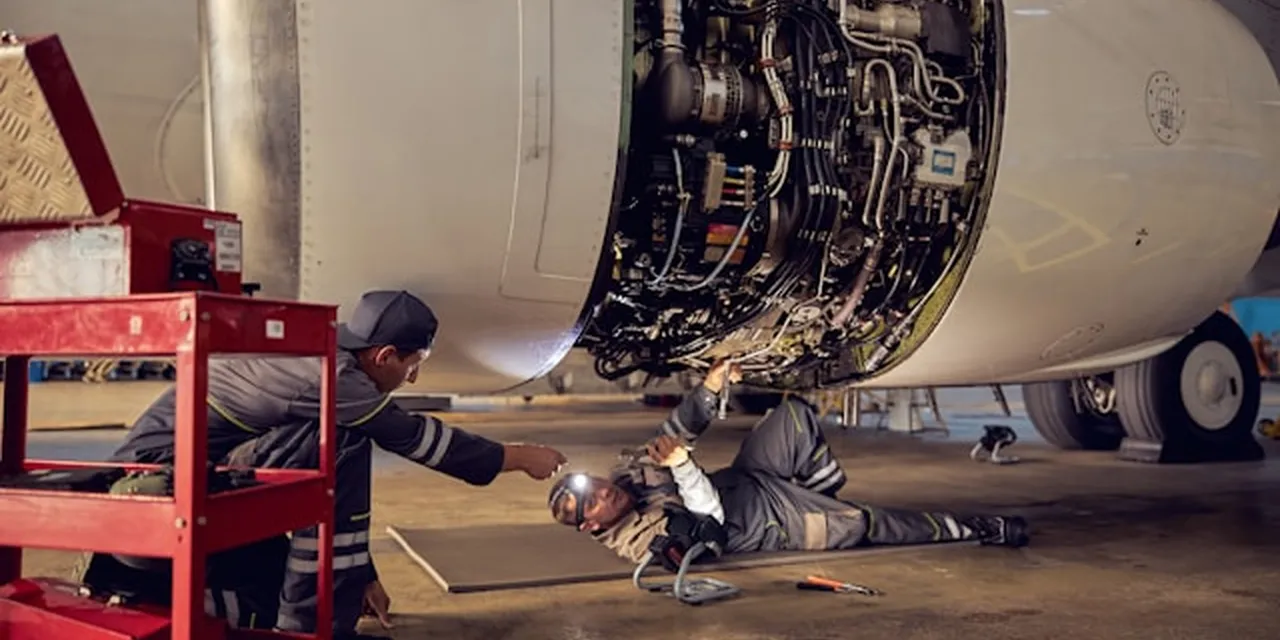
Chula Vista's advanced manufacturing sector added capacity, upgraded equipment, and secured new defence programme positioning through 2025. Collins Aerospace completed a $15 million modernisation of its automated fibre placement capabilities. Defence procurement budgets for Southern California contractors rose 8.3% year-over-year. Commercial aerospace backlogs continued to push output growth above 3.5%. By every measure of industrial activity, Chula Vista's aerospace corridor is expanding.
The problem is that the talent pipeline contracted at the same time. Mechanical engineering enrolment at California State University institutions has fallen 4.2% since 2020. Senior CNC machinists with 5-axis programming experience take 58 to 72 days to hire in the San Diego metro, nearly double the national average. Composite technicians capable of operating the new automated fibre placement equipment that Collins Aerospace installed represent a passive candidate pool so narrow that every hire is functionally a competitor poach. Chula Vista now finds itself in the specific and uncomfortable position of a market where capital investment has outrun the workforce needed to operate it.
What follows is a detailed analysis of the forces shaping this gap: the defence and commercial programmes driving demand, the compensation and geographic dynamics that make recruiting harder here than in competing markets, and what hiring leaders responsible for filling advanced manufacturing roles in this corridor need to understand about reaching the candidates who will never appear on a job board.
The Defence Procurement Surge and What It Means for Chula Vista
The growth trajectory in Chula Vista's advanced manufacturing sector is not speculative. It is driven by specific, funded defence programmes. The Next Generation Air Dominance programme and F-35 sustainment contracts both position Collins Aerospace's Chula Vista facility for subcontracting work through the remainder of the decade. Indo-Pacific deterrence strategy has been the primary catalyst for procurement increases across Southern California's defence industrial base.
Collins Aerospace's 1.2 million square-foot campus in southwestern Chula Vista already operates as one of two primary U.S. manufacturing sites for large composite aerostructures. The facility produces engine nacelles, thrust reversers, and composite structures for both the Boeing 787 and Airbus A350 programmes. These are long-cycle contracts. The demand they generate for composite technicians, manufacturing engineers, and quality specialists is not a temporary spike. It is embedded in production schedules that extend years into the future.
Commercial Aerospace Backlog Adds a Second Layer of Pressure
Defence is the dominant demand driver, but it is not the only one. Commercial aerospace backlog fulfilment pushed output growth to 3.5 to 4.2% through 2025. This matters because commercial and defence programmes compete for the same technician and engineering talent within the same facility. A composite layup technician working on a 787 nacelle and one working on a defence aerostructure require the same core skills. When both programme lines are running at capacity, the internal competition for qualified hands is as intense as the external competition.
The 2026 outlook projects moderate employment growth of 2.5 to 3.8%, contingent on final DoD budget appropriations. Even at the lower end of that range, Chula Vista's aerospace employers need to add headcount into a market that is already struggling to fill existing vacancies. The constraint is not demand. The constraint is people.
Where the Talent Gaps Are Most Acute
Three role categories define the hiring challenge in Chula Vista's aerospace and advanced manufacturing market. Each has distinct characteristics, and each requires a different approach to source effectively.
Senior CNC Machinists With 5-Axis Programming
According to the Burning Glass Institute's Q4 2024 analysis of the San Diego manufacturing labour market, senior CNC machinists with 5-axis programming and Mastercam proficiency take an average of 58 to 72 days to fill in the San Diego metro. The national average is 34 days. That gap is not explained by compensation alone. It reflects a deep shortfall in the number of available practitioners with the specific programming experience that high-mix, low-volume aerospace machining requires.
The dozens of smaller CNC machining and sheet metal fabrication shops operating in the Otay Mesa industrial corridor each employ between 15 and 75 people. They serve both aerospace primes and medical device OEMs. When one of these firms loses a senior programmer, the replacement search pulls from the same finite pool that Collins Aerospace and ControlPoint Technologies draw from. The result is a continuous cycle of lateral movement within the region rather than net talent addition.
Quality Engineers With Dual AS9100 and ISO 13485 Certification
This is perhaps the most constrained role category in Chula Vista's market. Quality engineers who hold both aerospace (AS9100) and medical device (ISO 13485) quality management system experience sit at the intersection of two regulated industries. Regional staffing firms report that when such dual-certified candidates enter the market, they receive 2.3 to 3.1 offers on average. Search processes commonly extend beyond 90 days.
The dual-certification requirement reflects the reality of Chula Vista's manufacturing mix. While the market is approximately 70 to 75% defence-aerospace weighted, the contract manufacturers serving medical device OEMs need quality professionals who understand both regulatory frameworks. Finding someone who has worked under AS9100 is straightforward. Finding someone who has also maintained ISO 13485 compliance in a medical device production environment narrows the field to a fraction of the already-small quality engineering talent pool.
Composite Technicians for Automated Fibre Placement
Collins Aerospace's $15 million modernisation created immediate demand for technicians capable of operating automated fibre placement and automated tape laying equipment. This is a passive candidate market in the purest sense. These technicians are employed, they are not posting CVs, and they are typically recruited directly from competitors. The San Diego Workforce Partnership's 2024 skills gap analysis identified this as one of the region's most acute manufacturing shortages.
The challenge is compounded by the fact that automated fibre placement is a relatively specialised discipline. The number of facilities in the United States that operate AFP equipment at production scale is small. Every technician with hands-on AFP experience is known to the recruiters working this market. The question is not whether they can be found. The question is what it takes to move them.
The Geographic Squeeze: Why Chula Vista Loses Talent in Both Directions
Chula Vista sits in an unusual competitive position. It loses senior talent upward to higher-paying markets and production talent downward to lower-cost ones. This two-directional pressure is the dynamic that makes this market harder to hire in than aggregate compensation data would suggest.
To the north, the Los Angeles-Long Beach-Anaheim metro offers 15 to 20% higher compensation for senior aerospace engineers. For executive-level roles, the pull is strong enough to draw experienced leaders out of the San Diego region entirely. To the east, the Phoenix-Mesa-Scottsdale metro offers comparable manufacturing wages within 5 to 8% while delivering 35 to 40% lower housing costs. According to CBRE's 2024 Tech Talent Report, Arizona's commerce authority has run targeted recruitment campaigns aimed specifically at San Diego CNC machinists and quality technicians.
San Diego County's median home price reached $985,000 as of Q4 2024, per the S&P CoreLogic Case-Shiller Index. For a mid-level manufacturing engineer earning $130,000, this creates a housing cost burden that Phoenix or Tucson simply does not impose. The result is a structural barrier to attracting talent from lower-cost markets and a persistent risk of losing existing talent to them.
For medical device roles specifically, the primary competitor is Irvine and Santa Ana in Orange County. That corridor hosts the highest concentration of Class III medical device manufacturers in the United States outside Minnesota. It offers 10 to 12% higher compensation for regulatory affairs and quality assurance roles while maintaining a similar cost-of-living profile to San Diego. A quality engineer considering a move within Southern California has a compelling reason to look north rather than south.
This is the original synthesis that the data points toward but that no single source states directly: Chula Vista's hiring problem is not a shortage problem in isolation. It is a positioning problem. The market sits in the cost shadow of San Diego without offering San Diego's research cluster advantages, while competing against Phoenix on cost and Los Angeles on compensation. Capital investment has improved the facilities. It has not changed the city's competitive position in the talent market.
The Medical Device Question: Why Proximity Has Not Translated to Growth
National data from the Reshoring Initiative's 2024 report shows meaningful reshoring of medical device manufacturing to mitigate China supply chain risk. Chula Vista, with available industrial space and a location 35 miles from one of the world's premier life science clusters, would appear to be a natural beneficiary. It has not been.
Medical device manufacturing in Chula Vista remains limited to contract sterilisation providers and component suppliers rather than integrated device manufacturers. The major medical device employers in the San Diego region, including firms like ResMed, Dexcom, and Illumina, are headquartered in northern San Diego County. The life science cluster in Torrey Pines sits 25 miles north, and according to the San Diego Regional Economic Development Corporation's 2024 Innovation Clusters Report, geographic fragmentation and Interstate 5 transportation bottlenecks limit direct spillover to Chula Vista.
The projected 4 to 5% growth in medical device manufacturing roles in Chula Vista for 2026 is real, but it operates from a small base. It reflects broader reshoring trends rather than Chula Vista-specific cluster development. The city's industrial ecosystem lacks the specialised cleanroom infrastructure and FDA-registered facility density found in Irvine or Carlsbad. Proximity to a life science cluster is not the same as participation in one.
For hiring leaders in medical device companies considering Chula Vista as a manufacturing location, this distinction matters. The talent pool for regulatory affairs managers and quality assurance professionals with FDA submission experience is concentrated where the device manufacturers are concentrated. That is not Chula Vista. Sourcing these roles here requires reaching candidates in other geographies and making a relocation case that competes against Orange County's established ecosystem.
Compensation Dynamics and the Security Clearance Premium
Aerospace manufacturing roles in Chula Vista command a 12 to 18% premium over general manufacturing wages in the region. This premium reflects two factors: the specialised composite skills required by the defence aerospace production environment and the security clearance requirements that exclude a portion of the otherwise-qualified workforce.
At the senior specialist level, manufacturing engineers with eight or more years of experience earn $118,000 to $145,000. At the VP of Manufacturing or Operations level, total compensation ranges from $185,000 to $240,000 with bonus potential of 25 to 35%. These figures are competitive within the San Diego metro but fall short of what Los Angeles aerospace employers offer for equivalent seniority.
The CNC programming tier tells a different story. Senior CNC programmers earn $75,000 to $95,000 in the San Diego market. This is a skilled trade role requiring years of experience, and at that compensation level, the housing arithmetic in a market with nearly million-dollar median home prices is punishing. It is no surprise that Phoenix's targeted recruitment campaigns find receptive audiences among this cohort.
Quality assurance and regulatory affairs roles sit in the middle. A QA manager with AS9100 or ISO 13485 certification earns $105,000 to $132,000, according to Bureau of Labor Statistics occupational employment data. At the VP level, quality and regulatory affairs leaders command $165,000 to $210,000, with equity participation available at venture-backed device firms. The gap between these two tiers represents the promotion pathway that keeps mid-career quality professionals engaged, but it also represents the range within which competitor offers from Orange County or Phoenix can be most disruptive.
Medical device roles carry their own premium of 8 to 14% over national medtech averages, driven by Southern California's high operational costs. But this premium is defensive rather than attractive. It compensates for cost of living rather than creating a compelling reason to relocate to the region.
Regulatory Pressure and the Compliance Staffing Cost Nobody Budgeted For
Two regulatory regimes are simultaneously increasing the compliance burden on Chula Vista manufacturers, and both are creating hiring demand for specialists who are already in short supply.
On the aerospace side, ITAR reform and Export Administration Regulations revisions targeting China have driven 15 to 20% increases in compliance staffing costs since 2023, according to the Bureau of Industry and Security's 2024 enforcement statistics. Collins Aerospace and its suppliers must maintain rigorous export control programmes, and the professionals who manage these programmes require both technical understanding of the products and detailed knowledge of the regulatory framework. This is not a role that can be filled by a generalist compliance hire.
On the medical device side, the FDA's proposed Quality Management System Regulation harmonisation with ISO 13485:2016 requires system overhauls by 2026. For Chula Vista's contract manufacturers serving the device sector, this means investing in both system upgrades and the personnel to implement them. The cost of a failed or delayed regulatory compliance hire in this environment is not simply the cost of the search. It is the cost of production delays, audit findings, and potential enforcement actions.
The compounding effect is what matters. A manufacturer operating at the intersection of aerospace and medical device production needs compliance professionals who understand ITAR, EAR, AS9100, ISO 13485, and now the evolving QMSR framework. These individuals are rare. When they appear in the market, they do not stay available for long. The 2.3 to 3.1 offers that dual-certified quality engineers receive is a direct reflection of this scarcity.
What the Automation Transition Means for Hiring Strategy
By 2026, approximately 12 to 15% of current production technician roles face automation-driven task restructuring, particularly in composite layup and conventional machining. This figure, from the San Diego Workforce Partnership's Future of Work in Advanced Manufacturing analysis, describes a shift that is already underway rather than a future projection.
The critical point is that automation does not eliminate these roles. It transforms them. The demand shifts from manual composite layup technicians toward mechatronics technicians and automation maintenance specialists. These are harder roles to fill, not easier ones. Southwestern College's Centre for Advanced Manufacturing and Energy provides CNC machining, metrology, and composites training, and the college maintains apprenticeship pipelines with Collins Aerospace. But the throughput of these programmes is measured in dozens of graduates per year, not hundreds.
The firms that will hire successfully in this transitioning market are those that recognise the shift early enough to build a proactive talent pipeline rather than reacting to vacancies as they arise. The organisations relying on job postings for mechatronics technicians in a market where unemployment for senior manufacturing engineers runs below 1.5% are engaged in an exercise with a predictable outcome. They will not fill the role.
Southwestern College and SDSU maintain research collaborations with Collins Aerospace on composite material fatigue testing and workforce development. These institutional partnerships are valuable, but they address the pipeline at the entry level. The senior specialists and engineering leaders who design automation strategies, manage the transition, and train the next generation of technicians are not graduating from apprenticeship programmes. They are working at competitors. Reaching them requires a fundamentally different approach to talent identification than posting a role and waiting.
The Tijuana Factor: Cross-Border Competition That Never Stops
Sixty miles of highway and a border crossing separate Chula Vista's advanced manufacturers from Tijuana's maquiladora sector, which offers 60 to 70% labour cost savings for precision machining and assembly. This proximity creates continuous pressure to offshore lower-complexity operations. It also creates a border crossing bottleneck. Otay Mesa commercial crossing delays average 45 to 90 minutes, according to U.S. Customs and Border Protection statistics, disrupting just-in-time supply chains for manufacturers relying on cross-border component flows.
The strategic implication for executive hiring in the manufacturing sector is that every senior operations leader in Chula Vista must manage this calculus. The VP of Manufacturing at a Chula Vista aerospace supplier is not simply managing a production floor. They are managing a make-or-buy decision that involves international trade compliance, cross-border logistics, and a workforce strategy that spans two countries. The candidates who can do this well are a subset of an already-small pool of senior manufacturing leaders. They need ITAR expertise, cross-cultural management experience, and the operational judgement to know which work stays and which work goes.
This requirement narrows the effective candidate pool for senior roles considerably. A plant manager from a landlocked Midwest facility may have excellent production credentials but no experience managing the cross-border dynamics that define Chula Vista's competitive reality. The search for leaders in this market must be calibrated to this specificity.
How Chula Vista's Hiring Leaders Should Approach This Market
The data across every dimension of this market points to the same conclusion. The candidates Chula Vista's aerospace and advanced manufacturing employers need most are the 80% of senior professionals who are employed, performing well, and not looking. Senior manufacturing engineers in this region carry unemployment below 1.5% and average tenure of 6.2 years. Over 85% of placements at this level occur through executive search or direct recruitment rather than job board applications. Regulatory affairs managers in the medical device space show a 4:1 ratio of passive to active candidates.
This is a market where speed and method both matter. A search that takes 90 days for a dual-certified quality engineer is a search that loses its best candidates to the 2.3 other offers those candidates received while the process unfolded. The cost of a slow search is not abstract. It is the production line that runs short-staffed, the compliance gap that persists, the automation transition that stalls.
KiTalent's approach to markets like Chula Vista's aerospace corridor is built around the reality that the candidates who matter are not visible. Through AI-enhanced talent mapping, KiTalent identifies passive candidates across competing facilities, adjacent markets, and related industries before a role is even posted. Interview-ready candidates are delivered within 7 to 10 days, with a pay-per-interview model that eliminates upfront retainer risk. Across 1,450 executive placements, this methodology has produced a 96% one-year retention rate, a figure that reflects the precision of the match rather than just the speed of the search.
For organisations hiring senior manufacturing engineers, quality leaders, or operations executives in Chula Vista's defence-aerospace market, where every qualified candidate is employed and the competition extends from Phoenix to Los Angeles, start a conversation with KiTalent's aerospace and defence search team about how to reach the talent this market will not show you on its own.
Frequently Asked Questions
What types of advanced manufacturing roles are hardest to fill in Chula Vista?
Three categories stand out. Senior CNC machinists with 5-axis programming experience take 58 to 72 days to fill in the San Diego metro, nearly double the national average. Quality engineers with dual AS9100 and ISO 13485 certification receive multiple competing offers the moment they enter the market. Composite technicians trained on automated fibre placement equipment represent a passive candidate pool so specialised that virtually every hire comes through direct recruitment from a competitor. These shortages are systemic rather than seasonal, driven by declining engineering enrolment and rising defence procurement simultaneously.
How does Chula Vista's aerospace talent market compare to Phoenix or Los Angeles?
Chula Vista faces two-directional competitive pressure. Los Angeles offers 15 to 20% higher compensation for senior aerospace engineers, drawing executive talent northward. Phoenix offers comparable manufacturing wages with 35 to 40% lower housing costs, attracting mid-level technicians and machinists eastward. San Diego County's median home price of nearly $985,000 intensifies this squeeze. Chula Vista employers must compete on role specificity, programme prestige, and career trajectory rather than on compensation or cost of living alone.
Is medical device manufacturing growing in Chula Vista?
Medical device manufacturing in Chula Vista is projected to grow 4 to 5% in 2026, but from a small base. The city's manufacturing economy is approximately 70 to 75% defence-aerospace weighted. Direct medical device manufacturing is limited to contract sterilisation and component machining rather than integrated device production. Major device employers are concentrated in northern San Diego County and Orange County. Firms considering Chula Vista for device manufacturing should assess cleanroom infrastructure and FDA-registered facility availability carefully before committing.
What compensation do senior aerospace manufacturing professionals earn in the San Diego region?
Senior manufacturing engineers with eight or more years of experience earn $118,000 to $145,000. At the VP of Manufacturing or Operations level, total compensation reaches $185,000 to $240,000 with 25 to 35% bonus potential. Aerospace roles carry a 12 to 18% premium over general manufacturing due to security clearance requirements and specialised composite skills. Senior CNC programmers earn $75,000 to $95,000, a figure that creates housing affordability challenges given San Diego's cost profile.
How does KiTalent approach executive hiring in specialised manufacturing markets?
KiTalent uses AI-enhanced talent mapping to identify passive candidates who are employed and not responding to job postings. In markets like Chula Vista's aerospace corridor, where unemployment for senior manufacturing engineers runs below 1.5% and most placements occur through direct headhunting rather than job board applications, this approach reaches the candidates that traditional recruitment methods miss. Interview-ready shortlists are delivered within 7 to 10 days under a pay-per-interview model, with no upfront retainer required.
What regulatory changes are affecting hiring in Chula Vista's manufacturing sector?
Two concurrent regulatory shifts are increasing demand for compliance specialists. ITAR reform and EAR revisions targeting China have driven 15 to 20% increases in compliance staffing costs for aerospace manufacturers since 2023. Simultaneously, the FDA's proposed Quality Management System Regulation harmonisation with ISO 13485:2016 requires medical device manufacturers to complete system overhauls. Both trends create demand for specialised compliance professionals who understand multiple regulatory frameworks, a candidate profile that is exceptionally scarce in the current market.