Dammam's Manufacturing Boom Has Outpaced the Workforce to Run It
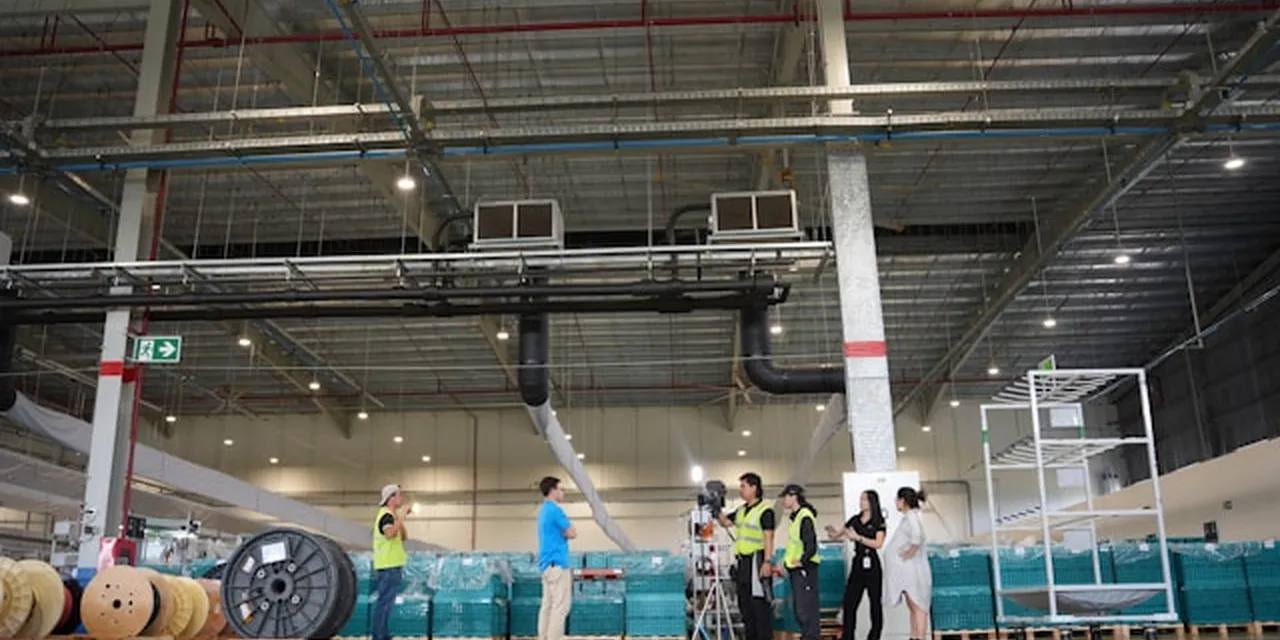
Dammam's Second and Third Industrial Cities now host close to 500 operational factories across metal fabrication, plastics compounding, and construction materials. Capacity utilisation climbed to 78% through 2024, contract awards from NEOM, the Red Sea Project, and Jafurah gas field development have pushed structural steel demand projections up 14% for 2026, and MODON has allocated 2.4 million square metres of new industrial land specifically for steel fabrication and construction material clusters. By every capital metric, this is a sector accelerating.
The workforce required to operate that expansion does not exist in sufficient numbers. ASME-certified welding engineers are short by 40% across the Eastern Province. The polymer processing specialists who run Dammam's plastics compounding lines number fewer than 500 qualified professionals in the entire region. HVAC design engineers with Saudi Aramco Engineering Standards credentials take an average of 94 days to place, and operations directors with existing Aramco vendor approval sit in a candidate pool that is more than 90% passive. Capital has moved faster than human capital could follow, and the gap is widening as infrastructure delivery trails land allocation by eight to ten months.
What follows is an analysis of the forces reshaping Dammam's industrial manufacturing sector, the specific talent categories where hiring has stalled, and what organisations operating in this market need to understand before they plan their next search. The central tension is not simply that demand is high and supply is low. It is that the investment pouring into Dammam's industrial base requires a workforce profile that the region's training pipeline, compensation structures, and geographic position have not yet produced.
A Sector Growing Into a Workforce It Does Not Have
The numbers describing Dammam's manufacturing growth are impressive in isolation. The Second Industrial City alone hosts 487 factories, with metal fabrication accounting for 34% of units, plastics and rubber products 22%, and non-metallic minerals 18%, according to MODON's H1 2024 statistical bulletin. The Third Industrial City, established in 2011, accommodates larger-format facilities averaging 20,000 square metres per plot, with stricter environmental and energy efficiency standards that attract steel structure fabricators and compounding operations at scale.
But the original synthesis that makes this market genuinely unusual is this: Dammam is not experiencing a talent shortage in the traditional sense of too many roles chasing too few people. It is experiencing a capability mismatch caused by the simultaneous collision of three forces that are rarely present together. The first is Saudization quotas that require manufacturers to replace experienced expatriate workers with Saudi nationals whose vocational training has not yet reached equivalent productivity levels. The second is a utility infrastructure that cannot keep pace with industrial land allocation, meaning the factories that need skilled operators cannot always run at full capacity even when they have them. The third is a geographic compensation gradient that pulls the most qualified specialists toward Jubail, Ras Al-Khair, and the UAE before Dammam employers even know they are available.
No single one of these forces would create a crisis. Together, they produce a market where the traditional hire, a qualified expatriate specialist recruited through a job posting, is becoming structurally unavailable. The Saudization rules restrict visa issuance for non-compliant firms. The infrastructure gaps reduce the reliability of production schedules. The compensation differential means the specialists who do exist are being recruited away at premiums Dammam's SMEs cannot match. Each force compounds the others.
For organisations navigating this environment, understanding why executive recruiting fails in markets with deep structural constraints is the starting point, not the conclusion.
The Saudization Paradox: Compliance Rising, Productivity Falling
The Nitaqat programme will tighten further in 2026. Medium-sized manufacturers with 50 to 499 employees must now achieve 25% Saudi national employment in technical roles, up from the 20% threshold that applied through 2025. The policy trajectory is clear: the Ministry of Human Resources and Social Development reported that manufacturing sector Saudization rates improved from 18% to 22% between 2023 and 2024.
That improvement came at a cost the headline compliance figures do not capture.
Output Per Labour Hour Has Declined
National Industrial Development Center skills assessments show that productivity metrics, specifically output per labour hour, declined 6% across metal fabrication SMEs during the same period that Saudization rates rose four percentage points. This is not a commentary on the capability of Saudi national workers. It is a commentary on the speed at which training pipelines can produce specialists in disciplines like ASME-certified welding, CNC five-axis machining, and scientific injection molding methodology. These are skills that take years to develop. The policy timeline operates in quarters.
The Compliance Trap for SMEs
As of Q3 2024, 34% of Dammam manufacturing SMEs sat in Red or Low Green Nitaqat zones, according to MHRSD quarterly data. Non-compliance suspends government contract eligibility and visa issuance restrictions. For a metal fabrication workshop that depends on expatriate welders and needs to recruit a replacement for a departing certified engineer, a Red zone classification means the replacement visa will not be issued. The workshop either finds a Saudi national with equivalent certification, which the supply data says is unlikely, or it operates short-staffed.
The firms best positioned to handle this pressure are the anchor employers: Zamil Industrial, Alfanar, Saudi Ceramic Company. They have the scale, the training budgets, and the compensation headroom to build Saudi national capability internally. The SMEs that form the Tier 2 and Tier 3 supply chain around these anchors do not. This creates a widening capability gap between the top of Dammam's manufacturing ecosystem and its base, a gap that shows up as delayed deliveries, rejected welds, and missed contract milestones rather than as a line item in a workforce report.
Three Shortage Categories That Define This Market
Not all hiring in Dammam manufacturing is equally difficult. Junior mechanical engineers, production supervisors, and quality inspectors show active candidate ratios of 40 to 50%, meaning conventional job postings still generate applicant flow for these roles, albeit with variable quality. The shortages that are reshaping the sector sit in three specific categories where passive candidate ratios exceed 70% and in some cases 90%.
Aramco-Approved Welding Engineers
These specialists operate at near-zero unemployment. The passive candidate ratio exceeds 85%, meaning fewer than 15 of every 100 qualified professionals are actively looking for a new role at any point. Average tenure exceeds 4.5 years. The certification stack required, ASME Section IX, Aramco approval status, weld procedure specification development capability, takes a decade to accumulate.
The scarcity is not abstract. According to industry reports citing regional recruitment data, Zamil Steel Manufacturing in Dammam maintained an open vacancy for a Welding Engineering Manager with Aramco certification for 11 months during 2023 and 2024. The role was eventually filled by recruiting an expatriate engineer from a competitor facility in Jubail at a 35% compensation premium above the standard market rate. That is the real cost of a search in this segment: not the recruiter's fee but the year of lost productivity and the premium required to close.
Polymer Processing Specialists
The entire Eastern Province contains an estimated 400 to 500 qualified polymer processing specialists capable of managing twin-screw extrusion, masterbatch formulation, and compounding operations. The passive candidate ratio sits between 70% and 75%. Active job postings for these roles receive minimal qualified applicant flow.
One mid-sized plastics compounding SME in the Second Industrial City restructured its entire technical team arrangement in 2024 after six months of failed local recruitment. According to the Gulf Plastics Association Member Survey, the firm created a cross-border commuting arrangement allowing a senior polymer technologist to work from Bahrain three days per week. This pattern now characterises 15 to 20% of Dammam plastics SMEs, which are sourcing technical talent from Bahrain and the UAE through arrangements that would have been unthinkable five years ago.
For hiring leaders in this segment, understanding the hidden 80% of the candidate market that never appears on job boards is the difference between a six-month failed search and a targeted approach that reaches the right professional directly.
HVAC Design Engineers with Oil and Gas Standards Credentials
Engineers fluent in Saudi Aramco Engineering Standards and Shell DEP specifications are in acute demand. The average time-to-fill for senior HVAC design roles is 94 days, more than three times the typical hire cycle for equivalent seniority in non-specialised manufacturing. The demand is being pulled simultaneously by the Jafurah gas field development and the Dammam Metro project, both of which require HVAC systems designed to specifications that only a fraction of the engineering population can deliver.
The common thread across all three categories is certification specificity. General manufacturing talent is available. The talent that carries the specific approval stamps, certification codes, and client-relationship histories required by Saudi Aramco and its supply chain is not.
The Compensation Gradient Pulling Talent Away From Dammam
Dammam does not exist in isolation. It competes for manufacturing leadership talent with three markets, each of which offers a specific advantage that Dammam must counter.
Jubail Industrial City sits less than 100 kilometres north and pays 15 to 20% more for equivalent welding and petrochemical engineering roles. SABIC, Tasnee, and international EPC contractors including Bechtel and Fluor anchor the Jubail market. Newer infrastructure and dedicated industrial utilities mean fewer power outages and more reliable production schedules. For a welding engineering manager weighing two offers, Jubail's combination of higher pay and better working conditions is a strong default.
Ras Al-Khair, the emerging mining and manufacturing hub anchored by Ma'aden, offers 10 to 12% salary premiums for metallurgical engineers and heavy fabrication specialists. Its newer housing compounds and tax incentives attract candidates willing to trade urban amenities for financial advantage. The trade-off favours Dammam only when candidates have school-age children and require the international schooling options available in the Dammam metropolitan area.
The UAE represents the most serious competitive threat for senior talent. Dubai and Abu Dhabi offer tax-free salary structures, more flexible visa regimes, and net compensation packages 25 to 30% higher for senior polymer technologists and HSE executives. According to the Hays GCC Salary Guide 2024, the UAE's international schooling allowances and lifestyle appeal draw passive candidates directly from Dammam's plastics sector.
The compensation data tells a clear story at the executive level. A Plant Operations Director or General Manager in Dammam commands SAR 55,000 to 85,000 per month at the VP or multi-site level, with total annual compensation including housing and transportation reaching SAR 1.2 to 1.8 million for Saudi nationals. A Supply Chain Director with petrochemical feedstock management expertise earns SAR 50,000 to 75,000 monthly, reflecting the premium placed on SABIC and Tasnee relationship networks. At the Welding Engineering Manager level, Aramco approval status and API certification drive significant variance, with executive-level Chief Technical Officer packages ranging from SAR 45,000 to 70,000 monthly.
These figures are competitive within Dammam but below what Jubail and the UAE offer for equivalent seniority. The result is a one-directional talent flow at the senior end: experienced specialists leave Dammam for higher-paying markets, and Dammam employers must recruit replacements from a diminishing local pool or pay above-market premiums to attract talent inward. Understanding how to negotiate compensation packages that account for these cross-border dynamics is now essential for any manufacturer competing for senior hires in the Eastern Province.
Infrastructure Constraints Are a Talent Problem in Disguise
It would be easy to categorise Dammam's electricity supply gaps and port congestion as operational issues unrelated to talent. They are not. They are among the most powerful factors determining whether a qualified operations director or plant manager accepts a role in Dammam or chooses a competitor market.
The Eastern Province grid experienced peak demand deficits of 1,200 megawatts during summer 2024, according to the Saudi Electricity Company Eastern Region Operational Report. MODON implemented rotational power management in the Second Industrial City during July and August 2024, affecting 23% of metal fabrication workshops. Manufacturing zones in the Second Industrial City experience two to three scheduled power outages monthly during peak summer, forcing reliance on diesel generator backup at material cost.
King Abdulaziz Port congestion pushed average container dwell time to 8.4 days in 2024, up from 6.2 days in 2023 according to Saudi Ports Authority data. For metal fabricators dependent on imported raw materials, this delay cascades through production schedules and contract delivery timelines.
For a senior operations executive evaluating a role in Dammam, these constraints signal operational complexity that more modern industrial cities do not impose. Jubail's dedicated industrial utilities, Ras Al-Khair's newer infrastructure, and the UAE's grid reliability all represent environments where production targets are easier to meet. The talent implication is direct: Dammam must compensate not just for lower headline pay but for harder operating conditions. The most experienced manufacturing leaders understand this calculation before they see a job description.
MODON's 2.4 million square metres of new industrial land allocation for 2025 to 2026 is designed to address part of this gap. But infrastructure delivery, specifically power substations and water supply, trails land allocation by eight to ten months. Factories licensed on new plots face a period where they have space but not the utilities to operate at capacity. This lag is not a minor scheduling issue. It shapes the hiring timeline for every role that depends on an operational production line.
What This Market Requires From a Hiring Strategy
The conventional approach to manufacturing recruitment in the GCC, posting roles on regional job boards and waiting for applications, reaches at most 15 to 30% of viable candidates in Dammam's critical shortage categories. For Aramco-approved welding engineers, the figure is closer to 15%. For operations directors with existing vendor approval, it is below 10%.
The reasons are specific to this market rather than generic. Saudization compliance restrictions mean that firms in Red or Low Green Nitaqat zones cannot issue new expatriate work visas, eliminating the historical fallback of recruiting internationally for specialist roles. The cross-border commuting arrangements emerging in the plastics sector, where specialists work from Bahrain or the UAE on partial schedules, require a level of candidate identification and proposition design that no job board can deliver. And the certification specificity of the most in-demand roles means that a shortlist of ten apparently qualified applicants may contain only two who actually hold the required Aramco approval stamps.
A talent mapping exercise conducted before a search begins changes the dynamics entirely. When the addressable candidate pool in the Eastern Province numbers 400 to 500 professionals for polymer processing or operates at 85% passive ratios for welding engineers, the search methodology must start with identifying exactly who those professionals are, where they currently work, and what proposition would be required to move them. This is the opposite of posting and waiting.
The firms in Dammam that are filling their most critical roles share a common approach. They treat recruitment for certified specialist and senior leadership positions as a direct headhunting exercise rather than an advertising exercise. They build compensation packages that account for the Jubail and UAE differential. And they engage with candidates months before a vacancy formalises, building relationships through industry conferences like the GPCA Plastics Conference and through targeted outreach to competitor facilities.
For organisations that lack the internal resources to run this kind of search, the cost of delay is concrete. A welding engineering manager vacancy that runs eleven months represents lost Aramco contract capacity, missed delivery milestones, and the compound cost of production lines running below specification. A polymer technologist role unfilled for six months pushes an SME toward the cross-border commuting arrangements that raise costs and reduce operational control.
Where KiTalent Operates in This Market
Dammam's manufacturing talent challenges are not solved by broader networks or better job advertisements. They are solved by executive search methodology designed to reach candidates who are not visible on any job board and to move them through an assessment and interview process fast enough to pre-empt competing offers from Jubail and the UAE.
KiTalent's approach to markets like Dammam's industrial sector begins with AI-powered talent mapping that identifies the full addressable candidate pool before a single outreach is made. In a market where the qualified population for critical roles numbers in the hundreds rather than the thousands, knowing exactly who exists and where they sit is not a nice-to-have. It is the search itself.
The delivery model is built for the urgency this market demands: interview-ready candidates presented within seven to ten days, with a pay-per-interview structure that removes the upfront retainer risk for manufacturers managing tight operational budgets. Across 1,450 executive placements globally, KiTalent maintains a 96% one-year retention rate, a metric that matters particularly in a market where the cost of a wrong hire at the plant director or engineering manager level cascades through production output, Aramco compliance status, and Saudization ratios simultaneously.
For manufacturers in Dammam's Second and Third Industrial Cities competing for welding engineers, polymer specialists, and operations directors in a market where the best candidates are employed, passive, and being courted by higher-paying competitors in Jubail and the UAE, start a conversation with our executive search team about how we approach this market and what a targeted search for your most critical role would look like.
Frequently Asked Questions
Why is it so difficult to hire certified welding engineers in Dammam?
Demand for ASME Section IX-certified welding engineers exceeds supply by approximately 40% across the Eastern Province. The candidate pool operates at a passive ratio above 85%, meaning fewer than 15% of qualified professionals are actively seeking roles at any time. The certification stack, including Aramco approval status and weld procedure specification development capability, takes a decade to accumulate. Competing markets in Jubail and Ras Al-Khair offer 15 to 20% higher compensation, creating a one-directional flow of experienced specialists away from Dammam. Successful recruitment in this segment requires direct headhunting from competitor facilities rather than job board advertising.
What are executive-level manufacturing salaries in Dammam in 2026?
A Plant Operations Director or General Manager at multi-site or VP level earns SAR 55,000 to 85,000 per month, with total annual compensation reaching SAR 1.2 to 1.8 million for Saudi nationals when housing and transportation allowances are included. Welding Engineering Managers with Aramco approval command SAR 45,000 to 70,000 monthly at executive level. Supply Chain Directors with petrochemical feedstock management expertise earn SAR 50,000 to 75,000 monthly. Saudi national hires at senior level now command premiums of 20 to 35% above equivalent expatriate packages due to Saudization compliance value.
How does Saudization affect manufacturing hiring in Dammam?
The Nitaqat programme requires medium-sized manufacturers to achieve 25% Saudi national employment in technical roles as of 2026. Firms classified in Red or Low Green zones, which includes 34% of Dammam manufacturing SMEs, face suspension of government contract eligibility and visa issuance restrictions. This means non-compliant firms cannot recruit expatriate replacements for departing specialists, compounding existing shortages. The challenge is that vocational training pipelines have not yet produced Saudi nationals at equivalent productivity levels in disciplines like certified welding and polymer processing.
What is the passive candidate ratio for senior manufacturing roles in Dammam?
The ratios vary by specialisation but are consistently high. Aramco-approved welding engineers operate at above 85% passive. Polymer processing specialists sit between 70% and 75% passive. Operations directors with existing Aramco vendor approval and project delivery history are more than 90% passive, meaning these roles are filled exclusively through executive search networks and direct candidate identification rather than public advertisement. Junior and mid-level roles show more active ratios of 40 to 50%.
How does Dammam compare with Jubail and the UAE for manufacturing talent?
Jubail pays 15 to 20% more for equivalent welding and petrochemical engineering roles and offers more reliable industrial utilities. The UAE offers 25 to 30% higher net compensation for senior polymer technologists and HSE executives, combined with tax advantages and lifestyle appeal. Dammam's advantages are residential amenities, proximity to an international airport, and international schooling options that matter to expatriates with families. For hiring leaders, the practical implication is that Dammam compensation packages must account for these differentials or risk losing preferred candidates to competitor markets before the offer stage.
Can KiTalent help with manufacturing executive search in Saudi Arabia's Eastern Province?
KiTalent delivers interview-ready executive candidates within seven to ten days through AI-powered talent mapping and direct headhunting methodology. The pay-per-interview model eliminates upfront retainer risk. In a market where the qualified candidate pool for critical roles numbers in the hundreds, KiTalent's approach identifies the full addressable population before outreach begins, reaching the passive candidates that conventional job advertising cannot access. With a 96% one-year retention rate across 1,450 executive placements, the methodology is built for markets where a wrong hire carries compounding operational consequences.