Diekirch Construction Hiring: Where Policy Ambition Meets a Workforce That Does Not Yet Exist
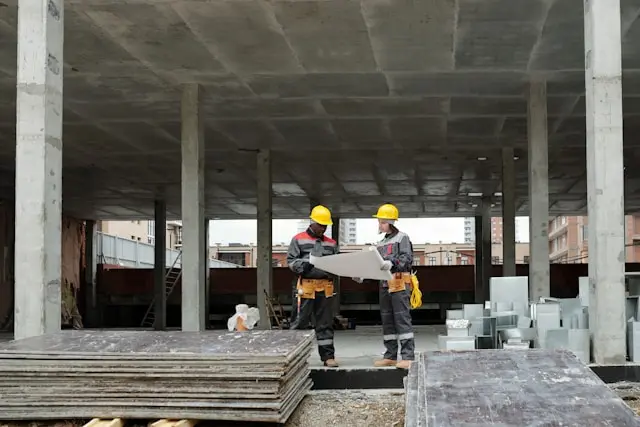
Luxembourg's northern construction market is caught in a paradox of its own government's making. The Nordstad development programme calls for 7,500 new housing units between Ettelbruck and Diekirch by 2030. The enhanced Klimabonus subsidy scheme has driven an 18% surge in energy renovation permit applications across the canton. The revised thermal regulations taking effect in 2026 will mandate higher energy standards for any renovation exceeding 25% of a building's envelope value. Every one of these policies assumes a workforce capable of delivering the work. That workforce does not exist in sufficient numbers, and the gap is widening.
The core tension in Diekirch's construction market is not a simple labour shortage. It is a mismatch between a regulatory framework designed to accelerate green building and an artisan base that lacks the certifications, digital competence, and specialist training to execute what the policy requires. Master electricians with high-voltage authorisation sit at a 1.2% unemployment rate. Certified HVAC technicians operate in a market where the ratio of active to passive candidates is estimated at 1:9. The subsidies created demand. They did not create supply.
What follows is a structured analysis of the forces reshaping construction and building services in Diekirch and the broader Éislek region: who employs the workforce, where the critical gaps sit, what roles pay, and why organisations hiring in this market need a fundamentally different approach to finding the people who can deliver the work.
The Nordstad Pipeline and What It Demands
Diekirch and the surrounding Nordstad agglomeration occupy a distinctive position in Luxembourg's territorial planning. Designated as priority zones under the Programme Directeur de l'Aménagement du Territoire, the Ettelbruck-Diekirch corridor is absorbing a share of national housing development that would be ambitious even with a surplus of skilled trades. Diekirch commune alone accounts for approximately 2,800 of the 7,500 units planned through 2030.
Current activity reflects this ambition. The Wëncherbaach II residential quarter is under way, with Phase II tendered for a 2026 start covering an additional 400 units. The former INDECK industrial site is being redeveloped. Secondary road and logistics infrastructure supporting the A7 motorway is scheduled for completion. The municipal school renovation in Diekirch carries a budget of €12 million and falls squarely into the decarbonisation category that demands certified energy renovation specialists.
The Statec Conjoncture Flash from December 2024 projects construction output growth of 2.1% for northern Luxembourg in 2026. That figure represents a deceleration from 3.4% in 2024. The reason for the slowdown is not weakening demand. It is the ceiling imposed by labour supply. The projects exist. The tenders are funded. The bottleneck is people.
Where the Delivery Pressure Concentrates
Not all trades face equal pressure. The Nordstad pipeline creates specific concentrations of demand that overwhelm thin specialist pools. Exterior insulation systems, HVAC installation for new residential builds, and electrical work requiring smart building integration are the three categories where project timelines are stretching most visibly. A residential development that once moved from permit to handover in 18 months now takes 24 or longer, not because of planning delays but because the subcontractor queue for certified installers has lengthened.
This distinction matters for anyone hiring in the region. The shortage is not evenly distributed across the construction workforce. General labourers and unskilled helpers remain available, with unemployment rates of 8 to 12% and healthy application volumes for posted vacancies. The crisis sits in the certified, experienced middle and upper tiers of the trades hierarchy. Understanding which roles are scarce and which are available is the difference between a hiring strategy that works and one that wastes months targeting the wrong channels.
Cross-Border Dependency: Enabler Turned Vulnerability
One of the most misunderstood dynamics in Diekirch's construction market is the role of cross-border workers. The instinct is to view the frontalier commute as a logistical constraint on the sector. The data tells a different story. Cross-border workers are not the problem. They are the reason the sector functions at all.
As of late 2024, an estimated 62% of construction employees in the Diekirch catchment area resided outside Luxembourg. Belgian workers from the Arlon corridor accounted for 34%. German workers from the Trier area made up 28%. This cross-border share exceeds the already substantial 47% seen in Luxembourg City's construction workforce. Projections from UEL and the Fédération des Bâtisseurs suggest this figure could reach 65% by the end of 2026 without structural intervention.
The dependency creates a specific vulnerability. Any disruption to free movement, any shift in tax treatment of cross-border income, or any improvement in conditions on the other side of the border directly threatens project delivery in Diekirch. This is not theoretical. German construction firms are already deploying four-day weeks and guaranteed weekend freedom as retention tools, specifically targeting workers who might otherwise commute to Luxembourg for higher wages. French workers previously commuting from Metz and Nancy are increasingly retained by improved regional infrastructure subsidies and rising domestic construction activity.
The real risk is not that cross-border workers are hard to recruit. Luxembourg's net wage advantage remains powerful: an electrician earns roughly 1.8 times the net pay of an equivalent role in Trier. The risk is that the entire operational model of northern Luxembourg's construction sector depends on a labour flow that multiple external policy decisions could disrupt. One change to Belgian tax treatment of Luxembourg-sourced income, and a third of Diekirch's construction workforce faces a recalculation.
The Certification Bottleneck: A Shortage Within the Shortage
Here is the analytical claim that the aggregate data obscures. Diekirch's construction labour shortage is not primarily a hiring problem. It is a certification problem. The regulatory framework has moved faster than the training pipeline can follow, creating a market where demand is measured in certified specialists and supply is measured in willing but unqualified tradespeople.
Consider the sequence. The Klimabonus enhancement in 2024 drove energy renovation permits up 18% in the Diekirch canton, outpacing the national average of 12%. The 2026 thermal regulation revision will mandate enhanced energy standards for renovations exceeding 25% of envelope value, requiring Conseiller en Rénovation Énergétique certification and specialised façade technician qualifications. Simultaneously, the Circularity Datasheet requirement arriving in 2025 and 2026 demands documentation capabilities that most small Diekirch subcontractors do not possess.
Each of these policies is individually sound. Together, they have created a market where the work that generates the most demand is precisely the work that the fewest firms are qualified to perform. A general contractor can build a wall. A certified energy renovation specialist can build a wall that meets the regulatory threshold. The distinction between those two capabilities is the distinction between an available workforce and an effective one.
The Lycée Technique du Nord in Ettelbruck produces approximately 120 construction trade graduates annually. Only 65% of offered apprenticeship positions in construction trades were filled in September 2024, down from 82% in 2019. The pipeline is thinning at exactly the moment policy is widening the demand funnel. Meanwhile, 34% of construction workers in the northern region are over 50 years old, with limited facility with BIM coordination and modern energy calculation tools. The sector is not simply short of hands. It is short of the right hands, and the definition of "right" is being rewritten by regulation every year.
What Roles Pay in Northern Luxembourg
Compensation in Diekirch's construction sector reflects the tension between scarcity and geography. Roles command meaningful premiums over cross-border equivalents, but they trail the capital region, creating a pull effect that drains experienced talent southward.
Specialist and Manager Compensation
A Chef de Chantier with five to ten years of experience earns between €72,000 and €95,000 in base salary, according to the FBTP collective agreement scale and recruitment firm benchmarking. BIM Coordinators in construction and building services command €68,000 to €85,000. These figures are competitive by regional standards but insufficient to prevent experienced site managers from gravitating toward Luxembourg City, where the same roles carry a 10 to 15% premium.
Executive Compensation
At the executive level, the premiums become more substantial. A Directeur de Travaux at a regional contractor earns between €130,000 and €165,000 in base salary, with project performance bonuses adding 10 to 20%. Technical Directors at mid-sized firms of 50 to 150 employees command €145,000 to €185,000 plus car allowance. Business Unit Managers overseeing northern operations for major national contractors earn total compensation of €160,000 to €210,000.
These figures carry an 8 to 12% premium over identical roles in Trier and a 5 to 8% advantage over Arlon. The premium is real but partially offset by Luxembourg's higher cost of living. For candidates weighing a move, the compensation conversation requires nuance beyond headline salary figures. A German site manager considering a Diekirch role needs to understand not just the gross differential but the net impact after tax, housing, and commuting costs.
The Poaching Dynamic
For HVAC technicians with F-gas certification, firms report offering wage premiums of 15 to 20% above standard scale to attract qualified candidates from competitors, according to the Fédération des Artisans. This is not a market where passive job advertising produces results. It is a market where the cost of hiring is baked into the premium required to move someone who is already employed and not looking.
The Passive Candidate Reality
The structure of Diekirch's construction talent market makes conventional recruitment methods functionally useless for the roles that matter most.
Master electricians with BTL and CTL authorisation operate at a 1.2% unemployment rate, according to ADEM data from late 2024. Average tenure is 7.4 years. These professionals do not apply to posted vacancies. They do not browse job boards. They move through direct approaches and referral networks. A public job posting for a certified electrician in the Diekirch and Ettelbruck zone has a 43% chance of remaining active beyond 90 days, compared to 28 days for an administrative role in the same area.
Certified HVAC technicians present an even more extreme profile. The Fédération des Artisans estimates an active-to-passive candidate ratio of 1:9. For every qualified technician actively looking for work, nine more are employed, performing well, and not engaged with the visible job market. Public postings for these roles attract primarily underqualified applicants. The qualified candidates must be found through competitor mapping and direct outreach.
Construction site managers with ten or more years of experience exhibit similar patterns. Annual turnover in this category runs at 4%, against a sector average of 12%. These individuals are stable in their current roles and respond to executive search approaches rather than advertisements. Their loyalty is an asset to their current employers and a barrier to everyone else.
This passive candidate dynamic is the reason that conventional recruitment channels consistently fail to reach the strongest candidates in this market. The active candidate pool for skilled construction trades in Diekirch consists predominantly of career entrants, underqualified applicants, and workers whose availability often signals a problem rather than an opportunity. The experienced, certified professionals who can actually deliver Nordstad's pipeline are invisible to any search strategy that relies on advertising and inbound applications.
The Structural Risks Hiring Leaders Cannot Ignore
Three structural dynamics threaten to intensify the hiring challenge in Diekirch over the next twelve to eighteen months, and each operates independently of the others.
Interest Rate Exposure
Residential construction in northern Luxembourg remains sensitive to ECB rate decisions. Mortgage applications in the region declined 12% in 2024 despite persistent housing shortages, according to ABBL data. Any sustained period of elevated rates could slow the Nordstad pipeline, creating a paradox where firms that invested in recruiting scarce talent find their project volumes temporarily reduced. The risk is not recession. It is volatility. Firms that lose skilled workers during a brief downturn will not recover them when demand rebounds.
Wage Indexation Compression
Luxembourg's automatic wage indexation triggered twice in 2024, adding 5.6% to salary costs. For contractors operating on fixed-price contracts signed before the inflation spike, this compression directly erodes margins. The downstream effect on hiring is indirect but real: firms with compressed margins become more cautious about offering the premiums required to attract scarce talent, which lengthens vacancy duration, which delays projects, which further compresses margins. The cycle is self-reinforcing.
The Ageing Workforce Cliff
With 34% of the northern region's construction workforce over 50, the sector faces a retirement wave that will remove experienced practitioners faster than the training pipeline can replace them. This is not a 2030 problem. It is a problem that begins now and accelerates annually. The workers leaving are precisely those with the institutional knowledge, site management experience, and client relationships that cannot be replaced by hiring a recent graduate, however well-trained.
These three risks converge on a single implication. Organisations hiring in Diekirch's industrial and construction sector cannot afford to wait for candidates to appear. The market rewards those who act pre-emptively, building talent pipelines before the vacancy becomes urgent and the project timeline becomes unrecoverable.
What a Successful Search Looks Like in This Market
The evidence from Diekirch's construction talent market points to a clear conclusion. The conventional hiring playbook, posting a vacancy, waiting for applications, screening inbound candidates, does not reach the people who can deliver the work. In a market where the strongest candidates have a 1.2% unemployment rate and average 7.4 years of tenure with their current employer, the search must go to them.
Reaching passive candidates in construction requires a different methodology than financial services or technology. There are no LinkedIn profiles with detailed skill endorsements. There are no conference speaking circuits that signal expertise. The signals in this market are project histories, certification records, referral networks, and competitor team structures. A firm that needs a certified HVAC technician with F-gas qualification and heat pump installation experience in the Diekirch area is searching a population that numbers in the dozens, not the hundreds. Identifying, qualifying, and approaching those candidates requires systematic talent mapping rather than hope.
The same logic applies at the executive level. A Directeur de Travaux earning €150,000 with a regional contractor is not reading job advertisements. A Business Unit Manager overseeing €20 million in northern operations is not updating a CV on a job portal. These individuals move when approached with a specific proposition that represents a genuine step forward in scope, compensation, or both. The cost of approaching this incorrectly is not just a failed search. It is six months of delay on a project that was already behind schedule.
KiTalent works with organisations facing exactly this profile of hiring challenge: specialised markets where the candidates who matter are not visible through conventional channels, and where the cost of a slow or failed search is measured in project delivery rather than just recruitment spend. Our AI-enhanced direct headhunting methodology identifies interview-ready candidates within 7 to 10 days, drawing on market intelligence and competitor mapping to reach the 90% of qualified professionals who will never respond to a job posting.
For construction firms, contractors, and regional employers in the Diekirch and Nordstad area competing for the certified trades professionals and site leaders this market cannot produce fast enough, start a conversation with our executive search team about how we approach hiring in markets where the strongest candidates must be found rather than attracted. With a 96% one-year retention rate across 1,450 placements and a pay-per-interview model that eliminates retainer risk, the approach is built for markets where every hire matters.
Frequently Asked Questions
What construction roles are hardest to hire in Diekirch, Luxembourg?
The most acute shortages in the Diekirch area are in certified electrical trades (BTL/CTL authorised electricians, 14.2% vacancy rate), plumbers and HVAC technicians (11.8% vacancy rate), and skilled joiners (9.4% vacancy rate). Master electricians face average time-to-fill of 127 days. Certified HVAC technicians with F-gas qualification are almost entirely passive candidates, with an estimated active-to-passive ratio of 1:9. These roles require direct search methodologies rather than job advertising, as public postings overwhelmingly attract underqualified applicants while the qualified professionals remain employed and not actively looking.
What do construction executives earn in northern Luxembourg?
Site managers with five to ten years of experience earn €72,000 to €95,000 annually. BIM Coordinators command €68,000 to €85,000. At the executive level, a Directeur de Travaux earns €130,000 to €165,000 plus performance bonuses of 10 to 20%. Technical Directors at mid-sized firms earn €145,000 to €185,000 with car allowance. Business Unit Managers at major contractors reach total compensation of €160,000 to €210,000. Northern Luxembourg roles carry an 8 to 12% premium over equivalent positions in Trier, Germany.
Why is energy retrofit driving construction hiring in Luxembourg?
Luxembourg's enhanced Klimabonus subsidy scheme drove an 18% increase in energy renovation permit applications across the Diekirch canton through the first three quarters of 2024. The 2026 revision of thermal regulations mandates enhanced energy standards for renovations exceeding 25% of building envelope value. This creates concentrated demand for Conseiller en Rénovation Énergétique certified professionals and specialised façade technicians. Supply has not kept pace with this policy-driven demand surge, creating bottlenecks in HVAC installation and exterior insulation services.
How dependent is Diekirch's construction sector on cross-border workers?
An estimated 62% of construction employees in the Diekirch catchment area reside outside Luxembourg, with 34% commuting from Belgium and 28% from Germany. This exceeds the 47% cross-border share in Luxembourg City construction. Projections suggest this could reach 65% by end of 2026. While this dependency enables the sector to function despite domestic skills shortages, it creates vulnerability to changes in cross-border tax policy, German retention strategies such as four-day working weeks, and competition from rising construction activity in Metz and Nancy.
How does KiTalent approach construction executive hiring in Luxembourg?
KiTalent uses AI-enhanced direct headhunting to reach the certified construction professionals and site leaders who do not appear on job boards. In a market where 43% of electrical contractor postings remain active beyond 90 days, the conventional post-and-wait approach fails consistently. KiTalent delivers interview-ready candidates within 7 to 10 days through systematic talent mapping and competitor analysis, with a pay-per-interview model that eliminates upfront retainer costs. This approach is built specifically for markets like Diekirch where the strongest candidates must be identified and approached directly.
What skills do construction employers in Diekirch need most in 2026?
The highest-demand skills combine trade certification with digital competence. Energy efficiency qualifications including CRE and Passivhaus designer certification top the list, followed by F-gas authorisation and heat pump installation expertise for HVAC roles. Electrical trades require BTL and CTL authorisations plus smart building automation knowledge, particularly KNX systems. At the project management level, BIM coordination capability and fluency with Luxembourg-specific BatiLux CAD standards separate competitive candidates from the rest of the applicant pool.