Honolulu Construction Hiring in 2026: The Island Market Where Projects Wait for People, Not Permits
Honolulu's construction sector added record permit value through 2024 and into 2025 while simultaneously losing ground on the headcount required to build what was permitted. Construction employment in Honolulu County sat at approximately 16,400 jobs as of late 2024, still 12% below the 2018 peak of 18,700. The backlog of entitled projects grew. The workforce did not follow.
This is not a conventional talent shortage where higher wages eventually attract supply. Honolulu operates under constraints that most mainland markets do not face: only 5% of Oahu is designated as Urban land. The Jones Act inflates every material shipment. Cultural compliance requirements unique to Hawaii extend timelines by months. And the geographic isolation that makes the islands desirable to residents makes them invisible to the mainland construction professionals this market desperately needs. The result is a market where projects are not being bid up. They are simply not being built.
What follows is a ground-level analysis of the forces shaping Honolulu's real estate and construction sector, the roles that are hardest to fill and why, and what organisations operating in this market need to understand before they commit to their next hire or their next project phase.
A Vertical Market Built on Scarce Land
The Hawaii State Land Use Commission's designation system is the single most important structural fact about Honolulu's development market. Only 5% of Oahu carries an Urban designation. The rest is classified Agricultural, Conservation, or Rural, and reclassification is a multi-year process with no guaranteed outcome. Every major developer on the island is competing for the same narrow band of buildable land.
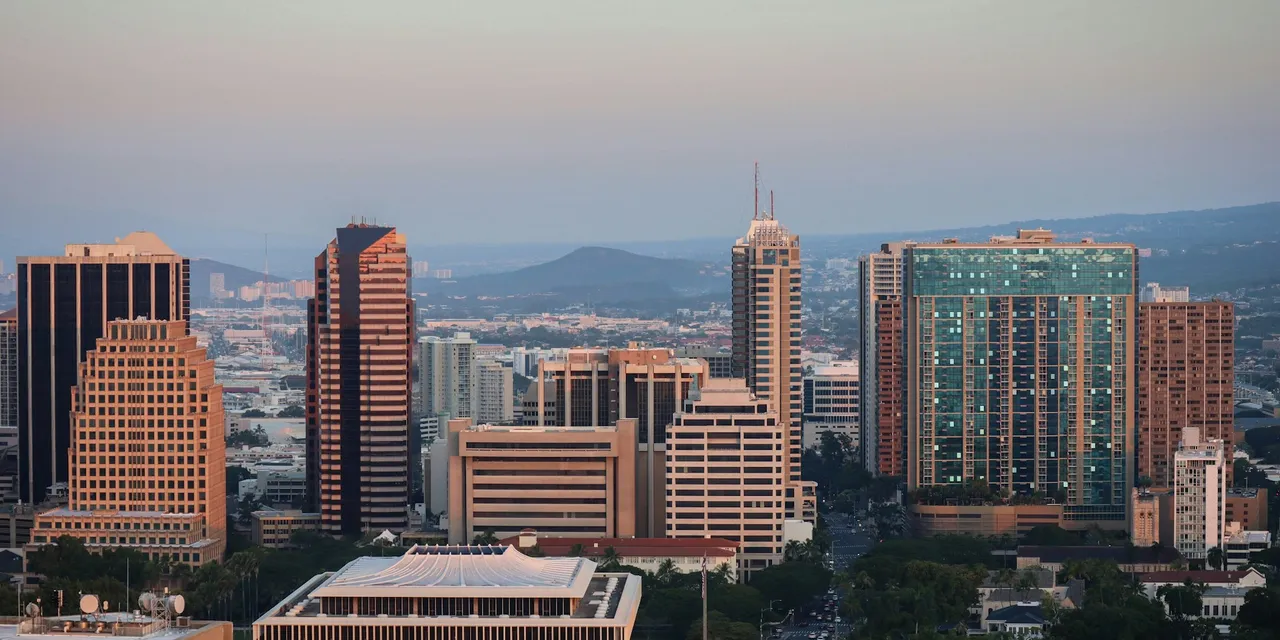
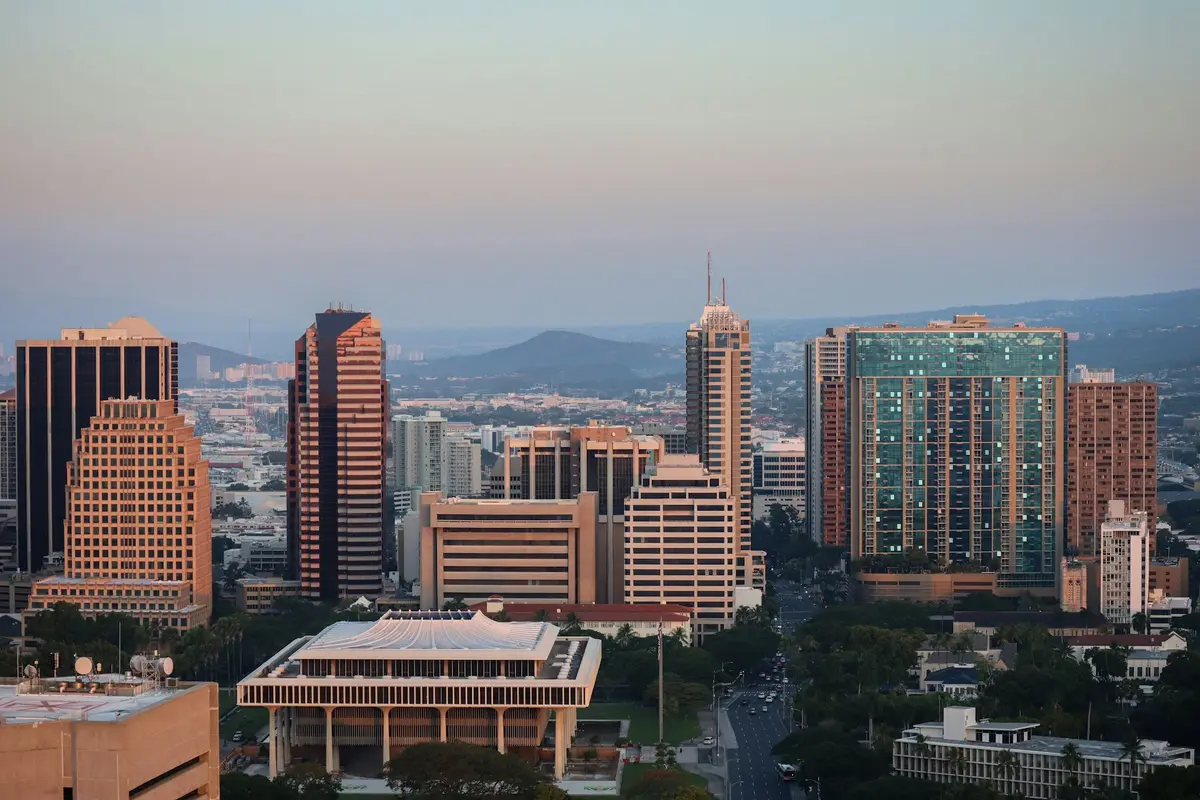
This constraint has produced a market defined almost entirely by vertical density. Howard Hughes Holdings Corp's Ward Village remains the dominant anchor in the Kakaako district, with Victoria Place completed in 2024 and The Park Ward Village under construction. Together these projects represent more than 1,200 units. Kamehameha Schools' Our Kakaako master plan has approximately 3,000 units in various entitlement phases. Castle & Cooke Hawaii continues its Kapolei and Koa Ridge developments with 3,500 residential units planned across 400 acres in the secondary urban centre.
The Absorption Problem
The pipeline looks robust on paper. The absorption tells a different story. Luxury condominium absorption rates slowed to 24 to 36 months for new towers by late 2024, up from 12 to 18 months during the 2018 to 2021 cycle. Inventory reached 14.2 months of supply, nearly double the 8.1 months recorded in 2022. With 30-year mortgage rates sitting between 6.8% and 7.2%, Howard Hughes Holdings reported a 35% cancellation rate on reservations during the 2023 rate spikes, according to the company's 2023 10-K risk factors filing.
Developers have responded by delaying launches of unsubsidised residential towers. The strategic pivot has moved toward rental-to-condo conversion and fee-simple rental product. This does not reduce the need for construction talent. It changes which talent is needed and when.
Transit-Oriented Development: Entitled but Unbuilt
The Skyline rail's Phase 2, connecting Aloha Stadium to Civic Center and Kakaako, sits at the centre of Honolulu's forward development thesis. The Honolulu Authority for Rapid Transportation estimates completion no earlier than 2031. Over 1,500 entitled units in the pipeline at Kapiolani Residences and the Victoria Ward Shops redevelopment depend on this infrastructure arriving on schedule.
The temporal mismatch is material. TOD projects have been entitled based on rail access that remains years away. Pre-construction activity at Kapiolani and Ala Moana stations will generate demand for development directors, project managers, and MEP engineers before the transit infrastructure justifies the density those projects assume. This means the next wave of hiring is front-loaded against a timeline that the broader construction market may not be able to support.
The Roles the Market Cannot Fill
The Building Industry Association of Hawaii reported a backlog of 2,400 skilled trade positions statewide as of 2024, with electricians, plumbers, and HVAC technicians representing 60% of unfilled roles. Construction unemployment in Hawaii stood at 3.2% in Q3 2024. That is full employment for skilled trades by any reasonable definition.
But the shortage is most acute not at the trade level. It is at the leadership and specialist levels where searches take the longest and the consequences of vacancy are highest.
Senior Project Managers for High-Rise Construction
The typical search duration for a Senior Project Manager with 10 or more years of high-rise experience in seismic zones runs 8 to 11 months in this market. Over 140 open positions were tracked across major contractors and developers through 2024. Major contractors report requiring 6 to 9 months to fill Senior PM roles for projects exceeding 200 feet, compared to 3 to 4 months for low-rise commercial work.
The bottleneck is specificity. A qualified candidate needs not only Type I construction experience but familiarity with Honolulu's union labour agreements with Laborers Local 368 and Carpenters Local 745. They need to have worked within the City's Department of Planning and Permitting entitlement process, which operates differently from any mainland equivalent. These are not skills that transfer seamlessly from a Portland or Denver high-rise project.
Senior PM compensation in Honolulu runs $135,000 to $165,000 base with a 15 to 20% performance bonus. That is lower than Seattle, where equivalent roles command $160,000 to $190,000 with no state income tax and 30% lower housing costs.
MEP Engineers: 40% Vacancy Rates After Six Months
Eighty-five or more openings for licensed Professional Engineers with high-rise residential MEP experience were recorded in 2024. Local firms report that 40% of MEP engineering roles remain vacant after 180 days. According to Pacific Business News, Nordic PCL and local MEP subcontractors including AECOM and R.M. Towill have engaged mainland recruitment firms, offering relocation packages averaging $35,000 to $50,000 for candidates willing to move from Seattle or Los Angeles.
The 75% passive candidate ratio among senior MEP engineers compounds the problem. Average tenure at current employers runs 7.2 years. These professionals are not looking. They are not on job boards. Reaching them requires direct identification and engagement rather than advertising and waiting.
Development Directors: The Regulatory Complexity Filter
At the VP level, 25 to 30 openings existed across master developers and institutional investors in 2024. The scarcity pattern here is driven less by compensation and more by the regulatory knowledge required. A Development Director in Honolulu must understand TOD zoning under HRS Chapter 206E, air rights negotiation in a market where vertical density is the only option, and compliance with the State Historic Preservation Division for Native Hawaiian burial sites.
This last requirement deserves particular attention. Virtually all Honolulu development projects require SHPD clearance and archaeological monitoring coordination due to the density of iwi kupuna sites across the urban core. Mishandling this process does not just create legal exposure. It creates community opposition that can stall projects for years. Approximately 85% of qualified Development Directors at VP level and above are passively employed, making proactive executive search the only reliable method for building a shortlist.
Why the Mainland Pipeline Does Not Work
Here is the original synthesis this data supports, and it is the analytical thread that connects the entire market challenge: Honolulu's construction talent shortage is not primarily a compensation problem or a volume problem. It is a jurisdictional knowledge problem. The regulatory, cultural, and physical constraints of building on Oahu create a talent requirement so specific that most of the mainland construction workforce, no matter how experienced, does not qualify without a multi-year adaptation period.
Consider the convergence of requirements for a single Senior Project Manager role. Post-tensioned slab expertise. Wind engineering for 180-plus mph hurricane design criteria. Shoring systems designed for extremely limited site footprints. FEMA Region IX floodproofing standards. SHPD burial site compliance. Local union agreements. HCDA affordable housing set-aside calculations with buy-out fees of $45 to $60 per square foot. Entitlement timelines of 18 to 24 months for condominium property regime approvals, compared to 6 to 9 months on the mainland.
No single one of these requirements is impossible to learn. Taken together, they create a learning curve measured in years, not months. A Senior PM recruited from Los Angeles will spend 12 to 18 months becoming effective in Honolulu's regulatory and cultural environment. That is time the project cannot afford, and it is time the employer is paying a premium salary for someone who is still learning the jurisdiction.
This is why the 8 to 11 month search duration for senior PMs is not simply a market inefficiency. It reflects a genuinely small pool of qualified professionals. And it is why the cost of a wrong appointment at this level is compounded by the replacement timeline.
Compensation: The Premium That Is Not Enough
Hawaii construction salaries carry a 25 to 35% premium over mainland U.S. averages. This premium is real. Honolulu's CPI stands at 180.2 against a U.S. average of 100, according to the Bureau of Labor Statistics. But the premium does not close the gap against the markets competing for the same talent.
At the Senior Project Manager level, Honolulu offers $135,000 to $165,000 base. Seattle offers $160,000 to $190,000 with no state income tax and a median home price of $825,000 versus Honolulu's $1,050,000. Las Vegas offers comparable salaries at $130,000 to $160,000 with 40% lower cost of living. California markets offer 20 to 25% salary premiums over Honolulu for sustainability and resilience engineers.
At the executive level, the numbers shift. VP of Construction roles command $210,000 to $285,000 base plus 25 to 35% bonus with equity participation at firms like Howard Hughes Holdings and Kamehameha Schools. VP of Real Estate Development at master developer level reaches $240,000 to $320,000 base plus long-term incentive plans tied to IRR hurdles. Chief Estimator and Preconstruction Director roles sit at $165,000 to $200,000 base plus project win bonuses.
The Golden Handcuffs and Lifestyle Arbitrage
Honolulu retains senior talent through two mechanisms that do not appear on a compensation comparison spreadsheet. The first is restricted equity in long-term development phases. Ward Village's remaining $2.1 billion in development costs through 2030 creates multi-year vesting cycles that are expensive to walk away from. The second is what the Hawaii Executive Recruiters Association's 2024 retention study describes as lifestyle arbitrage: senior executives accepting lower cash compensation for oceanfront access, school districts, and quality of life factors that do not have a mainland equivalent.
For hiring leaders trying to attract talent into this market, the implication is clear. A competitive offer requires more than salary benchmarking. It requires packaging the role within the lifestyle proposition and the long-term equity structure simultaneously. A cash-only offer to a senior PM in Seattle will lose to the economics of that city every time. An equity-loaded offer with relocation support and a realistic timeline for jurisdictional onboarding changes the calculation.
The Resilience Paradox: Building in Zones That May Become Uninsurable
One analytical tension in this market deserves direct attention from any hiring leader evaluating long-term career risk and project pipeline sustainability.
University of Hawaii research indicates that 3 feet of sea-level rise will render meaningful portions of Kakaako and Waikiki financially uninsurable by 2050. The Hawaii Climate Change Mitigation and Adaptation Commission has identified $5.4 billion in coastal adaptation needs statewide by 2100. Yet development entitlements in these exact zones accelerated 23% in 2023 to 2024 compared to the prior five-year average, according to HCDA data.
Current construction spending on resilience, including elevated structures and flood mitigation, represents less than 8% of total building permit value. Most development proceeds under existing flood risk designations rather than future projections. The City and County of Honolulu's $300 million resilience bond, approved in 2024, will fund coastal armouring and stormwater infrastructure and generate an estimated 800 to 1,200 construction jobs in heavy civil sectors through 2026. But this is a fraction of the $5.4 billion the state's own climate commission says is needed.
What This Means for Talent
The resilience gap is creating a new category of executive role that barely existed five years ago. Director of Sustainability and Resilience is emerging as a C-suite position responsible for climate risk disclosure under TCFD frameworks and green bond financing for institutional investors. Floodproofing expertise to FEMA Region IX standards, LEED-Hawaii compliance, and sea-level rise adaptive architecture are becoming baseline requirements rather than specialist qualifications.
For senior professionals evaluating opportunities in Honolulu, the long-term question is whether today's entitled projects will still be viable assets in 20 years. For employers, the question is whether they can attract senior leaders in technology and sustainability roles who understand both the engineering solutions and the financial disclosure requirements that institutional investors now demand. The professionals who sit at this intersection are among the scarcest in any U.S. construction market.
The Competitive Dynamics Reshaping Honolulu's Talent Pool
Honolulu does not compete against other island markets. It competes against Seattle, Las Vegas, and coastal California for the same professionals. Each competitor market offers a specific advantage that Honolulu must counter.
Seattle's South Lake Union and Bellevue TOD projects generate $2 billion or more in annual deal flow compared to approximately $600 million in Honolulu. For a Development Director or Senior PM, that means faster career progression, more diverse project exposure, and higher nominal compensation. Las Vegas draws superintendents and MEP coordinators through comparable salaries, 40% lower cost of living, and established diaspora community ties. According to the Hawaii Department of Business, Economic Development and Tourism, Hawaii workers frequently relocate to Las Vegas due to union reciprocity agreements between the Carpenters and Laborers locals.
California pulls sustainability officers and resilience engineers with 20 to 25% salary premiums and deeper venture capital markets for climate technology construction ventures.
The net effect is a talent outflow at precisely the seniority levels where Honolulu's project pipeline needs reinforcement. Senior professionals leave for higher pay and faster career progression elsewhere. Junior professionals trained at the University of Hawaii, which graduated 85 civil engineering undergraduates and 42 Master of Architecture candidates in 2024, provide a local entry-level pipeline. But that pipeline does not produce the 10-to-15-year experienced professionals the market needs today.
This is where conventional recruitment methods consistently fail. High-rise superintendents in this market are 80% passive. They move through union referral networks or direct competitor approaches, almost never through job postings. Development Directors are 85% passive. A search strategy that relies on advertising and inbound applications is structurally incapable of reaching the majority of the qualified candidate pool.
What Hiring Leaders in This Market Need to Do Differently
The combination of jurisdictional specificity, geographic isolation, compensation disadvantages against mainland competitors, and overwhelmingly passive candidate pools means that Honolulu's construction talent market requires a fundamentally different search methodology from what works in Seattle or Los Angeles.
Three adjustments separate organisations that fill critical roles from those that wait 8 to 11 months and still compromise on candidate quality.
First, relocation packages must be structured as investment, not expense. The $35,000 to $50,000 packages currently offered for MEP engineers are a starting point. For VP-level Development Directors and Senior PMs, the package must include jurisdictional onboarding support: introductions to the HCDA regulatory framework, cultural compliance training for SHPD requirements, and a realistic 12-to-18-month ramp period built into performance expectations. Employers who treat mainland recruits as immediately productive will face early attrition when the reality of the transition becomes clear.
Second, equity and long-term incentive structures must be front-loaded in the offer conversation. The lifestyle arbitrage that retains existing talent is not a factor for someone who has not yet experienced it. What moves a passive candidate in Seattle is a financial structure that cannot be replicated by their current employer. Restricted equity in a multi-year development phase, tied to project milestones they can influence, creates a different kind of gravity than a signing bonus.
Third, search methodology must be built for a passive market. With 75 to 85% of qualified candidates at senior and executive levels not actively seeking new roles, talent mapping and direct identification are not optional enhancements. They are the primary search channel. KiTalent's approach to executive search in real estate and construction is designed for exactly this dynamic: markets where the candidates you need are employed, satisfied, and invisible to job boards. Using AI-enhanced talent mapping to identify and engage these professionals directly, KiTalent delivers interview-ready candidates within 7 to 10 days, with a 96% one-year retention rate for placed candidates.
For organisations competing for senior construction and development leadership in Honolulu, where a single VP search can stall for nearly a year while entitled projects sit idle, speak with our executive search team about how we approach this market. The pay-per-interview model means you meet qualified candidates before committing a retainer, and the weekly pipeline reporting ensures you see exactly how the market is responding.
Frequently Asked Questions
Why is it so hard to hire senior project managers in Honolulu?
Honolulu's high-rise construction market demands a combination of technical skills and jurisdictional knowledge that few mainland professionals possess. Candidates need Type I construction experience, familiarity with local union agreements, HCDA entitlement processes, and SHPD cultural compliance for Native Hawaiian burial sites. The qualified pool is small, over 80% passive, and search timelines average 8 to 11 months. Direct headhunting methods outperform job advertising in this market because most qualified candidates are not actively looking and do not respond to postings.
What do construction executives earn in Honolulu compared to mainland markets?
Hawaii construction salaries carry a 25 to 35% premium over mainland averages. Senior Project Managers earn $135,000 to $165,000 base. VP of Construction roles reach $210,000 to $285,000 plus equity participation. VP of Real Estate Development at master developers commands $240,000 to $320,000 plus long-term incentives. However, Seattle offers 15 to 20% higher nominal pay with no state income tax and lower housing costs. Honolulu compensates through lifestyle factors and restricted equity in multi-year development phases that create retention through vesting cycles.
What is driving construction demand in Honolulu in 2026?
Three forces converge. Ward Village and Our Kakaako master plans continue delivering vertical residential density in the Kakaako district. The Skyline rail Phase 2 is generating pre-construction activity at Kapiolani and Ala Moana TOD sites with 1,500 or more entitled units. And the City's $300 million resilience bond is funding coastal armouring and stormwater projects that will generate 800 to 1,200 heavy civil construction jobs. Developers are pivoting from luxury condominiums toward rental and conversion strategies in response to softer absorption rates.
How does Honolulu's regulatory environment affect construction hiring?
Entitlement timelines in Honolulu average 18 to 24 months for condominium approvals and SHPD clearances, compared to 6 to 9 months in comparable mainland markets. HCDA requires 20% affordable housing set-asides with buy-out fees adding $2.5 million to $4 million per tower. These complexities mean employers need executives with specific local regulatory expertise, narrowing the qualified candidate pool well beyond what technical skills alone would suggest.
What construction roles are most affected by climate resilience requirements?
Director of Sustainability and Resilience is the fastest-emerging executive role, requiring expertise in TCFD climate risk disclosure, green bond financing, FEMA Region IX floodproofing, and sea-level rise adaptive architecture. With $19.3 billion in Honolulu coastal real estate within the 3-foot sea-level rise exposure zone and resilience spending at less than 8% of total permit value, demand for these professionals will intensify as institutional investors and insurers impose stricter climate risk standards on development projects.
Are most qualified construction professionals in Honolulu open to new roles?
The opposite. At senior and executive levels, 75 to 85% of qualified candidates are passively employed and not actively seeking new positions. High-rise superintendents typically move only through union referral networks or direct approaches from competitors. Development Directors at VP level show an 85% passive ratio. This means organisations relying on job postings and inbound applications are reaching at most 15 to 25% of the viable candidate pool. KiTalent's AI-enhanced direct search methodology is built specifically to identify and engage the passive majority that traditional methods miss.