Jeddah's Pilgrimage Hospitality Boom Is Building Faster Than It Can Hire: Inside the Leadership Gap Threatening Vision 2030
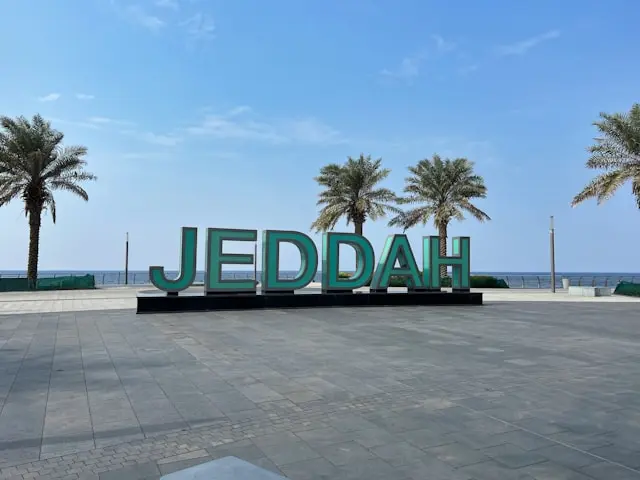
Jeddah is adding 7,200 hotel rooms to its pilgrimage hospitality inventory between 2025 and 2027. That is a 39% increase in capacity across a city that already serves as the aviation gateway for roughly 65% of international Umrah arrivals. Capital is flowing. Construction timelines are holding. The physical infrastructure is materialising on schedule. The leaders required to operate it are not.
The mismatch between Jeddah's built capacity and its available senior hospitality talent has become the defining constraint on the city's pilgrimage services sector. A General Manager search in Jeddah now averages 98 days to fill. That is 53% longer than the equivalent search in Riyadh. International hotel chains entering the market have resorted to systematic recruitment from domestic operators, offering premiums of 25% to 30% above prevailing rates. The result is not a growing talent pool. It is the same pool, circulating faster and costing more with each rotation.
What follows is a structured analysis of Jeddah's hospitality and travel services market as it stands in 2026: the forces reshaping it, the employers competing within it, the specific roles where supply has fallen furthest behind demand, and what senior hiring leaders need to understand before committing to a search in one of the most operationally complex hospitality markets in the world.
The Vision 2030 Acceleration and What It Demands
Saudi Arabia's Vision 2030 Pilgrimage Experience Program targets 30 million annual Umrah pilgrims by the end of the decade. Reaching that figure from the 13.5 million international pilgrims facilitated in 2024 implies a compound annual growth rate of 12% to 14%. For Jeddah, which captures the majority of international arrivals through King Abdulaziz International Airport, that trajectory means absorbing an additional two to three million visitors annually across every link in the service chain: aviation, ground transport, accommodation, and pilgrimage logistics.
The infrastructure investment is matching the ambition. KAIA's Phase 2 expansion will increase processing capacity to 43 million passengers by mid-2026, with dedicated Hajj terminal renovations completing before the 2026 pilgrimage season. The Haramain High Speed Rail, which transported 15.8 million passengers between Jeddah, Mecca, and Medina in 2023, is already operating at 85% capacity utilisation during Ramadan. Hotel supply is expanding by 3,800 keys in 2026 alone, primarily in the luxury and upper-upscale segments.
Where Capital Outpaces Human Capital
Every one of these expansion projects generates demand for operational leadership. A new luxury hotel property requires a General Manager, a Director of Revenue Strategy, a Director of Sales and Marketing, and typically a dedicated operations lead with pilgrimage logistics expertise. At the current pace of hotel openings, Jeddah needs to fill approximately 40 to 50 senior hospitality leadership positions annually through 2027 just to staff new properties. That figure does not account for replacement hiring driven by poaching, retirement, or relocation.
The candidate pool has not expanded at anything close to this rate. The hidden challenge facing hiring executives in this market is not that qualified leaders do not exist. It is that 75% to 80% of qualified hospitality executives in Jeddah are currently employed and not actively seeking new roles, according to analysis from Korn Ferry and Boyden covering the Middle East hospitality sector. Their average tenure at current employers runs six to eight years. They hold regulatory relationships and seasonal operational knowledge that cannot be replicated through training. Moving them requires more than money. It requires a proposition they cannot replicate in their current role.
This is the core tension shaping Jeddah's pilgrimage hospitality market in 2026: capital has moved faster than human capital can follow. The hotels are being built. The airport is expanding. The rail is running. But the leaders who make these assets productive during a 48-hour Hajj arrival compression or a Ramadan peak are not being produced at the pace the sector requires.
The Employers Driving Demand
Jeddah's pilgrimage hospitality sector is not a single market. It is three overlapping talent ecosystems, each with distinct employers, compensation structures, and hiring dynamics.
International Hotel Chains
Accor operates the largest international portfolio in Jeddah, with 12 properties and 3,200 rooms under the Raffles, Fairmont, and Pullman brands. Hilton manages six properties with 1,800 rooms and has three additional projects targeting 2026 opening. Marriott International operates five properties including the Ritz-Carlton Jeddah, employing 950 staff across its Jeddah portfolio. These operators have the deepest compensation budgets and the strongest employer brand recognition among expatriate hospitality professionals. They are also the most aggressive recruiters of proven General Managers from domestic competitors.
Domestic Conglomerates
Dur Hospitality, publicly listed on Tadawul, operates 16 properties in Jeddah under the Makarem and Diyafah brands, managing 2,400 rooms with 1,800 hospitality professionals. Taiba Investments holds eight properties across Jeddah and Mecca with 1,200 staff. These groups possess deep institutional knowledge of pilgrimage operations and regulatory relationships with the Ministry of Hajj and Umrah. They are also the primary targets of international chain poaching, losing experienced leaders to competitors who can offer 25% to 30% salary premiums plus housing allowances.
Integrated Travel Services
Seera Group, formerly Al Tayyar Travel Group, is Saudi Arabia's largest integrated travel services provider. It employs approximately 5,800 staff, with 1,200 based in Jeddah operations. Seera controls considerable market share in Umrah package distribution and represents the intersection of technology, logistics, and pilgrimage expertise. The Al-Hamra district alone hosts approximately 340 licensed travel agencies, forming the densest cluster of pilgrimage service providers in the country.
The competition among these three employer categories is not symmetrical. International chains recruit from domestic groups. Domestic groups recruit from travel services firms. Travel services firms recruit from each other. And all three compete with Riyadh's giga-project developments, which offer Saudi nationals 10% to 15% salary premiums plus career progression in mixed-use developments rather than seasonal pilgrimage properties. The talent does not flow into the market from outside. It circulates within a constrained pool and leaks steadily toward competitors in Dubai and Riyadh.
Why Dubai and Riyadh Are Winning the Same Candidates
The geographic competition for Jeddah's hospitality leadership talent is more severe than aggregate salary data suggests. Understanding why requires looking at the net compensation picture rather than the gross figures.
Dubai remains the primary competitor for international hospitality executives across the Gulf. The UAE offers zero personal income tax. Saudi Arabia applies a 20% rate on income exceeding SAR 1 million annually. For a General Manager earning SAR 1.2 million in base salary, this tax differential alone reduces Jeddah's effective compensation by SAR 40,000 or more. According to Deloitte's Middle East Hospitality Review, Dubai-based operators can offer net compensation 25% to 35% higher than Jeddah gross packages for equivalent roles. Add established international school infrastructure, a more permissive social environment for expatriate families, and a deeper pool of peer-level professional networks, and Dubai's pull on senior talent becomes systemic rather than transactional.
Riyadh presents a different threat. The competition is not for expatriate executives but for Saudi national hospitality management talent. The Red Sea Global, Diriyah Gate, and Qiddiya developments are hiring at scale. They offer career progression in year-round luxury hospitality, free from the acute seasonality that defines Jeddah's pilgrimage market. A Saudi national revenue manager in Jeddah faces a choice: remain in a role where 65% of annual revenue concentrates in two quarters, or move to a Riyadh-based development with a more stable operational rhythm and a 10% to 15% salary increase.
Makkah competes for a narrower but critical segment: religious tourism-specific expertise, including Mutawwif services and religious hospitality management. Makkah properties offer proximity to the Haram and the spiritual significance that draws a subset of professionals. But they typically compensate 20% below Jeddah for equivalent technical roles, reflecting lower revenue management complexity in a market driven by non-discretionary demand. Makkah is a competitor for mission-driven talent, not compensation-driven talent.
The implication for hiring executives in Jeddah is straightforward. Any executive search in this market must account for the fact that the strongest candidates have three viable alternatives, each with a distinct advantage that Jeddah cannot easily match: Dubai's tax efficiency, Riyadh's career trajectory, and Makkah's religious significance. A Jeddah-based offer must compensate for all three simultaneously.
The Saudization Paradox in Pilgrimage Hospitality
The Nitaqat programme mandates 100% Saudization for travel agency customer-facing roles and 25% to 30% Saudi national quotas for hotel management positions. The Ministry of Human Resources targets 70% Saudization in customer-facing hospitality roles by 2030. These targets are clear. The supply of qualified Saudi professionals to meet them is not.
Local hospitality graduates currently meet approximately 40% of the sector's demand for Saudi national staff, according to Ministry of Human Resources data. The gap is not simply numerical. It is experiential. The specialised knowledge required for international pilgrimage logistics sits at the intersection of regulatory compliance across 165 nationalities, multilingual service delivery in Arabic, English, Urdu, and Indonesian, cross-border payment processing, and crisis management during extreme demand compression. This knowledge resides predominantly with long-tenured expatriate professionals who have accumulated it over decades of seasonal operations.
Here is the paradox. Saudization policy restricts the visa pathways and quota allocations available to the expatriate professionals who hold exactly the expertise the sector cannot yet produce domestically. The policy is designed to accelerate national workforce participation. In pilgrimage hospitality, it has the unintended effect of constraining the supply of operational leadership at the precise moment when infrastructure expansion demands more of it.
This is not a criticism of the policy objective. It is an observation about timing. The infrastructure is expanding on a 2026 to 2030 timeline. The pipeline of Saudi nationals with ten years of pilgrimage operations experience does not exist yet and cannot be accelerated to match. The market will therefore depend on a shrinking expatriate talent pool for critical operational roles for at least the next three to four years, during which time competition for that pool from Dubai, Riyadh, and newly opening properties within Jeddah itself will intensify.
For hiring leaders, this creates a specific strategic question. How do you build Saudization compliance into a senior leadership team when the roles most critical to operational delivery require expertise that the Saudi talent pipeline has not yet produced in sufficient depth? The answer is not to choose between compliance and capability. It is to structure leadership teams with deliberate knowledge transfer pathways, pairing experienced expatriate operators with Saudi nationals in deputy roles designed to accelerate competence accumulation rather than simply filling quota positions.
Compensation in Jeddah: What the Numbers Actually Show
Executive compensation in Jeddah's pilgrimage hospitality sector tells a more nuanced story than headline salary figures suggest. The data below reflects 2024 market rates as reported in the Hays GCC Salary Guide and Michael Page Saudi Arabia surveys.
A General Manager at a five-star international brand property in Jeddah earns a base salary of SAR 55,000 to SAR 85,000 per month, with total compensation including housing and transport reaching SAR 900,000 to SAR 1,400,000 annually. A Director of Sales and Marketing with multi-property responsibility commands SAR 35,000 to SAR 55,000 monthly base, with bonus potential of 20% to 30% of base. A Revenue Management Director earns SAR 40,000 to SAR 60,000 monthly base. A Pilgrimage Operations Director, the most specialised role in the market, commands SAR 45,000 to SAR 70,000 monthly base, carrying a 15% to 20% premium above standard hotel operations roles due to regulatory complexity and multilingual requirements.
The Jeddah Premium for Pilgrimage Expertise
The compensation data contains an apparent tension that resolves into one of the market's most important dynamics. Jeddah hospitality compensation typically trails Riyadh by 5% to 10% for equivalent roles. Yet specialised pilgrimage expertise commands a 10% to 15% premium in Jeddah specifically.
This means the market is bifurcating. Generic hospitality management talent is cheaper in Jeddah than in Riyadh. Pilgrimage-specific talent is more expensive. A revenue manager with seasonal pricing expertise and regulatory relationships with the Ministry of Hajj and Umrah is worth more in Jeddah than a revenue manager with equivalent years of experience but no pilgrimage context. The premium reflects scarcity, not complexity. There are simply fewer people who have done this specific work.
International chains entering the market have responded by offering housing allowances valued at SAR 180,000 to SAR 240,000 annually on top of salary premiums. These packages are designed to overcome the Dubai tax advantage for expatriate candidates. For Saudi national candidates, the proposition must emphasise career trajectory, mission alignment, and the unique operational scale of pilgrimage hospitality. A role managing 2,400 rooms during Hajj arrival compression offers a professional challenge that no other hospitality market in the world can replicate. That is a genuine differentiator, but only if the hiring organisation can articulate it before the candidate accepts a competing offer from Riyadh.
The Nusuk Platform and the Technology Reckoning
The Ministry of Hajj and Umrah's Nusuk platform, fully implemented in 2024, has fundamentally altered the operational requirements for every licensed travel agency and hospitality provider in Jeddah. The platform integrates booking systems with Ministry databases, requiring real-time data synchronisation across pilgrimage service providers. By mid-2026, all licensed hospitality providers will be mandated to integrate AI-driven dynamic pricing capabilities with the Nusuk system.
This mandate is creating a new category of talent demand that did not exist three years ago. Traditional travel agencies in the Al-Hamra district, many of which have operated for decades on relationship-based booking models, now require technology infrastructure investment and the leadership capable of managing it. The Director of Pilgrimage Operations role has evolved from a logistics and regulatory compliance function into a technology-enabled operations role requiring fluency in digital platform management, API integration, and data-driven capacity planning.
The talent gap here is qualitative, not quantitative. It is not a shortage of warm bodies. It is a shortage of professionals who combine deep pilgrimage operational knowledge with digital transformation competence. These are two skill sets that have historically developed in entirely separate career tracks. A technology leader from Riyadh's fintech sector understands API architecture but not Hajj arrival compression. A veteran pilgrimage operations director understands the 48-hour surge management but not machine learning-driven pricing. The market needs people who hold both, and the number of such people in Saudi Arabia, or anywhere, is vanishingly small.
This is the synthesis that the aggregate data obscures. The investment in physical infrastructure, airport terminals, hotel rooms, rail capacity, and digital platforms has not reduced the sector's dependence on human capital. It has replaced one category of human capital with another that does not yet exist in sufficient numbers. Capital moved faster than competence could follow. Every new hotel opening, every Nusuk integration deadline, and every Vision 2030 milestone widens the gap between what the market has built and what it can staff.
What This Means for Hiring Leaders in 2026
The pilgrimage hospitality sector in Jeddah presents a hiring environment where conventional methods reach a diminishing share of viable candidates. Job postings and inbound applications access the approximately 20% to 25% of qualified professionals who are actively looking. The remaining 75% to 80% are passive candidates embedded in current roles, holding regulatory relationships and seasonal knowledge that make them reluctant to move without a highly specific proposition.
The 98-day average time-to-fill for senior positions reflects the structural reality of this market. Searches that rely on advertised vacancies and reactive applications consistently run longer and produce weaker shortlists. The Seera Group's experience is illustrative: a seven-month search for a Director of Pilgrimage Operations concluded not with a hire at the required seniority but with a restructuring of the role into two junior positions. According to LinkedIn hiring data and industry pattern analysis by Hays, this outcome is typical of the sector's most specialised roles.
Similarly, Dur Hospitality's decision to relocate its revenue management division from Jeddah to Riyadh, despite Jeddah being its operational hub for pilgrimage services, underscores the depth of the local talent gap. According to the company's Tadawul disclosure from March 2023, this was a structural adaptation to access a deeper pool of Saudi national analytics talent. When an employer moves the function rather than filling the role, the market is sending an unmistakable signal.
For organisations competing for senior hospitality leadership in Jeddah, where the strongest candidates are passive, the talent mapping required is multi-market, and the competition from Dubai and Riyadh erodes every shortlist, the difference between a successful search and a failed one comes down to method. KiTalent's AI-enhanced direct headhunting methodology is built precisely for markets like this: high passive-candidate ratios, compressed timelines around seasonal peaks, and candidate pools that span multiple geographies and regulatory environments. With a 96% one-year retention rate and interview-ready candidates delivered within 7 to 10 days, KiTalent's approach reaches the candidates that job advertising and traditional recruitment cannot access.
For hiring executives preparing to staff new properties, fill pilgrimage operations leadership, or build revenue management capability ahead of the 2026 Hajj season, start a conversation with our executive search team about how we approach this market and the specific roles you need to fill.
Frequently Asked Questions
What is the average salary for a hotel General Manager in Jeddah in 2026?
A General Manager at a five-star international brand hotel in Jeddah earns a base salary of SAR 55,000 to SAR 85,000 per month. Total annual compensation, including housing allowances and transport, ranges from SAR 900,000 to SAR 1,400,000. These figures reflect 2024 market data from the Hays GCC Salary Guide and have continued to rise through 2025 and into 2026 as international chains compete for proven operators. The pilgrimage segment commands premiums above standard hospitality due to seasonal operational complexity and regulatory requirements that narrow the qualified candidate pool.
Why is it so hard to hire senior hospitality leaders in Jeddah?
Three forces converge to make senior hiring in Jeddah exceptionally difficult. First, 75% to 80% of qualified executives are passive candidates not actively seeking roles. Second, Dubai offers 25% to 35% higher net compensation through its zero-tax environment, pulling expatriate talent away. Third, Saudization quotas constrain visa pathways for the expatriate professionals who hold the most specialised pilgrimage operations expertise. The result is a market where the average time-to-fill for a senior position runs 98 days, compared to 64 days in Riyadh. KiTalent's direct search methodology is designed to reach passive candidates in precisely this type of constrained market.
How does Saudization affect hospitality hiring in Jeddah?
The Nitaqat programme mandates 100% Saudization for travel agency customer-facing roles and 25% to 30% Saudi national quotas for hotel management. However, local hospitality graduates currently meet only about 40% of qualified Saudi national demand. Specialised pilgrimage operations expertise, requiring multilingual fluency and cross-border regulatory knowledge, resides largely with long-tenured expatriate professionals. Hiring leaders must design leadership teams that pair experienced expatriates with Saudi nationals in structured knowledge transfer roles to satisfy both compliance and operational capability.
What roles are hardest to fill in Jeddah's pilgrimage hospitality sector?
The most difficult roles combine pilgrimage-specific operational knowledge with a second discipline. Pilgrimage Operations Directors who also understand digital platform integration are the scarcest category. Revenue Management Directors with seasonal pricing expertise rank second, as evidenced by Dur Hospitality's relocation of its revenue management function to Riyadh to access talent. Multilingual General Managers fluent in Arabic, English, and either Urdu or Indonesian are the third most constrained segment. These roles require proactive pipeline development rather than reactive job advertising.
How does Jeddah's hospitality compensation compare to Dubai?
Jeddah gross compensation for hospitality executives is nominally competitive with Dubai. However, the net compensation picture diverges materially. Dubai's zero personal income tax means a General Manager earning an equivalent gross salary retains 25% to 35% more take-home pay. Jeddah employers compensate through housing allowances of SAR 180,000 to SAR 240,000 annually and pilgrimage-expertise premiums of 15% to 20% above standard hospitality roles. For employers competing for expatriate talent, the total package must address the tax differential explicitly to remain competitive.
What is the Nusuk platform and how does it affect hospitality hiring?
Nusuk is the Ministry of Hajj and Umrah's integrated digital pilgrimage management system, fully implemented in 2024. It requires all licensed travel agencies and hospitality providers to synchronise booking systems with Ministry databases. By mid-2026, providers must integrate AI-driven dynamic pricing capabilities. This mandate has transformed the Pilgrimage Operations Director role from a logistics function into a technology-enabled leadership position, creating demand for professionals who combine deep pilgrimage knowledge with digital transformation competence. The number of candidates holding both skill sets remains extremely limited.