Jerusalem's Housing Deficit Is Growing. The Workforce to Close It Does Not Exist in Sufficient Numbers
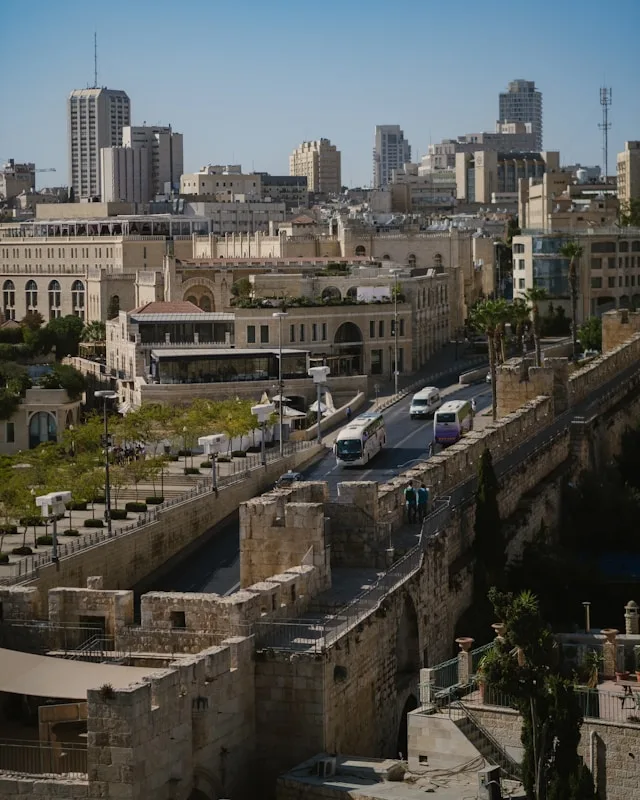
Jerusalem requires roughly 8,000 new housing units every year to keep pace with population growth. In 2025, the city delivered fewer than 3,500. The cumulative deficit now exceeds 20,000 units, and every indicator suggests the gap will widen before it narrows. New-build apartment prices in central neighbourhoods reached ₪3.4 million by late 2024, a 6.8% year-on-year increase that shows no sign of moderating.
The conventional explanation for this shortfall points to land scarcity and planning delays. Both are real. Nearly half of Jerusalem's municipal territory is unbuildable, and the average timeline from land acquisition to construction in the historic basin runs 8.3 years, almost double the national average. But these constraints have been present for decades. What has changed in the past three years is the collapse of the labour pipeline at precisely the seniority levels where construction projects succeed or fail. The city's most critical executive and specialist roles in real estate and construction now sit vacant for months, sometimes exceeding a year, because the professionals qualified to fill them are too few, too entrenched in current projects, and increasingly drawn to markets that pay more and deliver faster.
What follows is a ground-level analysis of why Jerusalem's construction sector cannot hire its way out of a deficit that is simultaneously a housing crisis, an infrastructure bottleneck, and a talent emergency. It maps where the shortages are most acute, what is driving them, what they cost, and what organisations operating in this market need to do differently to secure the leadership their projects demand.
A City Building at Half Capacity
Jerusalem's 2.4% annual population growth rate is the highest among Israel's major cities. That growth is not projected. It is measured, year after year, driven primarily by the city's ultra-Orthodox community and sustained natural increase across all demographic segments. The Jerusalem Institute for Policy Research has tracked this trajectory for over a decade, and the housing arithmetic is straightforward: at current growth rates, the city needs roughly 8,000 new units annually just to prevent prices from accelerating further.
The supply side cannot keep pace. Construction starts in 2023 reached only 3,048 units. Preliminary data for 2025 pointed to a range of 3,200 to 3,500. Even with the Ministry of Housing's designation of Jerusalem as a "National Priority Zone A," targeting 5,000 annual starts by 2026, industry consensus from the Israel Builders Association places the realistic ceiling at approximately 4,200 units given current labour constraints.
The character of what does get built has shifted. Urban renewal now dominates new residential delivery. Sixty-two per cent of new residential square footage in 2025 derived from Pinui-Binui evacuation-reconstruction and TAMA 38 structural strengthening projects, up from 48% in 2020. Greenfield development, once the primary source of new supply, has become the minority of the pipeline.
This shift has profound implications for the talent market. Urban renewal is not conventional construction. It requires negotiation with existing tenants, coordination with antiquities authorities, structural engineering for seismic retrofitting, and project management expertise that spans regulatory, community, and technical domains simultaneously. The workforce that built Jerusalem's peripheral neighbourhoods in the 1990s and 2000s does not possess these skills. The workforce that does is far smaller than the pipeline demands.
The Three Roles Jerusalem Cannot Fill
The Jerusalem metropolitan area shows 8,400 unfilled construction positions across all skill levels, with a 34% gap specifically in technical and managerial roles. But three categories stand out for the severity of their scarcity and the damage their absence inflicts on project timelines.
Urban Renewal Specialists
A senior project manager for a Pinui-Binui scheme must combine construction management credentials with tenant relocation negotiation skills, regulatory expertise across multiple municipal committees, and the patience to manage a process that can take three to five years from initiation to completion. These professionals do not come off an assembly line.
The market pattern is stark. According to the Diamond Consultants Construction Sector Survey for 2024, a senior project management role for a 180-unit Pinui-Binui project in the Rehavia district remained vacant for 11 months before the developer secured a candidate from a competing Tel Aviv firm. The hire required a 28% salary premium and relocation assistance. Three retained search firms worked the assignment sequentially before a placement was made. That pattern is not an outlier. It is typical of how senior urban renewal roles are filled in this city.
BIM Managers with Archaeological Coordination Experience
Any excavation exceeding two metres depth in 70% of Jerusalem's developable land triggers mandatory supervision by the Israel Antiquities Authority. This is not a theoretical constraint. It affects the majority of active construction sites in the city and adds an average of 18 to 24 months to pre-construction phases.
Managing this interface requires a BIM specialist who understands both digital construction modelling and the protocols of salvage archaeology. The combination is rare. BIM managers with Jerusalem-specific archaeological coordination experience show a 70% passive candidate ratio and an average tenure of 4.2 years, according to ManpowerGroup Israel's Tech Construction Report. The switching costs are high because the complexity of the work creates deep project-specific knowledge that does not transfer easily.
Archaeological Site Managers
The scarcest role in Jerusalem's construction sector is also its most unusual. Archaeological Site Managers require both civil engineering degrees and Israel Antiquities Authority certification. According to the Israel Builders Association, only 43 licensed professionals serve the entire Jerusalem district. Contractors on the Green Line light rail extension report 100% annual turnover in these positions, with roles typically remaining unfilled for four to six months.
When a single licensed profession has 43 practitioners serving a district with 8,400 unfilled construction positions, the mathematics do not resolve through conventional recruitment. One hundred per cent of hiring for these roles occurs through direct headhunting, because there is no active candidate pool to draw from.
The Archaeology Bottleneck and What It Really Costs
The regulatory requirement for antiquities supervision is often cited as a planning constraint. It is more accurately understood as a talent constraint wearing a regulatory disguise.
The direct financial cost is measurable. Salvage archaeology fees add ₪2.5 to ₪4 million per project, according to a Calcalist investigation published in 2024. But the indirect cost is larger. Each month of delay on a project carrying a 4.5% interest rate increases developer carrying costs materially. The Bank of Israel's Financial Stability Report for 2024 documented a 22% increase in carrying costs for long-cycle urban renewal projects since rates rose.
The 18 to 24 months that archaeological salvage operations add to project timelines are not simply a scheduling inconvenience. They compound every other constraint: the bi-monthly meeting schedule of municipal zoning committees, the 8-month backlog for initial hearings, and the 18 to 24 distinct permits required for residential high-rises. When a project's pre-construction phase stretches to 8.3 years, the professionals assigned to it are locked in place. They cannot move to the next project. They cannot be recruited elsewhere.
This is the mechanism that makes Jerusalem's talent shortage self-reinforcing. The regulatory environment does not merely slow construction. It traps qualified professionals in extended project cycles, removing them from the available talent pool for years at a time. A VP Development overseeing land acquisition and planning approval in Jerusalem is typically entrenched in a three-to-five-year cycle. The ratio of vacancies to qualified candidates for VP Development roles is 7:1.
The original analytical claim this data supports is not that Jerusalem has a talent shortage. Every growing city has a talent shortage. It is that Jerusalem's regulatory architecture, specifically the archaeology requirement, functions as a talent multiplier on the supply side. It does not merely fail to produce enough buildings. It consumes the professionals who would otherwise be available to build them, locking each qualified individual into longer project timelines than any comparable Israeli market requires. Capital and demand are present. The constraint is not investment. It is the finite number of humans licensed and experienced enough to convert that investment into built space under Jerusalem's unique conditions.
Where the Talent Goes Instead
Jerusalem does not compete for construction talent in isolation. Three markets actively draw candidates away, each offering a distinct value proposition that Jerusalem struggles to match.
Tel Aviv: Speed, Pay, and Cultural Fit
Tel Aviv offers 25 to 35% compensation premiums for equivalent VP Development and Project Director roles. But the salary differential understates the gap. Tel Aviv's construction projects operate on more predictable timelines because they rarely encounter archaeological constraints. A project manager who has spent three years navigating the antiquities process in Jerusalem can move to Tel Aviv and manage two projects in the same period.
The cultural dimension matters as much as the financial one. Senior construction management professionals in Israel are predominantly secular. Tel Aviv's secular workplace culture and lifestyle attract this demographic more readily than Jerusalem's religious character and Shabbat work restrictions. For dual-career couples, the comparison is even starker: Tel Aviv's high-tech economy offers employment for spouses in ways Jerusalem cannot match, driving out-migration of senior construction managers aged 35 to 45.
The Negev: Lower Cost, Faster Approvals
Be'er Sheva and the southern district compete through government-backed housing subsidies and accelerated planning approvals. The "Capital of the Negev" initiative offers construction workers a 15% lower cost of living that offsets salaries approximately 10% below Jerusalem's rates. The net proposition is roughly equivalent on compensation, with materially easier working conditions.
The Gulf: Tax-Free Multiples
Post-Abraham Accords, Emirati developers including Emaar and Aldar Properties have been actively recruiting Israeli construction executives for mega-projects exceeding $5 billion in scale. According to reporting by Globes in 2024, these roles offer tax-free compensation packages ranging from $180,000 to $350,000 annually. At the upper end, that represents two to three times Jerusalem market rates for candidates with high-rise and luxury hospitality experience.
The combined effect of these three competitors is a permanent drain on Jerusalem's senior construction talent. The professionals most capable of managing the city's complex regulatory environment are precisely those most attractive to markets that do not impose those complexities.
Compensation in Context: What Jerusalem's Construction Leaders Earn
Understanding why talent leaves requires understanding what talent earns. The compensation structure for Jerusalem's construction executives reflects the market's constraints, but it does not compensate for them sufficiently to prevent attrition.
At the senior specialist level, a Senior Project Manager in urban renewal commands ₪480,000 to ₪720,000 annually, with one to two months' performance bonus. A BIM Manager with archaeological coordination expertise earns ₪360,000 to ₪540,000, supplemented by project completion bonuses. These figures are sourced from the Ethosia Recruitment Salary Survey and ManpowerGroup Israel's 2024 Construction Guide respectively.
At the executive level, VP Development roles in Jerusalem carry compensation of ₪720,000 to ₪1,200,000 with 10 to 20% annual bonus and equity participation. Head of Planning and Regulation positions range from ₪600,000 to ₪960,000 with regulatory milestone bonuses. Chief Construction Managers sit at ₪540,000 to ₪840,000 with safety and timeline achievement bonuses.
These figures are competitive within Jerusalem. They are not competitive against Tel Aviv or Dubai. A VP Development earning ₪1,000,000 in Jerusalem could earn ₪1,300,000 or more for a comparable role in Tel Aviv, with a shorter project cycle and a less constrained working environment. The same professional could earn the equivalent of ₪1,800,000 or more tax-free in the Gulf. For hiring leaders trying to negotiate executive compensation in this environment, the challenge is not benchmarking against local peers. It is benchmarking against a global market for a skill set that travels.
The skills that command the highest premiums are the ones most specific to Jerusalem: regulatory navigation across the Israel Land Authority lease conversion process, Jerusalem Municipality zoning committees, and Committee for Planning and Building appeals. Archaeological coordination experience with the Israel Antiquities Authority. Arabic proficiency for Palestinian labour force management. English fluency for international investor relations, particularly with Canadian and American Jewish community investors who fund a material share of Jerusalem's development pipeline. The paradox is that the skills most valuable in Jerusalem are the skills developed exclusively by working in Jerusalem, which means the talent pool is inherently limited to professionals who have already committed years to this market.
The Green Line Catalyst and Its Talent Implications
The operational launch of the Green Line, Jerusalem's second light-rail line, is scheduled for late 2026. The Ministry of Finance's Infrastructure and Real Estate Division projects land value appreciation of 18 to 25% within 400 metres of new stations at Givat HaMatos, Hebron Road, and the northern terminus near Neve Yaakov.
This is not speculative. Pre-construction leasing for retail along the future corridor had reached 85% capacity by early 2025. Approximately 180,000 square metres of mixed-use commercial space is scheduled for delivery across 2026 and 2027, concentrated in the Academy Quarter government office conversions and the Talpiot Industrial Zone redevelopment.
The Green Line represents ₪12 billion in adjacent commercial and residential development along Jaffa Road and the southern corridor. For senior leaders in construction and development, this pipeline means that demand for qualified project directors, urban renewal heads, and BIM specialists will intensify precisely as existing professionals remain locked in current assignments.
The commercial market already shows bifurcation. High-tech adjacent office space in Har Hotzvim and the emerging Givat Shaul tech corridor maintains sub-6% vacancy rates, while traditional retail in the city centre hovers at 11 to 13%. The 45,000-square-metre Campus Innovation Hub delivered by Azorim in Har Hotzvim demonstrates the kind of development that attracts institutional tenants. The Green Line will extend this dynamic southward, creating new development nodes that will compete with existing projects for the same limited pool of qualified professionals.
For organisations planning to build a talent pipeline ahead of this infrastructure wave, the window for action is narrow. The professionals needed to deliver 2027 and 2028 projects must be identified and engaged now, before the Green Line's operational launch triggers a surge in simultaneous starts.
The Structural Paradox at the Heart of Jerusalem's Labour Market
One analytical tension in this market deserves direct attention because it shapes every hiring decision a developer in Jerusalem will make over the next five years.
Ultra-Orthodox demographic growth drives approximately 40% of Jerusalem's net housing demand. The Haredi community requires an estimated 3,200 additional units annually. Yet Haredi participation in the skilled construction workforce remains below 5%, according to Israel Central Bureau of Statistics Labour Force Surveys. Religious educational structures and gender segregation norms on construction sites create barriers that no single employer can dismantle.
The population segment most acutely needing housing expansion cannot participate in the workforce required to build it.
This exacerbates reliance on two labour sources, both of which face their own constraints. Palestinian construction workers from the West Bank comprised 35% of Jerusalem's construction workforce before October 2023. Post-conflict permit restrictions reduced available labour by 30% in the final quarter of 2023 and into early 2024. Secular Israeli professionals, the other primary source, face every incentive to work in Tel Aviv instead. The result is a labour market where structural demand is permanent but structural supply is fragile.
For hiring executives, this means that traditional recruitment approaches that depend on active candidates responding to posted vacancies will consistently underperform. Senior construction roles in Jerusalem operate as 85 to 90% passive candidate markets. VP Development and Head of Urban Renewal candidates are typically entrenched in multi-year project cycles. The Diamond Consultants Construction Sector Survey for 2024 found a ratio of nine passive candidates for every one active job seeker in these categories.
Material cost inflation compounds the pressure. Sixty per cent of construction inputs are imported. Steel rebar and aluminium curtain wall systems experienced 12% and 15% price spikes respectively in 2024 due to Red Sea shipping disruptions. Security premiums on imported materials add ₪380 to ₪450 per square metre. Input costs overall remain 12 to 15% above pre-October 2023 levels. Every month a critical role sits vacant, these costs accumulate against a project's budget with no construction progress to show for it.
What This Market Requires From Executive Search
Jerusalem's real estate and construction talent market does not respond to job advertising. It does not respond to database searches. The qualified professionals are known by name within the industry, employed on active projects, and not monitoring job boards. The 43 licensed Archaeological Site Managers in the district are not checking LinkedIn. The VP Development candidates running five-year project cycles are not uploading CVs.
Reaching these candidates requires a method built for passive markets: systematic talent mapping that identifies every qualified professional in the district, assesses their current project timeline and contractual position, and creates a proposition specific enough to justify the switching cost. In a market where the cost of a failed executive hire can mean 18 additional months of project delay, the stakes of getting this wrong are measured in millions.
KiTalent's approach to executive search in real estate and construction markets is designed for exactly this kind of challenge. Using AI-enhanced candidate identification, KiTalent delivers interview-ready candidates within 7 to 10 days, reaching the passive professionals who represent 85 to 90% of Jerusalem's qualified construction leadership. The pay-per-interview model means organisations pay only when they meet candidates who match their requirements, and a 96% one-year retention rate reflects the precision of the matching process.
For organisations competing in Jerusalem's constrained development market, where a single VP Development vacancy can stall a ₪200 million project and every qualified candidate is already committed to a multi-year cycle, start a conversation with our executive search team about how KiTalent approaches this market differently.
Frequently Asked Questions
What is the average time to fill a senior construction role in Jerusalem?
Senior project management and VP Development roles in Jerusalem's construction sector typically remain open for 6 to 11 months. The most constrained category, Archaeological Site Managers, averages 4 to 6 months of vacancy with 100% annual turnover. These timelines reflect a market where 85 to 90% of qualified candidates are passive, already employed on multi-year project cycles. Standard job advertising reaches a fraction of the available talent. Firms that use direct headhunting for construction leadership consistently reduce time-to-fill by engaging candidates who are not visible through conventional channels.
Why is Jerusalem's construction talent shortage worse than other Israeli cities?
Jerusalem faces a unique combination of constraints that no other Israeli city shares. Archaeological salvage requirements add 18 to 24 months to pre-construction timelines on 70% of developable land, locking qualified professionals into extended project cycles. Only 43 licensed Archaeological Site Managers serve the entire district. Tel Aviv offers 25 to 35% higher compensation with faster project timelines, drawing senior talent away. The ultra-Orthodox population drives 40% of housing demand but contributes fewer than 5% of skilled construction workers. These factors compound to create a shortage deeper and more persistent than any comparable Israeli market.
What does a VP Development earn in Jerusalem's construction sector?
VP Development roles in Jerusalem command annual compensation of ₪720,000 to ₪1,200,000, typically supplemented by a 10 to 20% annual bonus and equity participation. Senior Project Managers in urban renewal earn ₪480,000 to ₪720,000 with performance bonuses. These figures are competitive within Jerusalem but trail Tel Aviv equivalents by 25 to 35%, and Gulf markets offer two to three times Jerusalem rates on a tax-free basis for candidates with high-rise experience.
How does the Green Line affect Jerusalem's real estate development market?
The Green Line light rail, scheduled for operational launch in late 2026, is catalysing ₪12 billion in adjacent commercial and residential development. Land values within 400 metres of new stations are projected to appreciate 18 to 25%. Approximately 180,000 square metres of mixed-use commercial space is scheduled for delivery across 2026 and 2027. For hiring leaders, this infrastructure wave will intensify competition for an already scarce pool of senior project directors and urban renewal specialists.
What skills are most scarce in Jerusalem's construction executive market?
Three skill combinations face the most acute scarcity. First, regulatory navigation expertise across the Israel Land Authority, Jerusalem Municipality zoning committees, and planning appeals. Second, archaeological coordination experience with Israel Antiquities Authority salvage protocols. Third, language capabilities combining Arabic proficiency for workforce management with English fluency for international investor relations. Professionals who combine any two of these with senior construction management credentials represent fewer than 50 known individuals in the Jerusalem market.
How can developers attract passive construction talent in Jerusalem?
With 85 to 90% of qualified senior candidates already employed on active projects, conventional job advertising reaches at most 10 to 15% of the viable talent pool. Successful hiring in this market requires proactive identification of every qualified professional in the district, assessment of their current project timeline and contractual commitments, and a proposition that addresses the specific switching costs they face. Timing matters: approaching a candidate 6 months before their current project's completion phase is materially more effective than approaching them mid-cycle.