Liège Steel and Advanced Materials: The Talent Market That Restructuring Built but Cannot Fill
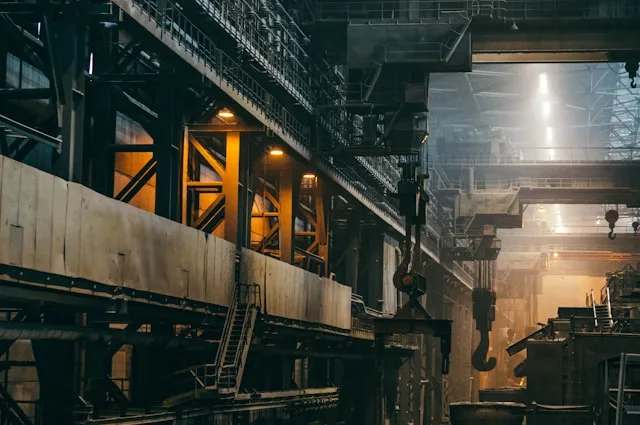
Liège's blast furnaces went cold in 2022. The closure of Blast Furnace A at Seraing ended liquid steel production in a basin that had defined the city's industrial identity for over a century. What followed was not collapse. It was transformation. The cluster that remains, centred on cold rolling, galvanising, advanced coatings, and a quietly ambitious R&D operation in hydrogen-era materials, is smaller, more specialised, and more technically demanding than the industry it replaced.
The problem is that the workforce did not transform at the same pace. Seraing's unemployment rate sits above 12%, more than double the Belgian national average. Yet the metallurgy sector in Liège province recorded 340 open vacancies in the third quarter of 2024, up 22% year on year. The vacancy-to-applicant ratio for metallurgical process engineers reached 4.2 to 1. Senior process engineering roles in continuous annealing and galvanising stay open for 120 to 150 days. The displaced workers are available. The jobs are available. They are not the same jobs.
This is not a story about a dying industry struggling to attract talent. It is a story about a sector that moved from volume to precision, from furnace heat to laboratory science, and left its legacy workforce stranded on the wrong side of the skills divide. What follows is an analysis of how Liège's metallurgy cluster reached this point, what the 2026 regulatory environment will do to accelerate the pressure, and what organisations hiring into this market need to understand about a talent pool that barely exists in active form.
A Post-Primary Steel Economy Running on Finishing and Innovation
The shape of Liège's metallurgy and advanced manufacturing sector in 2026 bears almost no resemblance to its 2010 predecessor. Direct employment in the broader cluster, encompassing steel finishing, advanced materials, and heavy equipment manufacturing, has fallen to an estimated 4,000 to 4,500 from over 10,000 at the turn of the millennium. ArcelorMittal's retained Liège operations, the Flémalle cold rolling mill and the Chertal galvanising lines, employ between 900 and 1,100 workers producing roughly 1.5 million tonnes of coated steel annually for automotive and construction clients. These are sophisticated finishing operations. They are not steelmaking.
The innovation layer is where growth sits. The CRM Group in Seraing, the basin's primary R&D anchor, employs approximately 160 researchers and engineers working on advanced high-strength steels, coatings, and process simulation. Its expansion into hydrogen permeation barriers and high-temperature alloys for nuclear small modular reactors is backed by Walloon Recovery and Resilience Facility funds. John Cockerill, headquartered in Seraing with 1,200 to 1,500 local employees, is scaling electrolyser manufacturing for the hydrogen economy. The University of Liège's Department of Metallurgy and Materials Science Engineering graduates 80 to 100 metallurgical and materials engineers each year, and the Centre Spatial de Liège generates spillover demand for high-performance alloy characterisation through its aerospace testing work.
The SME fabric connecting these anchors remains dense. The Seraing and Flémalle industrial zones host approximately 120 to 150 metallurgical SMEs in metalworking, heat treatment, surface engineering, and precision casting, collectively employing 2,000 to 2,500. These firms form the subcontracting backbone for ArcelorMittal's coating lines and John Cockerill's equipment manufacturing.
Yet the trajectory is directionally clear. Forem's sectoral forecast projects a further 5 to 8% headcount reduction in traditional rolling and coating roles through 2026, alongside 10 to 15% growth in R&D and advanced manufacturing engineering positions. The cluster is not shrinking uniformly. It is splitting.
The Skills Mismatch That Twelve Years of Restructuring Created
The most counter-intuitive feature of Liège's metallurgy labour market is the coexistence of high structural unemployment and acute specialist shortage. The restructuring that eliminated more than 6,000 direct industrial jobs between 2000 and 2024 created a pool of displaced workers whose expertise, built around blast furnace operations, conveyor logistics, and high-volume manual processes, does not transfer to the roles the sector now needs to fill. This is not a training gap that a six-month programme can close. It is a foundational mismatch between the cognitive demands of legacy steelmaking and the technical requirements of advanced finishing, process simulation, and decarbonisation engineering.
The data confirms the disconnect. Forem recorded a 4.2 to 1 vacancy-to-applicant ratio for metallurgical process engineers in 2024. Senior roles in continuous annealing and galvanising averaged 120 to 150 days to fill, against 45 days for general mechanical engineers. Automation engineer vacancies requiring legacy PLC expertise, specifically Siemens S7 and TIA Portal integration with 1990s-era systems, remained unfilled after 90 days in 83% of cases. Environmental compliance managers capable of navigating EU ETS verification and embedded carbon calculation for CBAM reporting showed vacancy durations exceeding 160 days.
The Automation Bottleneck
The automation shortage deserves particular attention because it is not simply a headcount problem. Manufacturers modernising rolling mills need engineers who can bridge two eras: interfacing legacy 1990s programmable logic controllers with modern Industry 4.0 architectures. This is a vanishingly rare combination. Engineers trained on modern systems rarely have exposure to the older hardware. Engineers who spent their careers maintaining the older hardware frequently lack the software fluency required for modern integration. According to Agoria's 2024 Industry Survey for the Wallonia sample, employers are routinely delaying modernisation projects by 6 to 12 months because they cannot secure these profiles locally. The hidden cost of these unfilled technical roles extends far beyond the vacancy itself. Each delayed modernisation project compounds energy inefficiency, maintenance costs, and competitive disadvantage against facilities that completed their digital transitions years ago.
The CBAM Compliance Scramble
The environmental compliance shortage is newer but intensifying rapidly. With CBAM's transitional phase ending in December 2025 and full carbon cost liabilities applying from January 2026, SMEs and trading houses urgently need managers capable of embedded carbon calculation and EU ETS verification. These profiles are typically sourced from Big Four consultancies in Brussels at salary premiums of 30 to 40% over local scales. The vacancy duration of 160 or more days reflects the reality that this specialism barely existed as a standalone role five years ago and the supply pipeline has not caught up.
The result is a labour market where double-digit unemployment and acute specialist scarcity occupy the same postcode. Retraining rates in Wallonia lag behind Flanders, and the legacy workforce's average age of 48 to 52 in steel production roles makes rapid reskilling both more urgent and more difficult.
The Compensation Trap: Luxembourg, [Antwerp](/antwerp-belgium-executive-search), and the Cross-Border Drain
Liège's metallurgy employers do not compete against each other for senior talent. They compete against Luxembourg, Antwerp, and the broader Flemish and Dutch process industry clusters. They are losing.
Luxembourg's tax regime and cost-of-living adjustments deliver net salaries 25 to 35% higher than comparable Liège roles for senior engineers. ArcelorMittal's global R&D centre in Esch-Belval, less than 90 minutes from Seraing, is a persistent draw for experienced Belgian metallurgists. The Port of Antwerp-Rotterdam corridor, anchoring chemical and process industry clusters including Tata Steel IJmuiden, Dow, and BASF Antwerp, offers 10 to 15% salary premiums for process engineers with better public transport connectivity.
At executive level, the spread is material. A Plant Operations Director at a large steel finishing site in Liège commands €180,000 to €240,000 base salary plus 30 to 40% performance bonus. An R&D Director at an industrial research centre or major corporate lab earns €135,000 to €175,000 plus innovation success bonuses. A Head of Decarbonisation reaches €120,000 to €160,000 with equity or long-term incentives at listed groups. These figures are competitive within the Walloon context but fall short of what Luxembourg and northern European alternatives offer for equivalent seniority and technical depth.
Even Charleroi, a direct Walloon competitor, presents a challenge. Aperam's facilities and the aeronautics cluster anchored by Sonaca and Safran offer comparable base salaries but carry stronger job security perceptions due to less exposure to steel cycle restructuring. For a senior metallurgist weighing a move to Liège, the question is not only whether the salary is adequate. It is whether the sector's trajectory justifies the risk of joining a cluster whose primary production anchor departed four years ago. The dynamics of how passive candidates evaluate these trade-offs are critical to understanding why conventional recruitment approaches fail in this market.
SMEs attempting to compete with these pressures face particularly acute strain. One precision coating SME in Flémalle reportedly offered a retention bonus of €18,000 to €22,000 plus a relocation package to secure a process engineer from a competitor in Charleroi, representing a 25% premium over standard salary scales. This is a pattern now typical across the specialty steel coatings sector according to Agoria's 2024 remuneration survey. Firms of 50 to 200 employees cannot absorb these premiums repeatedly without distorting their entire pay structure.
The Public Investment Paradox
Here is the tension at the heart of Liège's metallurgy future, and the original analytical claim this article is built around: the Walloon Region has invested over €120 million in "Liège Steel Valley" innovation infrastructure since 2021, expanding CRM Group, funding hydrogen pilot projects, and supporting university R&D. This is a serious bet on Liège as a materials innovation hub. At the same time, ArcelorMittal has explicitly excluded Liège from its European green hydrogen DRI investment roadmap, directing capital instead to coastal sites in Ghent and Dunkirk where grid capacity and port access make large-scale decarbonisation economically viable.
The consequence is a potential decoupling of innovation from production at a scale that has no obvious precedent in European metallurgy. Public money is building world-class R&D facilities. Private capital is building the next generation of steelmaking elsewhere. Liège risks becoming a centre of materials science excellence that lacks sufficient local industrial scale to commercialise its own innovations domestically. The researchers will produce breakthrough alloys and hydrogen-compatible coatings. The factories that use them will be in Ghent, Dunkirk, and northern Europe.
Why Grid Infrastructure Determines Talent Geography
This is not simply a corporate strategy decision. It reflects a deep physical constraint. Liège's industrial grid, according to Elia's Ten-Year Development Plan, lacks the capacity for large-scale electrolytic hydrogen production. Without green hydrogen feedstock, the basin cannot host the next generation of primary steelmaking even if it wanted to. The Walloon Hydrogen Strategy acknowledged this gap in 2023, but infrastructure investment of this magnitude operates on decade-long timelines. The talent implication is direct. Engineers and scientists who want to work at the frontier of green steel production will follow the capital, not the research papers. Liège's R&D cluster will train them. Luxembourg and Flanders will employ them.
For executive hiring in advanced manufacturing and heavy industry, this creates a market where the employer value proposition must be constructed around innovation and intellectual challenge rather than production scale and long-term career security.
The Regulatory Cliff of 2026 and Its Hiring Consequences
The regulatory environment facing Liège's metallurgy cluster in 2026 is not abstract. It carries specific cost implications that will reshape headcount decisions within months.
CBAM and Carbon Cost Exposure
CBAM's full implementation from January 2026 requires importers of steel into the EU to purchase certificates equivalent to the EU ETS carbon price, currently ranging between €70 and €80 per tonne. Liège's finishing mills rely on imported hot-rolled coil as feedstock. If suppliers cannot provide embedded carbon data, or if carbon-intensive imports from outside the EU undercut domestic prices before carbon cost adjustments fully equalise, margin compression at Liège's cold rolling and coating operations becomes severe. The Belgian Steel Federation's 2024 economic impact assessment estimated €50 to €70 million in annual carbon cost exposure for Belgian steelmakers by 2026 without free allocation.
[Belgium](/belgium-executive-search)'s Energy Cost Disadvantage
Compounding the carbon cost pressure, Belgium's industrial electricity tariffs remain among the highest in the EU-27. At €140 to €160 per megawatt hour including network charges and taxes, they exceed French and Nordic benchmarks of €100 to €120 per megawatt hour. For energy-intensive coating and annealing processes, this differential is not marginal. It is the difference between competitive and uncompetitive unit economics.
The hiring consequence of these combined pressures is twofold. First, it intensifies demand for decarbonisation and sustainability leadership, the Head of Decarbonisation and Environmental Compliance Manager roles that already show vacancy durations exceeding 160 days. Second, it introduces existential uncertainty into the employer proposition for traditional finishing roles. A senior process engineer evaluating a move to ArcelorMittal's Flémalle cold rolling mill must weigh whether the facility's economics will survive the 2026 to 2028 carbon cost transition. That calculation suppresses candidate willingness to move, extending vacancy durations further.
Permitting adds a third layer of friction. Environmental permits for modernising coating lines or installing carbon capture at CRM Group facilities face 18 to 24 month approval timelines in Wallonia. In the Netherlands, equivalent approvals take 6 to 12 months. For a firm trying to simultaneously decarbonise, modernise, and recruit, this delay structure means that the talent hired today may wait two years before the infrastructure they were recruited to operate receives regulatory clearance.
What Hiring Leaders in This Market Must Understand
The Liège metallurgy talent market in 2026 is defined by a single structural reality: the pool of qualified senior candidates is almost entirely passive. Unemployment among Belgian industrial engineers with ten or more years of experience stands at 1.8%, effectively full employment. Forem's data is unambiguous: only 12% of successful placements in metallurgical production engineering roles in 2024 originated from active job applications. The remaining 88% were sourced via headhunting or direct approach.
Senior candidates in this market hold average tenures of 7 to 9 years. They are not browsing job boards. They are not responding to LinkedIn InMails from internal recruiters. They require a specific combination of role expansion, compensation adjustment, and relocation support to consider a move. The reasons why conventional executive recruiting approaches fail in markets like this are well documented, but Liège presents an additional complication: the candidate must also be convinced that the sector's trajectory in this specific location justifies the disruption of moving.
This is the market where search methodology matters most. A firm posting a role on StepStone Belgium and waiting for applications is reaching, at best, the 12% of the candidate pool that is actively looking. The other 88% must be identified through systematic talent mapping, approached individually, and presented with a proposition that addresses not only compensation but career trajectory, sector stability, and the specific innovation narrative that makes Liège's R&D cluster a genuinely compelling destination.
For organisations competing for process engineers, R&D directors, and decarbonisation leaders in Liège's metallurgy cluster, the cost of a slow search is not measured in weeks of vacancy. It is measured in delayed modernisation projects, deferred CBAM compliance, and senior candidates lost to Luxembourg or Antwerp before a shortlist is even assembled. KiTalent delivers interview-ready executive candidates within 7 to 10 days through AI-powered identification of the passive talent that no job advertisement can reach, with a 96% one-year retention rate for placed candidates. To discuss how we approach this market, start a conversation with our executive search team.
The Search That Reaches 88% of the Market
Liège's steel and advanced materials cluster is a paradox made physical. Twelve years of restructuring eliminated the jobs that existed and created demand for jobs that the displaced workforce cannot fill. Public investment is building research infrastructure for a future that private capital is constructing elsewhere. The regulatory environment of 2026 will simultaneously protect domestic finishing operations via CBAM and threaten them via carbon costs and energy prices. The candidates who could lead these organisations through this transition are employed, passive, and require a search approach designed specifically for senior professionals who are not on the market.
The organisations that will compete successfully for this talent are those that move first, move precisely, and present a proposition built on the genuine strengths of the Liège cluster: proximity to CRM Group's research frontier, John Cockerill's hydrogen technology scaling, and a materials science ecosystem that remains, per capita, one of the densest in Europe. The story is compelling. But it must be told directly, to the right person, at the right moment. That is what distinguishes a direct executive search from a job advertisement.
Frequently Asked Questions
What is the current state of steel production in Liège, Belgium?
Primary steelmaking in Liège ended in 2022 with the closure of the last blast furnace at Seraing. The remaining metallurgy cluster focuses on cold rolling, galvanising, and advanced coatings, principally operated by ArcelorMittal Belgium at its Flémalle and Chertal sites. Direct employment across the broader cluster, including heavy equipment manufacturing by John Cockerill and approximately 120 to 150 metallurgical SMEs, stands at an estimated 4,000 to 4,500. Growth is concentrated in R&D and advanced materials engineering, with the CRM Group and University of Liège serving as primary innovation anchors.
Why is it so difficult to hire metallurgical engineers in Liège?
The market operates at effective full employment for experienced industrial engineers. Unemployment among Belgian industrial engineers with ten or more years of experience is 1.8%. Forem data shows that 88% of successful placements in metallurgical production engineering originated from headhunting, not active applications. Senior candidates hold average tenures of 7 to 9 years and typically require relocation support, compensation adjustment, and role expansion to consider moving. A specialist executive search methodology capable of identifying and engaging these passive professionals is essential.
How will CBAM affect Liège's steel finishing operations in 2026?
From January 2026, importers of steel into the EU must purchase CBAM certificates at the EU ETS carbon price, currently €70 to €80 per tonne. Liège's finishing mills rely on imported hot-rolled coil. If carbon-intensive imports are not accurately documented for embedded carbon, or if carbon pricing adjustments fail to equalise before margin compression hits, profitability of cold rolling and coating operations comes under direct threat. The Belgian Steel Federation estimated €50 to €70 million in annual carbon cost exposure for Belgian steelmakers by 2026 without free allocation.
What executive roles are hardest to fill in Liège's metallurgy sector?
Three categories show the most acute scarcity. Senior metallurgical process engineers specialising in continuous annealing and galvanising average 120 to 150 days to fill. Automation engineers with legacy PLC expertise remain unfilled after 90 days in 83% of cases. Environmental compliance managers for EU ETS and CBAM reporting show vacancy durations exceeding 160 days. At executive level, Plant Operations Directors, R&D Directors for advanced materials, and Heads of Decarbonisation all sit in predominantly passive candidate markets.
What salary does a Plant Operations Director earn in Liège's steel sector?
A Plant Operations Director at a large steel finishing site in the Liège basin commands a base salary of €180,000 to €240,000, plus a performance bonus of 30 to 40%, car allowance, and long-term incentives. At the operations manager level reporting to the director, base salaries range from €85,000 to €105,000 with 15 to 20% bonus. These figures are competitive within Wallonia but lag Luxembourg equivalents by 25 to 35% on a net basis, which is the primary driver of cross-border talent drain for senior metallurgical specialists.
How does KiTalent approach executive search in Liège's metallurgy market?
KiTalent uses AI-powered talent mapping to identify the passive candidates who represent 88% of successful placements in this sector. Rather than relying on job advertisements that reach only actively searching professionals, KiTalent's direct headhunting approach maps the full candidate ecosystem across Liège, Luxembourg, Flanders, and adjacent European metallurgy hubs, delivering interview-ready candidates within 7 to 10 days. The pay-per-interview model means clients only invest when they meet qualified candidates, and a 96% one-year retention rate ensures placements endure beyond the initial hire.