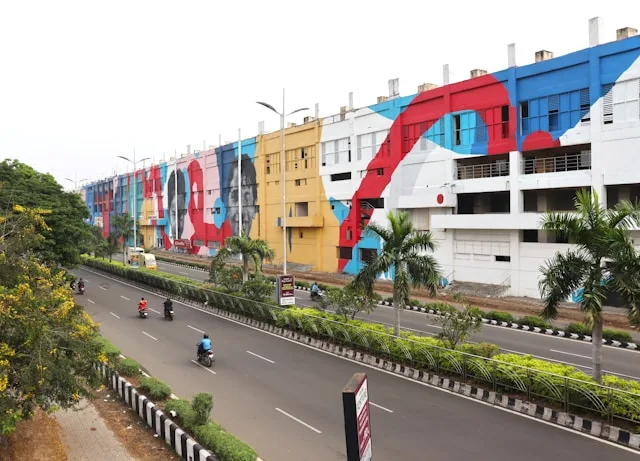
Makati's Financial District Produces 150,000 Graduates a Year and Cannot Fill Its Most Critical Roles

The Philippines produces roughly 150,000 business administration graduates annually. It produces approximately 3,500 certified risk managers, actuaries, and cybersecurity specialists combined. That ratio tells you almost everything you need to know about Makati's financial services talent market in 2026. The entry-level pipeline overflows. The senior specialist pool is nearly dry.
Along Ayala Avenue, the country's densest concentration of banking headquarters and professional services firms competes for the same thin layer of experienced leadership. Chief Risk Officer searches that closed in 90 to 120 days before the pandemic now stretch to 180 to 270 days. Senior cybersecurity leaders with BSP regulatory fluency command 40 to 50 per cent premiums when they move between competitors. ESG directors with both banking experience and certified sustainability credentials barely exist in sufficient numbers to fill the roles the regulator now requires.
What follows is a structured analysis of the forces reshaping Makati's financial services sector, the employers anchoring it, the regulatory demands accelerating talent scarcity, and what senior hiring leaders need to understand before they launch their next executive search in this market. The central tension is not simply that talent is scarce. It is that the Philippine education system, the regulatory framework, and the compensation structure are producing an hourglass: abundant at the bottom, thin in the middle, and desperately short at the top.
The Ayala Avenue Anchor: Who Still Calls Makati Home
Ayala Avenue remains the primary address for Philippine banking headquarters. Bank of the Philippine Islands, RCBC, PBCom, and Standard Chartered Philippines all maintain their executive functions along the corridor. Ayala Corporation, the parent company of BPI and Globe Telecom, anchors the Ayala Triangle Gardens complex. Metrobank sits at the CBD periphery on Sen. Gil Puyat Avenue. The Big Four professional services firms, including Deloitte Philippines, PwC Philippines, and KPMG Philippines, complete an ecosystem that supports corporate advisory, audit, and compliance work for the entire banking cluster.
This concentration is not static, though. The hypothesis that Makati dominates corporate headquarters requires qualification. San Miguel Corporation relocated to Mandaluyong. JG Summit maintains its presence in Ortigas. SM Investments anchors in Pasay. What Ayala Avenue now primarily hosts is financial headquarters and legacy conglomerate headquarters, not the full breadth of Philippine corporate power.
The domestic competitor redrawing the map is Bonifacio Global City. According to IBPAP's IT-BPM Industry Roadmap, BGC has captured approximately 30 per cent of new financial services job creation in Metro Manila since 2022. Makati's share has declined from 60 per cent before 2020 to roughly 45 per cent. The fintech corridor forming around Ayala Triangle Gardens, hosting BSP-supervised firms like Maya and various venture capital offices, represents Makati's attempt to retain relevance in the digital finance segment. Whether that corridor can hold against BGC's newer office stock, lower congestion, and fintech-friendly amenities is an open question that directly affects where senior talent chooses to work.
Bifurcated Scarcity: Why the Vacancy Data Misleads
Metro Manila's overall office vacancy rate sits at approximately 16.5 per cent as of early 2025, according to CBRE Philippines. That figure suggests a tenant's market with slack capacity. It is misleading.
Grade A Versus Everything Else
Ayala Avenue's Grade A buildings tell a different story. One Ayala, Ayala Triangle Gardens Tower 2, and RCBC Plaza maintain vacancy rates between 8 and 12 per cent. Prime rents have risen 3 to 5 per cent year on year, reaching PHP 1,050 to 1,200 per square metre per month. Meanwhile, secondary Grade B stock in peripheral Makati sees stagnant or declining rents, and fringe areas like Quezon City and Manila Bay sit at 20 to 25 per cent vacancy.
This is a flight-to-quality dynamic. The banks expanding compliance, RegTech, and cybersecurity teams want modern, ESG-compliant floor plates with the collaboration space that hybrid working demands. They are not moving into 1990s-era buildings regardless of the discount. The institutions occupying older stock face what Colliers International describes as stranded asset risk: employees increasingly demand facilities that match the standards of BGC competitors, and retrofitting aged buildings is often uneconomic.
The Same Bifurcation in the Labour Market
The real estate split mirrors the talent market precisely. The Philippines faces structural unemployment among new finance graduates, with a 4.5 per cent unemployment rate for finance majors under 25. At the same time, CRO, CISO, and ESG director roles go unfilled for six months or longer. Prime physical assets and prime human capital are both rationed. Secondary assets and general labour remain abundant. This is the analytical key to understanding Makati in 2026: the averages conceal the extremes, and the extremes are where executive hiring decisions are made.
The Regulatory Engine Driving Demand
Three regulatory mandates from the Bangko Sentral ng Pilipinas are simultaneously expanding the compliance and technology headcount that every universal and commercial bank needs.
Open Finance and Cybersecurity
BSP Circular 1149, the Open Finance Framework, requires banks to hire API architects and data governance officers. The enhanced cybersecurity framework mandates 24/7 Security Operations Centres, driving demand for shift-capable cybersecurity managers who understand both technical operations and BSP reporting obligations. These are not optional hires. They are regulatory prerequisites. A bank without a functioning SOC and a qualified CISO faces supervisory action.
Basel III and Climate Risk
The BSP's implementation of Basel III final reforms, effective through 2025 and 2026, has created additional demand for risk management professionals who can operate stress-testing frameworks, model credit risk under the revised standardised approach, and report to the board in language directors understand. Simultaneously, BSP Circular 1195 mandates climate risk disclosures for large banks beginning in 2025, requiring ESG directors who possess both banking experience and certified sustainability credentials.
The combined effect is material. The Institute of Bankers of the Philippines projects that financial institutions will expand back-office footprints by 8 to 12 per cent in 2026 to accommodate RegTech teams alone. That is headcount growth driven not by commercial ambition but by regulatory obligation. The talent to fill these roles does not become available simply because the regulator says it must.
This is the point at which the cost of a failed or delayed executive hire becomes measurable not just in lost productivity but in regulatory exposure.
The Experience Gap That Cannot Be Trained Away
Here is the original analytical claim this article rests on, and the one that hiring leaders in this market need to internalise: the Makati financial talent crisis is not a shortage problem. It is a time problem. BSP regulations require 10 to 15 years of audited experience for senior compliance and risk roles. No training programme, no graduate pipeline, and no certification course can compress a decade of supervised experience into two years. The 150,000 business graduates entering the market annually are irrelevant to the CRO search that has been open for eight months. They will become relevant in 2036.
The Philippine education system produces the volume. It does not produce the specificity. Only 3,500 certified actuaries, risk managers, and cybersecurity specialists graduate combined each year, according to CHED data. The progression path from certified graduate to BSP-eligible senior leader involves a minimum decade of accumulating audited experience in institutions the regulator recognises. Every year that a professional leaves the Philippines for a regional headquarters in Singapore or Hong Kong resets their availability to the domestic market.
This creates the hourglass that defines Makati's talent structure. The bottom is wide. The top is narrow. And the middle, where future CROs and CISOs should be developing, is thinning as BGC fintechs poach lateral talent and offshore opportunities drain mid-tier professionals entirely out of the Philippine banking system. The implications for leadership pipeline planning and succession strategy are severe. Firms that are not building their senior bench today will face the same shortages in 2030, compounded by five additional years of regulatory expansion.
What the Roles Pay and Why It Is Not Enough
Compensation data from Mercer, Willis Towers Watson, and Robert Walters reveals the scale of the bidding war in Makati's three most contested role categories.
At the executive and C-suite level, a Chief Risk Officer at a universal bank commands PHP 12 million to 25 million annually. A CISO earns PHP 8 million to 18 million. An ESG or sustainability head draws PHP 7 million to 14 million. A Chief Digital Officer sits at PHP 10 million to 20 million. Sign-on bonuses for scarce roles add 20 to 30 per cent of annual base. These are substantial packages by Philippine standards. They are modest by regional standards.
The Singapore Ceiling Drain
For C-suite risk officers and CFOs with regional capability, Singapore offers compensation multiples of 200 to 300 per cent compared to Makati. A CRO earning PHP 20 million in Makati could command the equivalent of PHP 40 million or more in Singapore. The cost-of-living differential is real, but the arithmetic is persuasive enough to pull the top 5 per cent of Philippine financial talent toward regional headquarters. The Monetary Authority of Singapore's talent requirements create friction, but the pull is constant.
This ceiling drain means that Makati's best compensated executives are not the ones most likely to stay. They are the ones most likely to leave. The retention bonuses of 20 to 30 per cent that banks have deployed across the Ayala Avenue cluster are defensive measures, not growth investments. They slow attrition. They do not stop it.
The BGC and Remote Squeeze From Below
At the same time, fintechs in BGC offer 10 to 15 per cent salary premiums over traditional banks, with newer office amenities and shorter commutes. US and EU fintechs hiring Filipino remote talent offer PHP 2 million to 4 million for mid-level developers and risk analysts. That is competitive with Makati senior specialist rates, delivered without the 90-minute commute from Calabarzon.
The traditional Ayala Avenue bank is squeezed from both directions. Outward by Singapore at the top. Inward by BGC and remote employers at the middle. The candidates who remain are either deeply loyal, deeply embedded in BSP regulatory networks, or waiting for the right offer. Most are not looking. That passive candidate reality shapes every search.
90 Per Cent Passive: Why Conventional Hiring Fails Here
The three scarcest role categories in Makati's financial sector are overwhelmingly passive candidate markets. According to Korn Ferry's Cybersecurity Talent Trends Asia 2024 report, approximately 90 per cent of viable CISO and cybersecurity leadership candidates are employed and not actively applying. ESG and sustainability directors show an 80 per cent passive ratio, constrained by the limited supply of candidates holding both banking experience and credentials like the GARP SCR or CFA ESG certificate. Senior risk officers at SVP level and above are 75 per cent passive, with average tenure of 7 to 9 years in their current roles, held in place by retention bonuses.
Active candidate pools exist for these roles. But they primarily contain candidates lacking specific BSP regulatory experience or candidates who failed to secure promotions at their current institutions. The distinction matters enormously to a hiring bank. A candidate who appears qualified on paper but has never operated within BSP's supervisory framework requires 12 to 18 months of acclimatisation before they can function autonomously. A candidate who has that experience is almost certainly not on any job board.
This is the market condition where traditional executive recruiting methods consistently fail. Posting a role and waiting for applications reaches, at best, the 10 to 25 per cent of the market that is actively seeking. The other 75 to 90 per cent must be identified, approached, and persuaded through direct headhunting methodology that understands the regulatory context well enough to frame a compelling proposition.
The commute problem compounds the passive candidate challenge. A 2024 survey by the People Management Association of the Philippines found that 62 per cent of Makati-based banks identified commute time and traffic congestion as the primary barrier to filling mid-level professional roles. EDSA's average vehicle speed of 11 to 15 kilometres per hour during peak periods and MRT-3 operating at 120 per cent capacity mean that a candidate in Calabarzon or Quezon City faces a calculation that goes beyond compensation. The 3-2 hybrid model that most banks have adopted expands the geographic catchment to Cavite, Laguna, and Bulacan. But BSP regulations requiring physical presence for certain compliance and audit functions constrain full remote options for precisely the roles that are hardest to fill.
The Competitive Dynamic Reshaping Makati
Digital-only banks operating without expensive Ayala Avenue real estate carry a structural cost advantage. According to BSP's Digital Banking Framework Assessment, traditional banks maintaining Makati headquarters face 25 to 30 per cent higher operating costs per employee than digital competitors. Maya Bank, Tonik, and UnionDigital do not pay PHP 1,200 per square metre per month for Grade A floor plates. They do not maintain the physical infrastructure that BSP requires for certain supervised functions. And they compete for the same digital banking architects and product leaders that traditional banks need.
This cost differential puts traditional banks in a bind. They must offer competitive compensation to attract digital talent while carrying a cost base that digital competitors avoid entirely. The headquarters premium model, where prestige of an Ayala Avenue address attracted talent, is weakening as younger professionals prioritise flexibility, modern facilities, and commute time over institutional brand. The Ayala Triangle Gardens fintech corridor represents an attempt to capture some of this energy within Makati's borders. It is a partial answer at best.
The disaster resilience dimension adds another layer of complexity. Makati CBD sits on the Valley Fault System. PHIVOLCS earthquake scenarios project 30 to 40 per cent office building damage in a 7.2 magnitude event. Business continuity requirements are driving some banks to establish disaster recovery sites in Cebu, Clark, and Iloilo, gradually decentralising headquarters functions that were previously concentrated on Ayala Avenue. Every function that moves to a secondary site takes talent demand with it. The question for hiring leaders is not just where to find a CRO. It is where that CRO will sit, which regulatory obligations attach to that location, and how hybrid and disaster resilience models interact with BSP's physical presence requirements.
For organisations assessing how these forces affect executive hiring across banking and wealth management, the Makati market demands a level of regulatory and geographic specificity that generic search methods cannot deliver.
What Hiring Leaders Must Do Differently
The Makati financial services talent market in 2026 rewards speed, specificity, and access to passive candidates. It punishes delay, generalism, and reliance on active applicant pools.
A CRO search that runs 270 days is not merely inconvenient. It means nine months of interim coverage at audit-firm premium rates, nine months of board-level risk governance gaps, and nine months during which the institution's strongest internal candidates may leave for competitors who already have their leadership teams in place. The cost is compounding. The counteroffer dynamics in this market are fierce, with 20 to 30 per cent retention bonuses now standard for cybersecurity and risk leadership.
The firms that fill these roles within reasonable timelines share common characteristics. They begin searches before the vacancy formally opens, using talent mapping to understand who holds the relevant BSP experience, who is approaching a retention bonus cliff, and who has signalled interest in a different organisational model. They construct propositions that address the specific calculation a passive candidate makes: not just compensation, but commute, mandate flexibility, team quality, and career trajectory. They do not wait for applications. They identify and approach.
KiTalent's approach to this market reflects these realities. Using AI-enhanced talent identification combined with direct headhunting methodology, KiTalent delivers interview-ready executive candidates within 7 to 10 days. The pay-per-interview model means clients invest only when they meet qualified candidates, not when a search begins. With a 96 per cent one-year retention rate across 1,450 executive placements globally, the methodology is designed for precisely the conditions Makati presents: thin pools, passive candidates, regulatory specificity, and a hiring timeline that cannot afford to stretch.
For organisations competing for risk, cybersecurity, or ESG leadership in Makati's financial district, where 75 to 90 per cent of the candidates you need are not visible on any job board and the cost of a slow search is measured in regulatory exposure and interim coverage premiums, speak with our executive search team about how we approach this market.
Frequently Asked Questions
How long does a typical CRO search take in Makati's financial services sector?
A Chief Risk Officer search at a universal or large thrift bank in Makati now typically extends 180 to 270 days, according to recruitment industry data from Robert Walters and Michael Page Philippines. This compares to 90 to 120 days before the pandemic. The extension reflects the scarcity of candidates combining BSP regulatory fluency with international risk certification such as FRM or PRM. During the vacancy period, institutions typically rely on interim risk officers, often sourced from external audit firms at premium rates. Firms using direct executive search approaches to engage passive candidates can materially compress these timelines.
What do senior cybersecurity roles pay in Philippine banking?
At the executive level, a CISO in Makati's banking cluster commands PHP 8 million to 18 million annually, with sign-on bonuses of 20 to 30 per cent of base salary for scarce candidates. Senior specialists and security architects earn PHP 3.5 million to 6 million. When candidates are poached between competing banks, total compensation packages can exceed PHP 15 million, representing premiums of 40 to 50 per cent above the candidate's previous package. Retention bonuses of 20 to 30 per cent have become standard across the Ayala Avenue corridor.
Why is ESG talent so scarce in Philippine financial services?
The scarcity stems from a dual credentialing requirement. BSP's Sustainable Finance Framework and SEC sustainability reporting rules require ESG directors who possess both banking operations experience and certified sustainability credentials such as the GARP SCR or CFA ESG certificate. Approximately 80 per cent of qualified candidates are passive, meaning they are employed and not actively seeking new roles. The Philippine education system does not yet produce sustainability finance specialists at scale, and the certification pathway adds years to an already long development timeline.
How does BGC compete with Makati CBD for financial services talent?
Bonifacio Global City has captured approximately 30 per cent of new financial services job creation in Metro Manila since 2022, up from a much smaller share before 2020. Fintechs and digital banks in BGC offer 10 to 15 per cent salary premiums over traditional Makati banks, alongside newer office facilities and shorter commute times. The competitive pressure is strongest for digital banking architects, product leaders, and mid-level technology professionals who prioritise workplace amenity and flexibility over institutional brand prestige.
What regulatory changes are driving talent demand in Makati banking?
Three BSP mandates are expanding hiring requirements simultaneously. Circular 1149, the Open Finance Framework, requires API architects and data governance officers. The enhanced cybersecurity framework mandates 24/7 Security Operations Centres. BSP Circular 1195 requires climate risk disclosures, creating demand for ESG finance directors. Basel III final reform implementation adds further need for risk management specialists. KiTalent works with financial institutions facing these regulatory-driven talent requirements to identify and deliver qualified leadership candidates through AI-enhanced direct headhunting.
How does commuting affect executive hiring in Makati CBD?
Makati CBD absorbs 400,000 to 450,000 daily workers through corridors where average peak vehicle speed is 11 to 15 kilometres per hour. A 2024 survey found that 62 per cent of Makati-based banks identified commute time as the primary barrier to filling mid-level roles, surpassing salary competition. Most banks have adopted 3-2 hybrid models to expand their talent catchment to surrounding provinces, but BSP regulations requiring physical presence for compliance and audit functions constrain remote options for exactly the roles in shortest supply.