Montgomery's Logistics Sector Is Growing Fast and Hiring Slower: The Automation Paradox Behind the Numbers
Montgomery, Alabama, sits at the intersection of two interstate corridors that carry freight between the Gulf Coast and the southeastern manufacturing belt. That geographic advantage helped the city attract Hyundai Motor Manufacturing Alabama and a network of tiered automotive suppliers that now account for roughly 60% of the region's logistics GDP. Through 2025, transportation, warehousing, and utilities employment reached approximately 14,200 workers, representing 8.9% of total nonfarm employment, up from 8.3% in 2019.
The paradox facing hiring leaders in this market in 2026 is not that growth has stalled. It is that growth is accelerating in a form that the existing workforce cannot support. Hyundai's $5.5 billion Metaplant America in Georgia, now ramping toward full production, is pulling supplier logistics demand through the Montgomery I-85 corridor. Facilities are expanding. Capital is flowing. Yet the roles created by automation, robotics, and predictive logistics technology require skills that the local talent pipeline produces in fractions of what employers need. Montgomery is experiencing a "jobless expansion" in warehouse headcount alongside acute shortages in the technical and strategic roles that keep automated operations running.
What follows is an analysis of the forces reshaping Montgomery's logistics and distribution sector, who the major employers are, where hiring is breaking down, and what organisations operating in this market need to understand before their next critical search.
The Automotive Engine Driving Montgomery's Logistics Demand
Montgomery's logistics identity is inseparable from its automotive sector. Hyundai Motor Manufacturing Alabama operates a 2.3 million square foot assembly plant with on-site sequencing centres and outbound vehicle logistics, employing 3,150 people directly. The ripple effects extend through every tier of the supply chain. XPO runs contract logistics operations serving automotive suppliers from Montgomery Industrial Park. AAA Cooper Transportation, now a Knight-Swift subsidiary, maintains its regional LTL operations headquarters in the city with approximately 400 employees. Koch Foods adds a cold chain dimension with 950 workers in poultry processing and refrigerated transport.
The next wave of demand is already arriving. Hyundai's Metaplant America in Ellabell, Georgia, scheduled for full production by late 2025, is projected to increase supplier logistics demand along the I-85 corridor by 12 to 15%. Tier-1 suppliers are expanding Montgomery operations to serve both the Alabama and Georgia assembly plants simultaneously. For hiring leaders, this means the volume of logistics work flowing through Montgomery is growing materially, even as the nature of that work shifts beneath it.
Why Volume Growth Does Not Equal Headcount Growth
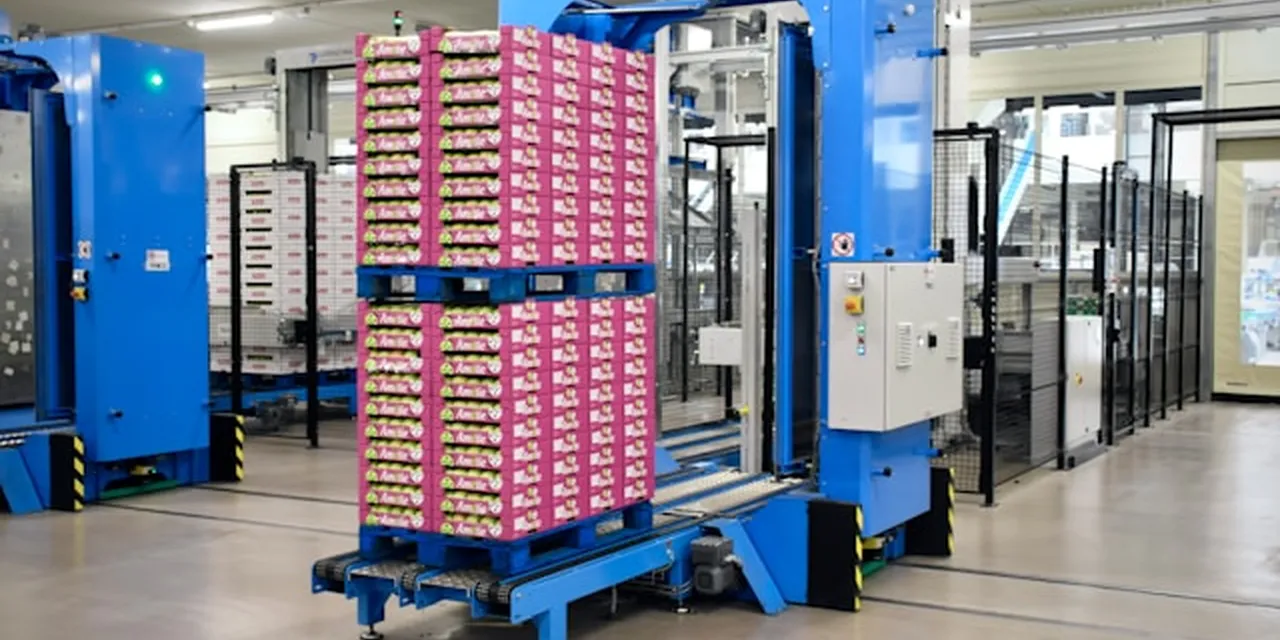
The same OEMs and tier-1 suppliers investing in corridor expansion are simultaneously deploying automated guided vehicles, autonomous mobile robots, and automated storage and retrieval systems. According to a Boston Consulting Group study of automotive logistics in the southeastern United States, these technologies are projected to reduce unit labour costs by 15% by 2027. In practical terms, that translates to a potential displacement of 400 to 600 warehouse associate positions in the Montgomery area, offset by the creation of only 80 to 100 higher-skill technician roles.
This is the core tension in Montgomery's logistics market. Capital is moving faster than the workforce can follow. A new cross-dock facility opens with 30% fewer forklift operators and twice the demand for electromechanical technicians who can maintain robotic systems. The net employment effect at the associate level may be flat or negative. The net demand at the technical and managerial level is intensifying with no proportional increase in supply.
The implication for anyone building a logistics team in this corridor is straightforward: the roles that are hardest to fill are the ones that did not exist five years ago.
Where Montgomery's Talent Shortages Are Most Acute
Three categories of shortage define the Montgomery logistics hiring market in 2026, and each operates by a different mechanism.
CDL-A Drivers with Clean Records and Hazmat Endorsements
The Alabama Department of Labor classifies heavy and tractor-trailer truck drivers as a "High Demand" occupation for the Montgomery MSA, with projected annual openings of 340 through 2026 and a current estimated shortage of 180 to 220 drivers relative to posted demand. Average time-to-fill for regional carriers sits at 47 days, compared to 32 days nationally.
The shortage is compounded by regulatory attrition. The Federal Motor Carrier Safety Administration's Drug and Alcohol Clearinghouse has disqualified approximately 4.2% of the regional CDL workforce since 2020. Among drivers holding hazmat and tanker endorsements, unemployment is below 1.5%. These candidates do not post resumes. They move between employers through referral networks, and the signing bonuses required to attract them now sit between $5,000 and $10,000 in competing markets like Birmingham.
Montgomery employers face a specific disadvantage here. Birmingham's Amazon BHM1 fulfilment centre, employing over 5,000 workers, creates concentrated demand that pulls drivers northward with signing bonuses that Montgomery-area carriers do not consistently match.
Industrial Maintenance Technicians with Automation Competency
This is the role category where the automation paradox bites hardest. As HMMA and its suppliers implement AGVs, robotic picking systems, and AS/RS technology, the demand for electromechanical technicians with PLC competency has outstripped supply by an estimated 2.5 to 1 ratio. Employers require three to five years of experience with Siemens or Allen-Bradley systems. The median search duration for this profile is 85 days, nearly double the time required to fill a comparable logistics role.
The challenge is not simply that these candidates are scarce. It is that the training pipeline produces too few graduates with hands-on experience to meet demand across the entire southeastern automotive corridor. Montgomery competes for the same technician pool as Kia's manufacturing operations along the I-85 corridor in Columbus, Georgia, and West Point, Alabama, where newer facilities and heavier capital investment provide a pull that Montgomery's older industrial parks struggle to match.
Mid-Level Supply Chain Analysts
Demand for data-analytics-capable logistics coordinators, those fluent in SQL, Python, Tableau, and ERP platforms like SAP or Oracle, has grown 34% since 2022 in the Montgomery MSA. The local pipeline draws primarily from Auburn University at Montgomery and Troy University Montgomery. Both produce capable graduates, but few arrive with practical ERP experience suited to automotive just-in-sequence operations. Entry-level hires typically require six to nine months of on-the-job training before reaching productivity standards.
The deeper problem is retention. Only 12% of AUM supply chain graduates remain in the Montgomery MSA after three years, according to the university's own alumni outcomes survey. Atlanta and Birmingham offer broader career trajectories, and the passive talent pool in Montgomery is routinely recruited by Atlanta-based 3PLs and manufacturers offering hybrid arrangements for strategic roles. The analysts who stay are perpetually in demand. The analysts who leave create gaps that take months to fill.
Compensation: The Cost Advantage That Becomes a Hiring Liability
Montgomery's position as a low-cost market is both its greatest site-selection asset and its most persistent hiring constraint. Industrial real estate vacancy stands at 6.2%, below the ten-year average of 8.1%, with Class A distribution space asking $5.85 per square foot annually. That is roughly 35% below the Atlanta I-85 corridor submarket, according to CBRE's Alabama Industrial MarketView for Q4 2024. For site selectors evaluating total occupancy cost, Montgomery wins.
For hiring leaders trying to fill the roles inside those buildings, the equation inverts.
The Gap at Senior Levels
A Vice President of Supply Chain in Montgomery commands $165,000 to $210,000 in base salary, with total cash compensation reaching $220,000 to $280,000. The same role in Atlanta pays $210,000 to $275,000 base. That is a 20 to 25% discount for a market that sits just 160 miles away on the same interstate. Birmingham sits 15% above Montgomery for equivalent positions.
Distribution Centre Managers overseeing 200-plus employee facilities earn $82,000 to $98,000 in Montgomery, representing 88 to 92% of Birmingham rates and 75 to 80% of Atlanta rates. Senior logistics analysts with data analytics focus earn $68,000 to $82,000, with an 8 to 12% premium for SAP TM certification.
Why the Gap Is Widening
Average wage growth in Montgomery's transportation and warehousing sector ran at 2.8% annually through 2022 to 2024. That trails inflation at 3.4% and lags well behind Birmingham at 4.1% and Atlanta at 4.8%. The data suggests that Montgomery employers are relying on labour pool exhaustion rather than price competition to clear the market. In a region where working-age population growth is 0.8% annually against logistics employment growth of 2.4%, that is a structurally unstable position.
The compensation gap matters most at exactly the seniority level where the most critical roles sit. A senior supply chain strategist weighing a Montgomery offer against an Atlanta opportunity is looking at a 25% pay cut, a smaller professional network, and fewer subsequent career options. Montgomery's housing cost advantage, roughly 40% below Atlanta, and its 22-minute average commute help at the associate and coordinator level. They prove insufficient to retain the directors and vice presidents whose decisions determine whether an operation runs efficiently or stalls.
Infrastructure Constraints Compounding the Talent Problem
Montgomery's logistics infrastructure is adequate for its current volume but constrained for the growth trajectory now underway.
The I-65 and I-85 interchange, locally known as "Malfunction Junction," remains under Alabama Department of Transportation study, with Phase 1 construction affecting freight flow through 2026. During peak hours, the I-65 corridor through Montgomery operates at Level of Service D or E, adding an estimated $0.15 to $0.22 per mile in drayage costs. These are not abstract cost figures. They translate directly into longer driver hours, tighter scheduling windows, and higher per-unit logistics costs that compress the margins available for competitive compensation.
The absence of a dedicated intermodal rail terminal within Montgomery County forces reliance on over-the-road trucking for first and last mile operations. The nearest facility is Birmingham's Inland Port, 95 miles north. CSX's Montgomery Yard operates at 78% capacity, limiting intermodal expansion without capital investment that has not yet been committed.
Montgomery Regional Airport lacks scheduled all-cargo service. Time-sensitive freight moves by belly cargo on limited passenger flights or by truck to Birmingham or Atlanta, adding four to six hours to supply chains that compete on speed. The Montgomery Airport Authority is marketing 300 acres at the Montgomery Aeroplex for air cargo development, but no anchor tenant had committed as of early 2025.
For hiring leaders, the infrastructure picture means this: the roles most affected by congestion and intermodal limitations are the same roles already in acute shortage. A transportation director managing 100-plus power units through a constrained corridor needs not only fleet management expertise but hazardous materials transportation knowledge, which commands a $15,000 to $20,000 premium over standard compensation. The infrastructure bottleneck raises both the skill threshold and the cost of the talent required to manage it.
The Competitive Geography That Shapes Every Search
Montgomery does not exist in isolation. Every logistics search in this market operates within a competitive triangle whose other vertices are Birmingham, Atlanta, and the Kia corridor along I-85.
Birmingham, 90 miles north, competes directly for CDL drivers, warehouse supervisors, and maintenance technicians. It offers 12 to 18% salary premiums for identical roles and higher cost of living by 8 to 10%. The presence of Amazon's BHM1 fulfilment centre creates a gravitational pull that Montgomery's smaller employers struggle to counter. According to Indeed Hiring Lab salary comparison data, Birmingham carriers routinely offer signing bonuses in the $5,000 to $10,000 range that Montgomery employers do not consistently match.
Atlanta, 160 miles east, competes for every strategic and analytical role. Supply chain managers, directors, VP-level executives, and data analytics specialists all face a 35 to 45% compensation premium in Atlanta alongside materially broader career progression. The passive candidate pool in Montgomery is a known target for Atlanta-based recruiters. For operations roles requiring physical presence, Atlanta demands relocation. For strategic roles, the rise of hybrid arrangements means an Atlanta employer can recruit a Montgomery-based analyst without asking them to move.
The Columbus, Georgia, and West Point, Alabama, corridor presents a different kind of competition. Kia Motors Manufacturing Georgia and its suppliers offer comparable wages to Montgomery but with newer facilities and heavier recent capital investment. Technicians and supervisors living in eastern Elmore County can reach Kia corridor facilities within a reasonable commute, making this less a relocation decision than a commute-direction decision.
The retention factors Montgomery can offer, lower housing costs and shorter commutes, work at the operational level. They are necessary but insufficient for retaining the senior professionals whose market value is set by Atlanta and Birmingham.
What This Means for Executive Search in Montgomery's Logistics Market
The original analytical claim that emerges from this data is one that the headline numbers obscure: Montgomery's logistics sector is not experiencing a single talent shortage. It is experiencing two markets splitting apart from each other. The operational workforce is being compressed by automation, regulatory attrition, and flat wage growth. The technical and strategic workforce is being stretched by demand that grows with every robotics installation and every supplier expansion. Capital investment is accelerating the split. Every dollar spent on an automated guided vehicle reduces demand for one category of worker and increases demand for another that barely exists in this geography.
This bifurcation means that conventional hiring methods address only half of the problem. Job postings and active candidate pools may fill warehouse associate roles, albeit with the 55 to 65% annualised turnover that characterises those positions. They will not fill the VP of Supply Chain role, the PLC-certified maintenance technician, or the senior logistics analyst with SAP experience. For those roles, 70 to 85% of qualified candidates are already employed and not actively looking. The VP or Director of Supply Chain in this market averages 4.2 years in their current role, according to Korn Ferry's southeast logistics search data. They field multiple recruiter approaches. They will not respond to a job posting.
For organisations hiring at the professional and executive level in Montgomery's logistics sector, the search must reach candidates who are employed, performing, and not visible on any job board. It requires systematic talent mapping across the competitive triangle of Birmingham, Atlanta, and the I-85 corridor, combined with compensation intelligence that accounts for the real premiums these markets command.
KiTalent works with logistics and manufacturing organisations facing exactly this challenge: markets where the candidates who matter most are passive, where competing geographies create constant retention pressure, and where the speed of a search determines whether a critical role is filled or lost. With a pay-per-interview model that eliminates upfront retainer risk and AI-enhanced sourcing that identifies the 80% of senior professionals not visible through conventional channels, KiTalent delivers interview-ready candidates within 7 to 10 days. Across 1,450-plus executive placements, 96% of placed candidates remain in role at the one-year mark.
For organisations competing for senior supply chain and logistics leadership along the I-85 corridor, where a slow search means losing your preferred candidate to Birmingham or Atlanta before a shortlist is assembled, speak with our executive search team about how we approach this market.
Frequently Asked Questions
What are the most in-demand logistics roles in Montgomery, Alabama, in 2026?
The three most acute shortage categories are CDL-A drivers with clean motor vehicle records and hazmat endorsements, industrial maintenance technicians with PLC competency in Siemens or Allen-Bradley systems, and mid-level supply chain analysts with SQL, Python, and ERP platform experience. CDL-A drivers face a regional shortage of 180 to 220 relative to posted demand, with average time-to-fill at 47 days. Maintenance technicians with automation experience take a median 85 days to fill. These shortages are driven by the convergence of automotive logistics expansion and warehouse automation deployment across the Montgomery corridor.
How does Montgomery logistics compensation compare to Atlanta and Birmingham?
Montgomery logistics roles pay 20 to 25% below Atlanta equivalents and approximately 15% below Birmingham at the executive level. A Vice President of Supply Chain earns $165,000 to $210,000 base in Montgomery versus $210,000 to $275,000 in Atlanta. Distribution Centre Managers earn $82,000 to $98,000 in Montgomery compared to $98,000 to $115,000 in Atlanta. Montgomery's cost-of-living advantage, with housing roughly 40% below Atlanta, partially offsets the gap for operational roles but proves insufficient for senior leaders who prioritise career mobility and professional networks.
Why is warehouse automation creating hiring problems in Montgomery?
Automotive OEMs and tier-1 suppliers in the Montgomery area are deploying automated guided vehicles, autonomous mobile robots, and automated storage and retrieval systems. These technologies reduce demand for warehouse associates while creating intense demand for electromechanical technicians, robotics maintenance specialists, and data-literate operations managers. The net effect is a reduction of 400 to 600 associate roles against a creation of only 80 to 100 higher-skill positions. The technician roles require three to five years of specialised experience that the local training pipeline produces in insufficient volume.
How can employers find passive logistics candidates in the Montgomery market?
At the professional and executive level, 70 to 85% of qualified logistics candidates in Montgomery are employed and not actively seeking new roles. Senior supply chain leaders average 4.2 years in their current positions and do not respond to job postings. Reaching these candidates requires direct headhunting and structured talent mapping across competing markets including Birmingham, Atlanta, and the I-85 automotive corridor. KiTalent's AI-enhanced sourcing methodology identifies passive senior professionals and delivers interview-ready candidates within 7 to 10 days.
What infrastructure constraints affect Montgomery's logistics sector?
Montgomery faces several infrastructure limitations. The I-65 and I-85 interchange reconstruction is affecting freight flow through 2026. The I-65 corridor operates at Level of Service D or E during peak hours, adding $0.15 to $0.22 per mile in drayage costs. There is no dedicated intermodal rail terminal in Montgomery County, forcing truck reliance for first and last mile operations. CSX's Montgomery Yard operates at 78% capacity, and the regional airport lacks scheduled all-cargo service. These constraints increase operating costs and raise the skill threshold for the logistics leaders required to manage complex freight operations through a constrained network.
What is the Hyundai Metaplant effect on Montgomery logistics hiring?
Hyundai's $5.5 billion Metaplant America in Ellabell, Georgia, ramping toward full production, is projected to increase supplier logistics demand along the I-85 corridor by 12 to 15%. Tier-1 suppliers are expanding Montgomery operations to serve both Alabama and Georgia assembly plants. This creates new logistics facilities and higher freight volumes but does not proportionally increase headcount due to concurrent automation investment. The net effect is more demand for senior supply chain strategists, maintenance technicians, and transportation directors, with minimal growth in entry-level warehouse employment.