Nantes Creative Tech in 2026: The Talent Paradox Behind France's Quietest Digital Boom

Nantes' creative technology sector added 127 new companies in the 2023 to 2024 cycle. Venture capital flowing into the city's digital economy rose 15% year on year. The Gobelins École de l'Image graduated its first Nantes cohort in July 2024 with an 85% employment rate within six months. By almost every measure of ecosystem health, the city's digital and creative cluster is expanding.
And yet Nantes has 40% fewer senior developers per capita than Bordeaux and 60% fewer than Paris. A Senior Unreal Engine 5 role in this market stays open for 140 to 180 days, three to four times longer than a generalist developer position. Technical Art Directors with seven or more years of experience attract zero qualified active applicants in the first 90 days of a search. The growth story and the hiring reality exist in direct contradiction.
What follows is a structured analysis of the forces shaping Nantes' creative tech sector in 2026: where the investment is going, why the talent is not following at the same pace, what compensation actually looks like at each seniority level, and what hiring leaders must do differently to fill the roles that determine whether a studio ships or stalls.
The Shape of Nantes' Digital Economy
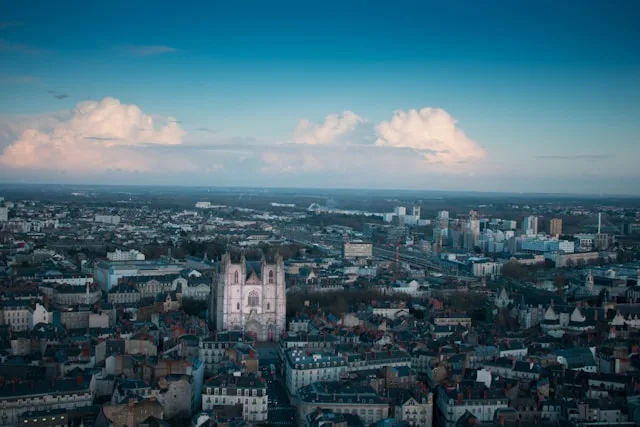
Nantes hosts approximately 850 digital and creative sector companies generating €1.2 billion in annual turnover. The video game subsector alone employed an estimated 600 full-time equivalents across pure-play studios as of early 2025, growing 8% year on year even as the global games industry contracted. Animation has seen the strongest expansion, catalysed by the September 2022 opening of the Gobelins campus on Île de Nantes, which trains 120 students annually and has attracted co-located studios to its immediate vicinity.
But the composition of this economy reveals a structural problem. The sector has a bipolar shape: a broad base of small creative studios averaging 8 to 12 employees, and a handful of large corporate outposts. The middle tier, companies employing 50 to 200 people, is conspicuously absent. This "missing middle" matters because mid-size studios are typically where senior technical talent finds the combination of creative autonomy and operational scale that makes a role worth staying for. Without enough of them, Nantes' creative sector struggles to offer the career trajectories that retain experienced professionals.
The anchor employers fill part of this gap. Ubisoft Nantes employs approximately 150 staff focused on AAA game development. Joovence, a digital therapeutics platform that raised €30 million in a Series B round in 2023, has grown to over 250 employees and is the only Nantes company qualifying for the French Tech Next40/120 growth programme. SII Group Ouest, an IT services and engineering firm with around 400 Nantes employees, serves as a talent pipeline for creative tech. Voodoo maintains a satellite office of 30 to 40 staff supporting its Paris headquarters.
These employers anchor the ecosystem but do not define its ceiling. The ceiling is defined by the talent available to fill the roles that sit between junior production staff and C-suite leadership. And that talent pool is thinner than the city's growth numbers suggest.
Why Akeneo's Departure Matters Less Than You Think
The most interesting tension in Nantes' digital economy is what happened after its most prominent tech company left.
Akeneo, the product information management platform founded in Nantes in 2013, relocated its headquarters to Bordeaux in September 2022, shifting strategic decision-making and senior executive functions out of the city. According to reporting in Les Echos at the time, the move represented a material loss of C-suite presence and, more subtly, the kind of large-exit founder capital recycling that feeds angel investment into younger companies.
The counterintuitive data point
Despite this departure, Nantes recorded its highest-ever number of startup creations in the 2023 to 2024 cycle. Venture capital deployment reached €89 million in 2024, up 15% from the previous year. Akeneo itself retains a Nantes office with approximately 110 employees focused on R&D and customer success.
This pattern challenges a commonly held assumption in regional economic development: that retaining unicorn headquarters is a prerequisite for ecosystem health. The Nantes data suggests something different. An anchor company's strategic functions can decouple from local entrepreneurial vitality. The startups kept forming. The capital kept flowing. What did not keep flowing was the kind of senior executive gravity that draws VP-level and C-suite talent to a city by reputation alone.
This is the analytical spine of the Nantes creative tech story. The city is building companies. It is not building the senior talent density those companies need. The missing middle in company size mirrors a missing middle in human capital: too few professionals with 10 or more years of experience to fill the leadership roles that mid-stage growth demands.
The Remote Work Paradox: Retention Tool and Poaching Mechanism
Remote work is reshaping Nantes' talent market in two opposing directions simultaneously. Both are true. Understanding both is necessary before making any hiring decision in this city.
The drain narrative
Paris-based studios can now recruit Nantes developers without requiring them to relocate. According to APEC's study on remote work and compensation in the Pays de la Loire, this allows senior developers to command Parisian salary bands of €80,000 or more while living in Nantes. For local studios that cannot match these rates, the result is direct wage pressure from employers they never compete with face to face.
International remote recruitment compounds the effect. Portuguese and Spanish studios in Lisbon and Barcelona actively recruit French-speaking Nantes developers, offering local salary rates but with lower tax burdens and what the SNJV's Talent Mobility Report describes as "sun-belt appeal." The competitive set for a senior Nantes developer is no longer confined to the Loire-Atlantique. It includes every studio with a remote-first policy and a contract structure that works across borders.
The retention narrative
The same APEC data shows that 42% of senior developers who considered leaving Nantes in 2024 ultimately stayed precisely because remote work let them access higher salaries without moving. They remain Nantes residents, they pay Nantes taxes, they sustain housing demand. The city retains the people even as local physical employers lose access to them.
This creates a bifurcated market. A senior gameplay programmer physically present in a Nantes studio four or five days a week earns €52,000 to €65,000. The same professional, working remotely for a Paris employer from the same apartment, earns €80,000 or more. The gap is not marginal. It is 25 to 40%. Local employers who require on-site presence are competing not against other local employers but against an entirely different compensation tier.
For hiring leaders, the implication is precise. Recruiting senior creative tech talent in Nantes requires either matching the remote premium or offering something a remote Paris contract cannot: creative ownership, equity participation, studio-level autonomy, or a leadership trajectory that a satellite role never provides. The proposition required to move a passive candidate in this market is not a better salary alone. It is a better role.
What Nantes' Creative Tech Roles Actually Pay
Compensation in Nantes' creative tech sector follows a clear pattern: competitive at junior and mid levels, materially discounted at senior and executive levels relative to Paris and Bordeaux.
Individual contributor compensation
A Senior Gameplay Programmer or Lead Developer with 5 to 8 years of experience earns between €52,000 and €65,000 in base salary, typically with a 5 to 10% bonus. According to APEC's regional salary benchmark, this represents an 8 to 12% premium over generic software development roles in the same region. The premium reflects the specialised nature of real-time engine expertise.
A Senior Creative Director in animation or gaming earns €58,000 to €72,000, rising to €85,000 to €110,000 at the executive Studio Creative Director level. These figures come from PageGroup's Media and Entertainment Salary Survey and APEC's Creative Industries Executive Roles data, both from 2024.
The executive gap
The most consequential compensation data concerns VP of Engineering and CTO roles. In Nantes, these positions command €95,000 to €125,000 in base salary plus equity participation. According to Robert Half's 2025 Salary Guide, this represents a 25 to 30% discount to equivalent roles in Paris, where the range runs €130,000 to €170,000. Bordeaux sits in between at €105,000 to €135,000, offering a 10 to 15% premium over Nantes for the same role.
This discount is not a recruitment advantage. It is a retention liability. A VP of Engineering in Nantes who receives an approach from a Paris studio faces a potential €40,000 to €50,000 increase in base compensation. Even with Nantes' lower cost of living, the gap is too large to offset through lifestyle arguments alone.
The studios that retain executive talent successfully tend to supplement base compensation with meaningful equity participation or profit-sharing arrangements. But equity only works as a retention tool when the company is growing fast enough to make the equity credible. In a market where Series B capital remains constrained and late-stage funding typically requires a Paris or London roadshow, the equity story is harder to tell convincingly than it is in a city with more visible exits.
What this compensation data reveals is not simply that Nantes pays less. It reveals that the discount widens precisely at the seniority level where retention matters most. Junior and mid-level roles are roughly competitive. The gap opens at the exact point where a professional's departure causes the most operational damage.
The Capital Constraint That Shapes Everything Else
Nantes' creative tech sector faces a capital access problem that cascades into every other challenge described in this article.
Venture capital deployment reached €89 million in 2024, but this figure is heavily concentrated in seed and Series A rounds. The city lacks dedicated venture capital funds above €50 million in assets under management focused on creative tech. For rounds exceeding €10 million, Nantes startups routinely relocate their fundraising roadshows to Paris or London. Average Series A timelines run 9 to 11 months, compared to 6 months in Paris, according to France Digitale's 2024 startup survey.
Only one Nantes company, Joovence, currently qualifies for the French Tech Next40/120 growth programme. Bordeaux has nine. The disparity is not explained by population differences. It reflects a structural gap in the availability of growth-stage capital that allows companies to scale past the 50-employee mark and into the "missing middle" that the ecosystem needs.
The implications for talent are direct. Companies that cannot raise Series B funding cannot offer the equity packages that attract and retain senior leaders. They cannot invest in the compensation infrastructure, the signing bonuses, the four-day work weeks, that counter the poaching pressure from Paris and Bordeaux. They cannot build the studio scale that creates genuine career progression for a Technical Director or VP of Product.
The capital constraint and the talent constraint are not separate problems. They are the same problem expressed in two currencies. One is measured in euros of funding. The other is measured in months of unfilled senior roles.
The Ubisoft Dependency and Ecosystem Risk
Ubisoft Nantes contributes an estimated 18 to 22% of local gaming sector wages. This concentration creates a dependency risk that every hiring leader in the market should understand.
At the corporate level, Ubisoft SA has faced acquisition pressure through 2024 and into 2025. Any consolidation, studio closure, or headcount reduction at the parent company level would ripple directly into Nantes' talent ecosystem. If Ubisoft Nantes contracted, it would simultaneously release experienced professionals into the local market and reduce the gravitational pull that attracts new talent to the city. The net effect depends on timing: if local studios are positioned to absorb that talent, a contraction could paradoxically strengthen the broader ecosystem. If they are not, the departing professionals follow the same routes to Paris, Bordeaux, and international remote roles that currently drain the market.
The Phase 2 completion of the Quartier de la Création on Île de Nantes, adding 15,000 square metres of studio and coworking space in 2025, represents the city's attempt to diversify beyond any single employer. But physical space is a necessary condition for ecosystem growth, not a sufficient one. The current 12% vacancy rate in creative sector real estate, reported by CBRE's Pays de la Loire market report, suggests that tenant recruitment rather than space availability is the binding constraint.
The serious games sector, encompassing corporate training and healthcare simulation, is projected by the SNJV to outgrow entertainment gaming locally by 2027. This diversification matters because it creates demand for a different profile of senior leader: professionals who combine technical game development skills with domain expertise in healthcare, education, or industrial training. These hybrid roles are even scarcer than pure gaming talent, but they also carry less direct competition from Paris studios that focus primarily on entertainment titles.
For organisations hiring into this market, the Ubisoft dependency creates a specific planning question. Is the role you are filling connected to a supply chain that depends on Ubisoft's continued local presence? If so, contingency planning around talent pipeline depth is not optional. It is the difference between a resilient hire and a vulnerable one.
What a Successful Search in This Market Actually Requires
The data on passive candidate ratios in Nantes' creative tech sector is unambiguous. Among Senior Unreal Engine developers with five or more years of experience, an estimated 85 to 90% are passive. They are employed. They are not applying. Among Technical Artists in the Pays de la Loire gaming sector, the SNJV's regional skills assessment describes "zero unemployment." One hundred percent of placements occur through network referral or direct search. Job boards reach none of them.
AI and ML engineers specialising in creative industries applications have an unemployment rate below 5% in the region. Their average tenure is 4.2 years, and they receive three to five recruiter approaches monthly. The signal-to-noise ratio for these candidates is poor: they are heavily approached but rarely by firms offering the specificity of role and compensation that would move them.
A conventional search process built around job postings and inbound applications will not work in this market. The arithmetic is straightforward. If 85% of qualified candidates are passive, then a search that reaches only active candidates is operating within 15% of the available pool. In a city with 40% fewer senior developers per capita than Bordeaux, narrowing the pool by another 85% renders the search functionally impossible.
What works instead
The studios that fill senior roles successfully in Nantes share three characteristics. They identify candidates through direct mapping of competitor teams, not through job advertising. They lead with the creative and technical specifics of the project, not with generic company branding. And they move fast: the 140 to 180 day average for a Senior UE5 role reflects searches that began with a job posting and only shifted to direct outreach after months of silence.
One documented pattern from Q3 2024 illustrates the premium required: a Nantes-based studio extended a €15,000 signing bonus and a four-day work week arrangement to secure a Senior UE5 Engineer from a Bordeaux competitor. According to Expectra IT Recruitment's market analysis, this combination of financial and lifestyle incentives is becoming the baseline expectation rather than the exception for senior creative tech hires.
KiTalent's approach to executive search in AI and technology businesses is designed for exactly these conditions. In a market where the candidates who matter are not visible on any platform and will not respond to a generic outreach, the search must begin with a complete map of where the talent sits, who holds it, and what proposition might move them. KiTalent delivers interview-ready candidates within 7 to 10 days using AI-powered talent mapping to identify the passive professionals that conventional methods miss entirely.
For organisations competing for senior creative tech and gaming leadership in Nantes, where 85% of qualified candidates are not looking and every search competes with Paris-level remote salaries, speak with our executive search team about how we source, map, and deliver the candidates this market hides. With a 96% one-year retention rate and a pay-per-interview model that eliminates upfront retainer risk, the search starts with precision and ends with a hire that stays.
Frequently Asked Questions
What is the average salary for a senior game developer in Nantes?
A Senior Gameplay Programmer or Lead Developer with 5 to 8 years of experience earns between €52,000 and €65,000 in base salary in Nantes, typically supplemented by a 5 to 10% bonus. This represents an 8 to 12% premium over generic software development roles in the Pays de la Loire region. However, Nantes salaries at this level sit 25 to 30% below equivalent Paris roles and 10 to 15% below Bordeaux, a gap that widens further at VP of Engineering and CTO levels where Nantes ranges top out around €125,000.
Why is it so hard to hire Technical Art Directors in Nantes?
Technical Art Directors who combine artistic vision with shader programming and engine expertise represent a critically understaffed profile. Roles requiring 7 or more years of experience and HLSL or Shader Graph proficiency attract zero qualified active applicants within the first 90 days of posting. The SNJV describes "zero unemployment" among technical artists in the Pays de la Loire gaming sector. Every placement occurs through network referral or direct executive search methods, not through job boards or inbound applications.
How does Nantes compare to Bordeaux for creative tech hiring?
Bordeaux offers 10 to 15% salary premiums over Nantes at senior levels, hosts nine companies in the French Tech Next40/120 programme versus Nantes' one, and has absorbed several Nantes startups through acquisition or headquarters relocation. Bordeaux also has a stronger unicorn presence, including Akeneo's relocated headquarters and Asobo Studio. However, Nantes maintains lower commercial real estate costs and is expanding creative infrastructure through the Quartier de la Création. The two cities compete directly for the same talent pool with comparable costs of living.
What impact does remote work have on Nantes' tech talent market?
Remote work simultaneously retains and drains Nantes' talent pool. APEC data shows 42% of senior developers who considered leaving in 2024 stayed because remote work gave them access to Paris-level salaries while remaining Nantes residents. But the same dynamic allows Paris employers to recruit Nantes professionals at €80,000 or more, creating 25 to 40% wage pressure on local studios requiring physical presence. International studios in Lisbon and Barcelona also recruit French-speaking developers remotely, expanding the competitive set far beyond the region.
How can companies in Nantes attract passive senior developers?
With 85 to 90% of qualified Senior Unreal Engine developers classified as passive, the search must bypass job advertising entirely. Successful hires in this market involve direct talent mapping of competitor teams, leading with specific project and creative details rather than employer brand, and structuring offers that combine financial incentives like signing bonuses with lifestyle differentiators such as compressed work weeks. Speed matters: the gap between a 45-day generalist hire and a 140 to 180 day specialist search represents months of lost production capacity.
What are the biggest risks to Nantes' creative tech ecosystem?
Three risks stand out. First, Ubisoft Nantes contributes 18 to 22% of local gaming sector wages, creating concentration risk if the parent company restructures. Second, constrained Series B and growth capital forces startups to fundraise in Paris or London, limiting local scale-up growth. Third, the EU AI Act creates new compliance costs for studios using generative AI tools, disproportionately burdening smaller operations that lack dedicated legal and compliance resources. The interplay of these three risks shapes every senior hiring decision in this market.