Nizwa's Date Agribusiness Is Building Capacity It Cannot Staff or Water: The Dual Crisis Behind Oman's Interior Economy
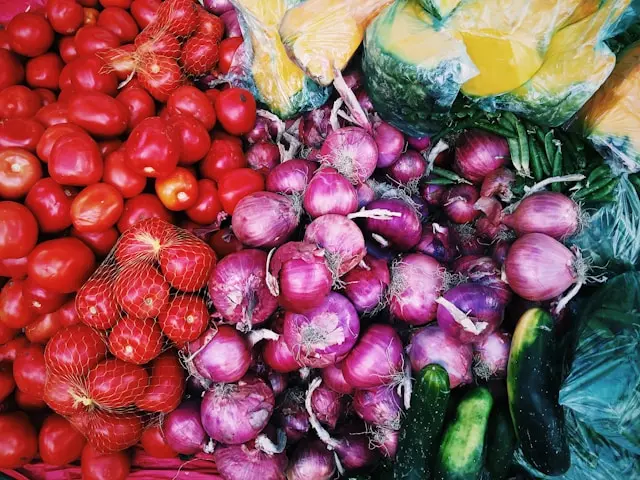
Nizwa's date sector produced an estimated 48,000 tonnes in the 2024/2025 harvest season, valued at OMR 28.8 million at farm-gate prices. The Al Dakhiliyah governorate, where Nizwa sits at the centre of Oman's interior agricultural economy, accounts for roughly one fifth of the country's total date output. By any production metric, this is a sector in growth. OFIC's orchard rehabilitation programme targets 52,000 tonnes for 2026. A new Agro-Logistics Zone at the Nizwa Industrial Estate is scheduled for completion in mid-2026, adding 8,000 tonnes of cold storage and a processing incubation centre for SMEs.
But two forces are pulling against that expansion with equal strength. The aquifer beneath Al Dakhiliyah is classified as critical, with extraction running at 140% of sustainable yield. The water table has dropped from 45 metres in 2010 to 78 metres in 2024. And the specialists required to manage water-efficient agriculture, food safety compliance, and cold chain logistics in this market take four to six months to hire, when they can be hired at all. Seventy to seventy-five percent of qualified candidates in these disciplines are not looking for work. They are employed, passive, and being courted simultaneously by Muscat, Al Ain, Dubai, and increasingly by Saudi Arabia's mega-projects offering packages 40 to 50 percent above Omani rates.
What follows is an analysis of the forces reshaping Nizwa's date and horticulture economy, the employers driving that change, and what senior leaders need to understand before they make their next hiring or investment decision in Oman's interior agribusiness corridor.
The Oasis Economy in Transition: From Falaj Networks to Industrial Processing
Nizwa's agricultural identity has been shaped for centuries by the falaj, the traditional irrigation channels that carry mountain water to the date palm groves of the interior. The city hosts two UNESCO World Heritage aflaj, Falaj Daris and Falaj Al Khatmeen, which together irrigate approximately 680 hectares of date palms and fodder crops. The Khalas, Fardh, and Mabsali varieties account for 85% of Nizwa's output. This is not a diversified horticultural market. It is a date economy with supplementary greenhouse vegetable production and a logistics role for mountain-grown pomegranates cultivated on Jabal Akhdar, 60 kilometres to the northeast.
The transition underway is from a fragmented, smallholder-driven supply chain to one increasingly controlled by industrial processors. The number of operational farms in Nizwa wilayat fell from 4,120 in 2018 to 3,650 in 2024. Average farm size rose from 1.2 to 2.1 hectares over the same period. This consolidation is driven by two reinforcing pressures: an ageing farmer demographic with limited generational succession, and economies of scale demanded by the industrial buyers who now dominate the wholesale market.
OFIC and Al Foah: The Two Buyers Reshaping the Market
Oman Food Investment Holding Company and Al Foah Oman have absorbed 35% of the wholesale market share previously held by small packers since 2022. OFIC's Nizwa Date Factory has a capacity of 10,000 tonnes per year and directly employs 180 personnel across its factory and associated orchards. Al Foah, a subsidiary of the UAE-based parent company, operates a processing and packaging facility in the Nizwa Industrial Estate with approximately 85 permanent staff and 200 seasonal workers.
Together, these two entities control roughly 60% of the wholesale market. For Nizwa's 14 agricultural cooperatives, including the Nizwa Agricultural Cooperative Society with its 340 active members, this concentration creates oligopsony pressure. Farm-gate prices have stabilised at OMR 600 per tonne. That price stability, in a context of rising water costs and tightening labour regulation, translates into margin compression for independent growers and accelerates exits from the sector.
The Cold Chain Gap That Costs 18 to 22 Percent of Every Harvest
Post-harvest losses in Nizwa remain at 18 to 22%, according to the FAO's Oman Country Programming Framework. The city operates 23 small cold-storage facilities with a combined capacity of 4,200 metric tonnes. That figure is insufficient for a harvest that now exceeds 48,000 tonnes. The Phase 3 expansion of the Nizwa Industrial Estate will add 8,000 tonnes of cold storage, but until that capacity comes online, the gap between production volume and preservation infrastructure continues to destroy value. Every percentage point of post-harvest loss at current farm-gate prices represents roughly OMR 288,000 in annual waste. The talent required to close that gap, cold chain logistics managers and post-harvest technology specialists, is among the hardest to recruit in this market.
Water Austerity and the Contradiction at the Heart of Nizwa's Growth Plan
The most consequential tension in this market is not between employers competing for talent. It is between two government strategies that assume contradictory resource trajectories.
On one side, PEIE's expansion of the Nizwa Industrial Estate anticipates 30% growth in processing capacity by 2026. The Agro-Logistics Zone, the cold storage additions, and the SME incubation centre all assume stable or growing raw material supply from local farms.
On the other side, the Ministry of Agriculture, Fisheries and Water Resources has imposed a moratorium on new agricultural boreholes. MAFWR's water budget allocation for Al Dakhiliyah agriculture in 2026 is capped at 42 million cubic metres, a 5% reduction from 2024 levels. The ministry's longer-term target demands a 40% reduction in agricultural groundwater use by 2030 to ensure aquifer sustainability. Tiered pricing for extraction beyond quota limits is coming, with projected production cost increases of 12 to 15% for non-compliant farms.
This is the original analytical insight that this article is built around: the processing capacity being built in Nizwa assumes a feedstock supply that the water policy is designed to constrain. Capital investment in industrial infrastructure has outpaced the resource base that feeds it. Unless transformational efficiency gains in irrigation, or alternative water sources such as agricultural desalination, materialise within the next two to three years, Nizwa's new processing facilities may face raw material shortages or be forced to source dates from outside the region. That outcome would dismantle the local value chain economic model that justifies the investment.
Current drip irrigation compliance stands at 34% against a 2026 mandate of 60%. The gap is not just a regulatory compliance problem. It is a water demand problem. And solving it requires exactly the category of specialist, agricultural engineers with hybrid falaj-modern irrigation expertise, that this market cannot hire quickly enough.
The Talent Scarcity That Water and Food Safety Policy Have Created
Nizwa's agribusiness hiring challenges are not driven by a general shortage of labour. Oman's national unemployment rate sits at 10.6%. Seasonal demand for field workers during the Rutab harvest from July to September and the processing season from October to December is met by approximately 12,000 South Asian workers on temporary agricultural visas. The labour supply problem is micro-level and discipline-specific.
Three specialist categories face acute shortages. Each is a consequence of policy decisions that have created demand faster than the training pipeline can produce supply.
Irrigation Engineers: A Competency That Barely Exists
The first shortage is in agricultural engineers who can integrate traditional falaj hydraulics with modern precision agriculture systems. Only 12% of local agricultural engineers possess both competencies, according to a Sultan Qaboos University alumni survey. The university, the primary academic anchor for the sector, produces approximately 45 agricultural graduates annually. That pipeline feeds the entire country, not just Nizwa.
Hiring timelines for senior irrigation engineers in this market typically extend to four to six months. Vacancy rates in the agricultural sector run at 23%. Employers frequently restructure roles, splitting responsibilities between a foreign consultant for system design and local technicians for maintenance, because they cannot find a single professional who combines both skill sets. The drip irrigation mandate makes this shortage operationally urgent. Farms that cannot convert by 2026 face regulatory penalties. Farms that want to convert cannot find the engineers to design and implement the systems.
Food Safety Managers: HACCP Certification Meets Regulatory Compression
The second shortage is in food safety and quality assurance managers with international standards certification. The new Food Safety Law, expected to be ratified in early 2026, will mandate HACCP certification for all date packing facilities. This regulatory shift will likely trigger further consolidation, as small operators lack the capital and expertise for compliance.
The candidates required for these roles need five or more years of GCC food manufacturing experience and, for export-facing facilities, dual familiarity with GCC standardisation frameworks and EU organic certification requirements. Typical search processes run three to four months, with 40% of offers rejected because candidates accept competing offers from Muscat or the UAE. At executive and VP level, food safety directors command OMR 5,000 to 7,200 per month, a 20 to 25% premium over general manufacturing, reflecting both regulatory complexity and candidate scarcity.
Cold Chain Logistics: The Infrastructure Is Coming, the Managers Are Not
The third shortage is in cold chain logistics managers capable of reducing the 18 to 22% post-harvest loss rate. This is not a skills problem that will be solved by the Phase 3 infrastructure expansion alone. The cold storage is hardware. Managing it effectively, maintaining temperature integrity across a fragmented supply chain of smallholder deliveries, and optimising throughput during the concentrated harvest window requires experienced logistics professionals who understand both the technology and the agricultural context.
Senior-level cold chain managers command OMR 4,000 to 5,500 per month at executive level, with compensation pressured upward by competition from logistics firms in Muscat's Sohar Freezone. The salary differential between Nizwa and Muscat or UAE equivalents is material enough to redirect candidates away from interior postings even when the operational challenge is more interesting.
The Compensation Dynamics That Make Interior Hiring Harder Than It Looks
Nizwa's agribusiness compensation structure reveals a market pulling in three directions. At the operational level, seasonal agricultural workers are paid at rates that reflect an abundant, expatriate-dominated labour pool. At the specialist level, irrigation engineers and food safety managers are paid at rates that reflect moderate scarcity but remain below regional competitors. At the executive level, compensation attempts to close the gap with Muscat and the Gulf but consistently falls short.
An Agricultural Operations Director at senior manager level earns OMR 1,800 to 2,400 per month. At executive or VP level with P&L responsibility across multiple sites, that range rises to OMR 4,500 to 6,500 plus performance incentives tied to yield metrics. A Food Safety Director at the same level commands OMR 5,000 to 7,200. Supply Chain and Cold Chain Managers at executive level earn OMR 4,000 to 5,500.
These figures must be read against the competitive context. Muscat offers 25 to 35% salary premiums for equivalent roles. The UAE offers tax-free salaries and international career trajectories. According to Gulf Business, Saudi Arabia's Neom and Red Sea Project are recruiting irrigation and desert agriculture specialists at packages 40 to 50% above Omani market rates. Nizwa cannot match these offers on compensation alone.
The implication for executive hiring strategy in this market is that the proposition must be constructed differently. Compensation is necessary but not sufficient. The candidates willing to accept a Nizwa posting over a Muscat or Dubai alternative are typically motivated by operational scope, technical challenge, or a specific interest in heritage agriculture systems. Identifying those motivations in a passive candidate pool requires search methodology that goes beyond job advertising and into direct identification and engagement of professionals who are not actively looking.
Omanisation, Unemployment, and the Reskilling Gap
The data in this market contains an apparent contradiction that deserves careful unpacking. Oman's national unemployment rate is 10.6%. Youth underemployment is a documented policy concern under Vision 2040. The government's Omanisation drive targets 300,000 private-sector jobs for nationals by 2030. Yet MAFWR's skills survey reports that 78% of agricultural enterprises cannot find qualified Omani candidates for irrigation technician and food safety inspector roles. Agricultural Omanisation rates stand at 12 to 15%, and the Ministry of Labour has mandated 25% by 2026, up from 15% in 2024.
These figures are not contradictory. They describe different populations within the same labour market. Aggregate unemployment reflects a surplus of Omani graduates in business, humanities, and general studies. The agricultural sector requires hands-on technical skills, regulatory certification, and willingness to work in field conditions in Al Dakhiliyah's interior. The mismatch is vocational, not numerical.
The penalty structure for non-compliance is consequential. Firms that miss the 25% Omanisation target face visa restrictions for expatriate labour. In a sector where 12,000 seasonal workers are expatriates and specialist roles already take four to six months to fill, losing the ability to bring in foreign workers compounds an already acute staffing problem. The cost of a wrong hire or a forced compliance appointment in a technical role, an Omani graduate placed into an irrigation engineering position without the requisite hybrid skills, is measured in system failures and crop losses, not just salary waste.
Sultan Qaboos University's 45 agricultural graduates per year represent the primary reskilling pipeline. That number serves the entire national agricultural sector. Without a material expansion of vocational training in irrigation technology, food safety certification, and cold chain management, the Omanisation mandate will force employers into one of two positions: accepting productivity trade-offs in technical roles, or inflating wage bills to attract the small number of qualified Omani professionals available.
Climate, Labour Fragility, and the Risks Beyond the Hiring Timeline
The talent and water challenges are the most immediate constraints, but they sit within a broader risk environment that any leader operating in this market must account for.
Climate Volatility and Yield Uncertainty
Projected temperature increases of 2°C by 2030 and irregular Khareef monsoon patterns are already affecting associated horticultural output. The 2024 heat dome reduced pomegranate yields in mountain farms by 15%, directly impacting Nizwa's processing volumes. Date palms are more heat-tolerant than most crops, but the interaction between rising temperatures and falling water tables creates compounding stress on orchards. This is not a future risk. It is a present condition that will intensify.
Seasonal Labour Supply Fragility
The sector's dependence on 12,000 seasonal migrant workers creates vulnerability that extends beyond normal hiring challenges. The 2024 visa amnesty and re-registration process temporarily reduced the available harvesting workforce in Al Dakhiliyah by 18%. Any future changes to GCC visa policy, regional geopolitical disruption, or pandemic-related travel restrictions would expose the same vulnerability. The harvest window is narrow. A labour shortfall during July to September cannot be recovered.
Regulatory Compression
The convergence of the Food Safety Law, Omanisation mandates, water tiered pricing, and drip irrigation conversion requirements creates a regulatory environment where compliance costs are rising across multiple fronts simultaneously. Small operators face the highest relative burden. The HACCP certification requirement alone may force further exits from the processing segment, accelerating the consolidation trend that has already reduced the number of independent packers. For leaders responsible for building teams in this environment, the regulatory trajectory means that the compliance and food safety talent required today will be even scarcer tomorrow.
What This Means for Organisations Hiring in Nizwa's Agribusiness Sector
The conventional approach to hiring in a market like Nizwa, posting a role, screening inbound applications, and waiting for the right candidate, reaches at most 25 to 30% of the viable talent pool. The remaining 70 to 75% are employed, passive, and will only consider a move if approached directly with a proposition tailored to their specific motivations. In a market where Saudi mega-projects and UAE tax-free salaries compete for the same specialists, passive candidate identification is not an optional refinement. It is the only method that reaches the professionals who can actually fill these roles.
KiTalent's approach to executive search in agricultural and industrial sectors is designed for exactly this market structure. AI-powered talent mapping identifies the specific individuals with hybrid irrigation engineering skills, GCC food safety certification, or cold chain logistics experience, regardless of whether they are visible on any job board. Interview-ready candidates are delivered within 7 to 10 days, compressing the four to six month hiring timelines that currently characterise specialist searches in this sector.
The pay-per-interview model means organisations only pay when they meet qualified candidates. For a market where 40% of offers are rejected because candidates accept competing positions during a lengthy search process, speed is not a luxury. It is the difference between securing the candidate you need and watching them accept a role in Muscat or Dubai.
For organisations building or expanding operations in Nizwa's agribusiness corridor, where the water budget is tightening, the regulatory burden is rising, and the specialists who can manage both are among the hardest professionals to hire anywhere in the GCC, start a conversation with our executive search team about how we approach this market. KiTalent has completed over 1,450 executive placements globally, with a 96% one-year retention rate that reflects the quality of candidate matching in specialised, hard-to-fill markets.
Frequently Asked Questions
What are the main challenges hiring agribusiness executives in Nizwa?
Nizwa's agribusiness sector faces three acute specialist shortages: irrigation engineers with hybrid falaj-modern system expertise, food safety managers with HACCP and GCC regulatory certification, and cold chain logistics managers. Hiring timelines extend to four to six months for senior roles. Approximately 70 to 75% of qualified candidates are passive and not actively seeking positions. Compensation competition from Muscat, the UAE, and Saudi Arabia's mega-projects compounds the difficulty. The new Food Safety Law and Omanisation mandates are increasing demand for certified professionals faster than the training pipeline produces them.
How much do agribusiness executives earn in Nizwa, Oman?
Compensation varies by role and seniority. Agricultural Operations Directors earn OMR 4,500 to 6,500 per month at executive level. Food Safety and Quality Assurance Directors command OMR 5,000 to 7,200, reflecting a 20 to 25% premium over general manufacturing. Supply Chain and Cold Chain Managers earn OMR 4,000 to 5,500 at executive level. Senior specialist and manager roles range from OMR 1,600 to 2,800 depending on the function. These rates sit 25 to 35% below Muscat equivalents and materially below UAE and Saudi benchmarks for similar specialisms.
Why is water scarcity affecting agribusiness hiring in Nizwa?
Groundwater extraction in Al Dakhiliyah exceeds sustainable recharge rates by 40%. The water table has dropped from 45 to 78 metres over 14 years. MAFWR has mandated drip irrigation conversion for 60% of farms by 2026, with current compliance at 34%. This creates urgent demand for irrigation engineers who understand both traditional falaj systems and modern precision agriculture. Only 12% of local agricultural engineering professionals possess both competencies, making this one of the most acute specialist gaps in the Omani market.
What is the Omanisation requirement for agriculture in Oman?
The Ministry of Labour mandates 25% Omanisation for agricultural enterprises by 2026, up from 15% in 2024. Current agricultural Omanisation rates sit at 12 to 15%. Non-compliant firms face visa restrictions for expatriate workers. Despite national unemployment of 10.6%, 78% of agricultural enterprises report inability to find qualified Omani candidates for technical roles. The gap is vocational rather than numerical. Sultan Qaboos University produces approximately 45 agricultural graduates annually for the entire country, creating a systemic bottleneck.
How can executive search help with agribusiness hiring in Oman's interior?
In a market where 70 to 75% of qualified specialists are passive and where job advertising reaches only active candidates, direct headhunting is the only method that accesses the full talent pool. KiTalent uses AI-enhanced talent mapping to identify specific professionals with the hybrid skills Nizwa's agribusiness sector requires, delivering interview-ready candidates within 7 to 10 days. The pay-per-interview model eliminates upfront retainer risk, and KiTalent's 96% one-year retention rate reflects the precision of candidate matching in specialised, hard-to-fill markets across the GCC.
What is the outlook for Nizwa's date sector in 2026?
Production is projected to reach 52,000 tonnes, supported by OFIC's orchard rehabilitation covering 1,200 hectares. The Nizwa Industrial Estate's Phase 3 Agro-Logistics Zone adds 8,000 tonnes of cold storage capacity by mid-2026. However, growth faces constraints: the 2026 agricultural water allocation has been cut by 5%, the Food Safety Law will mandate HACCP certification for all packing facilities, and Omanisation requirements are tightening. The processing infrastructure is expanding faster than either the water supply or the specialist talent pipeline can sustain without material efficiency gains.