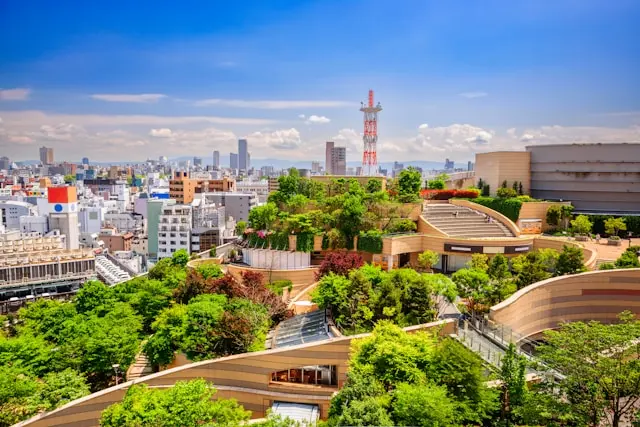
Osaka's Hospitality Boom Built a Talent Market That Cannot Staff Its Own Success
Osaka Prefecture welcomed 11.5 million international visitors in 2023. That figure represented just 80% of the 2019 peak. By the time Expo 2025 opened on Yumeshima Island last April, the city's hotels were running at 85% occupancy and its food service operators were turning away bookings. The investment story looked triumphant. The hiring story told a different version entirely.
The core problem is not that Osaka lacks hospitality workers. It is that the workers it needs most are the ones it is least equipped to attract. Bilingual hotel general managers, certified executive chefs with international kitchen credentials, revenue directors who can manage the swing from Expo-inflated rates to post-Expo normalisation, multi-unit food service leaders who can scale operations across 20 locations while ingredient costs climb 18% year on year. These are the roles where vacancies run past 120 days. These are the candidates who are already employed, not browsing job boards, and increasingly pulled toward Tokyo, Singapore, or Dubai by compensation structures Osaka has historically been unable to match.
What follows is a ground-level analysis of the forces reshaping Osaka's hospitality and tourism sector, the specific roles and salary bands that define its executive talent market, and what organisations hiring leadership in this city need to understand before they launch their next search. The data covers the full arc from the Expo demand surge through the post-Expo transition now underway, and identifies where the permanent gaps sit beneath the temporary noise.
A Multi-Polar Tourism Economy Running on a Single-Track Labour Supply
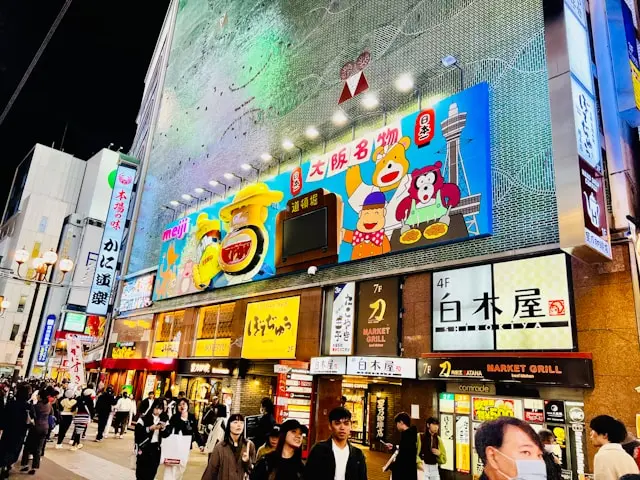
The common shorthand for Osaka's tourism economy puts Dotonbori and Universal Studios Japan at the centre. That framing is accurate but incomplete. Osaka functions as a multi-polar cluster. The Yumeshima Island corridor, anchored through 2025 by the World Exposition and supported by Intex Osaka's convention infrastructure, generates demand from a fundamentally different visitor profile than the leisure tourists crowding Dotonbori's neon-lit canal. Kansai International Airport serves as the Kansai region's primary international gateway, handling the logistics of moving millions of visitors into the metro area. The Umeda business district generates steady domestic business travel demand that operates on a separate seasonal cycle entirely.
Each pole requires different operational talent. A revenue director managing pricing for a bay-area hotel near the Expo site faces a radically different yield optimisation challenge than one managing a Namba property catering to repeat leisure visitors from South Korea and Taiwan. A food service area manager overseeing 15 locations in the Shinsaibashi corridor manages different cost structures and customer expectations than one overseeing airport-adjacent outlets.
Yet Osaka draws from a single, constrained labour pool. The accommodation and food services sector posted a job-opening-to-applicant ratio of 3.45:1 in Osaka Prefecture as of December 2023, according to data from Japan's Ministry of Health, Labour and Welfare. That figure exceeded the national average of 3.08:1. For candidates under age 30, the food service sector had just 0.4 applicants per opening. The pool is not just small. It is shrinking at the entry level while the roles that need filling are growing more complex at the senior level.
The Expo Effect on Permanent Hiring
The Expo's six-month run between April and October 2025 acted as both accelerant and distortion. The Japan Association for the 2025 World Exposition projected 28 million visitors over the period. Hotels across Osaka City reported occupancy rates exceeding 85% in Q2 and Q3 2025. Temporary wage inflation of 20 to 30% for six-month contracts drew mid-level managers out of permanent hospitality roles and into Expo-related positions. This was rational for the individuals involved. It was destabilising for every anchor employer competing for the same talent.
The distortion extends into 2026. Anchor institutions including USJ and the cluster of hotels surrounding the bay area deferred permanent hiring during the Expo period, either because they could not compete with temporary premiums or because they assumed the post-Expo correction would loosen the market. That assumption is proving unfounded. The Recruit Works Institute projects a net deficit of 12,000 workers in Osaka Prefecture's accommodation and food service sector by end of 2026, even accounting for the Expo's conclusion. The deficit is driven not by temporary demand but by structural attrition. The average age of the accommodation workforce stands at 42.3 years. Twenty-eight percent of the workforce is aged 55 or older. Replacements are not arriving at anything close to replacement rate.
Where the Searches Are Stalling: Three Roles That Define the Crisis
Not every hospitality role in Osaka is hard to fill. Front desk agents turn over at an annualised rate of 35%, but the market for them is at least active. Line cooks are scarce but recruitable through vocational school pipelines at institutions like Ecole Tsuji and Osaka Culinary Arts College. The genuine crisis sits in three specific categories where the talent is passive, the requirements are compounding, and the search timelines have stretched past anything the sector considers functional.
Bilingual Hotel General Managers and Revenue Directors
A luxury or upper-upscale hotel general manager in Osaka with profit-and-loss responsibility over a property generating more than ¥5 billion in revenue commands between ¥18 million and ¥32 million in total compensation. The role requires not just operational expertise but bilingual fluency in Japanese and English, familiarity with the volatile demand cycles created by inbound tourism surges, and increasingly, the ability to integrate hotel technology stacks including mobile check-in platforms, AI concierge systems, and IoT room management.
Senior hotel management roles in Osaka average 127 days to fill, compared to 94 days nationally according to the Hays Japan Hospitality and Tourism Salary Guide. The gap exists because Osaka's pool of candidates with international hotel brand experience, bilingual capability, and willingness to remain in the Kansai region is extraordinarily thin. Bilingual Japanese and English capability commands a 35 to 50% premium at the executive level in Osaka, compared to 20 to 30% in Tokyo. The premium is higher in Osaka specifically because fewer candidates meet the threshold.
Revenue management directors who can operate systems like IDeaS, Duetto, or Opera Cloud with genuine yield optimisation skill represent a similarly constrained pool. The post-Expo transition demands exactly this expertise. Hotels that priced for Expo-inflated demand must now recalibrate for a projected 15 to 20% drop in average daily rates in early 2026. The revenue leaders who can manage that transition without destroying rate integrity are precisely the ones already employed and performing well elsewhere.
Certified Executive Chefs with International Credentials
The Hotel Hankyu International case illustrates the severity of the shortage at the top of the culinary talent market. According to an industry executive interview cited in Hotelry.jp in February 2025, the property reportedly restructured its food and beverage operations in late 2024, eliminating its signature French restaurant's à la carte service and shifting to banquet-only operations after an eleven-month search for a Western cuisine Executive Chef with Michelin-starred experience failed to produce a hire. The Japan Hotel Association's Labour Shortage Survey confirms the broader pattern: 73% of luxury hotels reported extreme difficulty filling Executive Chef positions in 2024.
An executive chef at a luxury property in Osaka earns between ¥15 million and ¥24 million. A sous chef or chef de cuisine at the next tier earns ¥7 million to ¥10 million. The gap between the two tiers is wide enough that internal promotion often requires years of additional development. The external market is almost entirely passive. Executive pastry chefs, for example, hold average tenures of seven years or more and are recruited through the Japan Pastry Association network rather than any job board. For organisations hiring at this level, understanding why traditional executive recruiting methods fail is not theoretical. It determines whether a flagship restaurant stays open.
Food Service Multi-Unit Area Managers
The third acute shortage sits in the corporate operations layer of Osaka's food service chains. Area managers responsible for 10 to 20 store locations earn between ¥6 million and ¥8.5 million at the manager level. Regional operations directors earn ¥10 million to ¥14 million. These roles require the ability to manage margins in an environment where imported ingredient costs have risen 18% year on year due to yen depreciation, according to the Bank of Japan's Corporate Goods Price Index.
Kura Sushi's experience demonstrates the competitive pressure. According to Diamond Chain Store reporting from October 2024, the company's aggressive North American expansion targeting 300 or more US stores by 2026 created a talent suction effect at its Osaka headquarters. The company recruited three mid-level operations managers from rival Sushiro, offering ¥4.5 million retention bonuses and accelerated promotion tracks to area manager roles. When a single company's international ambition can strip experienced operators from a direct competitor in the same city, the talent pool is not merely tight. It is operating at a level where individual hires create visible disruption.
The Compensation Arithmetic That Explains the Talent Drain
Osaka's hospitality compensation challenge is not simply that it pays less than Tokyo. The differential is well known: Tokyo offers 12 to 18% higher base salaries for equivalent hotel management roles. Osaka partially offsets this through a cost-of-living advantage, with housing costs approximately 35% lower than central Tokyo. For mid-career professionals, this trade-off can be rational.
The problem is that the trade-off breaks down at exactly the seniority level where the most critical vacancies sit.
A hotel general manager in Osaka earning ¥25 million is competitive on purchasing power with a Tokyo counterpart earning ¥30 million. But the Tokyo counterpart has a visible pathway to corporate VP and C-suite roles at the Asia Pacific headquarters of Marriott, Hilton, or Hyatt. The Osaka counterpart's career ceiling within the same brand is the property itself. Lateral moves within Osaka are possible but the market is small. Upward moves require relocation to Tokyo or, increasingly, to Singapore or Dubai.
This dynamic creates what the research data shows in aggregate: a net outflow of approximately 2,400 hospitality graduates aged 22 to 30 from Osaka to Tokyo annually. The pipeline that should be building Osaka's next generation of hospitality leaders is leaking at the entry point. By the time these graduates reach the mid-career stage where Osaka most needs them, they are embedded in Tokyo networks and Tokyo career trajectories. Bringing them back requires more than a competitive salary negotiation. It requires a proposition that addresses career progression, not just compensation.
The international competition compounds the pressure. Yen weakness has made Japanese hospitality salaries less attractive in absolute terms against Singapore and Dubai. A ¥20 million salary translates to roughly SGD 180,000, which remains attractive in isolation. But Singapore's hospitality REITs offer equity participation and stock options that Japanese hotel operators historically do not. Dubai offers tax-free structures. For a bilingual hospitality executive aged 35 to 45, the mid-career window where career decisions have the highest long-term impact, these pull factors are material.
The Hidden Structural Constraint: Why Osaka Cannot Recruit Its Way Out
The original synthesis of this data reveals a dynamic that none of the individual data points state directly. Osaka's hospitality talent crisis is not primarily a compensation problem or a demand problem. It is a pipeline problem created by a cultural perception that has proven more durable than any wage increase.
Hospitality work in Japan carries the persistent stigma of being "3K": kitsui, kitanai, kiken. Hard, dirty, dangerous. This perception is decades old and largely outdated for the senior roles that carry the greatest shortages. A revenue management director working with AI-driven pricing tools in a luxury hotel has more in common with a financial analyst than with the stereotype embedded in the 3K label. But the perception operates at the pipeline entry point, not at the role description level. Only 8.3% of Osaka vocational school graduates enter hospitality, compared to 14.2% in Tokyo. The gap is not explained by compensation alone. Tokyo's cultural proximity to global hospitality brands, its concentration of English-language hospitality programmes, and its sheer visibility as a destination career market all contribute.
The implication for hiring leaders is direct. No amount of salary inflation at the executive level can resolve a shortage whose root cause sits at the vocational school decision point fifteen years earlier. The executives Osaka needs in 2026 were shaped by pipeline decisions made in 2010. The executives it will need in 2035 are being shaped by pipeline decisions happening now. Organisations that treat this as a search problem rather than an ecosystem problem will continue to run 127-day vacancies and restructure operations around roles they cannot fill. Those that invest in building a sustained talent pipeline while also sourcing from outside the conventional market have a structural advantage.
How Osaka's Passive Candidate Market Differs from Tokyo
The recruitment channel data contains a finding that should reshape how any organisation approaches executive search in Osaka's hospitality market. In Osaka, 65% of executive hospitality placements originate from executive search firm headhunting, compared to 22% in Tokyo, according to Korn Ferry's Japan Hospitality Recruitment Channels Report.
This is not a marginal difference. It is a fundamentally different market structure.
In Tokyo, the density of hospitality employers, the concentration of global brand headquarters, and the volume of mid-career movement create conditions where active and semi-active candidates are abundant enough to fill a meaningful share of executive roles through advertising, referral networks, and inbound applications. In Osaka, the talent pool is smaller, more embedded in existing roles, and less likely to be actively monitoring opportunities. The hidden majority of senior hospitality leaders are not on any job board. They are running properties, managing food service portfolios, or overseeing technical operations at institutions like USJ.
The Bilingual Premium as a Market Signal
The 35 to 50% bilingual premium in Osaka, compared to Tokyo's 20 to 30%, is not just a compensation data point. It is a scarcity signal. The premium exists because the supply of bilingual hospitality executives who choose to build careers in the Kansai region rather than gravitate toward Tokyo's larger market is exceptionally limited. Every candidate who meets this threshold knows their market value. They are approached regularly. They are not waiting to be found.
For international hotel operators like Marriott, Hilton, and the emerging wave of luxury brands entering the Osaka market ahead of the anticipated integrated resort developments, this means that the conventional approach of posting a role, screening inbound applications, and building a shortlist from visible candidates reaches a fraction of the viable pool. The fraction is too small to produce a competitive shortlist within any reasonable timeline.
Approaching this market requires a methodology that identifies and engages passive candidates directly, with market intelligence specific enough to understand which professionals are genuinely moveable and what proposition would be required to move them. Generic outreach fails in a market this small. The proposition must be specific to the individual.
The Post-Expo Transition: What 2026 Demands from Hiring Leaders
The Expo concluded in October 2025. The transition now underway will test every hospitality organisation in Osaka. JLL Hotels and Hospitality projects a 15 to 20% drop in hotel average daily rates in Q1 2026 compared to Q3 2025 peaks. Baseline demand remains elevated above 2024 levels, supported by the weak yen and expanded flight capacity at KIX. But the revenue environment has shifted from expansion to optimisation.
This shift changes the executive profile that matters most. During the Expo period, the premium was on capacity management: filling rooms, managing overflow, scaling food service operations to handle volume. In 2026, the premium shifts to margin management, revenue optimisation, and cost control in an environment where input costs remain elevated but pricing power has softened. The leaders who excelled at one may not excel at the other.
Simultaneously, the dissolution of Expo-period temporary employment contracts will release semi-skilled labour into the market. This creates a visible paradox: a simultaneous oversupply of general hospitality workers and an acute continuing shortage of the senior leaders, technical specialists, and bilingual executives who determine whether an organisation navigates the transition successfully. The cost of making the wrong leadership appointment in this window is amplified by the margin compression. A general manager who cannot manage the post-Expo rate transition will cost a 300-room property millions in missed revenue optimisation over twelve months.
The Visa and Workforce Composition Challenge
One further constraint deserves attention. Japan's Specified Skilled Worker visa programme, expanded in 2023 to include hospitality, was designed to address the volume shortage. Osaka employers have used it to bring in Southeast Asian workers for operational roles. But the programme requires a minimum N4 Japanese proficiency level, which limits the eligible pool. More critically, the current SSW framework prohibits permanent residency pathways. This creates embedded retention risk: an employer who invests in training a Specified Skilled Worker for two to three years faces the likelihood that the worker will either return home or seek a pathway to permanent residence through a different visa category, potentially leaving the employer's workforce.
For senior hiring, the visa constraint is less about direct eligibility and more about team composition. A hotel general manager in Osaka in 2026 must lead teams comprising Japanese staff, SSW visa holders from Southeast Asia, and potentially Western expatriate managers. Cross-cultural leadership at this level is not a nice-to-have competency. It is a core requirement driven by workforce structure.
What This Market Requires from Executive Search
Osaka's hospitality and food services sector presents a specific set of conditions that conventional hiring approaches are poorly equipped to address. The passive candidate ratio is extreme. The bilingual premium narrows the viable pool further. The post-Expo transition demands leadership profiles that differ from those that succeeded during the expansion phase. And the 127-day average search duration for senior hotel management roles tells a clear story about what happens when organisations default to standard methods in a non-standard market.
KiTalent's approach to executive hiring across hospitality and food services leadership is built for precisely these conditions. AI-enhanced talent mapping identifies the professionals who meet the bilingual, technical, and leadership thresholds before any approach is made. The pay-per-interview model means clients only invest when they are meeting qualified candidates, not paying retainers against searches that may stall for months in a market where the conventional stall rate is already extreme. Interview-ready candidates are delivered within 7 to 10 days. The 96% one-year retention rate reflects the precision of matching candidates to roles where they will stay.
For organisations competing for leadership talent in Osaka's hospitality market, where the candidates you need are employed, not looking, and aware of their market value, speak with our executive search team about how we approach this market differently.
Frequently Asked Questions
Why is it so difficult to hire senior hospitality leaders in Osaka?
Osaka's hospitality executive market combines three compounding constraints. The talent pool is smaller than Tokyo's, with a net outflow of 2,400 hospitality graduates to Tokyo annually. Bilingual capability, required for most senior roles at international brands, is scarcer in the Kansai region, commanding a 35 to 50% premium. And 65% of executive placements occur through headhunting rather than job advertising, meaning passive candidate identification through direct search methods is not optional. It is the primary channel through which senior hospitality roles are filled in this market.
What do hotel general managers earn in Osaka in 2026?
A hotel general manager at a luxury or upper-upscale property with more than 300 rooms and P&L responsibility over revenue exceeding ¥5 billion earns between ¥18 million and ¥32 million in total compensation. Department head level roles at similar properties earn ¥12 million to ¥16 million. Bilingual Japanese and English fluency adds 35 to 50% to the package at the executive level. Revenue management directors overseeing multiple properties earn ¥14 million to ¥18 million, with expertise in systems like IDeaS or Duetto increasingly required.
How has Expo 2025 affected Osaka's hospitality labour market?
Expo 2025 drew 28 million projected visitors between April and October 2025, pushing hotel occupancy above 85% and creating temporary wage inflation of 20 to 30% for six-month contracts. This pulled mid-level managers out of permanent roles. The post-Expo transition in 2026 has created a paradox: a simultaneous surplus of semi-skilled temporary workers and a continuing acute shortage of senior leaders, bilingual executives, and technical specialists. Anchor institutions that deferred permanent hiring during the Expo now face vacancies in a market where the 12,000-worker structural deficit persists.
What roles are hardest to fill in Osaka's food service sector?
Multi-unit area managers and regional operations directors represent the most persistent shortage. Kura Sushi's international expansion has created a talent suction effect at its Osaka headquarters, intensifying competition for experienced operators. Supply chain directors capable of managing 18% year-on-year ingredient cost inflation while preserving margins are equally scarce. Corporate F&B directors bridging hotel chains and food service operations earn ¥15 million to ¥20 million, but the candidate pool is predominantly passive and must be reached through retained executive search approaches.
How does Osaka compete with Tokyo for hospitality talent?
Tokyo offers 12 to 18% higher base salaries and clearer pathways to corporate VP and C-suite roles at global hotel chain headquarters. Osaka partially offsets this through a 35% lower housing cost. However, the compensation trade-off breaks down at the most senior levels, where career trajectory matters more than cost of living. Osaka loses approximately 2,400 hospitality graduates annually to Tokyo. Retaining and attracting senior leaders requires not just competitive pay but a career proposition that addresses progression, international exposure, and the quality of the leadership role itself.
How can KiTalent help with hospitality executive recruitment in Osaka?
KiTalent delivers interview-ready executive candidates within 7 to 10 days using AI-enhanced talent mapping that identifies passive professionals who are not visible through job boards or conventional channels. In a market where 65% of senior placements come through headhunting, this capability is essential. The pay-per-interview model eliminates upfront retainer risk. KiTalent has completed over 1,450 executive placements globally with a 96% one-year retention rate, and partners with more than 200 organisations including global hospitality and luxury brands.