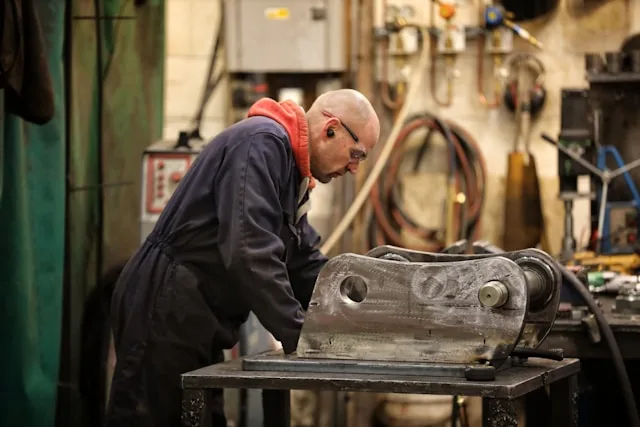
Pleven Agribusiness in 2026: €180 Million in Infrastructure, Not Enough Technicians to Run It

Bulgaria's Danubian Plain has received more investment in export infrastructure over the past three years than in the previous two decades combined. New rail gauge connections link Pleven's elevator network to the Ruse-West Port expansion on the Danube. Transport costs to Constanța and Central European markets are falling by an estimated 12%. On paper, the region's agribusiness sector is better positioned for growth than at any point since EU accession.
Yet capital expenditure in local food processing contracted by 8% in 2024. Vacancies for agricultural machinery technicians in Pleven Province sit unfilled for an average of 98 days. Senior agronomists are being recruited out of the region at premiums of 25 to 35% above local market rates. The infrastructure is arriving. The people who can operate it are not.
What follows is an analysis of the forces pulling Pleven's agribusiness sector in two directions at once: a commodity throughput corridor with world-class logistics, and a processing sector that cannot modernise because the workforce to run modern equipment does not exist locally in sufficient numbers. For hiring leaders responsible for filling roles in this market, the implications are specific and urgent.
The Throughput Corridor That Cannot Add Value
Pleven Province accounts for approximately 6.2% of Bulgaria's total grain production and 8.5% of its sunflower cultivation. The region's economic model is built on primary commodity handling: storing grain, crushing oilseed, and moving both to export markets. Mizia Group, the family-owned regional anchor headquartered in Pleven, operates four grain elevators with combined storage capacity of 220,000 tonnes and a sunflower crushing facility processing 120,000 tonnes annually.
The investment trajectory through 2025 reinforced this model. The €180 million dedicated to Danube port and rail infrastructure was designed to accelerate throughput, not to build processing capacity. The Ruse-West Port expansion, now nearing completion, will cut transport costs meaningfully. For a region whose competitive advantage is moving grain from field to port, this is the right infrastructure.
But it is only half a strategy. While logistics infrastructure improved, investment in value-added food processing actually declined. No new packaging lines, no branded food operations, no ready-meal production. The region is becoming better at moving raw commodities and worse at transforming them into anything more profitable. The explanation is not a lack of demand or capital. It is a lack of the people required to operate modern processing equipment.
Why Processing Investment Stalled
The processing sector's problem is specific. Seventy-five percent of small-to-medium fruit and dairy processors in the region operate equipment that is more than 20 years old. This equipment fails to meet current EU hygiene and energy efficiency standards. Replacing it requires not only capital but technicians capable of installing, calibrating, and maintaining automated systems that combine legacy mechanical components with programmable logic controllers.
Those technicians do not exist in sufficient numbers in Pleven. The Bulgarian Employment Agency recorded 340 unfilled vacancies in agriculture, forestry, and fishing for the region in Q4 2024. That figure represented a 28% year-over-year increase. The vacancy duration for agricultural and industrial machinery mechanics averaged 98 days, compared to 62 days for equivalent roles in Sofia. The gap is not closing. It is widening as infrastructure investment creates new roles the local workforce cannot fill.
This is the central tension in Pleven's agribusiness market in 2026. Capital has moved faster than human capital can follow. The infrastructure to export commodities is arriving on schedule. The workforce to add value to those commodities before they leave the region does not exist on any timeline the market has been able to produce.
A Workforce Built for a Previous Era
The demographic profile of Pleven's agricultural labour force explains much of the shortage. The median age of agricultural workers in the region is 54 years. Approximately 40% of field operations depend on temporary workers, primarily Ukrainian refugees and cross-border Romanian labour, to compensate for local demographic decline. This is not a cyclical problem. It is a generational exit with no replacement pipeline operating at the scale or skill level the sector requires.
Pleven's vocational schools graduate roughly 180 agricultural technicians each year. Employer surveys, however, indicate that only 30% of these graduates possess the hybrid mechanical-electronic skills required to maintain modern elevator automation systems. The educational system produces graduates who are theoretically qualified but practically unemployable for the specific technology stack used in local processing facilities.
This creates a paradox that is reshaping how organisations approach talent acquisition in the region. The graduates exist on paper. They hold the right certifications. But the certification curriculum does not include training on the programmable logic controllers that govern automated loading and drying systems in large grain elevators. A graduate trained on a textbook description of a drying system cannot maintain a facility where Soviet-era elevator mechanics coexist with IoT sensors and GPS-guided precision agriculture equipment.
The 100-Kilometre Innovation Gap
No dedicated agricultural university or R&D institute is physically located in Pleven. The region relies on technology transfer from the Institute of Field Crops in Chirpan and the Agricultural University in Plovdiv, both more than 100 kilometres away. This geographic separation between where the research happens and where the farming happens creates an innovation gap that compounds the skills mismatch.
A food safety manager trained in Plovdiv understands EU audit requirements in theory. But EUDR compliance demands geolocation data systems, traceability software, and audit protocols specific to the Danubian Plain's supply chain structure. That specificity is learned on the ground, not in a lecture hall. The distance between training institutions and operating facilities means that the most practically skilled professionals are self-taught or trained on the job by employers who then lose them to higher-paying markets.
The Three Roles Pleven Cannot Fill
Three specific role categories define the hiring crisis in Pleven's agribusiness sector. Each represents a different failure mode. Together, they explain why investment alone cannot solve the region's talent problem.
Agricultural Machinery Technicians
The most acutely scarce role requires a hybrid skill set that no local institution currently teaches. Modern grain elevators combine mechanical systems designed decades ago with digital monitoring, PLC-controlled automation, and IoT sensor networks for temperature and moisture management. A technician must be equally comfortable replacing a bearing assembly and reprogramming a controller. This combination is rare anywhere. In a regional market where the median agricultural worker is 54 years old, it is functionally nonexistent at volume.
The 98-day average vacancy duration for these roles reflects a genuine market failure. Employers cannot find candidates with the right hybrid skills locally. Candidates with the right skills in Sofia or Plovdiv have no compensation incentive to relocate to Pleven, where wages run 22% below Northeast region equivalents for comparable agronomist roles.
Food Safety Managers with EU Audit Experience
The enforcement timeline for the EU Deforestation Regulation required full traceability systems by December 2025. Local processors lacking €50,000 to €200,000 in capital for compliance software and audit systems now face exclusion from EU supply chains. But even processors with the capital face a second barrier: they cannot find food safety managers with direct EU audit experience to implement and operate these systems.
Senior food safety profiles with ten or more years of experience and EU audit credentials operate in what recruiters describe as a 70% passive candidate market. Only mid-level coordinators with three to five years of experience actively apply to postings. The senior candidates capable of leading an EUDR compliance implementation are already employed, typically at larger national or multinational processors, and are not monitoring job boards.
Multimodal Logistics Coordinators
The Ruse-West Port expansion and upgraded rail connections to Pleven's elevator network create immediate demand for logistics coordinators who understand Danube barge-to-rail transitions. This is a niche specialism. Ruse, Pleven's direct competitor for this talent, offers equivalent compensation but better connectivity to EU markets. Romanian regions across the Danube compete aggressively with Euro-denominated wages averaging 30% above Bulgarian lev-equivalent rates.
A logistics coordinator with Danube corridor experience who receives an offer from a Romanian employer faces a straightforward calculation. The work is similar. The currency is stronger. The market access is better. Pleven must compete on something other than money, and the region has not yet defined what that something is.
Compensation: Competitive Enough to Hire, Not Enough to Retain
Salary data for Pleven's agribusiness sector reveals a market that can attract entry-level and mid-level candidates but consistently loses senior specialists to competing regions. The compensation structure is adequate for local cost of living but inadequate for retention once a professional's skills become portable.
A precision agriculture agronomist in the region earns €24,000 to €32,000 annually. A food safety and quality manager with HACCP and IFS certification earns €22,000 to €30,000. A supply chain manager specialising in grain logistics earns €28,000 to €36,000. These figures, drawn from 2024 salary guides adjusted for the North-Central region, reflect a market where mid-career professionals can live comfortably but cannot build the kind of wealth that anchors them against external offers.
At the executive level, the picture becomes more complex. An operations director managing multi-site processing earns €45,000 to €68,000 annually. The upper end of that range, however, is typically found only in family-owned groups like Mizia that offer equity participation. Pure salaried executives in cooperatives cluster at the lower end. A chief agronomist managing holdings exceeding 10,000 hectares earns €38,000 to €52,000, frequently supplemented with yield-based bonuses.
The retention problem is structural. Sofia offers 40 to 60% salary premiums for corporate headquarters functions. Plovdiv, Bulgaria's primary food processing hub, offers 15 to 20% wage premiums with materially better industrial infrastructure. When a senior agronomist with precision farming expertise receives an offer from a large corporate farm in Dobrudzha at a 25 to 35% premium, Pleven has no counter. The region's employers are, in effect, investing in training professionals who leave once their skills reach the threshold where competing markets will pay to acquire them.
Understanding the dynamics of counteroffers in this market is essential for any employer attempting to retain senior talent. The problem is not that Pleven employers refuse to counter. It is that by the time a counteroffer is viable, the candidate has already been exposed to a compensation reality that Pleven's market cannot sustainably match.
Regulation Is Accelerating the Consolidation
Two regulatory forces are compressing the market in ways that intensify the hiring challenge rather than easing it.
The EUDR requires geolocation data for all agricultural commodities entering EU supply chains. Implementation costs of €0.08 to €0.15 per tonne for traceability systems are manageable for large operators like Mizia Group. For small meat and fruit processors already operating sub-scale equipment that fails EU hygiene standards, this additional compliance burden is expected to be terminal. The European Commission's EUDR implementation guidance makes clear that the regulation applies regardless of operator size. The projected consequence is a 15 to 20% reduction in the number of small processors in the Pleven region by end of 2026, with assets absorbed by larger cooperatives or traders.
This consolidation might appear to ease the talent shortage by reducing the number of employers competing for the same small pool of qualified food safety managers and technicians. In practice, it does the opposite. The surviving operators are larger, more complex, and more dependent on exactly the hybrid skills that the market cannot produce. A cooperative that absorbs three smaller processors does not need three food safety managers. It needs one. But that one must be capable of managing a multi-site, EUDR-compliant operation. The job description that emerges from consolidation is harder to fill than any of the three it replaced.
Subsidy Delays Compound the Problem
The National Recovery and Resilience Plan allocated dedicated funds for agricultural modernisation. As of Q1 2025, only 34% of those funds had been disbursed. The delay constrains equipment upgrade timelines for processors who might otherwise invest in automation. It also constrains the talent pipeline development that modernised equipment would eventually require.
An employer who cannot secure subsidised capital for a new processing line will not hire the technician to operate it. A technician who sees no demand for modern skills in the local market will train for a different career or relocate to a market where modernisation is already underway. The subsidy delay creates a feedback loop: no equipment means no jobs means no training means no candidates means no equipment. Breaking this loop requires either faster disbursement, which employers cannot control, or private investment justified by a talent strategy that can deliver the workforce to operate what gets built.
What Pleven's Agribusiness Market Requires From Executive Search
The passive candidate ratios in this market make conventional hiring methods functionally useless for senior roles. Unemployment among experienced agronomists in Bulgaria is 1.8%. Average tenure exceeds eight years. An estimated 85% of placements at the chief agronomist and operations director level in North-Central Bulgaria occur through direct headhunting rather than applications to advertised vacancies.
This is not a market where posting a role and waiting for applications will produce a viable shortlist. The candidates who can fill the most critical positions are employed, productive, and not looking. They will not see a job advertisement. They will not respond to a LinkedIn InMail from an unknown recruiter. They must be identified through systematic talent mapping that covers not only Pleven but the competing markets in Dobrudzha, Plovdiv, and across the Romanian border where equivalent professionals are working.
The original synthesis that emerges from this data is uncomfortable for regional employers but essential to acknowledge: Pleven's educational institutions are producing graduates whose certifications create an illusion of supply. The 180 annual vocational graduates look, on paper, like a pipeline. They are not. Only 30% have the skills employers actually need. The remaining 70% are certified but not competent for the specific hybrid technology environment that defines modern agribusiness operations. This means the effective annual output of employable technicians is closer to 54 than 180. That number cannot sustain a sector that recorded 340 unfilled vacancies in a single quarter.
For organisations hiring senior agribusiness leadership in Bulgaria's North-Central region, where 85% of viable candidates are invisible to job boards and the effective talent pipeline produces a fraction of what the certification numbers suggest, start a conversation with our executive search team about how KiTalent approaches this market. KiTalent's methodology delivers interview-ready candidates within 7 to 10 days by mapping the passive candidate pool that conventional methods cannot reach. With a 96% one-year retention rate across 1,450 executive placements, the approach is built for exactly the kind of market where the best candidates must be found rather than attracted.
The Strategic Question for 2026
Pleven's agribusiness sector faces a choice that infrastructure investment alone cannot resolve. The region can continue to optimise as a commodity throughput corridor, moving grain and oilseed from field to port with increasing efficiency. That model works. It employs people. It generates export revenue. But it captures a fraction of the value that processing, packaging, and branding would unlock from the same raw materials.
The alternative is to invest in the value-added processing capacity that the logistics infrastructure now makes viable. That path requires a workforce that does not yet exist in the region at the scale needed. It requires food safety managers who can implement EUDR compliance systems. It requires technicians who can maintain automated processing lines. It requires operations directors capable of managing multi-site consolidation across a fragmented cooperative structure.
The infrastructure is built. The regulation is enforced. The consolidation is underway. The only variable that remains unfixed is the talent to operate what has been built, comply with what has been mandated, and manage what is being consolidated. That is the variable that will determine whether Pleven's agribusiness sector captures the value its geography and logistics now make possible, or whether it remains what it has been for decades: a region that grows commodities for other markets to process.
Finding the senior leadership capable of executing that transition is not a challenge that job boards, local vocational schools, or inbound applications can solve. It requires a search methodology designed to reach the 85% of qualified candidates who are not looking. It requires speed, because the candidates this market needs are the same candidates three competing regions are also pursuing. And it requires market intelligence specific enough to know which professionals in Dobrudzha, Plovdiv, and Romania are both capable and movable.
The firms that solve their hiring challenges in agribusiness and food processing fastest will be the firms that define the next decade of Pleven's agricultural economy. The firms that wait for the right candidate to apply will still be waiting when the regulatory deadlines pass and the consolidation is complete.
Frequently Asked Questions
What are the hardest agribusiness roles to fill in Pleven, Bulgaria in 2026?
The three most difficult roles to fill are agricultural machinery technicians with hybrid mechanical and digital skills, food safety managers with direct EU audit experience, and multimodal logistics coordinators specialising in Danube barge-to-rail transitions. Machinery technician vacancies in Pleven averaged 98 days unfilled in 2024, compared to 62 days in Sofia. The shortage reflects a skills mismatch where local vocational graduates lack training on programmable logic controllers used in modern elevator automation. KiTalent's talent mapping methodology identifies these specialists across Bulgaria and neighbouring markets where they are currently employed but not actively searching.
What do senior agribusiness executives earn in Pleven, Bulgaria?
Operations directors managing multi-site processing operations earn €45,000 to €68,000 annually, with the upper range typically found in family-owned groups offering equity participation. Chief agronomists managing large holdings earn €38,000 to €52,000 with yield-based bonuses. Mid-level specialists earn less: precision agriculture agronomists receive €24,000 to €32,000, while food safety managers earn €22,000 to €30,000. Sofia commands 40 to 60% premiums over these figures for equivalent seniority, and Plovdiv offers 15 to 20% premiums, making retention of senior talent one of the region's primary challenges.
How does the EU Deforestation Regulation affect hiring in Bulgarian agribusiness?
The EUDR requires full traceability systems for agricultural commodities entering EU supply chains. Implementation costs of €50,000 to €200,000 for compliance software and audit systems are expected to force a 15 to 20% reduction in small processors in the Pleven region by end of 2026. Surviving operators will be larger and more complex, requiring food safety managers with direct EU audit experience. These senior professionals operate in a 70% passive candidate market and must be identified through executive search rather than job advertising.
Why is Pleven losing senior agronomists to other Bulgarian regions?
Senior agronomists with precision farming expertise in GPS-guided seeding and variable-rate fertilisation are recruited from Pleven-region holdings to corporate farms in Dobrudzha and international operations in Romania at compensation premiums of 25 to 35% above local rates. Pleven's North-Central region wages for agronomists run 22% below Northeast region equivalents. The combination of lower pay and limited career progression in a fragmented cooperative structure makes retention difficult without a deliberate counter-strategy built around role design and long-term career value.
How can employers find passive agribusiness candidates in Bulgaria?
With agronomist unemployment at 1.8% and average tenure exceeding eight years, an estimated 85% of senior placements in North-Central Bulgaria occur through direct headhunting rather than advertised vacancies. Effective search requires mapping professionals across Pleven, Dobrudzha, Plovdiv, and Romanian border regions. KiTalent delivers interview-ready executive candidates within 7 to 10 days using AI-powered talent identification to reach the professionals who are not visible on any job board, with a pay-per-interview model that eliminates upfront retainer costs.
What structural barriers limit agribusiness growth in Pleven Province?
Four barriers converge: land fragmentation averaging 4.2 hectares per holding prevents mechanisation economies of scale; energy costs are unhedged with natural gas accounting for 40% of processing energy; only 34% of National Recovery and Resilience Plan agricultural modernisation funds had been disbursed as of Q1 2025; and the nearest agricultural R&D institution is more than 100 kilometres away, creating an innovation gap between research output and farm-level application. These barriers make the region dependent on talent imports that its compensation levels struggle to fund.