Ruse Is Building a Bigger Port. The People Who Run It Are Leaving.
Port Ruse is in the middle of a €12.4 million terminal expansion funded by the EU's Connecting Europe Facility. By mid-2026, container storage capacity will grow by 40%. The quay at the West Terminal will be deepened. The Bulgarian Ministry of Transport projects throughput reaching 2.4 million tonnes by end of year, a volume the port has not handled since before the pandemic. On paper, Ruse's position as Bulgaria's primary Danube logistics hub is strengthening.
On the ground, the picture is more complicated. Between 2022 and 2024, according to the Bulgarian Logistics Association's Brain Drain Survey, 15 to 20 per cent of Ruse-based senior logistics managers with Romanian language skills relocated to Bucharest or Giurgiu. Sofia continues to draw mid-career coordinators after an average tenure of just 2.8 years. The customs broker pipeline produces 34 newly dual-qualified professionals a year against more than 120 open positions. Ruse is not struggling to attract cargo. It is struggling to retain the people who move that cargo across two countries and three transport modes.
What follows is an analysis of the forces reshaping this sector, the employers driving that change, and what senior leaders need to understand before they make their next hiring or retention decision in the Danube freight corridor. The core tension is one that hiring executives in small, specialised logistics clusters will recognise: capital investment can be approved in a single funding cycle, but the human capital required to operate it takes years to develop and can walk across a bridge in 30 minutes.
The Cluster That Functions but Does Not Cohere
Ruse's logistics sector is built around a handful of anchors. Port Ruse EAD, the state-owned terminal operator, employs roughly 180 people. Transagent Ruse, the largest local customs brokerage and freight forwarding firm, runs at approximately 85. Balkan Shipbrokers operates with around 60. The Ruse branch of DB Schenker coordinates land transport with about 45 staff. Beyond these, more than 40 registered freight forwarders and 35 licensed customs brokers work within the municipality.
The concentration sounds substantial. But cluster integration is weak. Data from the Institute for Market Economics shows that only 23 per cent of Ruse-port cargo originates from or terminates in the immediate Ruse region. The majority transits onward to Sofia, Plovdiv, or Bucharest. The businesses co-located in Ruse share geographic proximity and a bridge. They do not share supply chains, workforce planning, or joint training infrastructure in any coordinated way.
What the Danube Bridge Actually Generates
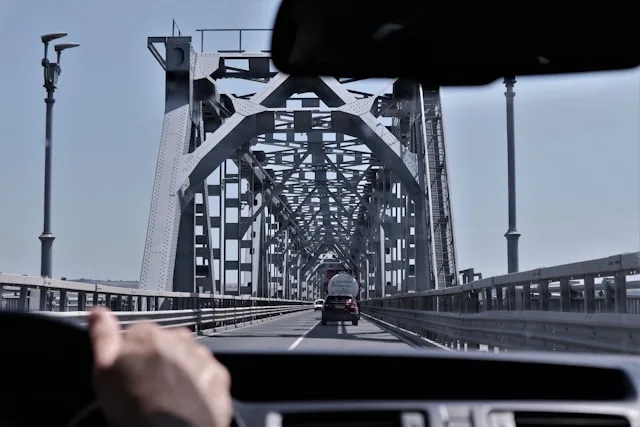
The Ruse-Giurgiu border crossing handled 1.9 million vehicles and 3.8 million tonnes of freight in 2023, representing 42 per cent of Bulgaria-Romania land border trade according to the Bulgarian Ministry of Transport. That traffic volume is the demand engine for every forwarder, broker, and terminal operator in the city. It is also the reason the most critical skills in Ruse are not purely Bulgarian or purely Romanian. They are both.
The Danube Bridge 2 at Vidin-Calafat diverted heavy freight traffic after 2013, but Ruse retains dominance in containerised and perishable goods because of superior warehousing connectivity. The World Bank's 2024 Danube Logistics Study confirmed this structural advantage. Yet the advantage depends on professionals who can operate seamlessly in both jurisdictions, and that population is shrinking relative to demand.
Warehouse Space at Effective Zero
The physical constraints extend beyond the port itself. Class A logistics space in Ruse carries a vacancy rate of 3.2 per cent, effectively full, with no new speculative development planned through 2025, according to CBRE Bulgaria's Industrial Market Report. The Ruse Free Zone, covering 45 hectares of customs-controlled warehousing, operates at 78 per cent occupancy. For any firm contemplating expansion in Ruse, the question is not just whether qualified people exist. It is whether there is anywhere to put additional operations.
This combination of infrastructure constraint and talent outflow creates a specific problem for hiring leaders. Expanding capacity in a market where physical space is near-full and the most experienced operators are leaving is not a growth challenge. It is a retention and recruitment challenge disguised as a capital investment.
The Compensation Gap That Pulls Talent North
Bucharest is 65 kilometres from Ruse. The drive takes an hour. The salary difference for equivalent logistics roles runs between 40 and 60 per cent.
A Logistics Director or Operations VP in Ruse earns between BGN 8,000 and 12,000 monthly, equivalent to roughly €4,100 to €6,100 before performance incentives, according to Adecco Bulgaria's Executive Compensation Report. The same role in Bucharest commands €6,500 to €9,800, based on the Romania Logistics Salary Guide compiled by Brainspotting. That gap is not marginal. It is large enough to justify relocation for any senior manager with Romanian language capability.
The gap widens further at the specialist level. A Head of Customs or Compliance in Ruse earns BGN 6,500 to 9,000 monthly (€3,300 to €4,600), according to PwC Bulgaria's Logistics Sector Pay Benchmark. Senior customs brokers sit at BGN 3,200 to 4,800 (€1,600 to €2,450). These figures reflect a 2024 baseline already adjusted upward by 8 per cent for annual wage growth. They remain materially below what multinational employers operating from Bucharest can offer for the same regulatory expertise, applied to the same cross-border corridor.
Sofia as the Second Drain
Bucharest takes the senior managers. Sofia takes everyone else. The capital offers a 20 to 25 per cent salary premium over Ruse for logistics roles, plus access to regional headquarters of DHL, Kuehne+Nagel, and other multinationals with career progression pathways that Ruse's smaller employers cannot match. Jobs.bg tenure data shows that the average logistics coordinator in Ruse stays 2.8 years before relocating to Sofia. Ruse functions, in effect, as a training ground for Bulgaria's capital city.
The implication for any employer investing in workforce development in Ruse is uncomfortable. Every BGN spent developing a mid-career professional generates returns for approximately three years before the professional moves. The investment is not lost from the Bulgarian economy. It is lost from Ruse.
Constanta and the Black Sea Pull
Constanta, Romania's major maritime container hub, draws a different segment. It pulls mechanical engineers and maritime logistics specialists with salary premiums of around 30 per cent over Ruse's river-port equivalents. Varna and Burgas, Bulgaria's Black Sea ports, take similar profiles, offering 15 per cent higher wages plus the appeal of LNG terminal expansion projects.
The pattern across all four competitor markets is consistent. Ruse retains its advantage only in one domain: Danube-specific river expertise. Professionals whose skills are transferable to sea-port, capital-city, or cross-border Romanian markets have both the ability and the financial incentive to leave.
Capital Is Moving Faster Than Human Capital Can Follow
This is the original analytical tension at the heart of Ruse's logistics market, and it is not stated in any single data point.
The €12.4 million CEF-funded expansion will increase Port Ruse's container storage by 40 per cent. The European Investment Bank has approved €35 million for dredging and fairway maintenance between Ruse and Giurgiu, expected to reduce seasonal draft restrictions by 30 per cent. The Bulgarian government forecasts throughput of 2.4 million tonnes by end of 2026. These are material investments that will expand what the port can physically handle.
But who will operate the expanded facility? Port crane technicians are trained at a rate of 6 to 8 per year by the Ruse Vocational High School of Transport. Port Ruse EAD alone has 8 to 10 openings for technicians capable of maintaining Liebherr and Gottwald mobile harbour cranes. The customs broker pipeline produces 34 dual-qualified entrants against 120 or more open positions. River captains certified under Danube Commission regulations are at effectively zero unemployment, with every qualified individual already under contract.
The investment thesis assumes that physical capacity will generate its own demand. That assumption is correct on the cargo side. Freight follows infrastructure. But the assumption that human capacity will follow physical capacity is wrong. It takes four to six months to recruit a senior customs broker in this market. It takes years to develop a river transport operations manager with trilingual capability and Danube navigation certification. Capital approval cycles are measured in months. Human capital development cycles in Ruse are measured in years. The gap between these two timelines is the defining challenge for every employer in this cluster.
The Cross-Border Regulatory Talent Bottleneck
The Ruse-Giurgiu corridor is a physical bridge. It is not a regulatory one.
Bulgarian and Romanian customs platforms do not integrate seamlessly. According to the Bulgarian International Freight Forwarders Association's 2024 survey, system integration gaps between the two countries' customs systems create 12 to 18 hour delays on cross-border freight. The Bulgarian "Customs 2025" digitalisation programme has moved 60 per cent of import declarations to digital processing. But that progress stops at the border.
Non-harmonised vessel technical inspections between Bulgaria and Romania, documented in the European Commission's Danube Region Strategy Implementation Report, add 24 to 48 hours of delay per vessel, increasing per-diem crew costs by €800 to €1,200. These are not temporary frictions. They are embedded in two separate regulatory architectures that have not been unified despite shared EU membership.
The AEO Certification Chokepoint
The professional who can operate across both jurisdictions holds Authorised Economic Operator certification in both Bulgaria and Romania. This person understands the EU Customs Code as implemented differently by two national authorities. They can manage post-clearance audits from Sofia and Bucharest simultaneously. And they are vanishingly rare.
The Bulgarian Customs Brokers Association estimates that 85 to 90 per cent of qualified senior brokers holding dual licences are employed and not actively seeking new roles. Recruitment occurs through direct headhunting or around the twice-yearly regulatory examination cycles, when a brief window opens and candidates reassess their options. The active candidate pool, for this specific profile, barely exists.
For hiring leaders, this means conventional job advertising reaches perhaps 10 to 15 per cent of the viable candidate population. The rest must be identified, approached, and persuaded individually. The hidden majority of qualified candidates in this market are not browsing job boards. They are embedded in competitors, often managing the same cross-border flows from the other side of a contract.
2026 Pressures: ETS, Ukrainian Grain, and Romanian Competition
Three forces are converging on Ruse's logistics market as of 2026, each intensifying the demand for senior talent with strategic, not just operational, capability.
The Emissions Trading System Arrives on the Danube
Full implementation of the EU Emissions Trading System for inland waterway transport took effect in January 2026. Approximately 60 per cent of vessels calling at Ruse are affected, according to the European Commission's Directorate-General for Climate Action. Local operators anticipated an 8 to 12 per cent increase in transport costs. The compliance burden falls on professionals who understand both environmental regulation and commercial logistics, a combination that barely existed as a job description three years ago.
This regulatory shift does not just raise costs. It raises the skill threshold for every senior role in the cluster. A Logistics Director in Ruse now needs ETS compliance strategy alongside traditional P&L oversight, government relations, and multi-modal operations management. The job has expanded while the candidate pool has not.
Ukrainian Grain Transit Normalisation
Post-war normalisation of Ukrainian Black Sea exports reduced Danube transit volumes through Ruse by 35 per cent in 2024 compared to 2023 peaks, according to UNCTAD's Maritime Transport Review. The wartime surge that temporarily boosted Ruse throughput has receded. The port must now compete for baseline cargo volumes on infrastructure quality and operational speed rather than geographic necessity.
Giurgiu's Container Expansion
Directly across the Danube, the Port of Giurgiu is expanding container capacity by 200,000 TEU by 2026 under Romania's Ministry of Transport Infrastructure Plan. This expansion targets Transylvanian cargo, the same flows that Ruse has historically captured through its warehousing connectivity advantage. With Romanian wages significantly higher for equivalent roles and Romanian infrastructure investment accelerating, the competitive dynamic is shifting.
The combined effect of these three forces is a market that demands more sophisticated leadership at exactly the moment when the supply of that leadership is thinning. Every senior hire in Ruse's logistics sector through 2026 carries more complexity than it did in 2023.
What Hiring Leaders in This Market Must Do Differently
The conventional approach to filling logistics leadership roles in a market like Ruse relies on job postings, local networks, and salary negotiation. This approach reaches the 10 to 15 per cent of qualified candidates who are actively looking for work. In a market where the most critical specialisms show active candidate ratios below 30 per cent, and where dual-qualified customs brokers register at 85 to 90 per cent passive, conventional methods will consistently underperform.
Three adjustments are necessary.
First, compensation benchmarking must account for cross-border competition. A Ruse employer offering BGN 9,000 monthly for a Logistics Director is not competing against other Ruse employers at similar ranges. That employer is competing against Bucharest at €6,500 to €9,800. The package must include non-monetary elements that Bucharest cannot match: shorter commutes, lower cost of living, operational autonomy that multinational headquarters do not offer, or equity participation and retention mechanisms that change the calculation over a multi-year horizon.
Second, the search methodology must reach passive candidates. River captains at zero unemployment, port automation engineers holding multiple simultaneous offers, and AEO-certified customs brokers embedded in competitor firms will not be found through advertisements. They must be identified through systematic talent mapping, approached individually, and given a reason to consider a move that goes beyond salary.
Third, succession planning must account for Ruse's function as a training market. If mid-career tenure averages 2.8 years before relocation, then every critical role needs a pipeline two to three candidates deep. Employers who treat each departure as an isolated event rather than a systemic pattern will find themselves perpetually restarting searches that take four to six months to complete.
For organisations hiring logistics and operations leadership in Ruse's Danube freight corridor, where the qualified candidate pool is small, predominantly passive, and actively courted by employers in Bucharest, Sofia, and Constanta, KiTalent's executive search methodology is designed for exactly this condition. Our AI-enhanced talent identification process reaches the candidates who do not appear on job boards, delivering interview-ready shortlists within 7 to 10 days. With a 96 per cent one-year retention rate across 1,450 completed executive placements, we focus not only on finding the right leader but on ensuring they stay.
If you are competing for senior logistics talent in a market where capital investment has outpaced human capital development, start a conversation with our search team about how we approach cross-border, niche-sector searches in markets where every qualified candidate must be found directly.
Frequently Asked Questions
What are the most in-demand logistics roles in Ruse, Bulgaria in 2026?
The most acute shortages are in three categories: licensed customs brokers holding dual Bulgarian-Romanian authorisation, river transport operations managers with Danube navigation certification and trilingual capability, and heavy machinery technicians qualified to maintain Liebherr and Gottwald mobile harbour cranes. Customs broker openings alone exceed 35 to 40 across the municipality against an annual pipeline of just 34 newly qualified entrants. Port automation engineers and PLC programmers for crane systems also face severe scarcity, with candidates typically holding multiple offers at once.
How does Ruse logistics compensation compare to Bucharest?
Bucharest offers 40 to 60 per cent higher net compensation for equivalent logistics executive roles. A Logistics Director in Ruse earns approximately €4,100 to €6,100 monthly, while the same position in Bucharest commands €6,500 to €9,800. At specialist level, the gap is proportionally similar. This differential is the primary driver of senior talent outflow from Ruse, particularly among professionals with Romanian language skills who can relocate with minimal friction.
Why is it difficult to recruit customs brokers in Ruse?
The difficulty stems from a fundamental supply constraint. The Bulgarian Customs Brokers Association estimates that 85 to 90 per cent of qualified senior brokers with dual licensing are employed and not actively seeking new roles. The twice-yearly regulatory examination cycle produces far fewer new entrants than the market requires. Employers report typical search durations of four to six months and poaching premiums of 25 to 30 per cent to attract brokers from competitors. Standard job advertising reaches only a fraction of this market. Specialist direct search approaches are required to identify and engage the passive majority.
What infrastructure investments are affecting Ruse port operations in 2026?
Port Ruse secured €12.4 million under the EU Connecting Europe Facility for deepening the West Terminal quay and expanding container storage by 40 per cent, with completion scheduled for mid-2026. The European Investment Bank approved €35 million for dredging and fairway maintenance between Ruse and Giurgiu to reduce seasonal draft restrictions. Additionally, the EU Emissions Trading System extension to inland waterways took effect in January 2026, affecting approximately 60 per cent of vessels calling at Ruse and increasing transport costs by an estimated 8 to 12 per cent.
How does KiTalent approach executive search in niche logistics markets?
KiTalent uses AI-enhanced talent mapping and direct identification to reach candidates who are not visible through conventional channels. In markets like Ruse, where active candidate ratios fall below 30 per cent for critical roles, this means systematically identifying qualified professionals across competitor firms, approaching them directly, and presenting interview-ready shortlists within 7 to 10 days. The pay-per-interview model means clients pay only when they meet qualified candidates, removing the risk of retainer fees in a difficult search market.
What is the biggest risk for logistics employers expanding in Ruse?
The primary risk is the gap between physical capacity growth and human capital availability. Port expansion and dredging investments will increase what Ruse can handle by 2026, but the local labour market is simultaneously losing 15 to 20 per cent of its senior operations managers to Bucharest and Sofia. Employers who invest in terminal capacity without a parallel strategy for building and retaining a leadership pipeline risk operating expanded facilities below optimal efficiency.