Rustaq's Construction Boom Depends on Talent the Market Cannot Produce Fast Enough
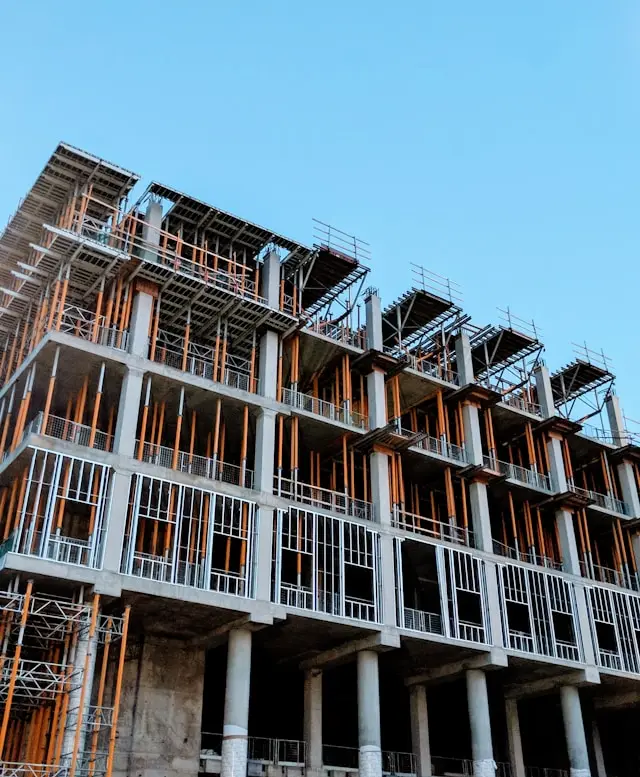
Rustaq is building a tourism economy on top of a construction sector that cannot source its own materials locally. The Omani government has committed OMR 45 million to heritage tourism infrastructure around Rustaq Fort and the Ain Al Kasfa hot springs across 2025 and 2026, while the Omran Group's Integrated Tourism Complex Phase II carries a $120 million price tag requiring an estimated 650,000 tonnes of aggregate. The money is real. The projects are permitted. The problem is that the professionals who can run them are almost nowhere to be found.
This is not a generic labour shortage. Al Batinah South has a 6.2% construction unemployment rate, above Oman's national average of 4.1%. General workers are available. What the market lacks is the narrow band of specialists who sit at the intersection of hard rock quarrying, heritage-sensitive construction, and bilingual project leadership. These are the roles that determine whether Rustaq's OMR 45 million in government funding becomes functioning tourism infrastructure or stalled concrete. Searches for heritage-qualified construction managers in secondary Omani cities typically run 90 to 120 days before firms resort to relocating talent from Muscat at considerable cost.
What follows is a structured analysis of the forces reshaping Rustaq's construction market in 2026: the regulatory constraints tightening supply, the compensation dynamics pulling talent toward Sohar and Dubai, and the specific hiring strategies that organisations operating in this wilayat need to adopt before the project pipeline outruns the available workforce entirely.
A Consumption Node, Not a Production Hub
The assumption that Rustaq's construction sector is self-sufficient collapses under scrutiny. The wilayat contains three licensed medium-scale quarries and an estimated eight to ten small-scale temporary extraction licences for road construction materials. Approximately 35 to 40 registered small masonry contractors serve residential renovation and minor civil works within Rustaq proper. This is a light-fabrication and consumption node. It is not a production hub.
Heavy building materials for major projects arrive from elsewhere. Major infrastructure and commercial developments, including the Rustaq Fort Tourism Development Zone and Al Batinah Highway expansion segments, draw aggregate from large-scale quarries in Sohar, 70 kilometres to the north, and from Muscat Governorate. Transport runs along the Batinah Coast Road, the single highway artery connecting Rustaq to its supply chain.
This dependency carries a measurable cost penalty. Transport costs for steel and cement from Sohar and Muscat represent 18 to 22 per cent of project costs in Rustaq, compared with 12 to 15 per cent in Muscat. For contractors operating on fixed-price tenders, the margin compression is real. It is also getting worse. Fuel subsidy rationalisation under the Ministry of Finance's Medium Term Fiscal Balance Plan is projected to push aggregate transport costs up by 8 to 12 per cent in 2026.
The absence of a rail connection compounds the problem. Unlike Sohar, which sits on the planned national logistics network, Rustaq depends entirely on road freight. During peak construction seasons, this single-corridor dependency creates supply bottlenecks that slow project timelines and increase holding costs. Every delay is a cost that flows downstream to the hiring timeline.
The Heritage Paradox: Building Sustainable Tourism on an Unsustainable Supply Chain
Rustaq's economic development strategy is anchored by heritage tourism. The Fort, the hot springs, and the surrounding archaeological zone form the centrepiece of a government investment thesis that is now producing real capital expenditure. Phase II of the Rustaq Integrated Tourism Complex alone requires 450,000 cubic metres of concrete.
Here is the paradox. The regulations designed to protect Rustaq's heritage assets are the same regulations that prevent the wilayat from sourcing the materials needed to build around them. Royal Decree 2020/34 on Cultural Heritage Protection froze new quarry licensing within 15 kilometres of the Rustaq Fort UNESCO World Heritage buffer zone. Environmental permitting guidelines prohibit quarry operations within 5 kilometres of permanent water sources and 10 kilometres of major archaeological sites. These restrictions have shut Rustaq out of its own high-quality limestone deposits.
Environmental Compliance Is Accelerating Consolidation
The regulatory pressure is not limited to location restrictions. Continuous particulate monitoring mandates under Royal Decree 114/2001, as amended, apply to quarries producing more than 100,000 tonnes annually. The compliance cost of retrofitting monitoring systems drove three small Rustaq quarries out of operation in 2024, according to the Oman Environmental Services Holding Company (be'ah). Water scarcity compounds the challenge. Quarry dewatering permits are restricted in Rustaq under agricultural priority rights, limiting deep excavation for the high-grade aggregate that large construction projects demand.
The Result: A Carbon-Intensive Dependency
The net effect is a development strategy that promotes "sustainable" heritage tourism while depending on diesel-fuelled aggregate haulage from Sohar. No current public data indicates that approved extraction zones closer to Rustaq are under consideration to resolve this contradiction. For hiring leaders, this means every major project in the wilayat carries embedded logistics risk that requires a specific type of construction leadership: professionals who can manage supply chain volatility, navigate environmental permitting constraints, and maintain project timelines when the nearest reliable aggregate source is an hour's drive north.
This is where the talent acquisition challenge becomes acute. The project management skills Rustaq needs are not standard commercial construction competencies. They are hybrid capabilities that combine heavy civil works experience with heritage conservation knowledge and arid environment logistics management. Professionals who hold all three are rare nationally. In a secondary city competing against Sohar's industrial zone incentives and Muscat's quality of life, they are functionally absent from the local labour market.
Labour Market Structure: General Surplus, Specialist Scarcity
Al Batinah South's construction workforce tells two stories simultaneously. The headline data shows surplus. The granular data shows crisis.
Approximately 89 to 92 per cent of construction labour in the governorate is expatriate, drawn primarily from India (45 per cent), Bangladesh (30 per cent), and Pakistan (15 per cent), according to the National Centre for Statistics and Information's Labour Market Survey from the third quarter of 2024. At the general labourer and semi-skilled level, workers are available. The 6.2 per cent construction unemployment rate confirms this.
But Rustaq's specific position within the Al Batinah labour market creates a structural disadvantage that headline numbers obscure. The wilayat offers lower wages than both Muscat and Sohar. This produces a 40 per cent annual turnover rate among skilled expatriate masons and steel fixers, nearly double the 25 per cent national average. Workers arrive, gain experience, and leave for better-paying sites elsewhere. The wilayat functions as a training ground that subsidises its competitors' workforce development.
Omanisation: The Gap Between Mandate and Reality
The Ministry of Labor mandates 15 per cent Omani representation for construction firms with more than 50 employees. Rustaq-based contractors achieve 8 to 11 per cent. The gap has consequences. Several mid-tier firms have faced visa restriction penalties, limiting their ability to recruit the expatriate specialists they need while simultaneously failing to attract Omani nationals to a sector that offers lower wages and harder conditions than alternatives in government or oil and gas.
The anticipated tightening of visa quotas for low-skilled construction labour is projected to increase expatriate mason and steel fixer wages by 10 to 15 per cent. This compounds the margin pressure from rising transport costs. For contractors operating in Rustaq, where input costs already run 6 to 7 percentage points above Muscat equivalents, the cumulative effect narrows the pool of firms that can profitably bid on government tenders.
Infrastructure Gaps Compound the Problem
Rustaq lacks the dedicated labour accommodation zones found in Sohar and Duqm. Construction workers are housed in repurposed agricultural buildings or commute from neighbouring wilayats. This is not merely an inconvenience. It is a structural barrier to workforce scaling. A contractor winning a major heritage tourism contract cannot rapidly mobilise 200 additional workers without somewhere to house them. The logistics of labour camp provision in Rustaq add weeks to project ramp-up timelines and cost to every tender.
The skills bottleneck is quantified. The Vocational Training Centre's Rustaq Branch Labour Market Needs Assessment projects a shortage of 200 to 250 qualified construction supervisors and site engineers across Al Batinah South by the fourth quarter of 2026. Rustaq College of Applied Sciences graduates 60 to 80 civil engineering technicians annually. The maths does not work. Even if every graduate stayed in the wilayat, the pipeline covers barely a third of the projected gap.
The Three Roles Rustaq Cannot Fill
Job postings for construction and quarrying roles in Al Batinah South increased 34 per cent year on year in Q3 2024, with Rustaq accounting for 18 per cent of the governorate's demand. Behind that aggregate figure sit three specific role categories where conventional hiring methods consistently fail.
Quarry Operations Managers
This is a predominantly passive candidate market. Qualified professionals with ten or more years in hard rock quarrying and blasting certification are overwhelmingly employed and not seeking new roles. The typical pattern across the Al Batinah region involves quarry operators offering 25 to 30 per cent salary premiums above 2022 baselines to attract operations managers from competitor sites. Non-compete clauses, rarely enforceable under Omani labour law for technical roles, provide no meaningful protection against poaching.
Compensation for a senior quarry operations manager in the wilayat sits at OMR 2,800 to 3,500 per month ($7,280 to $9,100) plus accommodation and transport, according to Mercer's Oman Total Remuneration Survey 2024. At the executive level with regional oversight responsibilities, the range climbs to OMR 5,500 to 7,200 per month ($14,300 to $18,720) with performance bonuses averaging 20 to 30 per cent of base.
Rustaq competes directly with Sohar, which offers 15 to 20 per cent higher base salaries through industrial zone incentives, and with Muscat, which offers superior expatriate schooling and family amenities. A passive candidate currently employed in Sohar requires more than a salary match. They require a compelling reason to accept a location with fewer amenities and weaker infrastructure.
Bilingual Project Managers with Heritage Conservation Experience
This is the most acutely scarce profile in Rustaq's construction market. The combination of Arabic-English bilingual capability, seven or more years of project management experience, and specific exposure to UNESCO heritage site construction protocols produces a candidate pool so narrow that searches typically stall after 90 to 120 days. Firms routinely end up relocating talent from Muscat at costs that include relocation packages, housing allowances, and family transition support.
Senior heritage conservation construction managers command OMR 4,000 to 5,500 per month ($10,400 to $14,300), a 15 to 20 per cent premium over standard commercial construction roles. At the director level with profit and loss responsibility, infrastructure construction managers reach OMR 7,000 to 9,500 per month ($18,200 to $24,700) with housing allowances of OMR 800 to 1,200.
The premium reflects genuine scarcity. Heritage-sensitive construction requires specific technical knowledge: vibration monitoring near protected structures, traditional masonry replication techniques, and the ability to coordinate with heritage authorities whose approval timelines do not align with commercial construction schedules. These are not skills that standard project management certification produces.
Heavy Equipment Maintenance Technicians
The market splits clearly along seniority lines. Junior technicians for crushers and conveyors are available through active recruitment channels. Specialists with specific aggregate plant experience are passive candidates who can name their terms. Dubai and Abu Dhabi draw both Omani and expatriate technicians with 40 to 50 per cent salary premiums and access to training facilities that Rustaq cannot match, according to EY's comparative salary data.
The blasting engineering specialism compounds this. Licensed handlers of ammonium nitrate fuel oil (ANFO) and electronic detonation systems operate under joint regulation by the Royal Oman Police and the Public Authority for Mining. The licensing pathway is narrow, the candidate pool is small, and the cost of a failed hire in a role with explosives safety implications extends well beyond recruitment fees.
The Original Tension: Capital Moved Faster Than Human Capital Could Follow
The analytical thread running through every dimension of Rustaq's construction market is not simply that talent is scarce. It is that investment decisions and regulatory decisions have been made on a timeline that the labour market cannot match.
Government capital has arrived. OMR 45 million in heritage tourism allocation. A $120 million integrated tourism complex. Highway widening. Logistics corridor development. These decisions were made at a pace dictated by economic diversification strategy and fiscal planning cycles.
The labour market operates on a different clock entirely. Rustaq College graduates 60 to 80 technicians per year into a market that needs 200 to 250 supervisors and site engineers by late 2026. Heritage construction expertise requires a decade of accumulated project experience that no training programme can compress. Blasting engineers require specific licensing pathways that take years. The capital committed to Rustaq's transformation presumes a workforce that does not yet exist in the wilayat and cannot be developed in the timeframe the project pipeline demands.
This is not a temporary mismatch. It is a permanent feature of secondary city development in economies transitioning from resource extraction to tourism and services. The investment thesis is sound. The execution depends entirely on whether the organisations leading these projects can find, attract, and retain the 15 to 20 senior specialists and the 200-plus mid-tier supervisors the pipeline requires. The firms that treat this as a conventional recruitment problem will discover, 90 days into a search, that the candidates they need are employed in Sohar, Muscat, or Dubai and are not reading job postings.
What Hiring Leaders Operating in Rustaq Must Do Differently
The conventional approach to construction hiring in Oman's secondary cities follows a predictable pattern: post a role on the National Employment Portal (Tanmia), engage a local agency, wait for applications, and select from whoever responds. In a market where the majority of qualified candidates are not actively looking, this method reaches a fraction of the viable pool.
For heritage-qualified project managers, the active candidate market consists largely of entry-level professionals. The senior professionals with UNESCO site experience and bilingual capability are working. They are not browsing job boards. They are managing live projects in Muscat, Riyadh, or Abu Dhabi. Reaching them requires direct identification and a proposition compelling enough to overcome the location disadvantage that Rustaq carries relative to capital cities.
Three adjustments are critical.
First, compensation benchmarking must account for the full cost of the location. A salary that matches Muscat on paper does not match Muscat in practice. Rustaq's weaker infrastructure, limited international schooling, and lack of dedicated labour accommodation mean that a genuinely competitive offer includes housing, family transition support, and sometimes schooling subsidies. Organisations that benchmark against Rustaq's local market rather than the markets they are competing against for talent will consistently lose candidates during negotiation.
Second, search timelines must be front-loaded. A 90-day search process for a heritage construction manager is not a failure of effort. It is a predictable outcome of candidate scarcity in this specialism. Organisations with project start dates in Q3 or Q4 2026 need active search processes running now. Waiting until a contract is signed to begin hiring is how firms end up relocating expensive talent from Muscat at the last minute.
Third, the search method itself must change. For roles where 85 to 90 per cent of qualified professionals are already employed, the only reliable approach is direct identification through systematic talent mapping. This means building a complete picture of where the relevant professionals sit across the GCC region, understanding their current compensation and contract status, and approaching them with a specific proposition. It is the difference between advertising into a void and conducting a targeted campaign.
Engaging a Search Partner for Rustaq's Construction Market
Rustaq's construction hiring challenge is specific enough that generic recruitment approaches consistently underperform. The combination of heritage conservation requirements, environmental regulatory knowledge, and willingness to work in a secondary Omani city narrows every search to a candidate pool measured in dozens rather than hundreds.
KiTalent's approach to executive search in industrial and construction markets addresses the core problem directly: identifying and engaging the passive candidates who represent 80 per cent or more of the qualified pool for these roles. Through AI-powered talent mapping, KiTalent builds complete market pictures of where relevant professionals sit across Oman and the wider GCC, enabling clients to see the full candidate field rather than the small fraction that happens to be looking.
The model is designed for markets exactly like Rustaq's, where the cost of delay is measured not in recruitment fees but in project timeline slippage. KiTalent delivers interview-ready candidates within 7 to 10 days, with a pay-per-interview pricing structure that eliminates upfront retainer risk. The 96 per cent one-year retention rate for placed candidates matters especially in a market where 40 per cent annual turnover among skilled workers is the norm.
For organisations building or operating within Rustaq's heritage tourism pipeline, where the candidates you need are employed by competitors in Sohar and Muscat and the cost of an unfilled site engineer role compounds with every week of project delay, open a conversation with KiTalent's executive search team about how we map and reach the candidates this market demands.
Frequently Asked Questions
What is the average salary for a construction project manager in Rustaq, Oman?
Senior construction project managers in the Al Batinah South region earn OMR 3,200 to 4,500 per month ($8,320 to $11,700), according to the Hays Oman Salary Guide 2024. At the executive or director level with profit and loss responsibility, compensation reaches OMR 7,000 to 9,500 per month ($18,200 to $24,700) plus housing allowances. Heritage conservation specialists command a 15 to 20 per cent premium over standard commercial construction rates due to the scarcity of professionals with UNESCO heritage site experience. Packages in Rustaq typically include accommodation and transport allowances to offset the wilayat's infrastructure limitations compared with Muscat.
Why is it difficult to hire construction leaders in Rustaq?
Rustaq competes for construction talent against Sohar, which offers 15 to 20 per cent higher base salaries through industrial zone incentives, and Muscat, which offers superior family amenities and international schooling. The wilayat's heritage tourism projects require specialised profiles combining Arabic-English bilingual capability, heritage conservation construction experience, and arid environment project management. Searches for these professionals typically stall after 90 to 120 days. KiTalent's direct headhunting methodology reaches the employed professionals who do not appear on job boards, delivering interview-ready shortlists within 7 to 10 days.
What are the Omanisation requirements for construction firms in Oman?
The Ministry of Labor mandates 15 per cent Omani representation for construction firms employing more than 50 workers. Rustaq-based contractors currently achieve 8 to 11 per cent Omani representation on average, falling short of the requirement. Firms failing to meet the threshold face visa restriction penalties that limit their ability to recruit expatriate specialists. Anticipated tightening of visa quotas for low-skilled construction labour is projected to increase expatriate wages by 10 to 15 per cent, adding further cost pressure to contractors already operating with higher input costs than Muscat-based competitors.
What construction projects are driving hiring demand in Rustaq in 2026?
Two projects dominate the pipeline. The Rustaq Integrated Tourism Complex Phase II, announced by Omran Group, carries an estimated $120 million budget requiring 450,000 cubic metres of concrete. The government has also allocated OMR 45 million for Rustaq Fort and Ain Al Kasfa hot spring heritage tourism developments through 2026. The Al Batinah South Logistics Corridor, connecting Rustaq to Sohar Port through road widening and dry port infrastructure, creates continuous aggregate and construction labour demand alongside the tourism projects.
How can an executive search firm help hire construction talent in Oman?
The qualified candidate pool for senior construction roles in Oman's secondary cities is predominantly passive. An estimated 85 to 90 per cent of professionals with the right quarrying, heritage construction, or site engineering experience are employed and not actively seeking new positions. KiTalent uses AI-enhanced talent mapping to identify these professionals across Oman and the GCC, building a complete picture of the available market before approaching candidates with a specific proposition. This method reaches the full candidate field rather than the small fraction visible through job advertising.
What are the biggest risks for construction firms operating in Rustaq?
Material cost inflation is the primary financial risk. Aggregate transport costs from Sohar represent 18 to 22 per cent of project costs in Rustaq, compared with 12 to 15 per cent in Muscat, and are projected to rise a further 8 to 12 per cent in 2026 due to fuel subsidy rationalisation. Environmental Impact Assessment approvals for quarry operations now average 8 to 11 months, nearly double the 2020 timeline, creating project planning uncertainty that requires experienced leadership to manage. Water access restrictions and heritage buffer zone quarry prohibitions further constrain local material sourcing.