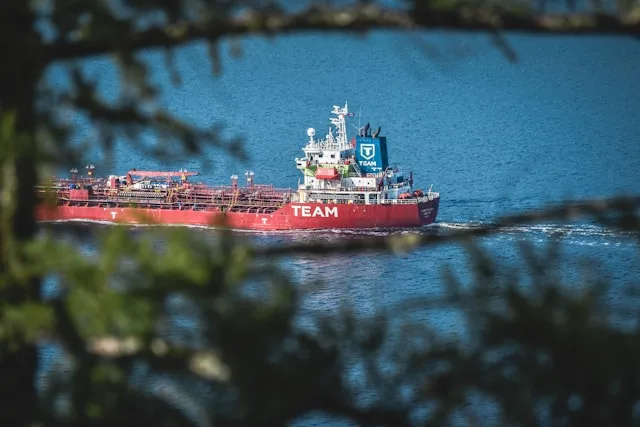
Saguenay Maritime Logistics: The Automation Shift That Replaced One Workforce With Another That Does Not Yet Exist

The Port of Saguenay handled 3.48 million tonnes of cargo in 2024, opened its 2025 navigation season eleven days later than the historical average, and entered 2026 with a wharf rehabilitation project nearing completion that will increase berthing capacity for Panamax-class vessels. By the numbers, the port is expanding. The infrastructure is modernising. The cargo throughput potential is rising by 15%. What the numbers do not show is that the workers required to operate the modernised facility are not arriving at a pace that matches the concrete being poured.
Rio Tinto's deployment of AP60 smelting technology at the Alma plant, completed in 2024, reduced labour intensity per tonne of aluminium produced. That headline suggested a shrinking workforce. The reality is different. The automation eliminated traditional smelter operator roles while creating acute demand for electromechanical technicians and process automation specialists that the region cannot supply. The port, which exists primarily to serve Rio Tinto's aluminium complex, now faces a workforce that is smaller in aggregate but harder to staff in the roles that matter most. The same dynamic is playing out across the fjord tourism sector, where a recovering cruise season is colliding with a single-berth terminal, compulsory pilotage bottlenecks, and a seasonal employment structure that repels the very candidates it needs to attract.
What follows is an analysis of the forces reshaping Saguenay's maritime and tourism economy, the specific talent gaps that infrastructure investment alone cannot close, and what hiring leaders in this market need to understand before they commit to their next search.
A Port Built Around One Customer and One Commodity
The Port of Saguenay is not a diversified shipping hub. It is the logistical extension of Rio Tinto's Saguenay-Lac-Saint-Jean aluminium operations. Sixty-five per cent of cargo volume is liquid bulk, primarily caustic soda and fuel. Twenty-five per cent is dry bulk, predominantly alumina imported for smelting. The remaining ten per cent comprises general cargo, including aluminium ingots and fabricated products. Rio Tinto's three smelters in Laterrière, Alma, and Arvida employ approximately 3,200 people and generate roughly 70% of the port's total cargo volume.
This concentration creates a dependency that no infrastructure upgrade can diversify away from in a single cycle. When aluminium prices swing between USD $2,100 and $2,700 per tonne on the London Metal Exchange, as they did throughout 2024, the port's shipping frequency follows. The CAD $62.5 million federal commitment under the National Trade Corridors Fund, targeting wharf reinforcement and liquid bulk capacity expansion through 2027, is building physical infrastructure for a throughput level that depends on decisions made in Rio Tinto's London boardroom.
The Phase II Expansion and Its Talent Implications
The Phase II rehabilitation of Quai La Bergeronnes, expected to reach completion by Q2 2026, will allow the port to berth Panamax-class vessels up to 70,000 DWT and enable simultaneous cruise and cargo operations. This is a meaningful capability upgrade. The current single-berth limitation at La Baie forces cargo diversions during peak cruise dates in September, when foliage season drives the highest passenger volumes. Eliminating that zero-sum scheduling conflict unlocks revenue that has been left on the table for years.
But a larger berth requires operators who can work it. Stevedoring at La Baie is contracted to Logistec Corporation, which employs 120 to 150 dockworkers and equipment operators on seasonal contracts. According to Emploi-Québec data, Logistec has experienced 40% annual turnover among mobile crane operators at the terminal. Positions typically take four to six months to fill through inter-regional recruitment. The dominant pattern is straightforward: operators leave for mining sector opportunities in Sept-Îles or Val-d'Or, where identical equipment certifications command hourly rates of CAD $38 to $42 versus Saguenay's CAD $32 to $35. A 15% throughput increase means nothing if the crane seats are empty when the ships arrive.
The Automation Paradox at the Aluminium-Port Interface
The original analytical claim of this article is this: Rio Tinto's investment in automation has not reduced the regional workforce problem. It has replaced one kind of worker with another that does not yet exist in sufficient numbers. Capital moved faster than human capital could follow.
The AP60 technology reduces the number of traditional smelter operators required per tonne of aluminium produced. At a surface level, this looks like a reduction in regional labour demand. But the roles eliminated are the roles the market could fill. The roles created, specifically Industry 4.0 maintenance technicians with hybrid industrial automation and maritime logistics skills, are the roles the market cannot.
Emploi-Québec data shows a 34% increase in vacancies for electromechanical technicians and marine engineers between Q1 2024 and Q1 2025 across the Saguenay-Lac-Saint-Jean region. Candidates with the right hybrid skill set maintain employment rates above 90%. Job postings attract primarily underqualified active applicants. Qualified profiles must be sourced directly from Rio Tinto's own operations, or from competitors such as Alcoa and Alouette in Sept-Îles. The automation that was supposed to reduce dependency on scarce labour has created a new scarcity that is harder to resolve than the one it replaced.
This bifurcation is not temporary. As the AP60 technology matures and its maintenance requirements become better understood, the demand for specialists who can bridge automated smelter operations and port-side cargo handling will intensify. The pipeline to produce these professionals does not currently exist at the volume the region needs.
A Navigation Season That Compresses Everything
The Port of Saguenay operates within a statutory navigation season that typically runs from early April through mid-December. Ninety per cent of annual commercial traffic concentrates within these 250 to 270 days. The 2025 season opened on April 8, with Canadian Coast Guard icebreaking services required to clear the approach. This was eleven days later than the historical average of March 28.
Climate data from Environment and Climate Change Canada shows a contradictory pattern that defies simple narratives about warming. Declining ice coverage has extended the theoretical navigation window by twelve days since 2000. But increased winter storm frequency in the Gulf of St. Lawrence has simultaneously delayed spring opening by an average of 4.3 days annually. The net effect is not a reliably longer season. It is a less predictable one.
What Seasonal Compression Means for Hiring
For port operations roles, the average time-to-fill is 87 days. For general administrative positions, it is 42 days. That gap is revealing. A search that takes 87 days in a market with a 270-day operational window means losing nearly a third of the season before the new hire is productive. For the Administration portuaire du Saguenay, which expands from 45 permanent employees to 85 seasonal positions during navigation season, the cost of a delayed or failed search is not abstract. It is measured in ships waiting and cargo diverted.
The seasonal structure creates an additional retention problem that goes beyond compensation. Sixty-eight per cent of port-related tourism employment is seasonal. Skilled trades workers who want year-round income stability leave for sectors and cities that can provide it. The 12% annual outmigration of technical trade professionals aged 25 to 35 from the Saguenay region, primarily to Montreal and Quebec City, is not driven solely by wages. It is driven by the structure of employment itself.
The Cruise Recovery Meets the Fjord's Physical Limits
The 2026 cruise season is pre-booked for 72 vessel calls, with projected passenger volumes of 58,000. This approaches the 2019 baseline and represents a meaningful recovery from the pandemic disruption. Through 2025, the fjord received approximately 52,000 cruise passengers across 65 vessel calls, a 12% increase over 2024 but still 18% below the pre-pandemic peak.
These are encouraging numbers. They are also misleading if read without the regulatory context.
The Saguenay-St. Lawrence Marine Park enforces speed restrictions of 10 knots or less in critical habitats, alongside whale avoidance protocols that extend cruise transit times by 45 to 90 minutes per passage. These regulations are not loosening. They are tightening as the beluga population monitoring intensifies. The effect is a compression of daily excursion capacity that sets a ceiling on how many passengers the fjord can actually process in a given day, regardless of how many ships are booked.
When Cruise Growth and Cargo Compete for the Same Berth
Until the Phase II rehabilitation is complete, the La Baie terminal operates with a single berth. A cruise vessel occupying that berth means a cargo vessel cannot. During peak September foliage season, when cruise demand is highest and aluminium shipments continue at full pace, this is not a theoretical constraint. It is a daily scheduling conflict. The port authority's strategic plan anticipates that simultaneous operations will become possible by mid-2026. But even then, the human capacity to manage two simultaneous berth operations requires marine pilots, stevedores, and harbour masters who are already in short supply.
The Corporation des pilotes du Bas-Saint-Laurent, which holds a federal monopoly on pilotage services for the Saguenay River, assigns 18 pilots to Saguenay rotations. Pilot availability limits port capacity to two to three vessel movements daily during peak season. The Corporation has maintained an open recruitment call for apprentice pilots since 2022. Zero candidates completed the Saguenay River certification track during the 2023-2024 training cycle, despite entry-level compensation of CAD $95,000 during the four-year apprenticeship. Candidates consistently withdraw during the 18-month ice-navigation practicum, which requires extended seasonal relocation to Saguenay from Quebec City or Montreal.
This is a bottleneck that compensation alone cannot solve. Qualified marine pilots earn CAD $175,000 to $265,000 annually on a self-employed basis. The money is there. The willingness to relocate for an 18-month practicum in a region where spousal employment options are limited is not.
The Bilingual Certification Wall
Transport Canada marine safety certification requires French proficiency. This is a federal regulatory requirement, not a regional preference. It excludes approximately 40% of potential interprovincial candidates from Atlantic Canada who lack working French capabilities. In a market where 85% of port-facing roles require French-English bilingualism for international shipping documentation and federal pilotage communications, this linguistic barrier functions as a hard filter that reduces the effective candidate pool before any conversation about skills or experience begins.
The practical effect is that Saguenay's maritime employers cannot recruit from the full Canadian talent base. They are limited to Quebec, francophone New Brunswick, and the small subset of anglophone Canadians who hold working French certification. When the region is simultaneously losing 1.2% of its working-age population annually through demographic contraction in the 25-44 cohort, the arithmetic becomes severe. The pool is shrinking from within while regulatory barriers prevent replenishment from without.
For senior roles, this constraint intensifies. A port operations executive needs aluminium bulk handling expertise, bilingual capability, and familiarity with the specific regulatory environment of the St. Lawrence corridor. Port operations executives with this profile exhibit 85% passive candidate characteristics: they are employed, not actively searching, and accessible only through direct executive search. Average search duration following executive search initiation runs four to six months.
Compensation: Competitive Within the Region, Not Against the Corridor
The compensation data reveals a market that pays well by Saguenay standards and poorly by St. Lawrence corridor standards. A port authority Director General earns CAD $185,000 to $240,000 in Saguenay. The equivalent role at the Port of Montreal commands a material premium, and Montreal offers year-round employment, superior spousal career options, and the career trajectory that comes with managing a port handling multiples of Saguenay's volume.
An Operations Manager in stevedoring earns CAD $95,000 to $125,000 at the La Baie terminal. The same role in Montreal pays CAD $130,000 to $160,000. That is a 25 to 35% gap for equivalent work, and it widens once seasonal bonuses and year-round stability are factored into the comparison.
The Tourism Executive Compensation Trap
The tourism side of the market illustrates a different compensation dynamic. A VP of Operations for cruise and fjord tourism in Saguenay earns CAD $110,000 to $145,000. This range is constrained by the seasonal revenue model: the operation runs at full capacity for six months and generates minimal revenue for the other six. Quebec City, which handles over 300,000 cruise passengers annually versus Saguenay's 50,000, offers comparable base compensation but a fundamentally different career proposition. Winter employment in Quebec City's hotel sector provides year-round engagement. Saguenay's tourism executives face a structural gap in their calendar that the compensation package cannot paper over.
The Croisières AML example is instructive. The Maritime Operations Director position for the company's Saguenay division remained vacant for 11 months during 2023-2024. According to archived job postings and anonymised sector interviews compiled by Développement économique Saguenay-Lac-Saint-Jean, three candidates withdrew during late-stage negotiations specifically over the six-month winter layoff structure. The role was eventually filled through internal promotion rather than external recruitment. When the strongest external candidates walk away at the offer stage because the employment structure itself is the problem, raising the base salary is not the answer.
What Hiring Leaders in This Market Need to Do Differently
The talent challenges in Saguenay's maritime and tourism sectors are not primarily about money. They are about structure. Seasonal employment patterns repel year-round professionals. Compulsory bilingual certification excludes a large portion of the interprovincial talent base. Automation has created roles the local training pipeline cannot yet fill. Demographic contraction is reducing the working-age population from within. These are systemic constraints that a single employer cannot solve alone and that traditional talent acquisition approaches were not designed for.
For organisations filling critical roles in this market, three shifts are necessary.
First, the search must begin with passive candidates. In marine pilotage, the active application rate is literally zero. For port operations executives, 85% of qualified candidates are passive. Job postings in this market reach the wrong population. Direct headhunting that maps the candidate pool across competing employers in Montreal, Quebec City, and Sept-Îles is not a premium service. It is the only method that reaches the candidates who matter.
Second, the offer must address the structural objections, not just the financial ones. The three candidates who withdrew from the Croisières AML Maritime Operations Director role did not leave over base salary. They left over the winter layoff. Employers who cannot restructure seasonal roles into year-round positions need to be explicit about what they offer instead: housing subsidies, transition support, guaranteed re-engagement terms, or clearly defined off-season project work.
Third, the timeline must account for the market reality. An 87-day average time-to-fill for port operations roles, in a market with a 270-day navigation season, means every search is a race against the calendar. Firms that begin their seasonal hiring cycle in March are already late. A search strategy built for this market must start months before the navigation season opens, with candidates identified and assessed before ice clearance determines the opening date.
KiTalent delivers interview-ready executive candidates within 7 to 10 days, using AI-enhanced talent mapping across industrial and manufacturing markets to reach the passive professionals that job boards and conventional postings cannot surface. In a market where qualified marine pilots, port operations executives, and electromechanical technicians are employed, not searching, and reachable only through direct approach, the speed and precision of the search method determines whether the role is filled before the season begins or sits vacant until the ice returns.
For organisations competing for leadership talent in Saguenay's maritime logistics and fjord tourism sectors, where the candidate pool is small, passive, and structurally constrained by bilingualism requirements, seasonal employment patterns, and corridor-wide competition, speak with our executive search team about how we approach this market. With a 96% one-year retention rate across 1,450 completed executive placements, KiTalent's pay-per-interview model ensures you meet qualified candidates before committing financially, eliminating the retainer risk that makes speculative searches in small markets feel prohibitive.
Frequently Asked Questions
What are the hardest maritime roles to fill in Saguenay?
Marine pilots, electromechanical technicians with Industry 4.0 competencies, and senior port operations managers represent the most acute shortages. The Corporation des pilotes du Bas-Saint-Laurent recorded zero successful apprentice completions for the Saguenay River certification track during 2023-2024, despite offering CAD $95,000 entry-level apprenticeship compensation. Electromechanical technicians with hybrid automation and maritime logistics skills maintain employment rates above 90%, meaning job postings attract mostly underqualified applicants. Direct executive search targeting passive candidates is the primary method for reaching qualified professionals in these categories.
Why is the Port of Saguenay experiencing talent shortages despite automation?
Rio Tinto's AP60 smelting technology reduced traditional smelter operator headcount but created acute demand for process automation specialists and maintenance technicians the region cannot supply. The automation replaced accessible roles with specialised ones. Emploi-Québec data shows a 34% increase in vacancies for electromechanical technicians and marine engineers between Q1 2024 and Q1 2025. Qualified candidates must typically be sourced directly from Rio Tinto, Alcoa, or Alouette operations, making proactive talent identification essential.
How does seasonal employment affect maritime hiring in Saguenay?
Sixty-eight per cent of port-related tourism employment is seasonal, running May through October. This structure drives 12% annual outmigration of technical trade professionals aged 25 to 35 to Montreal and Quebec City. The Maritime Operations Director role at Croisières AML's Saguenay division remained vacant for 11 months after three candidates withdrew over the six-month winter layoff. Employers must address the structural employment gap in their offers, not simply raise base compensation.
What compensation do port operations executives earn in Saguenay?
A Director General at the Administration portuaire du Saguenay earns CAD $185,000 to $240,000 with federal benefits and pension. Stevedoring Operations Managers earn CAD $95,000 to $125,000 with seasonal performance bonuses of 10 to 15%. Marine pilots earn CAD $175,000 to $265,000 on a self-employed basis. These figures are competitive within the region but trail Montreal equivalents by 25 to 35% for comparable roles, a gap that influences candidate decisions alongside lifestyle and career trajectory considerations.
How does bilingualism affect maritime recruitment in Saguenay?
Transport Canada marine safety certification requires French proficiency, excluding approximately 40% of potential interprovincial candidates from Atlantic Canada. Eighty-five per cent of port-facing roles in Saguenay require French-English bilingualism for international shipping documentation and federal pilotage communications. This regulatory requirement functions as a hard filter that reduces the effective candidate pool before skills or experience are assessed, making the already constrained regional talent market materially smaller.
Can KiTalent help with executive hiring in Saguenay's maritime sector?
KiTalent specialises in identifying passive, high-performing executives through AI-powered talent mapping. In Saguenay's maritime market, where 85% of port operations executives and 100% of qualified marine pilots are passive candidates, conventional job advertising reaches a fraction of the viable talent pool. KiTalent delivers interview-ready candidates within 7 to 10 days under a pay-per-interview pricing model, with no upfront retainer. This approach is particularly suited to small, specialised markets where the cost of a prolonged vacancy is measured in lost navigation-season revenue.