Salalah Port's Volume Surge Has Exposed a Workforce Built for a Smaller Operation
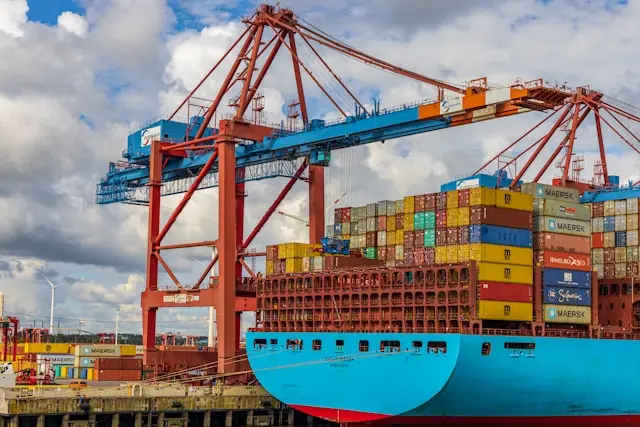
The Port of Salalah processed approximately 3.8 million TEU in 2023, ranking among the top 50 container ports globally and anchoring the largest transshipment hub between Jebel Ali and Djibouti. Through 2024, the Red Sea crisis pushed that figure higher still, with an estimated 15 to 18 per cent year-on-year increase in container throughput as carriers rerouted Asia-Europe traffic around the Cape of Good Hope. Salalah became, almost overnight, one of the most operationally critical relay points in global shipping. But the port's workforce was not built for this moment. It was built for the one before it.
The tension at the centre of this market is deceptively simple. Salalah's throughput is surging, its infrastructure investment pipeline is active, and its strategic positioning has never been stronger. Yet the people required to run the operation at this intensity are not available in sufficient numbers. Harbor pilot searches run eight to twelve months. Automated stacking crane technicians turn over at 40 per cent annually. Senior regulatory roles in the adjacent Salalah Free Zone have been restructured twice because no candidate could be found to fill them as originally designed. The crisis that gave the port its volume advantage has simultaneously revealed the fragility of its talent base.
What follows is a ground-level analysis of where the hiring gaps are most acute across Salalah's port and logistics cluster, what is driving them, why the conventional approaches to filling these roles are failing, and what organisations operating in this market need to understand before they commit to their next critical search.
A Transshipment Hub Operating Above Its Workforce Ceiling
The Port of Salalah, operated by APM Terminals under a concession extended to 2050, runs five deep-water berths capable of handling vessels with up to 18 metres of draft. Its transshipment-to-gateway ratio sits at roughly 75:25. That ratio tells the story of a port whose primary function is not serving Omani trade but relaying containers between global mainline services and smaller Gulf feeder routes. When those mainline services shifted their routing in response to Houthi disruptions in the Red Sea, Salalah's role expanded dramatically.
According to Drewry Maritime Research's Container Market Quarterly, the rerouting of approximately 30 per cent of Asia-Europe container traffic around the Cape of Good Hope during 2024 converted Salalah into a hub-and-spoke relay point that carriers had previously bypassed. The volume surge was material and immediate. But it came with operational costs that the throughput numbers alone do not capture.
Yard Capacity Under Strain
Container dwell time efficiency fell by 8 per cent compared to 2023 benchmarks. This metric matters because dwell time is a direct proxy for how well a port manages the flow of boxes through its yard. When it deteriorates, vessel turnaround times extend, carrier schedules compress, and the port's value proposition to shipping lines erodes. The problem was not that Salalah lacked berth space. The problem was that the people managing yard operations, crane sequencing, and vessel planning were stretched beyond the capacity for which the workforce was designed.
The Berth 6 Bet
APM Terminals has committed OMR 80 million (approximately $208 million) to deepen Berth 6 to 20 metres by mid-2026, enabling the port to receive 24,000 TEU ultra-large container vessels that currently bypass the facility. This investment addresses a real gap. Without it, Salalah risks losing relevance as vessel sizes continue to grow. But deepening a berth is an engineering problem with a clear timeline. Staffing the operation that berth will require is a talent problem with no guaranteed solution. The infrastructure will be ready. The question is whether the people to operate it will be.
The same pattern runs through Salalah's wider logistics ecosystem: capital is moving faster than human capital can follow.
Three Talent Categories Where the Market Has Failed
The Salalah port and logistics cluster directly employs approximately 8,500 personnel, with indirect employment across the Dhofar Governorate estimated at 22,000. Within that workforce, three categories of specialist talent have become acutely scarce, and each faces a different structural constraint.
Harbor Pilots and Marine Superintendents
Senior Harbor Pilot positions at major terminal operators in Salalah typically remain vacant for eight to twelve months. The requirement is narrow: an Omani licence, international certification, and deep-water experience with vessels at or above 14,000 TEU. According to data from the Oman Maritime Cluster Association, the entire qualified pool of Omani master mariners competing for these roles across Salalah and the Port of Duqm numbered approximately six individuals through 2024. Recruitment cycles for these positions regularly extend beyond three quarters.
This is not a compensation problem. It is a pipeline problem. The number of candidates who meet the certification and nationality requirements is so small that traditional search methods are irrelevant. Over 90 per cent of qualified candidates are currently employed, typically with DP World, APM Terminals, or Adani Ports, and are not responding to posted vacancies. Reaching them requires direct identification and approach methods with lead times of four to six months.
Automated Stacking Crane Technicians
APM Terminals Salalah operates the Middle East's first semi-automated container terminal. That distinction creates a hiring problem unique to this market. The technicians required to maintain automated stacking cranes, RTG cranes, and STS systems represent a global niche within a regional niche. Annual turnover for these roles runs at 40 per cent, driven primarily by competitors in Dubai and Saudi Arabia offering salary premiums of 25 to 30 per cent plus housing allowances to attract the same individuals on twelve-month renewable contracts.
The active applicant pool for these positions is thin and largely unqualified. According to the Hays Global Skills Index for infrastructure, 85 per cent of port automation engineers are passive candidates with average tenure at their current employer exceeding five years. The professionals who respond to job advertisements typically lack the specific container terminal automation experience that makes them productive from day one. This means every search for a crane technician in Salalah is, in practice, a search for candidates who are not looking and who must be convinced that the proposition justifies leaving a stable role.
Free Zone Regulatory Specialists
The Salalah Free Zone Authority has encountered persistent difficulty filling senior regulatory and customs optimisation roles. The requirement for combined GCC free zone experience and Arabic fluency narrows the candidate pool to a degree that has forced at least one position to be restructured twice, splitting responsibilities between Muscat and Salalah rather than leaving the role unfilled. This is an organisational design concession driven by talent scarcity, not by operational logic.
Job postings for Port Operations Manager and Marine Superintendent roles in Salalah increased 45 per cent year-on-year in Q3 2024. Average time-to-fill extended from 62 days in 2022 to 94 days in 2024. These are not marginal increases. They represent a market where traditional recruitment approaches are consistently failing and where the cost of each additional week without a critical hire compounds.
The Omanisation Paradox: Statistical Compliance, Functional Gaps
Oman's Ministry of Labour has raised Omanisation quotas for the logistics sector to 35 per cent for managerial roles and 45 per cent for technical operations, effective from January 2026. The previous thresholds were 25 per cent managerial and lower for technical staff. This is a meaningful increase, and it arrives at precisely the wrong moment for an industry already unable to fill its most critical positions.
The core issue is not the policy's intent. Localisation of employment in strategic sectors is a legitimate national objective, and several of Salalah's anchor employers have made real progress. APM Terminals reports 40 per cent Omanisation across its 850 direct staff. Oman Drydock Company has achieved 72 per cent. These are not trivial numbers.
The issue is the gap between headline Omanisation rates and functional competency in the most specialised roles. Industry reporting from the Oman Economic Association and recruitment market data both point to a pattern that has become known locally as "Omanisation by designation." In this practice, Omani nationals are placed in supervisory roles that satisfy quota requirements but without the full technical authority that the role title implies. The operational decisions remain with expatriate specialists working alongside or beneath them.
This creates two problems simultaneously. First, it satisfies the regulatory metric without building the local capability that the regulation was designed to develop. Second, it increases operational risk in an environment where the margin for error is already compressed by volume surges and equipment complexity. A harbour that is statistically 35 per cent Omanised in management but functionally dependent on expatriate decision-making is more fragile than either number suggests.
For organisations hiring into this market, the implication is concrete. The pool of Omani nationals with genuine terminal operations management qualifications is insufficient to meet the new quotas, and the cost of hiring mistakes at this level is compounded by regulatory non-compliance risk. Employers face a choice between investing heavily in training pipelines that take years to mature and paying premiums for the handful of qualified Omani professionals who exist today.
Compensation: Lower Than Dubai, But Not Low Enough to Ignore
Salalah's compensation market for port and logistics professionals operates at a consistent discount to Dubai. That discount is well known in the industry. What is less well understood is where the discount bites hardest and where it fails to explain hiring outcomes.
At the senior specialist and manager level, roles such as operations manager and berth planner command OMR 2,800 to 4,200 per month ($7,280 to $10,920), inclusive of transport and housing allowances. Expatriate packages add 15 to 20 per cent in schooling premiums. At the executive and VP level, roles such as port manager and marine operations director range from OMR 8,000 to 14,000 per month ($20,800 to $36,400), plus performance bonuses tied to throughput metrics.
These figures sit approximately 25 to 30 per cent below equivalent roles in Dubai, according to multiple salary benchmarking sources including the Hays GCC Salary Guide and GulfTalent's Executive Compensation Report. In the free zone and logistics management domain, a similar pattern holds: SFZ business development managers earn OMR 2,400 to 3,800, while executive roles such as SFZ Managing Director or Chief Commercial Officer range from OMR 7,500 to 12,000.
Where Money Alone Cannot Close the Gap
The interesting pattern is at the very top of the specialisation pyramid. For the rarest roles, such as harbour pilots and automation engineers, Omanisation pressures have driven premiums for qualified Omani nationals to the upper quartile, with some cases reaching 10 to 15 per cent above the equivalent expatriate package. This inversion reflects the reality that nationality, in the context of localisation regulation, has become a scarcity factor independent of skill. A qualified Omani harbour pilot is worth more to an employer than an equally qualified expatriate not because of any capability difference but because the Omani candidate simultaneously fills a regulatory requirement and a functional one.
The geographic competitors compound this dynamic. Saudi Arabia's Vision 2030 logistics projects, including NEOM and the King Abdullah Port expansion, are recruiting aggressively with tax-free packages and signing bonuses of 20 to 25 per cent, targeting the same limited GCC talent pool. Dubai offers not only higher base pay but also superior international schooling, broader career mobility, and a deeper job market that reduces the risk of career stagnation. Salalah's lower housing costs, approximately 40 per cent below Dubai per Numbeo data, offer partial mitigation but do not offset the schooling and amenity gap for expatriate families.
This means any organisation hiring senior maritime or logistics talent into Salalah faces a proposition problem that cannot be solved by adjusting the number on the offer letter alone. The candidate must be convinced that the role itself, the career trajectory, and the operating environment justify the trade-offs.
The Red Sea Question: Growth Engine or Structural Trap
Here is the analytical claim that sits beneath the surface of every data point in this market, and that hiring leaders need to confront directly.
The Red Sea crisis has not strengthened Salalah's talent position. It has weakened it.
The volume surge looks like growth. It registers as success in every throughput metric, every berth utilisation number, every quarterly traffic report. But the surge is artificial and crisis-dependent. Drewry's forecasts project that if Suez Canal transit normalises, Salalah's container throughput could retract from a potential 4.2 to 4.4 million TEU in 2026 back to approximately 3.5 million TEU. That retraction would represent not just a volume correction but an employment correction.
The damage is being done now, during the surge, in ways that will persist after the crisis resolves. The port is running its workforce at a tempo designed for higher volumes but hiring into that tempo with short-term contracts, poaching premiums, and compensation structures that assume continued growth. When the volume retracts, the employers who paid 30 per cent premiums to lure crane technicians from Jebel Ali will face a workforce sized for a demand level that no longer exists, while the training and development investments that would have built a sustainable local talent base were deferred in favour of immediate hiring.
This is the structural trap. The crisis created urgency. That urgency favoured buying talent over building it. And buying talent in a crisis-inflated market produces a cost base that becomes unsustainable the moment the crisis ends. Organisations filling critical leadership roles in this environment need to distinguish between positions that are structurally necessary regardless of throughput levels and positions that exist only because of the temporary volume spike. The search strategy for each should be fundamentally different.
What This Means for Organisations Hiring in Salalah's Logistics Cluster
The Salalah port and logistics market in 2026 presents a hiring environment with five defining characteristics that any organisation running a senior search must account for.
First, the candidate pool for the most critical roles is not just small. It is functionally closed. For harbour pilots and marine superintendents, the qualified population in the GCC can be counted on two hands. For automation engineers, 85 per cent are passive. For free zone regulatory specialists with the right language and jurisdiction combination, the pool barely exists. No talent mapping exercise will discover a hidden supply of these professionals. They must be identified individually and approached with a proposition calibrated to their specific circumstances.
Second, Omanisation quotas are not an administrative inconvenience. They are a material constraint on search design. Every senior hire must now be evaluated against both competency requirements and localisation compliance. This dual filter eliminates candidates who would otherwise be strong fits and adds weeks to every search.
Third, the compensation benchmarks favour competitors. Dubai pays more and offers more. Saudi Arabia is investing aggressively. Salalah's value proposition must be built on factors other than base salary: role scope, long-term contract stability, and quality-of-life factors that appeal to specific candidate profiles rather than the market at large.
Fourth, the timeline pressure is acute. With Berth 6 deepening expected by mid-2026 and Omanisation deadlines already in effect, the window for securing the leadership talent needed to operate expanded infrastructure under new regulatory conditions is narrowing by the quarter.
Fifth, the methods that work for general logistics hiring do not work for this market's critical roles. General logistics coordinators and freight forwarding agents show high active candidate ratios, around 60 per cent. But the senior technical and leadership positions show the opposite pattern. Building a reliable pipeline for these roles requires sustained, proactive identification of passive professionals across multiple GCC markets.
For organisations competing for senior maritime operations, port automation, or free zone leadership talent in Salalah, where the qualified candidate pool is measured in single digits and the regulatory requirements are tightening, KiTalent's AI-enhanced direct search methodology reaches the 85 to 90 per cent of candidates who are not visible on any job board. With interview-ready candidates delivered within 7 to 10 days and a 96 per cent one-year retention rate across 1,450 executive placements, this is the approach that matches the speed and precision this market demands. To discuss how we approach searches in the GCC maritime and logistics sector, start a conversation with our executive search team.
Frequently Asked Questions
What are the hardest logistics roles to fill in Salalah?
Harbor pilots, marine superintendents, and automated stacking crane technicians represent the most acute shortages. Harbor pilot searches at terminal operators typically extend to eight to twelve months due to a qualified Omani pool numbering fewer than ten individuals across the country. Automation technicians experience 40 per cent annual turnover as Dubai and Saudi Arabia recruit from the same limited talent base. Free zone regulatory specialists combining GCC jurisdictional experience with Arabic fluency are so scarce that positions have been restructured to split responsibilities between cities rather than remain vacant. These roles require direct headhunting approaches rather than conventional job advertising.
How does Salalah's logistics salary compare to Dubai?
Salalah's senior logistics compensation sits approximately 25 to 30 per cent below Dubai equivalents. A port operations director in Salalah earns OMR 8,000 to 14,000 per month, compared to significantly higher packages in Jebel Ali for similar scope. However, Salalah offers lower housing costs at roughly a 40 per cent discount and longer-term contract stability. For the rarest roles held by qualified Omani nationals, Omanisation pressures have pushed compensation to 10 to 15 per cent above expatriate equivalents, creating an inversion where nationality functions as a scarcity premium.
What impact has the Red Sea crisis had on Salalah's port operations?
The Houthi disruption of Red Sea transit through 2024 diverted approximately 30 per cent of Asia-Europe container traffic around the Cape of Good Hope, increasing Salalah's transshipment volumes by an estimated 15 to 18 per cent year-on-year. This surge converted the port into a critical relay hub but strained yard capacity, reducing container dwell time efficiency by 8 per cent. If Suez Canal transit normalises, Drewry forecasts volumes could retract to approximately 3.5 million TEU from a potential peak of 4.2 to 4.4 million, creating overcapacity risk.
What are Omanisation requirements for the logistics sector in 2026?
As of early 2026, Oman's Ministry of Labour requires 35 per cent Omani employment in managerial logistics roles and 45 per cent in technical operations, up from previous thresholds of 25 per cent managerial. The local supply of Omani nationals with terminal operations management qualifications is insufficient to meet these targets through hiring alone. Employers face a choice between long-term training investment and paying upper-quartile premiums for the limited number of qualified Omani professionals. Non-compliance carries penalties that add regulatory risk to the operational risk of unfilled positions.
How does KiTalent approach executive search in GCC maritime and logistics markets?
KiTalent uses AI-powered talent mapping to identify the passive candidates who represent 85 to 90 per cent of qualified professionals in specialised maritime roles. In markets like Salalah, where the qualified pool for critical positions can be counted individually, this direct identification approach replaces the job-board methods that reach only actively searching candidates. KiTalent delivers interview-ready candidates within 7 to 10 days under a pay-per-interview model with no upfront retainer. With a 96 per cent one-year retention rate across over 1,450 placements, the approach is designed for markets where the margin for a wrong senior hire is especially narrow.
What is the outlook for Salalah Free Zone expansion?
Asyad Group has invested OMR 120 million ($312 million) in SFZ expansion since 2022, with current occupancy at 68 per cent against an 85 per cent target under Oman Vision 2040. A new 25,000 pallet-position cold-chain facility specialising in pharmaceuticals and seafood is targeted for operational status by late 2026. However, only 12 per cent of SFZ tenants currently utilise facilities for processing or re-export packaging versus pure warehousing. The zone's growth depends on attracting value-added logistics operations and the specialised talent to run them, a challenge compounded by competition from Jebel Ali and King Abdullah Port for senior supply chain and operations leaders.