Samara's Refineries Are Spending Billions on Modernisation. The Engineers Who Can Run It Do Not Exist in Sufficient Numbers.
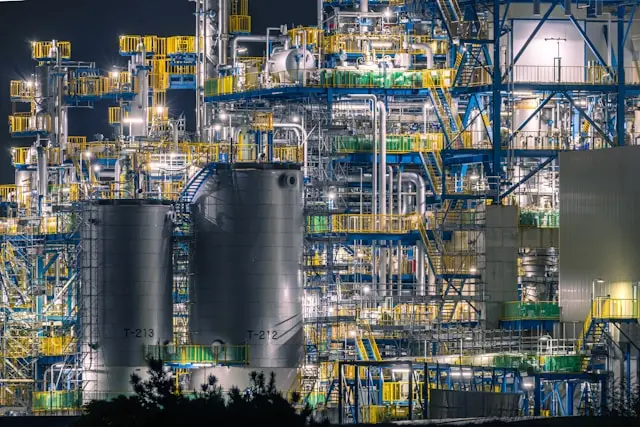
Samara Oblast processed approximately 25 to 27 million tonnes of crude oil in 2024 across its major refineries. Rosneft has committed 67 billion roubles to modernising those facilities through 2026. The Novokuibyshevsk Refinery completed a 45 billion rouble hydrocracker upgrade in late 2023. Capital is flowing at record levels into one of Russia's most concentrated refining clusters.
The problem is not capital. The problem is that the engineers, chemists, and digital specialists required to operate this new infrastructure are not available in sufficient numbers, and the mechanisms that traditionally supplied them have broken down. Western technology embargoes have made every refinery in the region a hybrid of imported legacy systems and untested domestic replacements. The professionals who can bridge that gap, who understand both Honeywell DCS architecture and its Russian-certified successors, are so scarce that vacancy fill rates for senior hydroprocessing roles fell to 23% in 2024. Down from 61% just three years earlier.
What follows is a ground-level analysis of why Samara's oil and refining sector is spending more than ever while struggling harder than ever to hire, where the specific bottlenecks lie, and what organisations operating in this market need to understand before launching their next critical search.
The Refining Complex That Makes Samara a National Priority
Samara Oblast's energy sector is not a single employer or a single facility. It is an integrated hydrocarbon system stretching across three core sites, a pipeline hub of continental importance, and a trading exchange that sets regional fuel prices.
The Novokuibyshevsk Refinery, 20 kilometres southeast of Samara city, achieved 94.5% refining depth in 2024. That figure was up from 92% the prior year, a direct result of the hydrocracker modernisation. The Syzran Refinery, 100 kilometres north, operates under the same Rosneft ownership and employs approximately 6,800 workers. Between them, these two facilities account for the bulk of the region's refining capacity, running at 92 to 95% utilisation as of early 2025.
Novokuibyshevsk Petrochemical Company, also Rosneft-controlled, produced 1.2 million tonnes of petrochemicals in 2024: synthetic rubbers, polyethylene, polystyrene. Output grew 3% year on year, driven by import substitution demand as Western chemical imports became harder to source. A 250,000 tonne per year polypropylene unit is expected to come online by late 2026, requiring 800 new technical positions.
The Pipeline Junction and Logistics Nerve Centre
Transneft's Upper Volga Regional Oil Pipeline Department operates from Samara, coordinating pipeline throughput exceeding 50 million tonnes annually through the Druzhba and connected systems. In 2024, Transneft reoriented approximately 18 million tonnes of Samara-origin oil exports from Western routes to Eastern ones, primarily serving China and India via the ESPO pipeline spur and Kozmino port. That reorientation increased rail tanker demand from Samara terminals by 22%, according to Russian Railway Volga Region dispatch data.
The Samara Commodity Exchange facilitates regional fuel trading, and Rosneft's Samara tank farm offers 800,000 cubic metres of storage capacity. The city is not merely adjacent to refining. It is the administrative and logistical node that coordinates the movement of product from refinery gate to market.
The sector directly employs between 38,000 and 42,000 people in the oblast, with an additional 15,000 in indirect logistics and services. The numbers suggest a robust, well-staffed industry. They conceal the fault line running through the middle of it.
Where Capital Has Moved Faster Than Human Capital Can Follow
The original synthesis of this article is straightforward but rarely articulated in hiring discussions about the Russian refining sector: Samara's capital investment programmes have created demand for a category of engineer that does not yet exist in sufficient numbers, because the technology these engineers must operate is itself new, hybrid, and without a mature training pathway.
The 67 billion roubles allocated for 2025 to 2026 refinery modernisation focuses on sulfur recovery units and catalytic reforming designed to meet Euro-5 fuel standards. The critical constraint is that this must be achieved without Western catalyst suppliers. Domestic catalysts, including those from Gazprom Neft's Omsk catalyst plant, have historically demonstrated 15 to 20% lower efficiency in heavy oil residue processing compared to equivalents from Axens or Albemarle. The engineers running these units cannot simply follow the procedures established for Western equipment. They must adapt processes in real time, compensating for lower catalyst performance while maintaining yield targets.
This is not a shortage of engineers in the general sense. Samara State Technical University graduates approximately 1,200 chemical and petroleum engineers annually. Entry-level process engineers remain an active candidate market. The shortage is concentrated in professionals with 10 or more years of experience who have operated Western-origin secondary refining units and can now manage the transition to domestic system integration and advanced process control. That intersection of legacy knowledge and adaptation capability defines a candidate pool that is, for practical purposes, a fraction of what aggregate employment figures suggest.
The Three Roles That Define the Hiring Crisis
Hydroprocessing and Catalytic Cracking Engineers
The most acute shortage in Samara's refining cluster sits with specialists capable of operating complex secondary refining units independently of Western technical support. According to the Hays Russia 2024 Energy and Natural Resources Salary Guide, 67% of Volga region refining companies reported DCS and automation engineer vacancies open longer than six months. The industry average for general engineering roles is 90 days. Senior Advanced Process Control engineer positions specialising in Honeywell or Yokogawa systems adapted for Russian refineries routinely remain unfilled for 180 to 240 days.
These are not roles where an additional 10% on the offer resolves the problem. The professionals who hold these skills are employed. Their unemployment rate is effectively zero. Their average tenure at current employers runs 8 to 12 years. They are not browsing job boards. They are not responding to advertisements. Reaching them requires direct identification and confidential engagement by professionals who understand both the technical requirements and the personal circumstances of each candidate.
Digitisation Specialists for Industrial Environments
The second critical shortage involves engineers proficient in digital twin implementation, predictive maintenance algorithms, and cybersecurity for industrial control systems. Federal Service for Technical and Export Control Order No. 136 mandates that all critical infrastructure transition to domestically certified control systems by 2026. Every refinery in Samara Oblast must retrofit its distributed control systems within that timeline. The engineers who can execute this work must understand both the Western systems being replaced and the domestic systems being installed.
To attract industrial data scientists for predictive maintenance work, Rosneft's Samara operations have reportedly introduced remote-work hybrid arrangements and relocation packages targeting professionals in Moscow and St. Petersburg. According to Vedomosti, this represents an unusual concession in an industry where physical presence at the refinery has been a non-negotiable expectation. It reflects a structural inability to source these profiles locally, forcing organisations to compete on terms they would not normally consider.
Sanctions-Era Logistics Coordinators
The third shortage category is newer but growing rapidly. The reorientation of export flows from Western to Eastern routes has created urgent demand for professionals who can manage customs documentation for Central Asian corridors, optimise rail logistics through bottleneck points, and coordinate Caspian maritime routes. According to Kommersant's energy sector analysis, bottlenecks at the Kazakhstan-China border crossing at Dostyk-Alashankou and limited ESPO pipeline capacity may force Samara traders to rely increasingly on the Aktau port route, increasing logistics costs by 12 to 15%.
The professionals who understand these corridors are concentrated in Moscow-based trading houses. Samara-based roles require poaching from other regions, and the compensation premiums required to do so are considerable. The logistics operations manager salary band in the oblast runs 4.2 to 6.0 million roubles annually. Moscow offers 60 to 80% premiums for equivalent roles. The arithmetic is unfavourable for Samara employers unless they can construct offers that compensate for the gap with non-monetary benefits, project significance, or career trajectory.
The Compensation Market: What Samara Pays, and Why It Is Not Enough
The compensation structure for senior technical and executive roles in Samara's oil sector reflects a market under pressure but constrained by the salary frameworks of state-controlled enterprises.
A senior process engineer specialising in hydrocracking or catalytic cracking earns 3.8 to 5.5 million roubles annually in base salary, excluding shift premiums. At the executive level, a refinery technical director commands 15 to 22 million roubles, with performance bonuses tied to refining yield metrics that can add 50 to 100% of base compensation. A VP of supply chain and logistics at a regional trading hub earns 18 to 28 million roubles, with variable pay components tied to arbitrage trading profits.
These figures are competitive within the Volga Federal District. They are not competitive against Moscow, where the same profiles command materially higher packages. More critically, they are not competitive against the poaching premiums now standard in the petrochemical sector. Ward Howell's 2024 Chemical Industry Talent Review documented "aggressive lateral hiring between the Samara and Tatarstan clusters with compensation premiums exceeding 40% for scarce catalysis experts." The competition between Rosneft's NKNK and Kazanorgsintez in Kazan for polymer synthesis chemists has driven typical poaching premiums to 35 to 45% above baseline for specialists with seven or more years of experience in stereospecific catalysis.
State-controlled entities face a particular constraint. Government regulations impose formalised salary caps for senior management at companies like Rosneft and Transneft. Regional general directors often receive non-monetary benefits, including housing and security arrangements, to offset cash compensation limits. For executive search processes targeting these roles, understanding the full compensation architecture, not just the cash figure, is essential to constructing offers that candidates will accept.
The compensation gap between Samara and its competitor markets is not static. It is widening fastest at exactly the seniority level where the most critical vacancies sit.
Three Competitor Markets Pulling Talent Away From Samara
Samara does not lose talent to the entire Russian labour market equally. It loses it to three specific competitors, each pulling a different profile of professional.
Kazan, the capital of Tatarstan, competes directly for petrochemical specialists in polymer chemistry and catalysis. Kazan offers comparable cost of living but stronger academic connections through Kazan Federal University, and its "technopark" infrastructure provides superior laboratory facilities. For R&D-oriented professionals, Kazan's investment in chemical parks creates an environment that Samara's industrial complexes cannot easily replicate. The result is a steady drift of research talent eastward along the Volga.
Moscow draws trading, finance, and senior executive talent. The shift of oil trading operations to Moscow, including Rosneft's own trading arm, has drained Samara's commercial talent pool. A logistics or trading VP considering a Samara role is weighing a 60 to 80% salary discount against cost-of-living savings that only partially offset it. For organisations competing for commercial leadership in Samara, this is the most difficult dynamic to overcome. The talent they need has already been pulled to the capital, and bringing it back requires a proposition that extends well beyond compensation.
Ufa, in neighbouring Bashkortostan, competes for downstream refining engineers. Bashneft's refineries offer similar industrial profiles but are perceived as having more stable, long-term modernisation programmes. Mid-career engineers seeking project continuity, the assurance that the facility they join will still be investing in five years, find Ufa's proposition compelling. In a market where specialist engineers are choosing between employers rather than scrambling for work, perceived stability matters as much as pay.
The Demographic Reality Beneath the Hiring Numbers
Samara Oblast's working-age population declined by 1.2% in 2024, according to Rosstat demographic data. In a sector already struggling to fill specialised roles, even a modest demographic contraction compounds the problem. There are fewer young engineers entering the pipeline, and those who do graduate from SamGTU face immediate competition from every refining cluster in the Volga region.
The 1,200 chemical and petroleum engineering graduates SamGTU produces annually sound substantial. But these are entry-level professionals. The roles that remain unfilled for six to eight months require a decade of operating experience on specific equipment types. No university programme can compress that timeline. The retirement of the generation that built and operated the original Western-sourced units creates a knowledge gap that cannot be filled by recruitment alone. It requires a combination of targeted hiring, internal development, and retention strategies that treat experienced engineers as irreplaceable assets rather than interchangeable headcount.
The aggregate employment data, showing sector employment stable within 1.5% from 2022 to 2024 and unemployment below 2%, masks this entirely. The market is not generically short of labour. It is specifically short of the legacy expertise required to operate increasingly complex domestic-equipment hybrids. That distinction is the difference between a manageable hiring challenge and a systemic one.
This demographic trajectory, combined with the competitive pull of Moscow, Kazan, and Ufa, means that organisations relying on traditional hiring methods in this market are reaching a shrinking fraction of the viable candidate pool with each passing year.
What This Means for Organisations Hiring in Samara's Refining Sector
The convergence of capital investment, technology transition, and talent scarcity in Samara creates a specific set of conditions that conventional search processes are poorly equipped to address.
For the most critical roles, senior APC engineers, catalysis R&D leads, refinery general directors, the candidate market is 85% or more passive. Active applicants for these positions typically lack the specific polymerization catalyst experience or hybrid system knowledge that employers require. The professionals who do hold these capabilities are employed, well-compensated, and not visible on any recruitment platform.
Reaching them requires a different method entirely. It requires talent mapping that identifies where these professionals sit, what they are working on, and what proposition might compel them to consider a move. It requires understanding that a 40% poaching premium is the market rate, not an anomaly. And it requires speed. In a market where fill rates for critical roles have fallen from 61% to 23% in three years, the organisations that reach the right candidate first are the ones that make the hire.
KiTalent works with organisations across the oil, energy, and industrial sectors to identify and deliver senior professionals who are not reachable through conventional channels. Our AI-enhanced talent identification methodology maps the passive candidate market in detail, producing interview-ready candidates within 7 to 10 days. With a 96% one-year retention rate across 1,450 completed executive placements, we bring both speed and precision to markets where the cost of a failed or delayed search is measured in unplanned refinery shutdowns and missed modernisation deadlines.
For organisations competing for hydroprocessing engineers, catalysis specialists, or logistics leadership in Samara Oblast's refining cluster, where the candidates you need are employed, passive, and being actively courted by three competing regions, speak with our executive search team about how we approach this market.
Frequently Asked Questions
What roles are hardest to hire in Samara's oil refining sector?
Senior Advanced Process Control engineers, hydroprocessing specialists, and catalysis R&D leads are the most difficult roles to fill. Vacancies for DCS and automation engineers at Samara Oblast refineries routinely remain open for 180 to 240 days. The Hays Russia 2024 salary guide found that 67% of Volga region refining companies reported automation engineer vacancies open longer than six months. Entry-level process engineers remain available through Samara State Technical University, but the decade of operating experience required for senior positions cannot be accelerated through recruitment alone.
What do senior refining engineers earn in Samara?
A senior process engineer specialising in hydrocracking or catalytic cracking earns 3.8 to 5.5 million roubles annually in base salary. Refinery technical directors command 15 to 22 million roubles, with performance bonuses of 50 to 100% of base. VP-level supply chain and logistics roles at trading hubs earn 18 to 28 million roubles with variable pay tied to trading profits. State-controlled entities may supplement cash compensation with housing and security benefits where salary caps apply.
Why is Samara struggling to hire refining specialists despite high investment?
The 67 billion rouble modernisation programme for 2025 to 2026 requires engineers who can operate domestic equipment replacing Western-sanctioned systems. These hybrid roles demand knowledge of both legacy Western DCS platforms and new Russian-certified replacements. The professionals who hold this combination of skills are extremely scarce. Domestic catalysts perform 15 to 20% below Western equivalents, requiring constant operational adaptation that only experienced specialists can manage.
How does KiTalent help hire in passive candidate markets like Samara's refining sector?
KiTalent uses AI-enhanced talent mapping and direct headhunting to identify and engage professionals who are employed and not actively seeking new roles. In markets where 85% of qualified candidates are passive, conventional job advertising reaches a fraction of the viable pool. KiTalent delivers interview-ready candidates within 7 to 10 days and operates on a pay-per-interview model, with no upfront retainer required.
Which cities compete with Samara for oil refining talent?
Three cities draw talent from Samara's refining cluster. Kazan competes for petrochemical R&D specialists through superior technopark facilities and academic connections. Moscow attracts trading, finance, and senior executive talent with salary premiums of 60 to 80% above Samara levels. Ufa draws mid-career refining engineers with the perception of more stable, long-term modernisation programmes at Bashneft's facilities.
What is the impact of sanctions on Samara's refining workforce needs?
Western sanctions have forced a complete rethink of the skills Samara's refineries require. The inability to source replacement parts for Honeywell UOP and Axens equipment has created demand for engineers who can manage maintenance and operations without Western technical support. The Syzran Refinery experienced a 14-day unplanned shutdown in Q3 2024 due to catalyst supply chain disruption. Federal mandates requiring domestically certified control systems by 2026 have intensified the urgency for digitisation specialists across all regional facilities.