Springfield's Logistics Sector Is Growing and Losing: The Technical Talent Shortage No Freight Cycle Can Fix
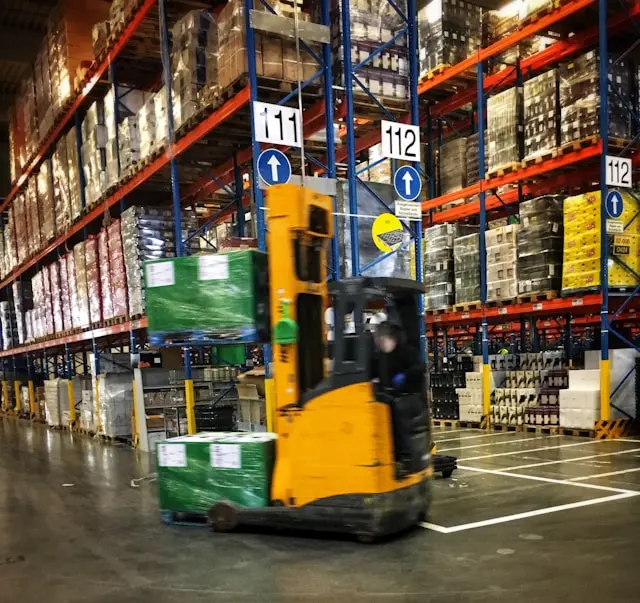
Springfield, Missouri, processed more freight in 2025 than at any point in its history. The I-44 and U.S. 65 interchange carried trucks for Prime Inc., Wilson Logistics, TransLand, and dozens of smaller carriers serving a distribution corridor that reaches Kansas City, St. Louis, Memphis, and Dallas within a single day's drive. Warehousing expanded. E-commerce fulfilment centres grew. Cargo volumes at Springfield-Branson National Airport climbed 8% year on year. By every volume metric, the market performed.
Yet the hiring picture tells a different story. Diesel technician roles in the Springfield MSA sat open for an average of 94 days through 2024, more than double the 42-day fill time for general warehouse labour. A VP of Supply Chain search in this market draws from a candidate pool that is over 90% passive. A 3PL operator stalled an entire SAP EWM implementation for four months because it could not find a single qualified logistics systems analyst locally. The freight rebound that the American Trucking Associations projected for late 2025 and into 2026 has begun to materialise. It has not brought the people needed to sustain it.
What follows is a ground-level analysis of why Springfield's logistics talent shortage is not a cyclical problem but a systemic one. It examines where the gaps are most acute, what is driving them, what competing markets are doing to pull Springfield's best people away, and what organisations operating here need to do differently to secure the technical and executive talent that keeps freight moving.
The Freight Recession Loosened Capacity. It Did Not Loosen Talent.
The national freight recession of 2023 and 2024 reduced volumes, compressed margins, and led to fleet optimisations across the industry. Prime Inc. publicly acknowledged volume declines that prompted fleet right-sizing. General dry van trucking capacity became oversupplied. For hiring leaders watching the macro data, the assumption was reasonable: a softer freight market should produce a softer labour market.
In Springfield, that assumption held for exactly one category of worker. Entry-level warehouse associates remained available, with 70% of candidates actively seeking work. General freight drivers loosened slightly. The correction looked, from a distance, like relief.
It was not. Beneath the aggregate numbers, vacancy rates for specialised roles stayed below 2% throughout the downturn. Flatbed operators, refrigerated haulers, heavy haul specialists, and diesel maintenance technicians were just as scarce in a freight recession as they had been during the boom. The Springfield logistics market did not experience a labour correction in the roles that matter most. The freight cycle moved. The talent market did not move with it.
This is the analytical point that matters most in this article: Springfield's technical talent shortage has decoupled from freight demand cycles entirely. It is now a structural deficit driven by workforce pipeline failures, demographic attrition, and geographic competition that no volume rebound will resolve on its own. Hiring leaders who waited for the freight recovery to bring candidates back to market are now discovering that those candidates never left their current employers in the first place.
The Numbers Behind the Decoupling
According to data from the Missouri Economic Research and Information Center, pure trucking employment in the Springfield MSA contracted 3.2% year on year through 2024. Warehousing and storage employment grew 4.7% over the same period, driven by e-commerce consolidation and last-mile distribution expansion. The sector as a whole employs approximately 18,400 workers, representing 8.2% of total MSA employment, according to the Bureau of Labor Statistics Quarterly Census of Employment and Wages.
The bifurcation is clear. General freight roles contracted while specialised and technical roles could not be filled. The market shed workers it did not need and could not find the workers it did. That pattern has carried into 2026.
Springfield's Anchor Employers and the Talent Demands They Create
Springfield's logistics cluster is not a collection of small operators. It is anchored by institutions large enough to shape the entire local labour market.
Prime Inc., headquartered in Strafford within the greater Springfield area, operates a fleet of approximately 6,500 trucks and employs around 7,000 people. It is the region's largest private employer. Its operations span refrigerated, flatbed, and intermodal divisions plus a brokerage arm. O'Reilly Auto Parts, also headquartered in Springfield, runs three distribution centres in the metro area totalling 2.1 million square feet and employing more than 1,800 people in logistics functions. Bass Pro Shops operates an 800,000 square foot outdoor gear distribution centre with over 600 warehouse associates. Amazon's 1.1 million square foot fulfilment centre in Republic employs 1,500 people.
These are not seasonal pop-up operations. They are permanent, capital-intensive facilities with year-round technical staffing needs. When Prime Inc. needs ASE-certified diesel technicians to maintain 6,500 trucks, or O'Reilly needs WMS analysts to optimise 2.1 million square feet of distribution, the local pipeline must produce talent at a rate that matches ongoing attrition and growth. It does not.
The Pipeline Shortfall
Missouri State University's Supply Chain Management programme produces 120 graduates annually. Ozarks Technical Community College's Transportation Technology Center trains 80 diesel technicians per year. Combined, these institutions produce 200 professionals, meeting only 60% of regional demand according to the Missouri Community College Association's workforce gap analysis. The remaining 40% must come from somewhere else.
This is not a problem that improved recruitment advertising can solve. The hidden 80% of the talent market applies with particular force in Springfield's specialised logistics roles. The candidates exist. They are employed at competing fleets in Kansas City, Dallas, or Memphis. They are not looking at job boards. They are not responding to postings. Reaching them requires a fundamentally different method.
Where the Shortages Bite Hardest
Three categories of talent are in acute deficit across Springfield's logistics sector. Each has different drivers, different compensation dynamics, and different implications for the organisations trying to hire.
Diesel Technicians: A 94-Day Hiring Cycle in a Same-Day Industry
The diesel technician shortage is Springfield's most visible workforce crisis. MERIC data shows roles averaging 94 days to fill. Prime Inc. and Wilson Logistics maintain continuous recruitment campaigns for experienced technicians with three or more years of hands-on work, offering signing bonuses of $10,000 to $15,000 for candidates holding ASE T-series certifications.
The shortage will deepen before it improves. The EPA's Phase 3 greenhouse gas standards, taking effect for model year 2027 trucks but already influencing fleet procurement decisions in 2026, will require Springfield carriers to accelerate fleet turnover toward electric and hybrid powertrains. Technicians trained on Cummins Insite and Detroit Diesel Diagnostic Link are already scarce. Technicians who can also service BYD and Volvo Electric drivetrains barely exist in this market.
Base compensation for a Master Diesel Technician or Shop Foreman in Springfield sits between $68,000 and $88,000. A Director of Fleet Maintenance overseeing 100 or more technicians earns $135,000 to $175,000. These figures are competitive within the Springfield cost structure. They are not competitive against Kansas City, which offers a 12 to 15% salary premium for the same roles.
Executive Supply Chain Talent: Raiding Higher-Tier Markets
The VP-level supply chain executive market in Springfield is over 90% passive. Average tenure in these roles exceeds five years, which means turnover is low and availability is almost nonexistent locally.
According to a feature in the Springfield Business Journal, a Springfield-based automotive parts distributor recruited a Vice President of Logistics from a Kansas City competitor in 2024, offering a compensation package exceeding $220,000 annually plus relocation. That represented a 35% premium over the incumbent's salary. This is not an outlier. It is the standard pattern for executive hiring in the industrial and manufacturing sector in markets like Springfield, where the local pipeline lacks depth for Fortune 1000-scale operations.
A Vice President of Supply Chain or Chief Logistics Officer in Springfield commands between $165,000 and $225,000 in base compensation, with long-term incentive plans common at publicly traded employers like O'Reilly Auto Parts. At the Director level, compensation runs $115,000 to $145,000. These figures sit roughly 12% below comparable roles in Kansas City and St. Louis, which is consistent with Springfield's lower cost of living but insufficient to attract candidates for whom the salary differential is not the primary barrier.
WMS and Automation Specialists: The Role That Does Not Exist Locally
The third shortage is the most telling. A 3PL operating a new 500,000 square foot facility in north Springfield reportedly stalled its SAP EWM implementation for four months in 2024 because it could not staff a Senior Logistics Systems Analyst position locally. The firm ultimately contracted with a remote specialist in Dallas at a 40% consulting premium over local salary expectations. This incident, presented as a case study at the Missouri Supply Chain Summit in October 2024, illustrates a problem that will intensify as automation and technology adoption accelerates.
By 2026, 40% of Springfield's warehousing operations are projected to have implemented automated storage and retrieval systems or robotic picking, up from 22% in 2024 according to the MHI Annual Industry Report. The shift from general labour to maintenance technicians and WMS analysts is already underway. The workforce pipeline for these roles was never established.
This is the point where capital investment and human capital diverge. Springfield's employers have invested in automation. They have not invested proportionally in the people who keep automated systems running. The gap between the two is widening.
The Geographic Competitors Pulling Talent Away
Springfield does not lose talent to abstract market forces. It loses talent to specific cities offering specific advantages that Springfield cannot currently match.
Dallas-Fort Worth commands a 25 to 30% compensation premium for experienced drivers and warehouse supervisors. Texas carries no state income tax, which compounds the after-tax advantage. According to the American Transportation Research Institute's Driver Retention Report, Springfield employers lose approximately 8 to 10% of senior drivers annually to Texas markets. That is not natural attrition. That is a directional flow.
Kansas City offers 12 to 15% salary premiums for diesel technicians, where the median sits at $78,000 compared to $68,000 in Springfield. Cost of living in Kansas City runs 15% higher, creating rough parity in real wages. But the larger market offers more dual-income household opportunities, which draws Springfield technicians whose spouses work in professional services. The compensation calculus is not household-to-household parity. It is household opportunity.
Northwest Arkansas presents a category of competitor that Springfield cannot replicate. Bentonville and Rogers house the headquarters of Walmart, J.B. Hunt, and Tyson Foods, with 20 to 25% salary premiums and corporate career trajectories that Springfield's operationally focused market cannot offer. Mid-career logistics professionals with five to ten years of experience are the primary demographic leaving for these types of corporate career opportunities.
Executive recruiters cited in the Springfield Business Journal identify Springfield's relative isolation from major airport hubs as a structural disadvantage for attracting top-tier supply chain strategists. Coast-to-coast travel requires connections. For a VP of Supply Chain who flies weekly, that is not a minor inconvenience. It is a permanent friction cost on their time.
The Cost-of-Living Advantage Is Real. It Is Not Enough.
Springfield's cost of living runs 12 to 15% below national averages and 18% below Kansas City, according to the Council for Community and Economic Research. For warehouse associates, entry-level drivers, and mid-level operational managers, this advantage is genuine. A $68,000 diesel technician salary in Springfield buys more than a $78,000 salary in Kansas City. The real wage comparison favours Springfield at the technician level.
The advantage collapses at the executive level.
A Vice President of Supply Chain considering Springfield is not primarily comparing housing costs. They are comparing airport access, spouse career options, corporate proximity, and long-term career trajectory. Springfield's affordability does not compensate for the lack of a major hub airport, the limited professional services market for dual-career households, or the absence of Fortune 500 headquarters density that characterises Kansas City, Dallas, or Memphis.
This tension is the most important strategic reality for Springfield hiring leaders to understand. The economic development pitch that works for mid-level talent does not work for senior talent. The proposition required to move a passive executive from a higher-tier market into Springfield must address factors that a salary comparison cannot capture. It must address career risk, family opportunity, and professional connectivity.
Organisations that approach executive hiring in Springfield with the same tools they use for operational hiring will consistently fail. The two markets require fundamentally different methods.
Regulatory and Financial Pressures Compounding the Talent Problem
Springfield's logistics employers are not operating in a benign regulatory environment. Several concurrent pressures are adding cost, restricting candidate pools, and increasing the stakes of every hire.
The Clearinghouse Effect and Fleet Classification Risk
The FMCSA Drug and Alcohol Clearinghouse has disqualified approximately 4.2% of Springfield's driver applicant pool since 2023, according to FMCSA Clearinghouse data. In a market where qualified specialised drivers are already scarce, removing 4.2% of applicants at the screening stage compounds the hiring challenge measurably.
Separately, the Department of Labor's 2024 Independent Contractor Rule, currently enjoined but under appeal, creates uncertainty for Springfield's large owner-operator population. Approximately 40% of Prime Inc.'s fleet operates under independent contractor agreements. A reclassification ruling would fundamentally alter the company's operating model and, by extension, the employment structure of the region's largest private employer. The cost of getting workforce classification wrong extends well beyond the immediate financial penalty.
Interest Rates and the Expansion Constraint
Fleet financing rates sit between 7.5% and 9.2% for new equipment, up from 3.5% in 2021, according to the Equipment Leasing and Finance Association. For Springfield's mid-sized carriers operating 50 to 300 trucks, this rate environment constrains expansion capability and limits job creation in the owner-operator and small fleet segment. At the same time, potential adoption of California CARB-style emissions regulations by Missouri would require the region's 8,000-plus truck fleet to accelerate replacement cycles at a cost of $50,000 to $80,000 per compliant vehicle.
The financial pressure and the talent pressure are not independent of each other. Carriers that cannot afford new equipment cannot attract technicians trained on new technology. Carriers that cannot attract those technicians cannot maintain a fleet that meets tightening regulatory standards. The cycle reinforces itself.
What Springfield Hiring Leaders Must Do Differently
The conventional approach to hiring in Springfield's logistics sector follows a familiar pattern: post the role, wait for applications, interview the best of what arrives, extend an offer. This method reaches the active candidate market. In diesel technicians, that is roughly 15% of the qualified pool. In executive supply chain roles, it is under 10%.
A freight market projected to grow 3.5% in tonnage across western Missouri through 2026 cannot be served by a hiring method that reaches one candidate in ten. The 1.2 million square feet of industrial space under construction in Springfield's North Corridor, 65% of it pre-leased to 3PL providers, will require staffing at every level. Traditional recruitment approaches that rely on visible, active candidates will leave those facilities understaffed before they are fully operational.
The alternative is direct identification and approach of passive candidates. This means mapping the technicians, engineers, and executives currently employed at competing operations in Kansas City, Dallas, Memphis, and Northwest Arkansas. It means understanding what would move them: not just compensation, but role scope, career trajectory, family fit, and the specific quality-of-life proposition that Springfield does offer when presented correctly.
KiTalent's approach to this market combines AI-powered talent mapping with direct headhunting methodology, delivering interview-ready candidates within 7 to 10 days. In a market where the average diesel technician search runs 94 days, compressing that timeline is not a marginal improvement. It is the difference between a maintained fleet and a grounded one.
For organisations competing for specialised logistics talent in Springfield, where the candidates who can service an electric powertrain or implement a warehouse management system are employed at competitors in larger markets and will never appear on a job board, speak with our executive search team about how we identify and reach the professionals this market needs. KiTalent has completed over 1,450 executive placements globally, with a 96% one-year retention rate and a pay-per-interview model that eliminates upfront retainer risk.
The freight is moving. The question is whether the people who keep it moving will be here to do it.
Frequently Asked Questions
What are the hardest logistics roles to fill in Springfield, Missouri in 2026?
The three most difficult categories are diesel technicians with ASE T-series certifications, senior supply chain executives at the VP level and above, and WMS implementation specialists with SAP EWM or equivalent experience. Diesel technician roles average 94 days to fill in the Springfield MSA, compared to 42 days for general warehouse labour. VP-level supply chain searches draw from a candidate pool that is over 90% passive, requiring direct headhunting rather than job advertising to reach qualified professionals.
How does Springfield logistics compensation compare to Kansas City and Dallas?
Springfield compensation runs 12 to 15% below Kansas City and 25 to 30% below Dallas-Fort Worth for equivalent logistics roles. A median diesel technician earns $68,000 in Springfield versus $78,000 in Kansas City. At the executive level, a VP of Supply Chain earns $165,000 to $225,000 in Springfield, compared to $185,000 to $265,000 in Kansas City. Springfield's cost of living offsets much of this gap at mid-level roles, but the differential widens at senior levels where non-financial factors drive candidate decisions.
Why is the diesel technician shortage in Springfield so persistent?
Three factors converge. First, local training programmes at OTC and MSU produce only 200 graduates annually against demand for over 330. Second, EPA Phase 3 greenhouse gas standards are accelerating fleet turnover toward electric and hybrid powertrains, creating demand for skills that barely exist in the market. Third, Kansas City and Dallas offer 12 to 30% compensation premiums that draw experienced technicians away from Springfield. The shortage persists through freight recessions because it is driven by pipeline and competition, not by freight volume.
How does warehouse automation affect logistics hiring in Springfield?
By 2026, 40% of Springfield warehousing operations are projected to use automated storage and retrieval systems or robotic picking, up from 22% in 2024. This shift reduces demand for general warehouse labour while increasing demand for AMR maintenance technicians, WMS analysts, and professionals with data analytics capabilities in TMS optimisation and inventory forecasting. The local workforce pipeline was not designed for these roles, creating a skills gap that grows with every automation investment.
What is the best approach to executive search in Springfield's logistics sector?
Springfield's executive logistics market is over 90% passive candidates. Active job advertising reaches fewer than one in ten qualified professionals at the VP level. Effective executive search in this market requires direct identification of candidates at competing operations in Kansas City, Dallas, Memphis, and Northwest Arkansas, combined with a proposition that addresses career trajectory, family relocation, and airport connectivity alongside compensation. Retained executive search firms with AI-powered talent mapping capabilities can compress a search that typically runs four to six months into a matter of weeks.
How large is Springfield's logistics and transportation workforce?
Springfield's transportation, warehousing, and related support activities sector employs approximately 18,400 workers, representing 8.2% of total MSA employment. The largest single employer is Prime Inc. with approximately 7,000 employees. Warehousing employment grew 4.7% year on year through 2024 even as pure trucking employment contracted 3.2%, reflecting the sector's diversification into e-commerce fulfilment, automotive parts distribution, and cold chain operations.