Tijuana's Cross-Border Logistics Boom Has a Workforce Problem No Infrastructure Investment Can Fix
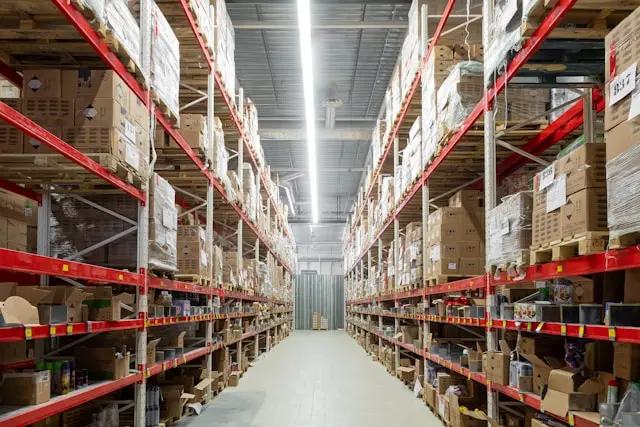
Tijuana's industrial vacancy rate sat at 1.2% through the final quarter of 2024. Class A logistics rents climbed 14% year on year. Foreign direct investment in logistics and warehousing infrastructure reached $1.2 billion in 2024 alone. By every capital metric, the Tijuana cross-border corridor is one of the most successful nearshoring stories in North America. The physical infrastructure is arriving. The money is arriving. The people who know how to run it are not.
The core tension in this market is not about trucks, warehouses, or border crossings. It is about a workforce bottleneck that threatens to turn a $1.2 billion infrastructure buildout into an underperforming asset. Only 320 licensed customs brokers serve the entire Tijuana-San Diego corridor. The market needs between 450 and 500 to eliminate processing delays. Bilingual supply chain directors with FDA regulatory knowledge are being recruited away to Monterrey and Mexico City at signing premiums of 30% to 50%. Cold chain specialists qualified in pharmaceutical distribution protocols are retained through consulting arrangements because permanent hires cannot be sourced fast enough. The infrastructure is expanding at 40% capacity increments. The customs broker population grows at 3% per year.
What follows is a ground-level analysis of the forces shaping Tijuana's logistics talent market in 2026, where the real gaps sit, what is driving them, and why the firms that treat this as a standard hiring problem will find themselves staffing billion-dollar facilities with the wrong people or no people at all.
The Nearshoring Capital Wave and the Labour Market It Created
Tijuana's logistics sector has been transformed by the broad relocation of manufacturing from Asia to North America. The $1.2 billion in foreign direct investment that flowed into logistics and warehousing in 2024, according to Mexico's Secretaría de Economía, was not speculative. It followed concrete demand from medical device manufacturers, electronics assemblers, and aerospace component producers who had already committed to Tijuana's industrial corridors.
The medical device cluster is the primary demand driver. Medtronic, Becton Dickinson, and Thermo Fisher Scientific all maintain manufacturing operations in Tijuana that require GMP-compliant logistics, validated cold chain handling, and FDA-regulated documentation at every transfer point. DHL Supply Chain operates a 250,000 square foot healthcare logistics campus in Parque Industrial Pacifico with approximately 800 personnel. These are not general freight operations. They are specialised environments where a single documentation error can halt a shipment at the border.
Nearshoring volumes peaked at the same time as the talent constraints tightened. Commercial truck crossings at the Otay Mesa port averaged 3,200 northbound trucks daily in 2024, a 6% increase over the prior year, according to U.S. Department of Transportation border crossing data. Cold chain capacity expanded by 23% year on year. Yet cold storage vacancy remained below 3%. Every major indicator shows a market in which physical capacity is being consumed faster than it can be built, and the workforce to operate that capacity is not keeping pace.
The result is a corridor where capital has moved faster than human capital can follow. And the gap is widening.
The Customs Broker Bottleneck: A Regulatory Constraint That Money Cannot Solve
Mexico's customs clearance system requires a licensed customs broker, an agente aduanal, for every commercial import and export transaction. This is not optional. It is a federal regulatory requirement administered by the SAT (Servicio de Administración Tributaria), and the licensing process is among the most restrictive professional certifications in Latin American trade. As of late 2024, approximately 320 active licensed brokers served the Tijuana-San Diego corridor. Industry demand projections, cited by the Asociación de Agentes Aduanales de Tijuana (AAAT), place the requirement at 450 to 500 brokers to eliminate processing bottlenecks.
Why the Gap Persists
The broker population has grown at only 3% annually over the past five years. Stringent federal examination requirements, which include multi-stage testing on tariff classification, trade law, and customs procedure, constrain the supply pipeline in a way that no amount of employer investment can accelerate. A company cannot train a customs broker internally the way it trains a warehouse supervisor. The certification is external, government-controlled, and slow.
This creates a hard ceiling on throughput. The planned Otay Mesa East commercial crossing, scheduled for phased opening in late 2026, is projected to increase commercial vehicle capacity by 40% and reduce average wait times to under 30 minutes, according to SANDAG's 2025 Regional Plan. But if the number of licensed brokers does not grow proportionally, the documentation bottleneck simply moves from the border queue to the brokerage office. Trucks may cross faster, but the paperwork that authorises them to cross will not be processed faster.
The Workaround That Signals the Problem
Major 3PL operators in Tijuana have already adapted. According to Deloitte's Supply Chain Resilience Report, several operators have created remote customs clearance hubs in Mexico City and Monterrey, hiring brokers in those cities to process Tijuana-origin documentation digitally. This is a response to local scarcity, not a preference. The regulatory framework still favours physical presence at the port, and remote processing introduces latency and compliance risk. But the alternative is leaving cargo stranded while a local broker becomes available.
The passive candidate dynamics in this category are stark. Only approximately 10% of qualified brokers are actively seeking new roles at any given time. Average tenure exceeds seven years at a single brokerage. Recruitment into these roles depends almost entirely on direct headhunting and relationship-based approaches, not job postings.
For any organisation whose cross-border supply chain runs through Tijuana, the customs broker shortage is not a hiring inconvenience. It is a systemic constraint on velocity that the Otay Mesa East expansion will not resolve.
Bilingual Supply Chain Leadership: The Executive Search That Breaks Every Playbook
The second critical scarcity sits at the director and VP level. Bilingual supply chain directors with medical device experience, FDA 21 CFR Part 820 knowledge, and cross-border trade fluency represent a candidate pool so narrow that most placements happen outside public job markets entirely. According to Page Executive's Mexico Industrial Search Statistics, the hidden market accounts for 70% of placements at the director level and above in this sector.
The profile these roles demand is unusual. A candidate must hold operational fluency in both Spanish and English. They must understand U.S. FDA regulatory requirements for quality system regulation. They must be experienced in USMCA rules of origin certification. And they must be willing to work in Tijuana, a city that many senior supply chain executives view as an execution hub rather than a decision centre.
That last point matters more than it might appear. According to Deloitte's Nearshoring Talent Retention Survey, the primary competitive disadvantage for Tijuana employers is not compensation at entry level. It is career trajectory limitations at the senior level. Tijuana operations are frequently perceived as satellite functions. Strategic roles sit in Mexico City, Monterrey, or the U.S. headquarters. Senior talent relocates to where the decisions are made, and Tijuana loses the experienced operators who keep cross-border supply chains functioning.
The financial response has been aggressive. Bilingual supply chain directors with medical device experience are being recruited from competitors in Tijuana to fill roles in Mexicali and Monterrey with signing bonuses ranging from 30% to 50% of annual base salary, according to Korn Ferry's Mexico Industrial Market Talent Trends report. At the VP level, total compensation packages for cross-border operations roles now reach $120,000 to $180,000 annually, increasingly structured with retention bonuses tied to USMCA compliance metrics.
When the hidden majority of qualified candidates are not visible on any job board and actively being courted by competitors in three other cities simultaneously, a conventional search process is structurally incapable of reaching them. A role posted on OCC Mundial or LinkedIn reaches the 30% of the market that is actively looking. The 70% that moves through executive networks requires a fundamentally different approach.
Cold Chain and Regulatory Compliance: The Skills That Do Not Exist in Sufficient Quantity
Cold chain logistics in Tijuana is forecast to grow 12% to 15% annually through 2026, according to Mordor Intelligence's Mexico Cold Chain Logistics Market Report. This outpaces general industrial logistics growth of 7% by a considerable margin. The growth is driven by pharmaceutical and biologics distribution requirements from the medical device corridor, by fresh produce exports through the San Diego gateway, and by the broader expansion of temperature-sensitive e-commerce fulfilment.
The Validation Gap
The technical profiles required to operate GDP-compliant cold chain facilities are not produced in volume by Tijuana's educational institutions. Cold chain validation engineers, specialists capable of executing IQ/OQ/PQ documentation for temperature-controlled logistics, are retained through project-based consulting arrangements rather than permanent hires. The active-to-passive ratio in this category is approximately 1:4, meaning one in five qualified professionals is actively looking at any given time. The rest are locked into engagements.
The skills deficit compounds at the intersection of cold chain expertise and regulatory knowledge. A cold chain quality assurance manager for a Tijuana facility distributing medical devices must understand both GDP compliance and FDA 21 CFR Part 11 (electronic records). These are layered requirements. Finding candidates with one qualification is achievable. Finding candidates with both, who are also bilingual and willing to remain in Tijuana, reduces the viable pool to a fraction of the already-small total.
The Education Pipeline Problem
Local universities, including the Universidad Autónoma de Baja California and CETYS Universidad, produce approximately 1,200 graduates annually in business administration and logistics-related fields. Only 15% to 20% of these graduates possess the functional English proficiency required by multinational logistics operations. This is a systemic gap. It means the replacement pipeline for bilingual logistics professionals is structurally undersized relative to demand, and the gap widens every year as nearshoring volumes increase.
The implication for employers is that cold chain and regulatory compliance talent cannot be grown organically at the pace the market requires. It must be found, attracted, and moved from wherever it currently sits.
The Triangular Talent Drain: Competing Against Three Markets Simultaneously
Tijuana does not compete for logistics talent in isolation. It sits at the centre of a three-way pull that draws professionals toward Mexico City, Monterrey, and San Diego.
Mexico City and Monterrey offer 15% to 25% higher base compensation for director-level roles. They also offer proximity to corporate headquarters and the perception of strategic importance that Tijuana's execution-hub reputation cannot match. Monterrey in particular competes directly for customs talent, offering better transport infrastructure and lower cost of living relative to executive salaries.
San Diego draws bilingual mid-level managers with salaries 60% to 80% higher than Tijuana equivalents, according to the U.S. Bureau of Labor Statistics. Visa constraints limit direct mobility, but the Otay Mesa corridor is home to a meaningful population of U.S.-educated and dual-nationality professionals for whom the San Diego market is accessible. These professionals represent the highest-value mid-career candidates in Tijuana's logistics sector, and many of them leave.
Guadalajara has emerged as a competing logistics hub for central Mexico distribution, with a stronger tech-enabled logistics sector and startup culture that attracts younger supply chain analysts and digital logistics specialists. For employers trying to recruit technology-literate logistics professionals, including those proficient in AI-enabled supply chain platforms and transportation management systems such as SAP TM or Descartes, Guadalajara is now a direct competitor for the same talent.
This triangular drain means that Tijuana employers are not simply filling roles. They are retaining against three distinct value propositions simultaneously: higher pay in Mexico City and Monterrey, dramatically higher pay in San Diego, and better lifestyle and career optionality in Guadalajara. The compensation data alone does not capture the full competitive pressure. The counteroffer dynamics in this market are intense precisely because every qualified candidate knows they have options in at least two other cities.
The Original Tension: Infrastructure Investment Is Creating a Problem It Cannot Solve
The analytical claim at the centre of this market is not simply that talent is scarce. It is that the scale and speed of infrastructure investment in the Tijuana-San Diego corridor has created a workforce deficit that the infrastructure itself structurally cannot address.
Consider the arithmetic. Otay Mesa East will increase commercial vehicle capacity by 40%. Cold chain capacity expanded 23% in a single year. Industrial rents have risen 40% since 2020. FDI reached $1.2 billion in 2024. These are capital-led growth rates. They assume that the professionals who operate, regulate, and certify the movement of goods will materialise at proportionate rates.
They will not. The customs broker population grows at 3% per year against a system that requires 40% more capacity. Cold chain validation engineers are not graduating from local universities in meaningful numbers. Bilingual supply chain directors are leaving for cities that offer strategic roles rather than operational ones. The infrastructure investment has not reduced the workforce requirement. It has replaced one kind of constraint with another: border wait times may fall, but documentation clearance times will not fall with them unless the broker population expands simultaneously.
This is the paradox of Tijuana's logistics market in 2026. The capital story is excellent. The workforce story undermines it. And the firms that recognise the distinction between building capacity and staffing capacity are the ones that will capture the nearshoring dividend. The rest will own expensive facilities operating below their throughput potential because the people who make them function cannot be found through conventional means.
What This Means for Hiring Leaders in the Tijuana Corridor
For organisations operating or expanding in the Tijuana cross-border logistics market, the practical implications are clear. Senior customs compliance manager roles in the Parque Industrial El Florido corridor routinely take 90 to 120 days to fill, compared to 45 days for general management positions. The cost of leaving these roles open is not abstract. It is measured in cargo delays, compliance exposure, and throughput losses at facilities built to handle volumes that the current workforce cannot process.
The 2026 USMCA review cycle will intensify this pressure. According to Deloitte's USMCA Compliance Outlook, stricter rules of origin verification and labour compliance audits are likely. Every tightened requirement adds a professional headcount need. Trade compliance specialists. Customs audit managers. Regulatory documentation coordinators. These roles draw from the same constrained bilingual professional pool that is already insufficient for current demand.
The approach that works in this market is not volume-based. It is precision-based. The candidates who matter are not on job boards. They are embedded in competitor operations, retained through loyalty and compensation, and accessible only through targeted executive search methodologies built around direct identification and confidential approach. Ninety percent of licensed customs brokers in this corridor are passive. Seventy percent of director-level placements happen through the hidden market. A search strategy built on inbound applications will reach, at most, the bottom quartile of the available talent.
KiTalent's approach to markets like this one is designed for exactly this constraint. Through AI-powered talent mapping and direct headhunting, KiTalent identifies and engages the passive, high-performing professionals who will never appear on a job board listing. With interview-ready candidates delivered within 7 to 10 days and a pay-per-interview pricing model that eliminates upfront retainer risk, the method is built for markets where speed and precision are not opposing priorities. In Tijuana's logistics sector, where a 90-day vacancy in customs compliance translates directly to border delays and regulatory exposure, the cost of a slow search compounds daily.
For organisations competing to fill customs compliance, cold chain leadership, or bilingual supply chain director roles across the Tijuana-San Diego corridor, speak with our executive search team about how we identify and deliver the candidates this market will not surface on its own.
Frequently Asked Questions
Why is it so difficult to hire licensed customs brokers in Tijuana?
Mexico's customs clearance system requires a federally licensed agente aduanal for every commercial transaction. Only approximately 320 active licensed brokers serve the Tijuana-San Diego corridor, against a projected need of 450 to 500. The licensing examination is multi-stage and government-controlled, producing new brokers at roughly 3% annual growth. This hard regulatory cap means the supply cannot expand quickly regardless of employer investment. Ninety percent of qualified brokers are passive, making direct identification and confidential approach the only viable recruitment method for most organisations.
What salary does a bilingual supply chain director earn in Tijuana?
A bilingual supply chain director with medical device and cross-border experience earns between $95,000 and $135,000 USD in total annual compensation at the director level as of late 2024. Top-quartile earners at multinational medical device manufacturers reach $155,000 USD with equity participation. VP-level cross-border operations roles command $120,000 to $180,000 USD, increasingly including retention bonuses linked to USMCA compliance performance. Signing bonuses of 30% to 50% of base salary are common when relocating candidates between Mexican cities.
How will the Otay Mesa East border crossing affect Tijuana logistics hiring?
The planned Otay Mesa East crossing, scheduled for phased opening in late 2026, is projected to increase commercial vehicle capacity by 40% and reduce average wait times to under 30 minutes. However, the customs broker shortage means documentation processing may not speed up proportionally. Physical border capacity will improve, but the workforce that clears shipments through that border has not grown at the same rate. Hiring leaders should anticipate that the new crossing will increase demand for customs and trade compliance professionals rather than reduce it.
What are the main risks for logistics employers expanding in Tijuana?
The primary risks include chronic customs broker scarcity, a triangular talent drain toward Mexico City, Monterrey, and San Diego, water scarcity that raises cold storage utility costs by 15% to 20%, and rising cargo theft insurance premiums of 8% to 12% annually. The 2026 USMCA review may impose stricter rules of origin and labour compliance audits, adding professional headcount requirements. Industrial rents have risen 40% since 2020, eroding the total landed cost advantage that originally attracted nearshoring investment.
How does KiTalent approach executive search in Tijuana's logistics sector?
KiTalent uses AI-powered talent mapping to identify passive candidates in logistics and supply chain leadership roles who are not visible through conventional job advertising. In a market where 70% of director-level placements happen through the hidden market and 90% of licensed customs brokers are not actively seeking new roles, direct headhunting is the only method that reaches the full candidate pool. KiTalent delivers interview-ready candidates within 7 to 10 days and operates on a pay-per-interview model, meaning clients pay only when they meet a qualified candidate. The firm maintains a 96% one-year retention rate across 1,450 executive placements globally.
Is Tijuana still cost-competitive for logistics operations compared to U.S. markets?
Tijuana remains cost-competitive for time-sensitive, cross-border supply chains, but the margin is narrowing. Industrial rents have approached parity with secondary U.S. markets such as Phoenix and Tucson when total occupancy costs including security, insurance, and energy are factored. Logistics executive salaries have risen 25% in USD terms over recent years. The cost advantage is strongest for operations that require same-day or next-day access to the U.S. market through the San Diego corridor and for manufacturers in the medical device, electronics, or aerospace clusters that depend on proximity to maquiladora production. For cost-sensitive, non-time-critical goods, the advantage is being re-evaluated.