Turku Life Sciences in 2026: A Manufacturing Boom and a Startup Funding Cliff Are Splitting the Talent Market in Two

Turku's life sciences sector employs roughly 4,500 professionals and generates over €1.2 billion in annual revenue. By most regional development metrics, this is a success story. A €50 million manufacturing expansion is ramping up. University enrolment in molecular biosciences is at record levels. Clinical trial activity at Turku University Hospital continues to grow. Read the headline figures, and you might conclude that this is a market with momentum and the talent to match.
That conclusion would be wrong. Beneath the aggregate numbers, Turku's life sciences cluster has fractured into two markets operating under entirely different conditions. On one side, Bayer's upgraded manufacturing complex is absorbing talent at a pace that reshapes the entire local labour pool. On the other, approximately 40% of biotech tenants in Turku Science Park need fresh capital by mid-2026 simply to keep operating. These two realities are not parallel. They are directly competing for the same pool of bioscience graduates, and one side is winning decisively.
What follows is a structured analysis of the forces reshaping Turku's life sciences sector, the employers driving that change, and what senior leaders need to understand before they make their next hiring or retention decision. The picture that emerges is not a generic shortage story. It is a market where capital is pulling talent in one direction while innovation demands it in another, and where the candidates who matter most are almost entirely invisible to conventional recruitment.
The Bimodal Structure Behind Turku's Life Sciences Numbers
Turku's life sciences cluster is often described as "Finland's secondary biotech hub." The label is accurate but misleading. It implies a smaller version of Helsinki's ecosystem. In reality, Turku's sector has a fundamentally different architecture.
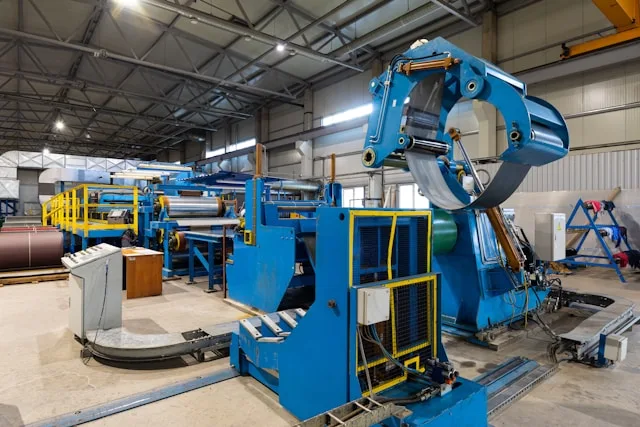
The cluster's economic centre of gravity is pharmaceutical manufacturing, not drug discovery. Bayer Oyj's Turku site alone employs over 900 people, making it one of the Nordic region's largest pharmaceutical production facilities. Fujirebio Finland contributes another 200-plus in diagnostics manufacturing. PerkinElmer Finland adds roughly 150 in instrumentation. Thermo Fisher Scientific operates a further 120 in pharmaceutical services and clinical trials logistics.
Where the weight really sits
Together, these four employers account for more than 1,300 roles. That is roughly a quarter to a third of the entire cluster's workforce. These are stable, capital-intensive operations running established product lines: oral solid dosage forms, automated immunoassay systems, chromatography components. The talent they require is production-oriented: GMP bioprocessing engineers, quality assurance managers, validation specialists, packaging line supervisors.
The other side of the market
Surrounding this manufacturing core is a fragmented ecosystem of 70-plus companies housed in Turku Science Park's BioCity complex. The highest-profile name among them, Faron Pharmaceuticals, employs approximately 25 people locally. Navigo Proteins, one of the more established mid-tier firms, has around 40. Most tenants are smaller still. These companies need an entirely different talent profile: regulatory affairs specialists capable of steering EMA submissions, clinical development physicians, computational biologists, and commercial executives with US market access experience.
The two halves of this market share a geography and an industry label. They share almost nothing else. The compensation structures are different. The career trajectories are different. The risk profiles for candidates are different. And crucially, the competition for talent between these two halves is not balanced. Manufacturing employers can offer stability, benefits at scale, and salaries at the top of Finnish market rates. Startups competing for the same graduates must offer equity in companies that may not survive to their next funding round.
This is the foundational dynamic that every hiring decision in Turku's life sciences sector must account for.
The Bayer Expansion and Its Gravitational Effect
In late 2023, Bayer announced a €50 million investment to upgrade its Turku site's oral solid dosage and packaging lines. Full operational ramp-up is expected by mid-2026, creating an estimated 80 to 100 new production and quality assurance roles.
For regional development authorities, this is straightforward good news. For the startup ecosystem, it is considerably more complicated. Every bioprocess engineer, QA manager, and validation specialist absorbed into Bayer's expanded operations is one fewer candidate available to the 70-plus smaller firms trying to grow in BioCity. In a market where senior bioprocess engineers already have unemployment below 2% and average tenure exceeding six years, each additional large-employer role tightens an already constricted supply.
The TEK (Academic Engineers and Architects in Finland) Salary Survey from 2023 documented this dynamic in its regional analysis of biotech compensation. Senior bioprocess engineers at large manufacturing sites in southwest Finland earn base salaries reaching €85,000. The same role at a startup or mid-tier firm in Turku Science Park typically pays €60,000 to €70,000. The gap is not subtle. When a Turku biotech startup needs a GMP-qualified process scientist, it is bidding against an employer that can offer 20 to 30 percent more, a pension scheme at multinational scale, and a career path that does not depend on the next funding round closing.
The pattern documented in TEK's survey, where sector sources confirmed that bioprocessing specialists were moving from smaller firms to large manufacturing employers at premiums of approximately 40% above previous base salary, is a direct illustration of this gravitational pull. It is not that Turku lacks bioprocessing talent in aggregate. It is that the talent is being concentrated in the part of the market that can afford to pay for it.
For hiring leaders at Turku's clinical-stage biotechs, this creates a compounding problem. The candidates you need are increasingly sitting inside organisations that offer better compensation, lower career risk, and less disruption. The proposition required to move them is not a marginal salary increase. It is a fundamentally different value argument.
The Funding Cliff and Its Consequences for Talent
While Bayer expands, the other half of Turku's life sciences market faces an existential constraint. Finnish biotech venture funding dropped 34% year-on-year in 2023, according to the Finnish Venture Capital Association (FVCA). Turku-based startups have found it particularly difficult to secure Series B rounds above €15 million.
The downstream effect on talent is immediate and measurable. When capital contracts, hiring freezes follow within quarters. Companies that cannot hire cannot retain either, because their most marketable employees recognise the funding signal and begin considering alternatives. A Turku Science Park tenant survey from 2024 found that roughly 40% of biotech tenants would require fresh capital by mid-2026 to maintain operations.
This creates a paradox that the aggregate employment statistics do not capture. On paper, Turku's life sciences employment is stable or growing. Bayer's expansion alone adds enough roles to offset any losses from startup contraction. But the nature of the roles lost is entirely different from the nature of the roles gained. A regulatory affairs director at a clinical-stage biotech is not interchangeable with a packaging line supervisor at a manufacturing plant. When startups contract, the specialised talent they release does not necessarily stay in Turku. It migrates to Helsinki, Stockholm, or Copenhagen, where the next role exists.
The practical implication for hiring leaders: any organisation recruiting in Turku's innovation ecosystem in 2026 is operating in a market where the funding environment is actively working against talent retention. The strongest candidates are either already employed at stable manufacturers or considering relocation to deeper markets. A conventional job posting will reach neither group.
The Skills Mismatch That University Output Cannot Solve
Here is the observation that sits at the centre of this market and that few stakeholders have stated plainly: Turku's two universities are producing fundamental research scientists while the cluster's economic evolution demands applied technical specialists. This is not a temporary misalignment. It is a deep-rooted mismatch between the academic pipeline and commercial reality.
The University of Turku and Åbo Akademi University together graduate approximately 300 MSc-level bioscience students annually. This is record output. If these graduates matched the sector's demand profile, Turku would have a talent surplus. They do not match.
What the universities produce
The overwhelming majority of these graduates emerge with training in fundamental molecular biology, cell biology, or biochemistry. Their skills are oriented toward academic research: hypothesis-driven investigation, scientific publishing, laboratory technique in a research context. These are valuable capabilities, but they are not what the market's hiring demand concentrates on.
What the market actually needs
BioTurku's 2024 member survey showed 82% of companies reporting difficulty filling technical positions. The hardest roles to fill are not research scientist roles. They are GMP bioprocess technicians, quality assurance associates with ATMP experience, and regulatory affairs coordinators with working knowledge of the EU Clinical Trials Regulation. These roles require practical, applied training in manufacturing operations, compliance documentation, and regulatory submission processes. None of these are core components of a standard MSc in molecular biosciences.
The university system is doing what university systems do: producing researchers. The market has shifted beneath it. The €50 million Bayer expansion needs production and quality assurance professionals. The CROs scaling for the EU Clinical Trials Regulation need regulatory submission coordinators. The ATMP companies that do survive the funding cliff need Qualified Persons certified for batch release, a credential that requires years of post-graduate industrial experience, not additional academic training.
This mismatch means that even in a market with 300 new bioscience graduates per year, the most critical roles remain unfillable through conventional channels. The supply problem is not volume. It is composition.
The Roles That Resist Every Conventional Search
Four role categories in Turku's life sciences market are characterised by overwhelmingly passive candidate pools, meaning the professionals who could fill them are employed, performing well, and not responding to job advertisements.
Qualified Persons and QPPVs. According to analysis of Finland's Fimea QP Registry from 2024, approximately 85 to 90 percent of qualified individuals in the country are employed and not actively searching. Average tenure exceeds seven years. When a Turku ATMP startup searched for a QP for Pharmacovigilance, it found zero qualified applicants within Finland after six months. The company ultimately outsourced the function to a consultancy in Copenhagen, as documented in Fimea's SME Advisory Panel minutes from mid-2024. This is not a story about an inadequate recruitment effort. It is a story about a candidate pool that functionally does not exist in accessible form.
Senior bioprocess engineers. Unemployment in this category sits below 2%. Average tenure exceeds six years. The few candidates who become available typically do so because of redundancy or planned relocation, neither of which produces the reliable candidate flow that a structured search requires.
Regulatory affairs directors with dual FDA and EMA experience. The passive-to-active ratio in this category is estimated at four to one, according to Nordic Minds Executive Search's 2024 market report. This means that for every regulatory affairs director responding to a job posting, four equally qualified or better-qualified individuals are employed and unreachable through advertising.
Clinical development physicians. Finn-Medi Research's 2023 study on clinical investigator availability described this as a nearly 100% passive market requiring international recruitment. MDs with drug development experience represent the single most constrained talent category in the region.
For organisations attempting to fill these roles, the implication is direct. Posting a role and waiting for applications will reach, at best, 10 to 15 percent of the viable candidate pool. The other 85 to 90 percent must be identified, approached, and persuaded through a fundamentally different method: direct, targeted search that maps the market before a single conversation begins.
The regulatory pressure is about to intensify this problem further.
Regulatory Complexity Is Adding Demand Without Adding Supply
Two regulatory developments are compounding Turku's existing talent constraints simultaneously.
The EU Clinical Trials Regulation has reached full implementation, increasing the administrative burden on clinical research organisations substantially. Turku-based Finn-Medi Research reported a 25% increase in staffing needs for regulatory submission coordination, according to its own impact assessment cited in Turku Science Park communications from 2024. The forthcoming European Health Data Space regulations will create additional demand for clinical data management specialists across every organisation that handles health data for research purposes.
Turku's CROs project 15 to 20 percent headcount growth in regulatory and clinical data management functions through 2026, according to stakeholder consultation data from the Finnish Medicines Agency (Fimea). This is new demand layered on top of existing shortages. The regulatory affairs professionals who could fill these roles are the same professionals who are already in acute shortage across the cluster.
The regulatory burden also falls disproportionately on smaller organisations. A company with 25 employees does not have the administrative infrastructure to absorb a 25% increase in regulatory submission workload without hiring. But it also may not have the capital to hire, especially if it is among the 40% of Turku Science Park tenants facing funding constraints.
The QP bottleneck
The Qualified Person requirement deserves particular attention. Under EU pharmaceutical law, every batch of a medicinal product released in the EU must be certified by a QP. There is no workaround. There is no temporary exemption. If you cannot hire a QP, you cannot release product. For Turku's ATMP-focused startups, this means that a single unfilled role can halt an entire clinical programme. The failed search documented in Fimea's advisory panel minutes, where a company searched for six months before outsourcing to Copenhagen, illustrates what a QP shortage actually costs: months of delay, external consultancy fees, and a critical dependency on a provider in another country.
These regulatory dynamics are not cyclical. They are permanent increases in the talent required to operate in this sector. Every company in Turku's cluster will need more regulatory and quality professionals in 2027 than it needed in 2025. The supply pipeline has not adjusted to match.
What Turku Competes Against: The Geographic Pull
Turku's life sciences talent does not exist in isolation. It exists in a Nordic and European context where multiple cities offer the same professionals materially better terms.
Helsinki and the surrounding Espoo-Vantaa corridor draw Turku talent with salaries typically 5 to 10% higher for equivalent roles. More importantly, Helsinki offers greater availability of international schools and expatriate infrastructure, which matters considerably for the international specialists Turku needs to recruit. Orion Oyj and Thermo Fisher Scientific's Vantaa operations are the most frequent destinations.
Stockholm presents a more serious competitive challenge. The Medicon Valley region offers 15 to 25% higher base salaries for bioprocessing and regulatory roles, deeper venture capital availability, and active recruitment of Finnish QPs and CMC specialists. Swedish employers use language proximity and higher post-tax disposable income as specific selling points, according to SwedenBIO's 2024 industry analysis.
Copenhagen, for C-suite and commercial leadership roles, offers a different order of magnitude. Danish biotechs in the Lundbeck and Genmab ecosystem provide total compensation packages 30 to 40% above Finnish equivalents, combined with English-first working environments. For a Chief Business Officer or Chief Medical Officer considering their next move, Copenhagen offers a career trajectory and compensation level that Turku's domestically oriented ecosystem simply cannot match.
At the global level, Boston and Basel compete for CMO and regulatory VP searches at compensation multiples of 2.5 to 3.5 times Finnish levels. Cost-of-living adjustments partially offset the gap, but for a candidate weighing an international move, the financial argument is powerful.
The Finnish tax wedge compounds the problem. According to OECD Taxing Wages data from 2024, Finland's total employer cost relative to net employee income remains among the highest in the OECD. A compensation package that looks competitive in gross terms becomes less so once the candidate calculates their take-home pay against what Stockholm or Copenhagen would deliver.
For Turku's hiring leaders, this means that every search for a senior specialist or executive is a search conducted against geographic competitors who can offer more money, lower taxes, deeper career markets, and better expatriate infrastructure. The compensation negotiation is not simply about the number. It is about the total proposition: career trajectory, quality of life, family considerations, and long-term optionality. Organisations that approach these searches with a standard Finnish salary band and a Turku postcode will lose them consistently.
What This Means for Organisations Hiring in Turku
The analytical core of this market can be stated in a single sentence: Bayer's manufacturing expansion and the startup funding cliff are not separate trends. Together, they are concentrating talent into the stable half of the market while starving the innovative half of exactly the specialists it needs to survive.
This is the force that makes Turku's life sciences hiring harder than the aggregate numbers suggest. It is not that there is a simple shortage. It is that capital is moving talent in one direction while the sector's long-term competitiveness depends on talent moving in the other. The graduates who could staff tomorrow's clinical-stage biotechs are being absorbed today into manufacturing roles that pay more, last longer, and carry less risk. The experienced regulatory and bioprocessing leaders who could build the next generation of Turku's innovation pipeline are, in 85 to 90% of cases, employed and not visible to any job posting.
For organisations competing in this environment, the conventional search process is not just slow. It is reaching the wrong layer of the market. Talent mapping that identifies passive candidates before a search begins is not a premium service in this context. It is the minimum viable approach.
KiTalent works with life sciences organisations across the Nordics and Europe to identify and deliver interview-ready candidates within 7 to 10 days, using AI-enhanced direct headhunting that reaches the professionals no job board can surface. With a pay-per-interview model that eliminates upfront retainer risk and a 96% one-year retention rate for placed candidates, the approach is designed for exactly the conditions this market presents: scarce, passive talent that must be found rather than attracted.
For organisations recruiting regulatory affairs leaders, bioprocessing directors, or commercial executives in Turku's bifurcated life sciences market, where the candidates who determine your success are not looking and the cost of delay is measured in regulatory bottlenecks and missed clinical milestones, start a conversation with our executive search team about how we approach this specific challenge.
Frequently Asked Questions
What are the hardest life sciences roles to fill in Turku in 2026?
Qualified Persons for Pharmacovigilance, senior GMP bioprocessing engineers, regulatory affairs directors with dual EMA and FDA experience, and clinical development physicians with drug development backgrounds are the most constrained categories. QP and QPPV roles are the most extreme: 85 to 90% of qualified individuals in Finland are employed and not actively searching, and one documented search ran for six months before the company outsourced the function abroad entirely.
How does Turku life sciences compensation compare to Stockholm and Copenhagen?
Stockholm offers 15 to 25% higher base salaries for bioprocessing and regulatory roles than equivalent positions in Turku. Copenhagen is more competitive still at the executive level, with C-suite and commercial leadership packages running 30 to 40% above Finnish equivalents. Finland's high tax wedge further reduces the net income advantage. For global CMO and VP Regulatory searches, Boston and Basel pay 2.5 to 3.5 times Finnish levels.
Why do Turku's universities produce 300 bioscience graduates annually while companies still report talent shortages?
The output is overwhelmingly oriented toward fundamental research rather than applied commercial skills. The roles companies cannot fill are GMP bioprocess technicians, quality assurance associates with ATMP experience, and regulatory submission coordinators. These require practical manufacturing and compliance training that standard MSc programmes in molecular biosciences do not provide. The shortage is compositional, not volumetric.
What is the impact of the EU Clinical Trials Regulation on hiring in Turku?
Full implementation of the EU CTR has increased administrative burden materially. Turku-based CROs report needing 15 to 20% more staff in regulatory and clinical data management functions. The forthcoming European Health Data Space regulations will add further demand. These requirements create new hiring needs in categories that were already in acute shortage, compounding the existing constraint.
How does KiTalent approach executive search in a passive candidate market like Turku life sciences?
KiTalent uses AI-enhanced talent mapping to identify qualified candidates who are not visible on any job board or applicant tracking system. In markets where 85 to 90% of the target professionals are passively employed, this direct headhunting methodology is the only reliable way to build a complete shortlist. KiTalent delivers interview-ready candidates within 7 to 10 days under a pay-per-interview model, meaning clients only pay when they meet qualified professionals.
Is Turku's life sciences sector growing or contracting in 2026?
Both, simultaneously. Bayer's €50 million manufacturing expansion is adding 80 to 100 new roles and represents genuine growth in pharmaceutical production. At the same time, approximately 40% of Turku Science Park's biotech tenants face funding constraints that threaten their ability to maintain operations. Aggregate employment may appear stable, but the composition of the workforce is shifting toward manufacturing and away from innovation-stage research and development.