Ventura's Coastal Economy Is Splitting in Two: What It Means for Every Hiring Leader on the Waterfront
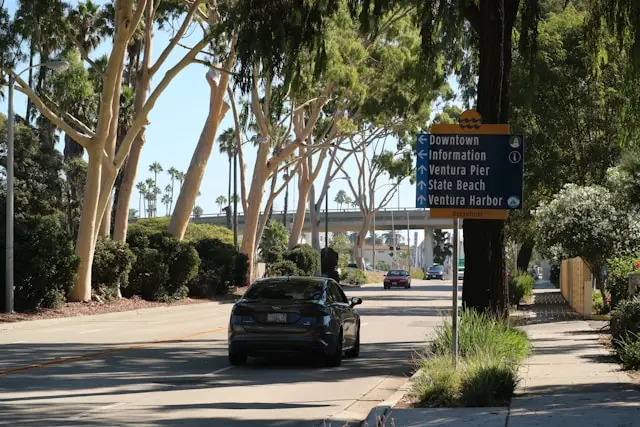
Ventura's working waterfront tells two stories in 2026, and neither one is simple. The harbour's 85 to 95 active commercial fishing vessels still make it one of Southern California's last genuine working ports. Ventura Harbor Boatyard and Channel Islands Marine operate with waitlists stretching three to six months. Tourism from Channel Islands National Park is approaching 400,000 annual visitors. The economic engine is running. But the people who keep it running are disappearing.
The problem is not that Ventura lacks economic momentum. The city's coastal economy generates approximately $850 million in direct annual impact and supports roughly 8,500 jobs. The problem is that the economy has fractured into two labour markets that are pulling talent in opposite directions. On one side, sustainability-focused corporate roles at firms like Patagonia offer compensation premiums of 40 to 60 per cent above traditional maritime service wages. On the other, the marine trades and hospitality operators that form the physical backbone of the harbour economy cannot compete for the same workers. The resulting talent drain is not gradual. It is accelerating at the exact moment a $31.4 million breakwater rehabilitation project is about to disrupt operations for 8 to 12 months.
What follows is a structured analysis of the forces reshaping Ventura's coastal and marine services sector, the specific roles that have become hardest to fill, and what organisations dependent on this waterfront economy must understand before they make their next critical hire.
A Harbour Economy Under Pressure from Both Directions
The Ventura Harbor Maritime Cluster has long functioned as the city's primary economic anchor. It holds federal designation as a Port of Entry with U.S. Customs and Border Protection presence. It supports commercial fishing, recreational charters, maritime repair, and the hospitality businesses that ring the waterfront. Facility utilisation for commercial marine service tenants exceeds 92 per cent.
But the fleet itself is shrinking. Active commercial vessels have stabilised at 85 to 95, down from more than 150 in 2005. This is no longer decline. It is a new baseline. The remaining fleet concentrates on squid, crab, and urchin fisheries, and the operators who have survived are efficient. The concern is not whether the fleet will collapse. It is whether the infrastructure that supports it can retain the skilled workers needed to keep these vessels operational while a generational wave of retirements removes experienced talent faster than any pipeline can replace it.
The harbour's repair infrastructure illustrates this clearly. Ventura Harbor Boatyard, the largest private marine service employer with roughly 85 to 95 employees, maintains waitlists of three to six months for haul-out and mechanical services. Demand is not the issue. Capacity is not the issue. The issue is finding certified marine diesel mechanics to do the work. The hidden 80 per cent of qualified candidates who are not actively looking for new roles dominate this market at the experienced level, where unemployment sits below 2 per cent and average tenure exceeds six years.
The breakwater rehabilitation project approved by the U.S. Army Corps of Engineers adds a layer of complexity. Construction begins Q2 2026, with disruption to commercial fishing and charter boat services expected for 8 to 12 months. For marine service providers whose revenue depends on fishing vessel traffic, this is not an abstract infrastructure investment. It is a period of reduced demand arriving at the same moment that labour supply is at its tightest.
The Retirement Cliff Nobody Has Staffed For
Marine Diesel Mechanics: A 40 Per Cent Supply Deficit
The most acute hiring shortage in Ventura's coastal economy is not in hospitality or tourism. It is in marine diesel mechanics and systems technicians. Demand exceeds local supply by an estimated 40 per cent, according to the Ventura County Workforce Development Board's 2024 Maritime Sector Analysis. Average time to fill experienced positions stretches to four to six months.
The pipeline problem is demographic. The regional retirement rate for marine mechanics aged 55 and above exceeds 15 per cent annually. That figure does not describe a problem approaching over the horizon. It describes a workforce losing its most experienced operators every year without replacement. The American Boat Builders and Repairers Association's 2024 Workforce Survey confirms that the pattern is national, but it bites hardest in markets like Ventura where the total workforce is small enough that each retirement leaves a visible gap.
A marine diesel mechanic role requiring CAT or Cummins certification at Ventura Harbor Boatyard, based on patterns identified through industry interviews and consistent with Ventura County Workforce Development Board findings, remained open for 11 months during 2023 and 2024. The role was ultimately filled through recruitment from San Diego with a $15,000 signing bonus and relocation package. This is not an outlier. It is a preview of the standard recruitment process for technical marine roles in this market.
Vessel Crew Turnover and the AB5 Reclassification Effect
Deckhand positions for squid and crab seasons experience 30 to 40 per cent turnover despite daily wages of $200 to $400 during peak season. The seasonal nature of the work is one factor. California Assembly Bill 5 is another. The ABC test for independent contractor classification has forced reclassification of 30 to 40 per cent of charter boat crew and fishing vessel deckhands from 1099 to W-2 employment, according to the California Legislative Analyst's Office. Labour costs for vessel operators have risen 25 to 35 per cent as a result.
For the commercial fleet, this reclassification changed the economics of crew recruitment. Operators accustomed to the flexibility of contractor arrangements now carry the full cost of employment taxes, workers' compensation, and compliance obligations. Some have absorbed the cost. Others have reduced crew sizes. Neither response solves the recruitment problem at its root. Younger workers are not entering commercial fishing in sufficient numbers, and the cost of a prolonged vacancy or a bad hire in a specialised technical role compounds quickly in a fleet where every vessel depends on a small, skilled crew.
The Sustainability Premium Is Pulling Talent Away from the Trades
Here is the analytical tension at the centre of Ventura's coastal hiring market, and the dynamic that most hiring leaders on the waterfront have not fully accounted for: the sustainability economy and the maritime trades economy share the same geography but compete for the same workers at a ratio that the trades cannot win.
Patagonia's global headquarters at 259 W. Santa Clara Street employs approximately 450 to 500 people locally across corporate, retail, and environmental advocacy functions. The company's influence extends well beyond its own payroll. Its presence has made Ventura a destination for outdoor industry talent, attracting sustainability-focused professionals who might otherwise have located in Denver or Portland.
The compensation gap between these sustainability-focused corporate roles and traditional maritime service positions is not marginal. It is systemic. A Marine Service Manager in Ventura earns $78,000 to $115,000. A VP of Supply Chain or Materials at an outdoor apparel company in the same city earns $180,000 to $260,000 plus equity. A Sustainable Tourism Coordinator, an emerging role category, earns $65,000 to $92,000. A Director of Sustainable Materials, based on patterns consistent with outdoor industry executive recruitment and industry compensation surveys, can command packages exceeding $275,000 annually, representing premiums of 35 per cent or more over previous role compensation.
This creates a gravitational pull that affects not only executive talent but also mid-career workers who might otherwise have built careers in marine repair or harbour operations. When a marine mechanics apprentice can see that a corporate sustainability role 15 minutes away pays 40 to 60 per cent more than a senior technical role at the boatyard, the rational career calculation points away from the trades. The sustainability premium is not just attracting talent to Ventura. It is redirecting talent within Ventura, away from the harbour economy that needs it most.
This is the original analytical contribution of this piece: the same force that makes Ventura attractive to sustainability professionals is actively destabilising the skilled trades pipeline that keeps the working waterfront operational. Capital and mission-driven employment have concentrated on one side of the economy. The physical infrastructure of the harbour still depends on the other side. The two cannot coexist at current wage ratios without intervention, and no intervention is currently planned.
Tourism Recovery Has Plateaued, and Senior Roles Are Going Unfilled
Occupancy and Revenue Below Pre-Pandemic Baseline
Tourism in Ventura has recovered. It has not returned. Hotel occupancy rates averaged 68.4 per cent in 2024, according to STR Global's Ventura Market Report, below the 2019 baseline of 74.2 per cent. Average daily rates reached $189.50. The waterfront hospitality district, encompassing Harbor Village and the San Buenaventura State Beach corridor, accounts for 42 per cent of the city's Transient Occupancy Tax collections.
The market exhibits pronounced seasonality. Peak occupancy occurs June through September. January through March brings material troughs. This pattern constrains employer ability to offer year-round senior roles with consistent operational intensity, which in turn limits the pool of experienced hospitality executives willing to relocate.
The GM and Director Vacancy Problem
General Manager and Director of Sales positions for waterfront hotels show vacancy rates 22 per cent above regional averages. The Ventura-Santa Barbara market requires 45 to 60 days to fill senior hospitality management roles, compared to 30 days nationally. At the executive level, 60 to 70 per cent of placements result from executive search outreach rather than job board applications.
The competitive dynamics make this harder still. Santa Barbara, 25 miles north, offers comparable or higher compensation for GM roles ($130,000 to $180,000) alongside more prestigious property portfolios. Phoenix and Austin compete on cost-of-living adjusted wages and housing affordability, drawing mid-career hospitality managers away from Ventura's high-cost market where median home prices sit at $825,000 and average rent for a two-bedroom unit is $2,850.
A General Manager role at a waterfront resort property in Ventura carries compensation of $110,000 to $160,000 plus incentive bonuses. That figure must be weighed against a housing cost that consumes a disproportionate share of take-home pay. For a hospitality executive considering a move from Phoenix, the salary negotiation is not just about base compensation. It is about the entire cost structure of living and working in a California coastal market.
The CARB Compliance Cliff Is Coming in 2027
California Air Resources Board regulations mandate an 80 per cent reduction in diesel particulate emissions from commercial harbour craft by 2030. The compliance timeline is not a distant concern. The first enforcement milestones under the 2027 effective date require engine retrofits or replacements costing an estimated $25,000 to $75,000 per vessel. With 60 per cent of harbour-based commercial fishing vessels exceeding 30 years of age, the capital investment required across the fleet is substantial.
This regulatory pressure intersects with the talent shortage in a specific and damaging way. The mechanics who can perform CARB-compliant engine retrofits are the same marine diesel specialists already in acute shortage. An operator cannot simply order a replacement engine and have it installed. The installation requires certified technicians who understand both the new emissions systems and the aging vessel platforms they are being fitted into. The shortage is not a hiring problem in isolation. It is a knowledge problem. You cannot recruit experience that does not yet exist in sufficient quantity.
The fleet operators who delay compliance face escalating penalties. Those who begin early compete for the same small pool of qualified mechanics. The organisations best positioned to manage this transition are those that have already secured technical talent. For those still searching, the talent mapping required to identify and approach the handful of qualified candidates in this market cannot begin too early.
Housing Affordability Is a Structural Hiring Barrier
Every talent shortage in Ventura's coastal economy is amplified by a housing market that prices out the workers the economy needs. Ventura's median home price of $825,000 and average two-bedroom rent of $2,850 create a foundational mismatch with coastal tourism and maritime service wages. The result is predictable: the workforce commutes from Oxnard, Santa Paula, and Fillmore.
For employers, this commute pattern creates retention risk. A marine mechanic who drives 40 minutes each way is more susceptible to a competing offer from a San Diego or Long Beach employer offering 15 to 25 per cent higher compensation and a shorter commute. A hospitality manager weighing a move to Ventura against a comparable role in a more affordable market performs a calculation that Ventura's employers frequently lose.
This is not a problem that individual employers can solve through compensation alone. A signing bonus or relocation package addresses the initial move. It does not address the ongoing cost of housing in a market where the median price requires income far above what most maritime or hospitality roles offer. The organisations that have maintained staffing stability in this market have done so through creative retention strategies: housing assistance programmes, shift scheduling that accommodates long commutes, and counterofffer-resistant compensation structures that reduce the risk of losing a critical hire six months after placement.
What Hiring Leaders in Ventura's Coastal Economy Must Do Differently
The conventional approach to filling roles in Ventura's coastal economy has been to post openings and wait. For entry-level seasonal positions, this still works. Application volumes remain high for deckhand roles and front-desk positions. For every role above that level, the approach fails.
Marine diesel mechanics with five or more years of experience exhibit unemployment rates below 2 per cent. Seventy-five to 80 per cent of qualified candidates are employed and not actively seeking. Executive hospitality roles follow the same pattern. The candidates who can fill the most critical roles in this market are not on job boards. They are working in San Diego, Long Beach, or Santa Barbara, and they will not move without a proposition that accounts for Ventura's cost of living, the specific opportunity on offer, and the career trajectory available.
For organisations facing senior search challenges in this market, whether for a Port Director role requiring maritime administration credentials and public agency management experience, a Marine Service Manager with ABYC certification, or a General Manager capable of running a $15 million waterfront property, the search methodology matters as much as the compensation package. KiTalent's AI-enhanced direct headhunting methodology identifies and approaches passive candidates who would never appear in an active search process, delivering interview-ready candidates within 7 to 10 days.
The pay-per-interview model eliminates the retainer risk that makes executive search prohibitive for mid-sized harbour operators and hospitality groups. In a market where 75 to 80 per cent of qualified marine technicians and 60 to 70 per cent of senior hospitality executives are passive, a direct search approach built for passive candidate identification is not a luxury. It is the only method that reaches the right people.
KiTalent's track record includes over 1,450 executive placements with a 96 per cent one-year retention rate. For hiring leaders in Ventura's bifurcated coastal economy, where the cost of an unfilled technical or leadership role compounds through lost revenue, delayed compliance, and downstream operational disruption, start a conversation with our executive search team about how we approach this market.
Frequently Asked Questions
Why is it so hard to hire marine diesel mechanics in Ventura?
Ventura's marine diesel mechanic workforce faces a convergence of pressures. Unemployment among experienced mechanics with five or more years sits below 2 per cent. The retirement rate for those aged 55 and over exceeds 15 per cent annually, and apprenticeship pipelines are not replacing departures at sufficient volume. Compensation for marine mechanics in Ventura ($78,000 to $115,000 for service managers) sits 15 to 25 per cent below competing markets in San Diego and Long Beach. The result is an estimated 40 per cent supply deficit, with experienced roles taking four to six months to fill through conventional methods. Firms like KiTalent use AI-enhanced talent mapping to identify and approach the passive candidates traditional job boards cannot reach.
What is the Ventura Harbor breakwater project and how will it affect hiring?
The U.S. Army Corps of Engineers has approved a $31.4 million rehabilitation project for Ventura Harbor's breakwater system, with construction starting Q2 2026. The project will disrupt commercial fishing operations and charter boat services for 8 to 12 months. This disruption reduces vessel traffic, which affects revenue for marine service providers. However, the project also creates temporary demand for construction and engineering professionals. Hiring leaders should plan for both the operational slowdown and the post-construction recovery surge when demand returns.
How much do hospitality executives earn in Ventura?
General Manager roles at waterfront resort properties in Ventura offer $110,000 to $160,000 base salary plus incentive bonuses. Director of Sales positions carry similar ranges. Santa Barbara, 25 miles north, offers $130,000 to $180,000 for comparable GM roles with more prestigious property portfolios. Ventura's housing costs ($825,000 median home price, $2,850 average two-bedroom rent) must be factored into any offer strategy. Effective executive compensation negotiation in this market requires addressing total cost of living, not just base pay.
What impact do CARB regulations have on Ventura's commercial fishing fleet?
California Air Resources Board regulations require an 80 per cent reduction in diesel particulate emissions from commercial harbour craft by 2030, with compliance milestones beginning in 2027. Engine retrofits or replacements cost $25,000 to $75,000 per vessel. With 60 per cent of Ventura's harbour-based fishing vessels exceeding 30 years of age, fleet-wide compliance investment is substantial. The same marine diesel specialists needed for retrofits are already in acute shortage, making early investment in technical talent critical.
How does Patagonia's presence in Ventura affect the local labour market?
Patagonia's global headquarters employs 450 to 500 people locally across corporate, retail, and environmental advocacy functions. The company's sustainability-focused roles offer compensation premiums of 40 to 60 per cent above traditional maritime service wages, creating a gravitational pull that draws talent toward corporate positions and away from marine trades. This dynamic elevates Ventura's profile as an outdoor industry hub but simultaneously destabilises the skilled trades pipeline that the harbour economy requires.
What is the best way to recruit senior leaders in Ventura's coastal economy?
With 75 to 80 per cent of experienced marine technicians and 60 to 70 per cent of senior hospitality executives not actively job seeking, traditional advertising reaches a fraction of the qualified market. Executive search firms that specialise in direct headhunting for passive candidates consistently outperform job boards in this market. The most effective approach combines market intelligence on competitor compensation with targeted outreach to candidates currently employed at competing ports and properties in San Diego, Long Beach, and Santa Barbara.