Wichita's Automation Surge Has Made Its Talent Shortage Worse, Not Better
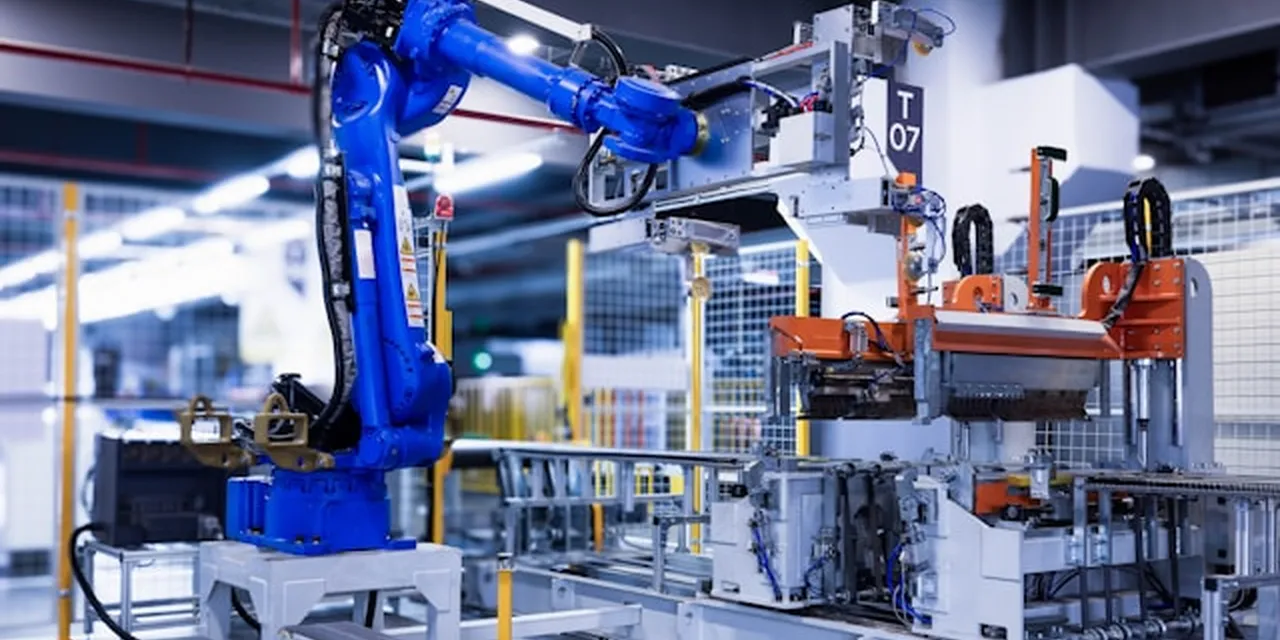
Wichita's advanced manufacturing sector invested 22% more capital in CNC automation and robotic machine tending in 2024 than the year before. That investment was supposed to ease the pressure on a workforce stretched thin by a decade of persistent shortages. It has done the opposite. Demand for automation technicians and controls engineers grew 34% over the same period, outpacing the vacancy rates for the traditional machinists the technology was meant to replace.
The result is a manufacturing economy that now has two parallel shortages running simultaneously. The first is the familiar one: CNC programmers, tooling engineers, and manufacturing engineers with aerospace certification experience remain almost impossible to hire through conventional means. The second is newer and accelerating: the integration specialists, PLC programmers, and robotic systems technicians needed to operate the equipment that was purchased to solve the first shortage. Neither problem will resolve the other. Together, they are compressing the capacity of Wichita's tier-2 and tier-3 supplier base at a moment when reshoring demand, geothermal diversification, and post-acquisition Boeing integration are all pulling in the direction of growth.
What follows is an analysis of how Wichita's advanced manufacturing and machining sector reached this position, where the specific hiring gaps are deepest, what the compensation data reveals about the competition for critical roles, and what organisations in this market need to understand before launching their next senior technical or leadership search.
The Boeing-Spirit Integration Created a False Impression of Labour Availability
The October 2024 completion of Boeing's $4.7 billion acquisition of Spirit AeroSystems dominated Wichita's economic headlines for months. Spirit announced voluntary separation programmes affecting more than 600 salaried employees in late 2024. The public narrative suggested that a wave of experienced manufacturing professionals would soon be available to an employer base that had been struggling to hire for years.
That wave never arrived. CNC machinist vacancy rates across Wichita's tier-2 and tier-3 supplier network remained at 12% throughout the integration period, with no measurable increase in qualified applicant flow. The explanation is straightforward but widely misunderstood: the Spirit employees who accepted separation packages were primarily assembly technicians and composite fabricators. Their skills do not transfer directly to the precision multi-axis CNC programming and AS9100D quality management work that the tier-2 supply base needs.
There is also a wage differential working against lateral movement. Tier-1 assembly roles at Spirit historically paid $22 to $28 per hour. Tier-2 machining positions start at $18 to $24 per hour. A displaced Spirit assembly worker looking at the tier-2 machining floor sees a pay cut, a skill gap, and a retraining requirement. Few are making that move.
The consolidation headlines created a false impression that qualified talent was available. The layoffs targeted assembly and administrative roles. The simultaneous shortage in precision machining, tooling engineering, and automation integration deepened.
For hiring leaders at Wichita's mid-size machining firms, the practical consequence is that the talent pool has not expanded despite the largest workforce restructuring event the region has experienced in five years. The candidates they need were not at Spirit. They are employed at competing shops, and 78% of them are not looking.
A Manufacturing Economy Running at Full Employment in Its Most Critical Trades
Wichita's manufacturing sector accounts for 18.2% of total nonfarm employment in the metro area. As of January 2025, 58,400 people worked in manufacturing, with 24,800 in advanced manufacturing categories spanning precision machining, metalworking, and aerospace component fabrication. Precision machining and tooling alone comprise 62% of that advanced manufacturing total.
The unemployment rate for production occupations in Wichita stood at 3.1% as of December 2024. That figure represents full employment conditions. There is no reserve pool of skilled machinists or tooling engineers waiting to be activated by better job postings or higher starting wages.
2,400 Unfilled Positions and a 94-Day Average Fill Time
The scale of the shortage is concrete. As of the first quarter of 2025, the Wichita metro area reported 2,400 unfilled advanced manufacturing positions. The average time to fill a skilled production role reached 94 days. For the four most acute scarcity categories, that average understates the real duration considerably.
The hardest roles to fill are multi-axis CNC programmers with Mastercam or GibbsCAM fluency, manufacturing engineers with AS9100D audit experience, tooling engineers with die and mould design capability, and automation technicians with PLC programming and robotic integration skills. Active candidate pools for CNC programmers with aerospace multi-axis experience yield between three and five qualified applicants per 100 postings. That ratio does not support a hiring strategy built around job advertising.
The Retirement Curve Compounds the Shortage
The average age of a precision machinist in Wichita is 54.3 years. Thirty-eight percent of the workforce will be eligible for retirement within ten years. Even without any growth in demand, that retirement curve generates 1,800 replacement openings annually through 2026. These are not entry-level positions being vacated. They are roles held by machinists who carry decades of legacy tooling knowledge, including jig boring, manual machining for specialty aerospace repairs, and institutional expertise in customer-specific quality requirements that exist nowhere in a training manual.
WSU Tech and the National Center for Aviation Training are the region's primary talent pipeline institutions. They produce graduates with foundational CNC and quality systems training. But the pipeline cannot fill 1,800 replacement openings per year while also addressing the existing 2,400-position backlog and the new automation-driven demand layer on top of it.
The maths does not close. It will not close through 2026 without a fundamentally different approach to finding and attracting experienced professionals.
Why Wichita's Automation Investment Deepened the Talent Crisis
This is the central paradox of Wichita's manufacturing labour market in 2026: the capital investment designed to reduce dependence on scarce human labour has generated greater dependence on an even scarcer category of human labour.
The automation capital flowing into Wichita's machining shops is real. A 22% year-over-year increase in CNC automation expenditure, concentrated in robotic machine tending and lights-out machining capability, reflects a sector that recognises it cannot grow by simply hiring more machinists at the entry level. The technology works. It does reduce the number of operators needed per unit of output.
But it replaces one kind of worker with another that does not yet exist in sufficient numbers. Every robotic tending cell requires integration, programming, and ongoing maintenance by technicians fluent in Fanuc and Robotiq robotics, Allen-Bradley PLC ladder logic, and machine vision systems. Demand for these automation and technology integration specialists grew 34% in the same period that automation investment grew 22%. Vacancy rates for automation technicians now exceed those for traditional machinists.
The local training infrastructure at WSU Tech is scaling its automation and controls curriculum, but programme completion timelines are measured in semesters, not months. The pipeline that will eventually produce these technicians at scale does not match the pace at which the equipment is being purchased and installed. Capital moved faster than human capital could follow.
For the 41% of Wichita machining firms that report delaying CNC or automation purchases due to financing costs exceeding 8% APR, according to the Federal Reserve Bank of Kansas City's Regional Manufacturing Survey, the irony is compounded. The firms that can afford the equipment cannot find the people to run it. The firms that cannot afford the equipment are falling further behind competitively.
Compensation Pressure from Every Direction
Wichita's cost of living has historically been its competitive advantage in talent retention. A senior CNC programmer earning $72,000 to $88,000 in Wichita can afford a quality of life that the same salary cannot provide in Dallas-Fort Worth or even Kansas City. That advantage still exists, but it is eroding as competing markets increase their pull.
What Critical Roles Pay in 2026
At the senior specialist and manager level, CNC programmers and manufacturing engineers command $72,000 to $88,000 in base salary for roles requiring seven or more years of multi-axis programming or process engineering in regulated environments. Senior tooling designers with injection mould or aerospace fixture expertise earn $78,000 to $95,000. Automation engineers with PLC and robotic integration experience sit at $82,000 to $105,000.
At the executive level, manufacturing engineering directors or VPs of operations at mid-size precision machining firms ($30 million to $100 million in revenue) command $145,000 to $185,000 in base salary, plus 20% to 35% bonus potential and equity participation in private firms. Directors of tooling or VP of manufacturing roles in plastics fabrication and tooling firms command $135,000 to $165,000. Chief operating officers or VPs of automation at firms actively transitioning to Industry 4.0 sit at $150,000 to $200,000 or above, with meaningful variation depending on capital deployment authority.
The Geographic Competition for Senior Talent
The competition Wichita faces for executive and senior technical talent is concrete and well-documented. Tulsa offers a 10% to 15% compensation premium within an aerospace cluster that shares Wichita's supply chain DNA and offers lower housing costs. Dallas-Fort Worth, home to Lockheed Martin and Bell Textron operations, offers a 25% to 35% compensation premium but with materially higher living expenses. Kansas City provides an 8% to 12% premium as a general manufacturing hub.
For automation engineering specifically, Oklahoma City competes for energy-sector automation specialists and often offers remote or hybrid working arrangements. Wichita's hands-on manufacturing environment cannot easily match that flexibility. When a controls engineer can programme PLC systems from a home office in Oklahoma City three days a week and fly to the plant floor for two, Wichita's five-day-on-site requirement becomes the deciding factor in the candidate's decision, not the salary.
The poaching dynamics within the region are equally telling. In the third quarter of 2024, according to aggregate staffing firm reports for the Wichita metro area, a plastics fabrication and tooling firm specialising in aviation interior components hired a senior tooling engineer from a south Wichita competitor at a 22% salary premium: $118,000 versus the candidate's previous $97,000, plus a $15,000 relocation stipend to bring them from the Tulsa market. When the cost of acquiring a single senior specialist includes a salary negotiation of that magnitude, the economics of traditional search processes become difficult to sustain.
Reshoring, Geothermal, and the Demand That Has Not Yet Peaked
The pressures described above exist within a market where demand is still growing. Two forces are adding net new hiring demand on top of the replacement and automation-driven needs already stretching the talent pool.
ITAR-Driven Reshoring
Thirty-four percent of Wichita precision machining firms reported quoting work returning from offshore sources, primarily China and Mexico, during 2024. The driver is not cost. It is ITAR compliance. Components previously manufactured offshore under commercial designations are being reclassified under stricter export controls, requiring domestic production with enhanced cybersecurity (CMMC 2.0 Level 2) and personnel screening. According to SIFMA's analysis of regulatory compliance burdens, the pattern of regulatory requirements driving domestic production requirements is consistent across defence-adjacent manufacturing sectors.
For Wichita's tier-2 and tier-3 shops, this is a revenue opportunity. But it is also a hiring requirement. Converting reshored work into production requires the same CNC programmers, quality engineers, and manufacturing engineers that are already in acute shortage. The conversion of reshored quotes into actual orders, expected to materialise through the second half of 2025 and into 2026, will add volume to an already overstretched workforce.
Geothermal Component Manufacturing
Agricultural equipment modification shops in Wichita's south-side industrial corridor are pivoting toward geothermal drilling component manufacturing. The pivot is logical. Wichita has deep institutional expertise in deep-hole drilling and honing, core competencies that transfer directly to geothermal applications. This subsector is forecast to grow 8% annually through 2026.
The talent implication is the same. Growth in a new application area draws from the same pool of CNC machinists, metalworking specialists, and tooling engineers serving aviation and energy. It does not create a new talent pool. It divides an existing one into more pieces.
The Regulatory and Structural Constraints Narrowing the Effective Talent Pool
Beyond the supply and demand dynamics, several forces are actively narrowing the pool of candidates who can work in Wichita's advanced manufacturing environment.
ITAR, CMMC, and the Cost of Compliance
The reclassification of certain commercial aviation components under stricter export controls has forced more than 30 Wichita suppliers to implement CMMC 2.0 Level 2 cybersecurity and enhanced personnel screening. The annual compliance cost for an SME machining firm runs $50,000 to $150,000. But the talent constraint is more subtle than the cost. ITAR compliance requires that employees handling controlled technical data be US persons. This eliminates a portion of the international talent pool that might otherwise be accessible for senior technical and leadership recruitment. For roles requiring both multi-axis CNC expertise and ITAR clearance eligibility, the effective candidate pool shrinks materially.
Simultaneously, tier-2 suppliers maintaining AS9100D, ISO 9001:2015, NADCAP, and customer-specific quality certifications report audit fatigue. Direct annual costs for audit preparation and consulting reach $80,000. The indirect cost is the time that quality engineers and manufacturing engineers spend supporting audits rather than production. Firms with thin engineering teams feel this acutely.
Physical Capacity Constraints
The Park City Industrial District, home to major precision machining and plastics operations, reports less than 5% vacancy for Class B industrial space suitable for machining operations. A firm that wins a reshored contract or secures a new geothermal component programme may not have the physical space to execute it. South Wichita has land, but brownfield remediation requirements add cost and timeline to any expansion.
These constraints do not appear in job postings or vacancy surveys. But they shape the decisions that hiring leaders face. A VP of operations evaluating whether to bid on a new programme must calculate not only whether the talent exists to staff it but whether the physical plant can accommodate it. In a market where both the talent and the space are constrained, growth decisions become leadership decisions of a different order.
What This Means for Hiring Leaders in Wichita's Manufacturing Sector
The talent market facing Wichita's advanced manufacturing firms in 2026 cannot be solved by better job postings, higher starting wages, or incremental improvements to training pipeline throughput. Each of those measures helps at the margin. None addresses the core problem.
The core problem is that 78% of the CNC programmers, manufacturing engineers, and automation technicians who could fill the most critical vacancies in this market are already employed and not looking. Standard job boards yield three to five qualified applicants per hundred postings for the most acute scarcity roles. A search that relies on inbound applications is a search that reaches less than a quarter of the viable market.
A Park City precision machining firm spent 11 months trying to fill a single senior Mastercam CNC programmer role through 2024, according to patterns documented in the Wichita Regional Chamber's member survey on hiring challenges. The role offered $85,000 to $95,000, well above the regional median of $68,000. It received zero qualified applications through standard channels. It was eventually filled through a national search at a $12,000 recruitment fee. Eleven months of lost capacity, foregone bids, and production constraints preceded the outcome.
That search duration is not an outlier. It is the natural result of posting a role and waiting in a market where the people you need are not looking at your postings.
KiTalent's approach to this market begins from that reality. Using AI-enhanced talent mapping, KiTalent identifies and engages the passive candidates who constitute the overwhelming majority of qualified professionals in precision manufacturing and aerospace machining. The model delivers interview-ready candidates within 7 to 10 days, with a pay-per-interview structure that eliminates the upfront retainer risk that constrains small and mid-size manufacturers already managing working capital pressure from extended payment terms.
For a mid-size machining firm in Wichita facing a 94-day average fill time for critical production roles, a 7-to-10-day delivery timeline changes the hiring calculus entirely. It means bidding on reshored contracts with confidence that the engineering team can be assembled. It means installing automation equipment with a realistic path to staffing the integration and maintenance roles that equipment requires.
The 96% one-year retention rate across KiTalent's 1,450 completed executive placements reflects a process designed not simply to fill a seat but to match the candidate to the specific environment, compensation structure, and growth trajectory of the hiring firm. In a market where a single bad executive hire costs multiples of the annual salary in lost production, delayed programmes, and team disruption, that retention figure is the most relevant metric a hiring leader can evaluate.
For organisations competing for CNC programming, tooling engineering, and automation leadership talent in Wichita's advanced manufacturing market, where the candidates you need are employed, not looking, and being actively courted by competitors in Tulsa, Dallas, and Kansas City, start a conversation with our industrial manufacturing search team about how we approach this specific market.
Frequently Asked Questions
Why is it so hard to hire CNC programmers in Wichita?
Wichita's location quotient for precision machining is 3.4 times the national average, meaning the region has an outsized concentration of demand relative to the available workforce. Seventy-eight percent of qualified CNC programmers with aerospace multi-axis experience are currently employed and not actively seeking new roles. The average age of a precision machinist in Wichita is 54.3, and retirement-driven replacement alone requires 1,800 new hires annually. Job postings yield three to five qualified applicants per 100 listings. Reaching the other 78% requires direct headhunting and passive candidate identification rather than job advertising.
What do senior manufacturing roles pay in Wichita in 2026?
Senior CNC programmers and manufacturing engineers earn $72,000 to $88,000 base. Senior tooling engineers with aerospace or injection mould expertise earn $78,000 to $95,000. Automation engineers with PLC and robotic integration skills command $82,000 to $105,000. At the executive level, VP of operations and manufacturing engineering directors at mid-size firms earn $145,000 to $185,000 base plus 20% to 35% bonus. Chief operating officers at firms undergoing Industry 4.0 transitions command $150,000 to $200,000 or more, depending on capital deployment authority.
How has the Boeing-Spirit AeroSystems acquisition affected Wichita manufacturing hiring?
The $4.7 billion acquisition completed in October 2024 resolved immediate liquidity concerns but has not eased hiring conditions for tier-2 and tier-3 suppliers. Spirit's voluntary separation programmes affected primarily assembly and composite technicians whose skills do not transfer to the precision multi-axis CNC work the supply base needs. CNC machinist vacancy rates remained at 12% throughout the integration period. Additionally, Boeing's integration of Spirit's procurement systems has lengthened payment terms from 30 days to 45 to 60 days, creating working capital pressure for smaller firms.
What is driving demand for automation technicians in Wichita?
Capital investment in CNC automation grew 22% year-over-year in 2024, driven by persistent labour shortages. Every robotic tending cell and lights-out machining installation requires technicians fluent in Fanuc and Robotiq robotics, Allen-Bradley PLC programming, and machine vision systems. Demand for these specialists grew 34% in the same period. Local training programmes are scaling but operate on academic timelines that lag equipment procurement cycles. The result is a secondary shortage layered on top of the original machinist shortage.
How does KiTalent help manufacturers hire in tight labour markets like Wichita?
KiTalent uses AI-enhanced talent mapping and direct executive search to identify and engage the passive candidates who make up 78% of the qualified talent pool in Wichita's precision manufacturing sector. Candidates are delivered interview-ready within 7 to 10 days under a pay-per-interview model that requires no upfront retainer. This approach is designed for markets where job advertising reaches a fraction of viable candidates and where search timelines of 94 days or longer carry real production and revenue costs. The firm maintains a 96% one-year retention rate across more than 1,450 executive placements.
What are the biggest risks facing Wichita's manufacturing sector in 2026?
Three risks converge. First, the Boeing-Spirit integration may consolidate the tier-2 and tier-3 supplier network by 15% to 20% over 24 months, reducing the number of independent firms. Second, tariffs of 10% to 25% on imported aerospace-grade aluminium and titanium directly compress margins for suppliers unable to pass costs to Tier 1 primes. Third, interest rates above 8% APR for equipment financing are causing 41% of machining firms to delay automation purchases, widening the productivity gap between well-capitalised firms and smaller competitors.