Zaragoza's Agri-Food Sector Is Automating Fast. It Cannot Hire the Engineers to Keep the Machines Running.

Zaragoza's oilseed crushing facilities operated at 87% capacity through 2024. Its cereal processing cluster handled roughly 35% of Spain's total cereal production. The Plataforma Logística de Zaragoza, known as PLAZA, distributed temperature-controlled shipments across 250,000 square metres of cold-chain warehousing, anchoring an Iberian distribution network that few competitors can match. By the numbers, Zaragoza's agri-food processing complex is performing.
The trouble is underneath those numbers. The sector recorded €147 million in capital expenditure across Aragon in 2024, concentrated heavily in automation and energy efficiency. That investment was driven, in large part, by the need to offset chronic labour shortages in operational roles. But automation does not install, calibrate, or maintain itself. The engineers required to make these investments productive are among the scarcest professionals in the region, with unemployment below 3% and average tenure exceeding six years. Firms are spending to automate their way out of a talent problem while creating a new talent problem in the process.
What follows is an analysis of the forces reshaping Zaragoza's agri-food sector, the specific roles that hiring leaders cannot fill through conventional methods, and what organisations operating in this market need to understand before their next senior search.
The Ebro Valley Cluster: Scale, Specialisation, and a Narrowing Advantage
Zaragoza's position in Spanish agri-food processing is built on geography, infrastructure, and decades of specialisation. The Ebro Valley's cereal and oilseed output feeds a dense cluster of 42 processing facilities within the PLAZA logistics zone and surrounding industrial parks, generating €3.2 billion in annual turnover. Cargill operates an oilseed processing complex within PLAZA. Nestlé runs coffee processing and soluble products manufacturing with over 400 employees. Pastas Gallo produces pasta and cereal products with roughly 480 workers. Grupo Aneto, headquartered in Zaragoza, expanded its R&D facility in 2024 with a €12 million investment.
The cluster is real. The Cluster Food & Health Aragón coordinates 112 member companies representing €4.8 billion in aggregate turnover. The Centro de Innovación y Tecnología Alimentaria (CITA) employs 120 researchers focused on cereal and meat product innovation. This institutional density gives Zaragoza a genuine competitive moat in grain and oilseed processing that Mediterranean coastal hubs like Murcia and Valencia do not replicate.
Where the specialisation helps
The concentration of cereal and oilseed expertise creates deep local knowledge networks. A food safety director moving between two Zaragoza-based processors carries directly transferable regulatory and operational knowledge. An automation engineer familiar with pneumatic systems in food-grade environments can move across employers without retraining. For mid-level operational roles, this density is a hiring advantage.
Where it becomes a constraint
That same specialisation means the talent pool is narrow. Fresh-produce processing, alternative protein development, and food-tech innovation remain concentrated in Barcelona and Valencia. The roles Zaragoza needs most urgently in 2026, particularly in automation, sustainability reporting, and senior R&D, sit at the intersection of food science and disciplines that developed elsewhere. The cluster's depth in traditional processing has not produced equivalent depth in the functions now driving investment.
The trajectory established through 2025 has continued into 2026, but the conditions supporting it are tightening from multiple directions simultaneously.
Water, Policy, and the Squeeze on Raw Material Supply
The Ebro Basin entered the 2024-2025 hydrological year with reservoir reserves at just 52% of capacity, triggering pre-alert status for potential irrigation restrictions. This is not a single-season anomaly. The Ebro River Basin Management Plan for 2022-2027 mandates environmental flows that may reduce water availability for agricultural abstraction by 10-15% by 2026. For a region where 70% of agricultural surface area is rain-fed, the irrigation-secured premium crops that underpin high-margin processing segments are directly exposed.
The Common Agricultural Policy compounds the pressure. Spain's CAP Strategic Plan for 2023-2027 introduced eco-scheme requirements, including mandatory 4% fallow land and crop diversification, that disproportionately affect Aragon's extensive cereal farming model. The projected impact is an 8-12% reduction in cereal supply volumes available to Zaragoza's mills and crushing facilities. When your infrastructure was built for throughput and your capacity utilisation sits at 87%, an 8-12% reduction in feedstock is not a minor adjustment. It is a direct threat to the economics that justify the plant.
Smallholder suppliers face an additional €50-80 per hectare in compliance costs under the new conditionality requirements. This accelerates farm consolidation. Fewer, larger suppliers mean less diversity in the processor's sourcing base and greater exposure to individual supplier failure. The talent implication is direct: supply chain directors in this market now need to manage commodity volatility, regulatory compliance risk, and supplier concentration simultaneously. That profile did not exist five years ago.
For hiring leaders, this means the supply chain director role in Zaragoza's agri-food sector has become materially harder to fill than the same title suggests elsewhere. The candidate needs agricultural sourcing expertise, just-in-time manufacturing integration, cold-chain logistics knowledge, and now CAP regulatory fluency. The hidden cost of hiring the wrong person for a role this complex is measured not just in salary but in processing downtime and contract losses.
The Automation Paradox: Investing in Technology You Cannot Staff
This is the central tension in Zaragoza's agri-food labour market in 2026, and it is one that the sector has not resolved.
The logic is straightforward. Operational labour is difficult to recruit for physically demanding processing roles. Automation, particularly food-grade robotics and AI-driven quality control, reduces dependency on operational headcount. The sector invested accordingly. The €147 million in 2024 CAPEX was concentrated in exactly these areas.
The problem: automation engineering and maintenance roles grew 28% in vacancy postings year-on-year through 2024. These are not entry-level positions. They require specialisation in pneumatic systems, food-grade robotics, and increasingly in the software that connects automated lines to quality management systems. Unemployment among automation engineers in Aragon sits below 3%. Average tenure is 6.2 years, according to SEPE affiliation data. These professionals are not looking for work. They are embedded in roles at employers who understand their scarcity and compensate accordingly.
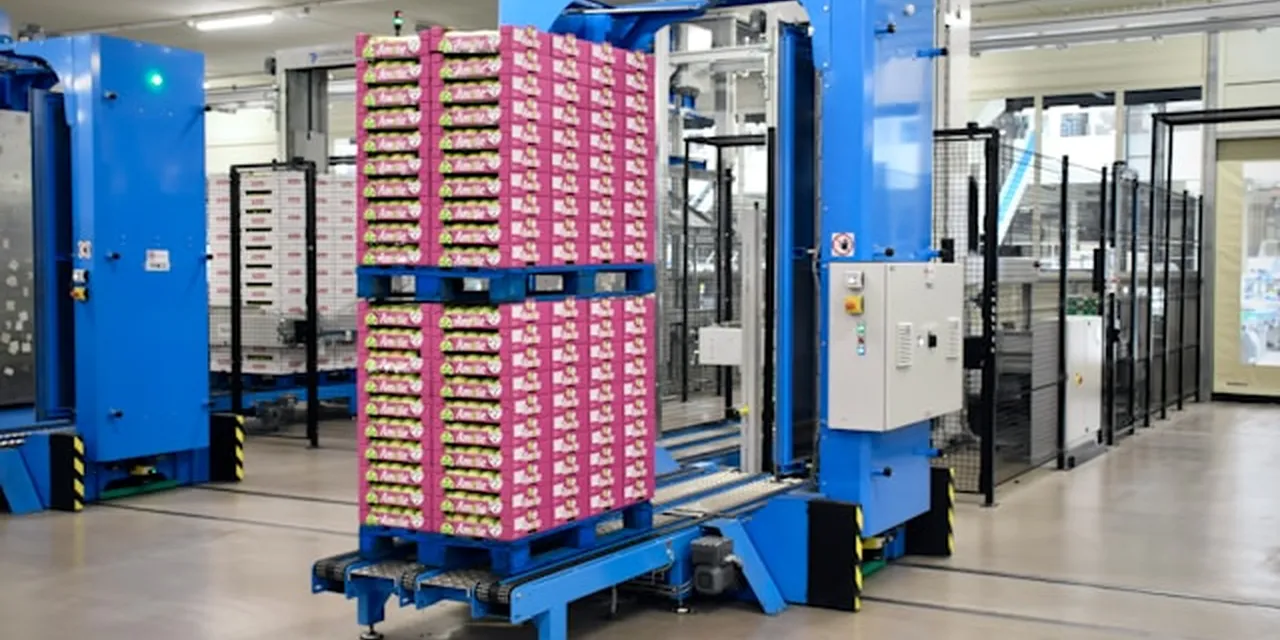
The capital moved faster than the human capital could follow. A processing plant that installs a €2 million robotic palletising line and then cannot hire the maintenance engineer to keep it running has not solved a labour problem. It has converted a lower-skill shortage into a higher-skill shortage at greater expense.
This is the analytical claim that does not appear in any single data point but emerges when the investment figures and the vacancy data are placed side by side. The automation investment was supposed to reduce the sector's dependence on scarce talent. Instead, it has shifted that dependence upward in the skill hierarchy, toward an even smaller pool of candidates who are even less likely to be found through job postings. The firms that recognised this early and began building a talent pipeline for automation roles before commissioning the equipment are the firms whose lines are running. The firms that assumed the engineers would appear when the machines did are the firms now operating expensive capital at reduced efficiency.
Compensation: The 18% Gap That Defines Every Senior Search
Zaragoza's agri-food compensation operates at 82-88% of Madrid benchmarks for equivalent roles. For operational and mid-management positions, this discount is offset by a 15-20% lower cost of living. For senior and executive positions, the maths stops working.
A Food Safety and Quality Director in Zaragoza commands €85,000-€110,000 base plus 15-20% variable. An R&D Director earns €95,000-€125,000 base plus 20-25% variable. An Operations Director at plant level receives €90,000-€115,000 base plus bonus. At C-suite level for major processors with €500 million or more in revenue, total cash compensation ranges from €180,000 to €250,000, representing a 35% discount to equivalent positions in Madrid.
Why the discount matters more at the top
The cost-of-living differential between Zaragoza and Madrid narrows as seniority increases. Housing costs may be 20% lower in Zaragoza, but school fees for international executives, travel budgets, and the opportunity cost of a smaller professional network do not scale linearly with the property market. A senior food technologist saving €300 per month on rent notices the difference. An R&D Director weighing a 25% pay cut against a smaller city with fewer career options is making a fundamentally different calculation.
Madrid draws senior R&D and regulatory affairs executives with 25-35% compensation premiums, proximity to the Ministry of Agriculture, and corporate headquarters that offer stronger international career trajectories within multinational food groups. Barcelona competes for innovation and marketing talent, particularly in alternative proteins and food-tech startups, with an ecosystem that offers 40% more hybrid roles than Zaragoza's plant-based economy.
The compensation gap is not closing. It is widening fastest at exactly the seniority level where the most critical roles sit. When Aneto expanded its Zaragoza R&D facility in 2024 and created 45 specialised positions, the company publicly acknowledged in Heraldo de Aragón that 60% of those roles required relocation packages to attract talent from Madrid and Barcelona, citing insufficient local availability of senior food formulation chemists. This is a company headquartered in Zaragoza, investing in Zaragoza, and still unable to fill senior technical roles from the local market.
For any organisation approaching salary negotiations for senior roles in this sector, the benchmark data tells only half the story. The other half is the relocation package, the career development narrative, and the role design that makes Zaragoza competitive against cities that pay more and offer more optionality.
The Passive Candidate Problem: Why 85% of the Best Talent Is Invisible
The most critical roles in Zaragoza's agri-food sector are overwhelmingly passive candidate markets. The data is specific.
Food Safety and Quality Directors: 85% of placements require executive search or direct headhunting. Active applicants typically lack the BRCGS lead auditor credentials that the role demands. Advanced automation engineers: below 3% unemployment in Aragon, 6.2-year average tenure, effectively zero active candidates at any given time. Export Commercial Directors specialising in MENA or Asian food markets: 90% passive ratio.
A Food Technology R&D Director with ten or more years of experience in hydrocolloid or clean-label formulation typically remains on market for fewer than 14 days before receiving multiple offers. In 2024, 73% of such placements involved candidates recruited from existing employment rather than active application pools, according to Hays España's survey of 45 Aragon-based food manufacturers.
This means that conventional hiring methods, job postings, inbound applications, even referral networks, reach at most 15-27% of the viable candidate pool depending on the role. The remaining 80% of senior talent requires a fundamentally different approach. These are professionals who are performing well in their current roles, who are not monitoring job boards, and who will only consider a move if the opportunity is presented directly and compellingly.
The practical consequence for hiring leaders in Zaragoza's agri-food sector is stark. A Food Safety Director search run through job advertising and recruiter databases will systematically exclude the majority of qualified candidates. The search will fill eventually, but it will fill from the 15% who are actively looking, not from the 85% who would be the strongest fit. The average 94 days-to-fill for this role reflects the time it takes for that smaller pool to produce an adequate, rather than optimal, candidate.
Organisations that have adapted to this reality use talent mapping to identify and approach passive candidates before a vacancy becomes urgent. Those that have not adapted are running the same slow, expensive searches repeatedly.
What Hiring Leaders in This Market Must Do Differently
The structural conditions in Zaragoza's agri-food sector in 2026 create a hiring environment where the standard playbook fails predictably. The failures are not random. They follow patterns that the data makes visible.
Reframe the compensation conversation
The 82-88% Madrid benchmark is a starting point, not a ceiling. For roles where the candidate must relocate, the total proposition must include the relocation package, the career trajectory within the organisation, and the quality-of-life argument that Zaragoza genuinely offers. Firms that lead with base salary in a market where they are structurally disadvantaged on base salary will lose every competitive offer. Firms that lead with the role, the project, and the total package win candidates that base salary alone cannot reach.
The counteroffer risk is acute for passive candidates in this market. A food safety director approached by a Zaragoza processor while employed in Madrid will almost certainly receive a retention counteroffer from their current employer. The counteroffer will be financially competitive because Madrid employers know the Zaragoza discount. Only a proposition that offers something the current role cannot, whether that is scope, autonomy, innovation budget, or strategic influence, survives the counteroffer.
Build automation talent before commissioning equipment
The automation paradox described earlier has a practical solution, but it requires a timeline shift. Organisations planning capital expenditure on food-grade robotics or AI-driven quality systems should begin their automation engineering search 6-9 months before equipment installation, not after. This is the inverse of how most firms operate. Most firms approve the capital, order the equipment, and then discover that the engineer they need has a 94-day average time-to-fill and a 3% unemployment rate.
Accept that senior searches require specialist methodology
For Food Safety Directors, R&D Directors, Supply Chain Directors, and Export Commercial Directors, the passive candidate ratios make direct headhunting the only viable primary method. Job postings may run in parallel for compliance or visibility, but the search strategy must be built around identifying, approaching, and engaging professionals who are currently employed and not looking.
This is not a general observation about recruitment. It is specific to this market, these roles, and these conditions. An organisation hiring a production line supervisor in Zaragoza can use conventional job advertising effectively. An organisation hiring a Quality Director cannot. The method must match the market, and in Zaragoza's agri-food sector, the market for senior roles is one where the reasons executive searches fail are almost always rooted in reaching too small a fraction of the available talent.
Positioning for the 2026-2027 Hiring Cycle
The forces acting on Zaragoza's agri-food sector in 2026 are converging. Water scarcity constrains raw material supply. CAP eco-conditionality reduces cereal volumes. Automation investment continues but requires engineers the market cannot produce locally. Compensation gaps with Madrid and Barcelona persist at senior levels. The sector's 3.1% GVA growth in 2024 is projected to decelerate to 1.5-2.0% as these pressures compound.
None of these forces will reverse in the next 12 months. Ebro Basin reservoir levels are a function of climate patterns, not policy decisions. CAP conditionality is mid-programme and will not be relaxed before 2027. The automation investment cycle is committed. The compensation differential with Madrid reflects structural economic geography, not a temporary distortion.
For hiring leaders at Zaragoza-based agri-food processors, the implication is that every senior search conducted in 2026 and 2027 will be harder than the equivalent search in 2024. The candidate pool is not expanding. The demands on senior roles are increasing. The competing cities are not standing still.
KiTalent works with agri-food and industrial organisations across Europe to identify and deliver senior leadership talent through AI-enhanced direct search, reaching the passive candidates that conventional methods miss. With interview-ready candidates delivered within 7-10 days and a 96% one-year retention rate, the methodology is built for markets where speed and precision are not optional. For organisations hiring Food Safety Directors, R&D leaders, or Supply Chain Directors in Zaragoza's agri-food sector, where 85% of the strongest candidates are not visible on any job board and the cost of a prolonged vacancy compounds weekly, speak with our team about how we approach this market.
Frequently Asked Questions
What are the hardest agri-food roles to fill in Zaragoza in 2026?
Food Safety and Quality Directors, advanced automation and maintenance engineers, and Supply Chain Directors with cold-chain expertise represent the most acute shortages. Food Safety Directors average 94 days to fill, with 85% of placements requiring direct headhunting rather than job advertising. Automation engineers face below 3% unemployment in Aragon, making them effectively invisible to conventional recruitment. Export Commercial Directors specialising in MENA or Asian markets show a 90% passive candidate ratio, meaning nine out of ten viable candidates are currently employed and not actively searching.
How does Zaragoza agri-food compensation compare to Madrid?
Zaragoza's agri-food sector compensates at 82-88% of Madrid benchmarks for equivalent roles. At director level, base salaries range from €85,000-€125,000 depending on function, with 15-25% variable compensation. At C-suite level for major processors, total cash compensation ranges from €180,000-€250,000, representing a 35% discount to Madrid equivalents. Cost of living is 15-20% lower in Zaragoza, which offsets the gap for mid-level roles but becomes insufficient at senior levels where career trajectory and network access weigh more heavily in candidate decisions.
Why is Zaragoza's agri-food automation investment creating new hiring problems?
The sector invested €147 million in CAPEX in 2024, concentrated in robotics and energy efficiency, to offset operational labour shortages. However, the engineers required to install, calibrate, and maintain food-grade automation systems are among the scarcest professionals in the region. Vacancy postings for automation and maintenance engineers grew 28% year-on-year. The investment has converted a lower-skill shortage into a higher-skill shortage, creating a transitional bottleneck that proactive talent pipeline development can address but reactive hiring cannot.
What impact does the CAP have on Zaragoza's agri-food talent needs?
The Spanish CAP Strategic Plan 2023-2027 introduces eco-scheme requirements that are projected to reduce Aragonese cereal supply volumes by 8-12%. This pressures processing capacity utilisation and increases demand for supply chain directors who can manage commodity volatility, regulatory compliance, and supplier concentration simultaneously. It also creates new demand for sustainability reporting specialists with expertise in Scope 3 carbon accounting and EU Taxonomy alignment, a profile that barely existed in this market three years ago.
How can organisations attract senior agri-food talent to Zaragoza from Madrid or Barcelona?
Successful relocations in this market require a total proposition beyond base salary. When Aneto created 45 specialised positions in 2024, 60% required relocation packages to attract candidates from larger cities. Effective strategies include structured relocation support, clear career progression within the organisation, and role design that offers scope or autonomy unavailable in larger corporate environments. Leading with base salary in a market where you are structurally 15-25% below Madrid benchmarks guarantees competitive losses. Leading with the role itself and its strategic importance is how experienced executive search partners position these opportunities successfully.
What is the best approach to executive search in Zaragoza's agri-food sector?
Given that 73-90% of senior agri-food professionals in this market are passive candidates, direct headhunting is the only primary methodology that reaches the full candidate pool. Job advertising reaches at most 15-27% of viable candidates depending on the role. KiTalent's AI-enhanced direct search methodology identifies and engages professionals who are currently employed and performing well, delivering interview-ready candidates within 7-10 days through systematic market mapping rather than database reliance.