Abu Dhabi's $20 Billion Petrochemical Bet Has a Problem No Amount of Capital Can Solve
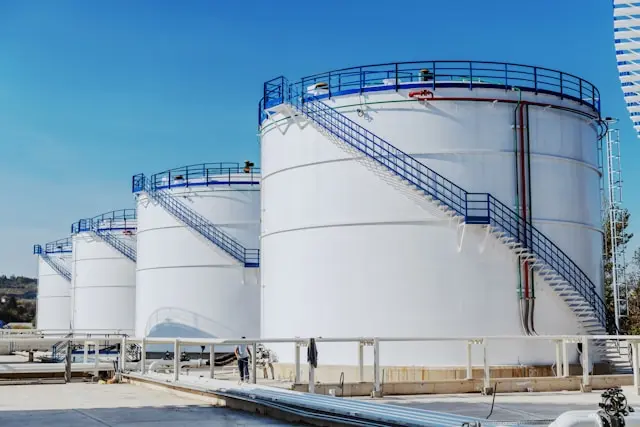
Abu Dhabi has committed more than $20 billion to downstream petrochemical expansion since 2022. TA'ZIZ Phase 2 is under construction. Borouge 4 has entered commercial operations. The Ruwais Derivatives Park, a joint venture with Reliance Industries, completed its front-end engineering design last year. On paper, this is the most concentrated petrochemical investment programme in the GCC outside Saudi Arabia. On the ground, the picture is different.
The critical constraint is not capital, feedstock, or regulatory approval. It is people. Senior sour gas process engineers with the certifications to work in high-H2S environments are taking more than 180 days to recruit. Specialty polymer engineers with experience on Borealis-licensed Borstar processes are being systematically targeted by Saudi competitors offering 22 to 28 percent salary premiums. Vice President of Operations searches for TA'ZIZ joint venture entities have repeatedly stalled because fewer than twelve qualified candidates exist regionally with the right combination of greenfield commissioning experience, Arabic fluency, and JV governance credentials. Abu Dhabi's downstream investment wave has moved faster than the human capital required to bring it online.
What follows is an analysis of the forces reshaping Abu Dhabi's oil, gas, and petrochemicals sector, the employers driving that change, and what senior leaders need to understand before they make their next hiring or retention decision in this market.
The Ruwais Ecosystem: Scale, Integration, and the Talent Implications of Concentration
The Ruwais Industrial Complex is not a single facility. It is a 3,000-hectare industrial city 240 kilometres west of Abu Dhabi, housing 18 operating companies, 25,000 industrial workers, and a refining and petrochemical integration that very few locations globally can match. The refinery processes 837,000 barrels per day across two units. Borouge operates polyethylene and polypropylene plants with a combined capacity now reaching 6.4 million tonnes annually following Borouge 4's ramp-up. TA'ZIZ adds methanol, low-carbon ammonia, and a pipeline of specialty chemicals targeting 2026 and 2027 startup dates.
This concentration creates integration efficiencies that underpin Abu Dhabi's competitive position. Naphtha feedstock moves from the refinery to adjacent cracking units without the logistics cost that inflates Asian petrochemical production. Ethane pricing, regulated domestically at an estimated $1.50 to $2.00 per MMBtu compared to $3.50 to $4.50 in the US and $8 to $12 for naphtha-based production in Asia, gives Abu Dhabi producers a cost floor that most global competitors cannot reach.
But concentration has a second-order effect that is less discussed: it makes the talent market radically local. A commissioning engineer for Borouge 4 and a process safety manager for TA'ZIZ Phase 2 are not interchangeable, despite sitting eight kilometres apart. One works with bimodal polyethylene catalyst systems. The other handles chlor-alkali chemistry. Both must live in or rotate through Ruwais, a remote desert location where 28/28 or 42/21 rotational schedules are standard. The pool of professionals willing and qualified to do either job, in that location, at the compensation Abu Dhabi currently offers, is thinner than the investment numbers suggest.
Ruwais contributes approximately 17 percent of Abu Dhabi's non-oil GDP and handles roughly 80 percent of the emirate's non-oil industrial exports by value. Its operational continuity is a national economic priority, not merely a corporate one.
Why Abu Dhabi's Talent Problem Is a Timing Problem
The phrase "talent shortage" is used loosely in most markets. In Abu Dhabi's downstream sector, the problem is more specific than a general shortage. It is a collision of project timelines.
Borouge 4, TA'ZIZ Phase 2, the Hail and Ghasha sour gas development, and the Ruwais Derivatives Park are all drawing from the same regional talent pool at the same time. S&P Global estimated that 30 percent of GCC petrochemical projects face 18-month schedule extensions due to labour constraints. Abu Dhabi's programme is a major contributor to that statistic. Recruitment activity in the emirate's oil and gas sector rose 34 percent year-on-year through 2024, but the surge in demand has not been matched by a corresponding expansion in the available workforce.
The 180-Day Recruitment Cycle
The gap between general engineering positions and specialist roles is stark. General engineering vacancies in Abu Dhabi's energy sector fill in an average of 68 days, according to Hays GCC data. Specialised technical roles take 127 days. For senior sour gas process engineers with 15-plus years of experience and H2S handling certification, 40 percent of requisitions remain unfilled after six months of active search.
These are not junior positions that can be backfilled through graduate pipeline programmes or internal promotions. A senior process engineer in Abu Dhabi's petrochemical sector commands AED 540,000 to 780,000 in annual base salary, plus a 15 to 20 percent bonus. A VP of Manufacturing for a refining or petrochemical operation earns AED 1.2 million to 1.8 million plus performance incentives that can reach 60 percent of base. At these levels, candidates are not responding to job advertisements. They are embedded in long-tenure roles with competitors.
Saudi Arabia as the Primary Competitor
The timing collision extends beyond Abu Dhabi's borders. Saudi Arabia's own downstream expansion, driven by SABIC, Saudi Aramco's SATORP complex in Jubail, and NEOM-related industrial projects, is drawing from the identical regional talent pool. According to the Mercer Middle East Energy Executive Compensation Survey, Saudi employers currently offer 15 to 25 percent base salary premiums for equivalent senior engineering roles, supplemented by housing allowances of SAR 180,000 to 240,000 annually versus AED 120,000 to 180,000 in Abu Dhabi.
Abu Dhabi retains meaningful advantages. Zero income tax compared to Saudi Arabia's 20 percent expatriate tax effective since 2024 partially offsets the base salary gap. Lifestyle accessibility for Western expatriates remains materially stronger. But for the Indian nationals who constitute 45 to 50 percent of the downstream technical workforce, the equation has shifted further. Indian refineries, particularly Reliance's Jamnagar complex and IOCL's Panipat operations, now offer dirham-equivalent packages of INR 4 to 6 crores annually with substantially lower living costs, creating what industry observers have described as a reverse brain drain for mid-career process engineering talent.
The competition for senior talent in this market is not a two-player contest between Abu Dhabi and Riyadh. It is a four-way pull involving Saudi Arabia, Qatar's Ras Laffan LNG operations, and India's domestic refinery expansion. Abu Dhabi's capital advantage is real. Its talent advantage is not.
The TA'ZIZ Distinction: Why New Chemistry Means New Talent Requirements
The most common misunderstanding about Abu Dhabi's downstream expansion is that it is simply more of the same. It is not. The TA'ZIZ Industrial Chemicals Zone represents a deliberate strategic pivot away from conventional polyolefins toward transition fuels and specialty chemicals. Blue ammonia. Methanol. MTBE. Chlor-alkali. Linear alkylbenzene. These products share almost no process chemistry with the Borstar polyethylene technology that defines Borouge's operations.
This distinction matters enormously for hiring. A polymer engineer who has spent fifteen years optimising bimodal polyethylene reactors cannot step into a blue ammonia facility without extensive retraining. The feedstock handling is different. The process safety requirements are different. The regulatory frameworks governing ammonia transport and storage bear little resemblance to polyolefins logistics. TA'ZIZ Phase 2, which confirmed its Final Investment Decision for 1,000 kilotonnes per annum of additional blue ammonia capacity, will require 500 permanent operational roles by 2026. These roles demand a combination of chemicals commissioning experience and joint venture governance knowledge that exists in very few professionals globally.
This is the original analytical point that the investment data alone does not reveal. Abu Dhabi has not built a larger version of its existing petrochemical operation. It has built a parallel industry alongside it, one that requires a fundamentally different talent base. The capital moved in one direction. The human capital required to operate it does not yet exist in sufficient numbers and cannot be grown from the existing workforce through lateral transfer. Every search for a TA'ZIZ operational leader is, in effect, a search for a candidate who has done something similar somewhere else in the world, because Abu Dhabi itself has never operated these assets before.
Workforce Composition and the Emiratisation Pressure Point
Abu Dhabi's oil, gas, and petrochemicals sector employs approximately 45,000 people directly across upstream and downstream operations. The workforce composition reflects the structural dependencies that have characterised Gulf industrial development for decades. Emirati nationals represent 16 to 18 percent of the total workforce, concentrated in corporate functions, HSSE, and government liaison roles. Only 6 percent of technical operations roles are held by UAE nationals.
Western expatriates from Europe, North America, and Australia account for 12 to 15 percent of the workforce, predominantly in senior engineering, project management, and executive leadership. Arab expatriates hold roughly 18 to 20 percent, with strong representation in middle management. South Asian professionals, primarily Indian, Pakistani, and Bangladeshi nationals, constitute the largest segment at 45 to 50 percent, dominating construction, maintenance, and technician-level roles.
The Nafis Mandate and Its Practical Constraints
The UAE's Nafis programme mandates 10 percent Emiratisation for private sector companies with 50 or more employees, rising to 15 percent by 2026 for skilled sectors including petrochemicals. ADNOC's own entities exceed 20 percent Emiratisation at a group level. But the joint ventures and contractor organisations that perform the physical work of building and commissioning downstream assets, including TA'ZIZ's EPC partners such as Bechtel, Tecnimont, and Petrofac, consistently struggle to reach 8 to 10 percent Emirati representation in technical roles.
The enforcement mechanism carries real cost. The Ministry of Human Resources and Emiratisation imposes penalties of AED 7,000 per month per Emirati shortfall. For a major EPC contractor employing thousands during peak construction, the cumulative penalty exposure can run into millions of dirhams annually, potentially delaying project milestones if contractors must divert resources toward compliance.
The tension here is not between ambition and capability. It is between the timeline of workforce development and the timeline of capital deployment. Training an Emirati process engineer to the level required for sour gas operations or specialty chemical commissioning takes a decade of structured development. TA'ZIZ Phase 2 needs those engineers by 2027. The two timelines do not align, and no penalty structure can accelerate the first without compromising the second.
Compensation: What the Market Actually Pays and Where the Gaps Are Widest
Understanding compensation structures in Abu Dhabi's downstream energy sector requires separating three distinct tiers, because the dynamics at each level are different.
At the senior specialist and manager level, covering individual contributors with 10 to 15 years of experience, process engineers earn AED 540,000 to 780,000 annually plus a 15 to 20 percent bonus. Process safety managers command AED 600,000 to 900,000. Digital and AI implementation leads with oil and gas domain expertise carry an 18 percent premium over general IT roles, earning AED 660,000 to 960,000, reflecting the scarcity value of professionals who combine machine learning capability with process industry knowledge.
At the VP level, functional leaders in manufacturing for refining or petrochemical operations earn AED 1.2 million to 1.8 million in base salary, with performance bonuses reaching 40 to 60 percent and long-term incentive plan participation. VP Project Delivery for mega-projects above $5 billion commands AED 1.44 million to 2.16 million. Country Presidents and Managing Directors of major international contractors receive AED 1.8 million to 2.4 million plus housing and education allowances.
These figures are competitive. They are not market-leading. Saudi Arabia's premium of 15 to 25 percent at equivalent seniority levels means that a VP of Manufacturing who earns AED 1.5 million in Abu Dhabi could earn the equivalent of AED 1.8 million to 1.9 million in Jubail. The tax differential partially closes this gap, but it does not eliminate it, particularly for non-Western expatriates whose lifestyle preferences may favour Saudi Arabia's expanding social infrastructure.
Abu Dhabi-based employers have responded to the competitive pressure with targeted retention mechanisms. According to the Robert Walters Middle East salary survey, retention bonuses equivalent to six months' salary have been deployed for critical Borouge 4 commissioning personnel. This is a defensive measure, not a strategic one. It addresses the symptom of attrition risk without changing the underlying market dynamic.
For organisations trying to negotiate offers with passive senior candidates in this market, the total package calculation must account for elements beyond base salary. Housing, education allowances, rotation schedule, and project prestige all influence the decision. A candidate weighing Abu Dhabi against Saudi Arabia is not simply comparing two numbers. They are comparing two lifestyles, two tax regimes, and two project portfolios.
The Passive Candidate Reality: Why Direct Search Is Not Optional
The passive candidate ratio in Abu Dhabi's downstream sector makes conventional recruitment methods structurally inadequate for senior roles. LinkedIn Talent Insights data for the UAE chemicals sector shows approximately 75 percent of senior process engineers with 15-plus years of experience are passive. They are employed. They are not looking. They do not appear on job boards.
For digital transformation executives with oil and gas domain expertise, the figure rises to 85 percent passive, with average tenure of 4.2 years at current employers. These professionals are not mobile. They are retained, incentivised, and in many cases contractually constrained by non-compete provisions that limit lateral movement within the GCC.
The most extreme category is greenfield chemicals commissioning specialists, who during project boom cycles are 90 percent passive. These individuals secure sequential project engagements through professional networks and personal referrals. They never see a job advertisement because they never need to. Their next engagement is typically arranged before their current one reaches mechanical completion.
For organisations attempting to fill senior operational and technical leadership roles through job postings and inbound applications, this data explains why the results are consistently disappointing. A job advertisement for a VP of Operations at a TA'ZIZ joint venture reaches, at best, 10 to 15 percent of the viable candidate market. The remaining 85 to 90 percent must be found through direct headhunting that maps the specific project history, process chemistry experience, and geographic willingness of each individual. There is no shortcut.
This is the market condition that makes the cost of a failed executive hire particularly acute in Abu Dhabi's downstream sector. A wrong appointment at VP level does not merely cost the replacement fee. It costs months of commissioning delay on assets worth billions. The selection process matters more here than in almost any other talent market.
Structural Risks That Shape Every Hiring Decision
No analysis of this market is complete without acknowledging the structural risks that sit beneath the growth narrative. These risks do not change the hiring imperative. They change the profile of candidates who can succeed in it.
Feedstock Economics Under Pressure
Abu Dhabi's petrochemical cost advantage has been built on cheap ethane. That advantage is narrowing. UAE gas production has plateaued despite rising demand. The Hail and Ghasha sour gas development, while critical for gas self-sufficiency, carries a breakeven cost of $4 to $5 per MMBtu compared to $1.50 for conventional gas, according to Wood Mackenzie analysis. The shift toward naphtha cracking for Borouge 4 and the Ruwais Derivatives Park further dilutes the pure ethane cost advantage, even as it enables a broader product slate.
Leaders hired into this market need to understand that the margin environment of the next decade will differ from the margin environment of the last one. Cost discipline and feedstock optimisation will be operational priorities, not afterthoughts.
Export Market Concentration
Sixty percent of Borouge's polyolefin output exports to Asia, with China and India as the primary destinations. Chinese polyethylene self-sufficiency is expected to reach meaningful levels with capacity additions projected for 2026 and 2027. A leadership team focused exclusively on production efficiency without a view on market diversification may deliver excellent short-term results while exposing the business to medium-term demand risk.
Geopolitical Exposure
Ruwais exports transit the Strait of Hormuz. Military tensions or shipping disruptions would halt 100 percent of petrochemical exports and 60 percent of refined product exports within days. This is not a hypothetical risk. It is a standing condition that shapes insurance costs, buyer behaviour, and the strategic calculus of every international partner evaluating Abu Dhabi as a production base.
For C-level and VP-level candidates evaluating roles in this market, these structural factors are part of the decision. The opportunity is genuine. The complexity is also genuine. Candidates who have operated only in stable, infrastructure-complete environments may find the adjustment more demanding than anticipated.
What This Means for Organisations Hiring Leadership in Abu Dhabi's Downstream Sector
The convergence of factors in this market creates a specific set of conditions that senior hiring leaders must internalise.
First, the timeline for filling critical roles is longer than most organisations plan for. A 127-day average for specialised positions, stretching to 180 days or more for sour gas and commissioning specialists, means that talent acquisition for 2027 project milestones needs to begin now. Organisations that wait until commissioning schedules demand it will find the market has already been picked over by competitors who started earlier.
Second, the candidate pool is smaller than it appears. The TA'ZIZ programme has introduced chemical processes that are new to Abu Dhabi. The Borstar-licensed polymer technology at Borouge requires experience that a general petrochemical engineer does not possess. The sour gas expertise demanded by Hail and Ghasha exists in a globally constrained population. Each of these specialisms narrows the pool. In combination, they narrow it severely.
Third, conventional search methods do not work at this level of specificity. When 75 to 90 percent of viable candidates are passive, and the required experience profile combines process chemistry, geographic willingness, language capability, and JV governance fluency, a search methodology built on talent mapping and direct identification is not a premium option. It is the only option that reaches the candidates who matter.
KiTalent works with organisations across the energy, oil, and renewables sector to deliver interview-ready executive candidates within 7 to 10 days, using AI-enhanced talent mapping that identifies and engages the passive specialists who never appear on a job board. With a 96 percent one-year retention rate for placed candidates and a pay-per-interview model that removes upfront retainer risk, the approach is designed specifically for markets where precision matters more than volume.
For organisations competing for commissioning, process safety, and operational leadership talent in Abu Dhabi's downstream sector, where the margin for a wrong hire is measured in billions of dollars of project delay, speak with our executive search team about how we approach this market.
Frequently Asked Questions
What are the hardest roles to fill in Abu Dhabi's oil and gas sector in 2026?
The most acute shortages are in four categories: senior sour gas process engineers with H2S handling certification, specialty polymer engineers with Borstar or equivalent multi-reactor process experience, industrial digitalisation specialists combining AI and ML capability with process industry knowledge, and process safety engineers qualified in Functional Safety and HAZOP analysis with Middle East regulatory experience. Vacancy fill rates for these roles average 127 to 180 days in Abu Dhabi, compared to 68 days for general engineering positions. KiTalent's direct headhunting methodology is built to reach the 75 to 90 percent of these professionals who are passive and not visible through conventional recruitment channels.
How does Abu Dhabi's petrochemical compensation compare to Saudi Arabia?
Saudi employers, primarily SABIC and Saudi Aramco's SATORP complex, currently offer 15 to 25 percent base salary premiums for equivalent senior engineering and leadership roles. Housing allowances in Saudi Arabia also exceed Abu Dhabi equivalents. However, Abu Dhabi's zero income tax partially offsets this gap, as Saudi Arabia introduced a 20 percent expatriate tax in 2024. Lifestyle accessibility for Western expatriates remains materially stronger in Abu Dhabi. The total package comparison depends heavily on nationality, family status, and lifestyle priorities.
What is the Emiratisation requirement for Abu Dhabi petrochemical companies?
The UAE's Nafis programme mandates 10 percent Emiratisation for private sector companies with 50 or more employees, rising to 15 percent by 2026 for skilled sectors including petrochemicals. ADNOC entities exceed 20 percent at group level, but joint ventures and EPC contractors struggle to reach 8 to 10 percent in technical roles. Non-compliance carries penalties of AED 7,000 per month per Emirati shortfall, creating meaningful cost exposure for large contractor organisations during peak construction phases.
Why do executive searches fail in Abu Dhabi's downstream chemicals sector?
Executive searches for senior operational leaders in Abu Dhabi's downstream chemicals sector fail most commonly because the required candidate profile is too specific for conventional search methods to reach. A VP of Operations role at a TA'ZIZ joint venture may require Arabic fluency, 20-plus years of chemicals experience, greenfield commissioning expertise, and JV governance credentials. Industry reports indicate that fewer than twelve candidates regionally meet this combination. Searches that rely on job advertising or database mining structurally miss the passive professionals who comprise the majority of this talent pool.
What is TA'ZIZ and why does it matter for Abu Dhabi's energy talent market?
TA'ZIZ is a $15 billion industrial chemicals zone within the Ruwais complex, jointly owned by ADNOC (60 percent) and ADQ (40 percent). It produces methanol, low-carbon ammonia, and a pipeline of specialty chemicals distinct from the polyolefin production that dominates the adjacent Borouge complex. TA'ZIZ matters for the talent market because its chemical processes are new to Abu Dhabi. Existing Borouge engineers cannot transfer laterally into TA'ZIZ operations without extensive retraining. This creates parallel demand for two distinct categories of petrochemical professional within a single industrial complex.
How long does it take to hire a senior engineer in Abu Dhabi's oil and gas sector?
Average vacancy fill rates for specialised technical roles in Abu Dhabi's energy sector run at 127 days, according to Hays GCC data. For senior sour gas process engineers with 15-plus years of experience, 40 percent of requisitions remain unfilled after six months. KiTalent's approach delivers interview-ready executive candidates within 7 to 10 days by combining AI-powered talent mapping with direct candidate engagement, compressing timelines that conventional search methods cannot achieve in this market.