Al Ahmadi's $16 Billion Refinery Upgrade Is Running at 92% Capacity: The Workforce Gap Behind Kuwait's Hollow Infrastructure
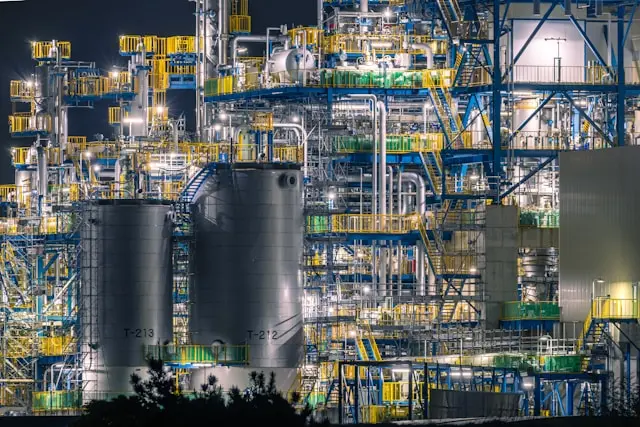
Kuwait's Mina Al Ahmadi Refinery completed its $16 billion Clean Fuel Project in 2022. The upgrade added residual fluid catalytic cracking units, expanded capacity to 466,000 barrels per day, and made the complex one of the Middle East's largest producers of low-sulphur fuel oil compliant with IMO 2020 standards. By every infrastructure metric, the refinery is a modern, world-class facility. By the metric that matters most to operational performance, it is running with a structural gap it cannot close through conventional hiring.
That gap is human capital. Specialised technical vacancies in hydrocracker operations, process safety, and digital systems exceed 12% across the complex. The refinery operates at roughly 92% of its design capacity, not because of mechanical constraints or feedstock limitations, but because the people required to run its most advanced units at full throughput are not available in sufficient numbers. The research points to a specific dynamic: infrastructure capability exists, but the workforce to match it does not. This creates what can only be described as hollow capacity.
What follows is a structured analysis of the forces shaping Al Ahmadi's talent market in 2026. It examines why Kuwaitisation mandates and OPEC+ economics collide with the demand for advanced technical skills, why compensation parity with the UAE is not preventing attrition, and what hiring leaders operating in this market need to understand about reaching the candidates who can close this gap.
The State-Dominated Employer Structure and What It Means for Hiring
Any senior leader approaching Kuwait's petroleum logistics market for the first time makes a predictable assumption: that private-sector bunkering, fuel trading, and terminal operations anchor the talent pool, as they do in Fujairah or Singapore. The assumption is wrong.
Al Ahmadi's refining and petroleum logistics sector is dominated by state-owned enterprises. The Kuwait National Petroleum Company (KNPC), a subsidiary of Kuwait Petroleum Corporation (KPC), owns and operates the refinery and terminal infrastructure. The Kuwait Oil Tanker Company (KOTC) runs the maritime terminal and a fleet of 32 vessels. KNPC alone employs approximately 6,800 staff across its two refineries, with 2,400 based specifically in Al Ahmadi operations.
Private-sector participation exists, but it is peripheral. Petrofac International holds maintenance contracts valued at $1.2 billion over five years. WorleyParsons and Técnicas Reunidas maintain engineering presences for Clean Fuel Project follow-on work. Al Mulla Group provides specialist cleaning and inspection services. Shipping agents including Kuwait Maritime Transport Company and Alghanim International handle non-KPC vessel clearances. But none of these firms control revenue-generating trading or bunkering operations. KPC holds the commercial monopoly.
What the Monopoly Means for Talent
This structure creates a hiring dynamic fundamentally different from liberalised petroleum markets. The talent pool is shaped by a single dominant employer's compensation framework, career progression timelines, and cultural norms. When KNPC sets a salary band for process engineers, that band effectively becomes the market rate. When KNPC imposes a bureaucratic hiring process, there is no private-sector alternative offering faster decisions.
EPC contractors can offer project-based premiums, but they cannot offer tenure. KNPC reports that its technical staff turnover is low in absolute terms, with average tenure exceeding seven years for terminal operations directors. But low turnover in a state monopoly is not the same as high retention. It often means that the professionals who would leave have already left, and those remaining are either committed to the system or constrained by sponsorship arrangements that limit their mobility. The result is a stable but ageing workforce, not a dynamic one.
The Hollow Capacity Problem: Infrastructure Without the Workforce
The original synthesis of this analysis is this: Kuwait invested $16 billion to modernise the physical infrastructure of Mina Al Ahmadi but did not make a corresponding investment in the human infrastructure required to operate it. Capital moved faster than human capital could follow, and the result is a refinery that is physically capable of 466,000 barrels per day but operationally constrained to 410,000 to 430,000 barrels per day in part because the specialists who run the most complex units are not available domestically and cannot be hired freely from abroad.
This is the hollow capacity phenomenon. The tanks exist. The hydrocracking units exist. The vapour recovery systems mandated by the Kuwait Environment Public Authority exist. What does not exist in sufficient quantity is the cadre of process safety engineers with RFCC experience, the automation engineers who can run the incoming advanced process control systems, and the carbon management specialists mandated by Kuwait's Paris Agreement commitments.
Approximately 35% of KNPC's technical workforce at Mina Al Ahmadi is over 50 years old and approaching retirement eligibility. The ratio of retiring experts to available local replacements is estimated at 3:1. Kuwait University's Petroleum Engineering programme produces roughly 85 graduates annually against a sector replacement demand estimated at 120 to 150 technical graduates per year. The arithmetic is straightforward. It does not close.
The Q2 2026 Turnaround Test
This gap will face its sharpest test in Q2 2026. KNPC has scheduled a major turnaround maintenance cycle for Units 33 and 37, its hydrocracker and continuous catalytic reformer, requiring an estimated 3,000 contract workers and reducing throughput by 40% for six weeks. Sourcing 3,000 qualified contract workers for a six-week intensive maintenance window in a market where the dominant employer already has 12% technical vacancies is not a routine procurement exercise. It is a stress test for the entire contracting ecosystem.
Recruitment firms serving the GCC report that process safety engineers with specific hydrocracker experience face typical vacancy durations of 90 to 120 days in this market. The regional average for general chemical engineers is 45 days, according to the Hays GCC Salary Guide 2025. The specialists needed for turnaround maintenance are not sitting on job boards waiting to be found.
Kuwaitisation: The Mandate That Narrows the Funnel
Kuwait's localisation policy requires 100% Kuwaiti staffing in administrative and supervisory oil sector roles. Technical roles are targeted at 50% localisation by 2027. KNPC reports current technical staff localisation at 42%.
These numbers create what industry observers describe as a talent sandwich. At the top, senior expatriate experts are retained at premium cost because no local replacements exist with equivalent depth of experience. At the bottom, entry-level positions are oversupplied with local graduates who hold the right nationality but lack the specialised skills that the post-CFP refinery requires. In the middle, technical roles face vacancies because the domestic graduate pipeline is insufficient and Kuwaitisation targets restrict the hiring of expatriates who could fill them.
The mandate is not unreasonable in its objective. National workforce development is a legitimate policy goal across the GCC. But the timeline creates a mismatch. A 50% localisation target for technical roles by 2027 requires a supply of technically qualified Kuwaiti professionals that the education system is not currently producing at scale. The College of Technological Studies and Kuwait Institute for Scientific Research supply technician-level talent, but the gap is at the engineer and senior specialist level, precisely where the hidden majority of candidates are passive and already employed elsewhere in the region.
For hiring leaders working with EPC contractors in this market, the practical effect is a narrowed funnel at every stage. The candidates you can legally hire are fewer than the candidates who are technically qualified. The candidates who are technically qualified and willing to relocate to Kuwait are fewer still.
Compensation Parity Is Not Preventing Attrition
The data on this point is striking. Kuwait offers tax-free compensation at parity or a 5 to 10% premium over UAE equivalents for senior petroleum logistics roles. KNPC itself pays a further 5 to 8% above private EPC contractors at the specialist and manager level to compensate for perceived bureaucracy. A senior process engineer in Al Ahmadi earns $95,000 to $130,000 in total annual package at the specialist level and $180,000 to $240,000 at the executive level, inclusive of housing allowances that typically represent 20 to 30% of base salary.
These are competitive numbers. They should, in theory, anchor talent.
They do not. LinkedIn workforce migration data for the GCC energy sector shows higher voluntary attrition from Kuwait to Dubai and Saudi Arabia than the salary differentials would predict, according to Mercer's 2024 remuneration survey. Professionals are leaving despite earning more, or at least equivalent amounts.
The Non-Monetary Calculus
The explanation lies in the non-monetary factors that Kuwait's compensation structure cannot offset. Dubai offers superior lifestyle flexibility, including international schooling density, social infrastructure, and increasingly common remote work policies. Marine superintendents with VLCC experience face a 60% offer rejection rate for shore-based roles at KOTC, with candidates preferring Dubai-based positions that offer schedule flexibility.
Saudi Arabia, under Vision 2030, has moved aggressively. Saudi Aramco and SABIC now offer 20 to 30% salary premiums over Kuwait for senior process engineers and terminal managers. But more critically, Saudi Arabia's social liberalisation and new entertainment zones have narrowed the historical lifestyle gap. Saudi Arabia also offers faster permanent residency pathways for skilled workers. Kuwait's kafala sponsorship system remains among the most restrictive in the GCC.
Qatar competes for marine logistics talent specifically, offering tax-free packages 12 to 18% above Kuwait equivalents for VLCC operations managers. The talent pool overlap is smaller due to Qatar's LNG focus, but for the marine logistics professionals Al Ahmadi needs, Ras Laffan is a direct competitor.
The cost of losing a senior hire in this context extends well beyond the replacement salary. When a process safety engineer with RFCC experience leaves for Jubail, the knowledge they carry is irreplaceable on any timeline shorter than years. Compensation is a necessary condition for retention. It is not a sufficient one.
The 2026 Demand Curve: What Is Coming and Who Needs to Fill It
Several converging developments will intensify hiring pressure through 2026 and into 2027. Each creates a distinct talent requirement that overlaps with, but is not identical to, the existing shortage.
Digitisation and the Refinery of the Future
KNPC's "Refinery of the Future" initiative will deploy advanced process control systems across Mina Al Ahmadi by Q4 2026. The programme is projected to reduce manual operator requirements by approximately 15%. That figure sounds like a headcount reduction. It is not. It is a headcount replacement. The operators who are no longer needed are not the same people as the automation engineers and data scientists who are newly required.
This is the pattern visible across industrial digitisation globally: automation does not shrink the workforce, it replaces one kind of worker with another that does not yet exist in sufficient numbers. In Al Ahmadi, where the existing technical workforce is already 35% over 50 and the domestic graduate pipeline cannot fill current vacancies, layering a demand for AI and technology specialists onto the existing gap compounds the problem materially.
Carbon Capture and Environmental Compliance
Kuwait's Nationally Determined Contributions under the Paris Agreement require a 7.4% reduction in greenhouse gas emissions by 2035. KNPC is mandated to install carbon capture feasibility studies at Mina Al Ahmadi by end of 2026, preemptively staffing carbon management roles. The challenge is that 90% or more of regional carbon capture talent is currently locked into Saudi Aramco or ADNOC projects, with recruitment lead times of six to nine months.
Simultaneously, the Kuwait Environment Public Authority's updated air quality standards, enforced from January 2025, require refineries to reduce sulphur dioxide emissions by 15% below 2022 baselines. KNPC has deployed $200 million in flaring reduction and vapour recovery systems to comply. But compliance technology requires compliance specialists. Environmental engineers with refinery-specific emissions monitoring experience represent yet another layer of demand on a talent pool already stretched thin.
Fleet Modernisation and Maritime Logistics
KOTC's fleet modernisation programme is adding four Very Large Crude Carriers by late 2026. This increases demand for marine superintendents, fleet operations managers, and shore-based logistics coordinators. The talent pool for these roles is predominantly passive. Terminal operations directors with 15 or more years of experience show average tenure of 7.2 years and a ratio of active to passive candidates estimated at 1:9.
A conventional job posting in this segment reaches, at best, one in ten qualified candidates. The other nine must be found through direct headhunting methodology that identifies and engages professionals who are not looking.
The Economic Constraints Tightening the Budget
The demand for talent is rising. The budget to acquire it is not.
OPEC+ production quotas capped Kuwait's crude output at approximately 2.413 million barrels per day in March 2025, against a national capacity of 3.0 million barrels per day. This constraint reduces throughput economics at Mina Al Ahmadi directly. KNPC deferred non-critical maintenance hiring and cut contractor budgets by approximately 8% in Q1 2025 in response to revenue constraints.
Product exports via Mina Al Ahmadi averaged 280,000 barrels per day in 2024, with Q1 2025 showing a 4% year-on-year decline due to compliance adjustments. The forecast assumes OPEC+ quota relaxation in H2 2026, which would push throughput to 450,000 barrels per day and storage turnover to 14 million barrels per month. But this is a projection contingent on geopolitical decisions outside any single company's control.
Political gridlock regarding the planned 615,000 barrel-per-day fourth refinery, the so-called New Refinery Project, has delayed final investment decisions since 2021. This uncertainty has prompted EPC contractors to relocate talent to Saudi Arabia's ongoing projects, where investment timelines are clearer and project pipelines are deeper. The talent pipeline that Al Ahmadi needs is being drawn to markets where the long-term commitment is more visible.
Meanwhile, $50 million in capital expenditure for real-time emissions monitoring at Mina Al Ahmadi is diverting operational budgets from expansion hiring to compliance technology. Ancillary logistics role headcount is effectively frozen through 2026.
The net effect: hiring leaders in Al Ahmadi must compete for scarcer talent with tighter budgets, against regional competitors who are spending more and offering more. This is not a market where posting a role and waiting for applications produces results.
What This Market Requires from a Search Strategy
The talent dynamics in Al Ahmadi's petroleum logistics sector present a specific and unusual challenge. The dominant employer is a state enterprise operating within Kuwaitisation constraints. The talent pool is overwhelmingly passive. Compensation is competitive on paper but insufficient in practice to overcome non-monetary attrition drivers. And the budget environment is tightening even as the demand for specialised skills accelerates.
In this environment, the conventional search approach, posting roles on job boards, screening inbound applications, and building shortlists from visible candidates, reaches a fraction of the qualified market. For senior process safety engineers, an estimated 75 to 80% of qualified candidates in Kuwait are passive. For terminal operations directors, the ratio of active to passive candidates is approximately 1:9. For carbon capture specialists, lead times of six to nine months are standard because the regional talent is locked into competitor projects.
The method that works in this market is executive search built on talent mapping. It means identifying every qualified professional in the GCC and adjacent markets who holds the specific technical credentials, mapping their current employer, tenure, and likely motivators, and engaging them directly with a proposition calibrated to what actually moves passive candidates in this sector. That proposition is not simply a higher salary. It is role scope, project significance, career trajectory, and the specific technical challenge the candidate cannot access in their current position.
KiTalent delivers interview-ready executive candidates within 7 to 10 days through AI-powered talent mapping that reaches the professionals who are not visible on any job board. In markets like Al Ahmadi, where traditional recruiting methods consistently fail to reach the right candidates, the difference between a search that finds passive specialists and one that only attracts active applicants is the difference between filling a role and watching it sit open for 120 days.
With a 96% one-year retention rate across 1,450 completed executive placements and a pay-per-interview model that eliminates upfront retainer risk, KiTalent is built for exactly this kind of constrained, high-stakes market.
For organisations hiring senior process engineers, terminal operations leaders, or carbon capture specialists in Kuwait's petroleum logistics sector, where every qualified candidate is already employed and the cost of a vacant role is measured in lost throughput and deferred compliance, speak with our executive search team about how we approach this market.
Frequently Asked Questions
What is the average time to fill a senior process safety engineer role in Al Ahmadi?
Roles requiring specific experience with residual fluid catalytic cracking units at Mina Al Ahmadi typically remain unfilled for 90 to 120 days. This compares to a 45-day regional average for general chemical engineers in the GCC. The extended timeline reflects the narrow candidate pool created by the Clean Fuel Project's specific technology requirements and Kuwaitisation constraints that limit expatriate hiring. Firms using direct headhunting rather than job advertising consistently shorten this cycle by engaging passive candidates before they enter the active market.
How does Kuwaitisation affect technical hiring in Kuwait's oil sector?
Kuwait mandates 100% Kuwaiti staffing in administrative and supervisory oil sector roles, with a target of 50% localisation for technical roles by 2027. KNPC's current technical localisation rate is 42%. This creates a structural constraint where senior expatriate specialists are retained at premium cost, mid-level roles face vacancies due to insufficient local graduates, and entry-level positions are oversupplied with local candidates lacking specialised skills. Hiring leaders must plan around these quotas when structuring any recruitment campaign.
What do senior petroleum logistics roles pay in Kuwait?
Compensation is tax-free and includes housing allowances of 20 to 30% of base salary. Senior specialist and manager-level process engineers earn $95,000 to $130,000 in total annual packages, rising to $180,000 to $240,000 at executive and VP level. Terminal operations and marine logistics roles command $90,000 to $125,000 at the senior specialist level and $170,000 to $230,000 at executive level. Candidates with dual competencies, such as process engineering combined with carbon capture expertise, command 15 to 20% premiums. KiTalent provides detailed compensation benchmarking for hiring leaders competing in this market.
Why are professionals leaving Kuwait for Dubai and Saudi Arabia despite competitive pay?
Non-monetary factors override compensation advantages. Dubai offers superior lifestyle infrastructure, international schooling, and increasingly flexible work arrangements. Saudi Arabia under Vision 2030 has narrowed the historical lifestyle gap while offering 20 to 30% salary premiums and faster permanent residency pathways. Kuwait's restrictive kafala sponsorship system and social constraints create attrition that salary adjustments alone cannot prevent. Retention strategies in this market require addressing total proposition, not just total compensation.
How does KiTalent approach executive search in Kuwait's petroleum sector?
KiTalent uses AI-powered talent mapping to identify and engage passive candidates who represent 75 to 90% of the qualified talent pool for senior petroleum logistics roles. In markets dominated by state employers and constrained by localisation mandates, conventional job postings reach only a fraction of available talent. KiTalent delivers interview-ready candidates within 7 to 10 days, with full pipeline transparency and weekly reporting. The pay-per-interview model eliminates upfront retainer risk, making it suited to markets where search timelines and outcomes are inherently uncertain.
What is the outlook for refining talent demand at Mina Al Ahmadi through 2026?
Demand will intensify across three fronts. The Q2 2026 turnaround maintenance of hydrocracker and reformer units requires approximately 3,000 contract workers. KNPC's Refinery of the Future digitisation programme creates new demand for automation engineers and data scientists. Carbon capture feasibility mandates add a third layer of specialist requirement. With 35% of the existing technical workforce over 50 and approaching retirement, the replacement challenge alone exceeds the domestic graduate pipeline by 40 to 65 positions per year.