Albany Built the Infrastructure for Offshore Wind. Now It Cannot Find the People to Run It
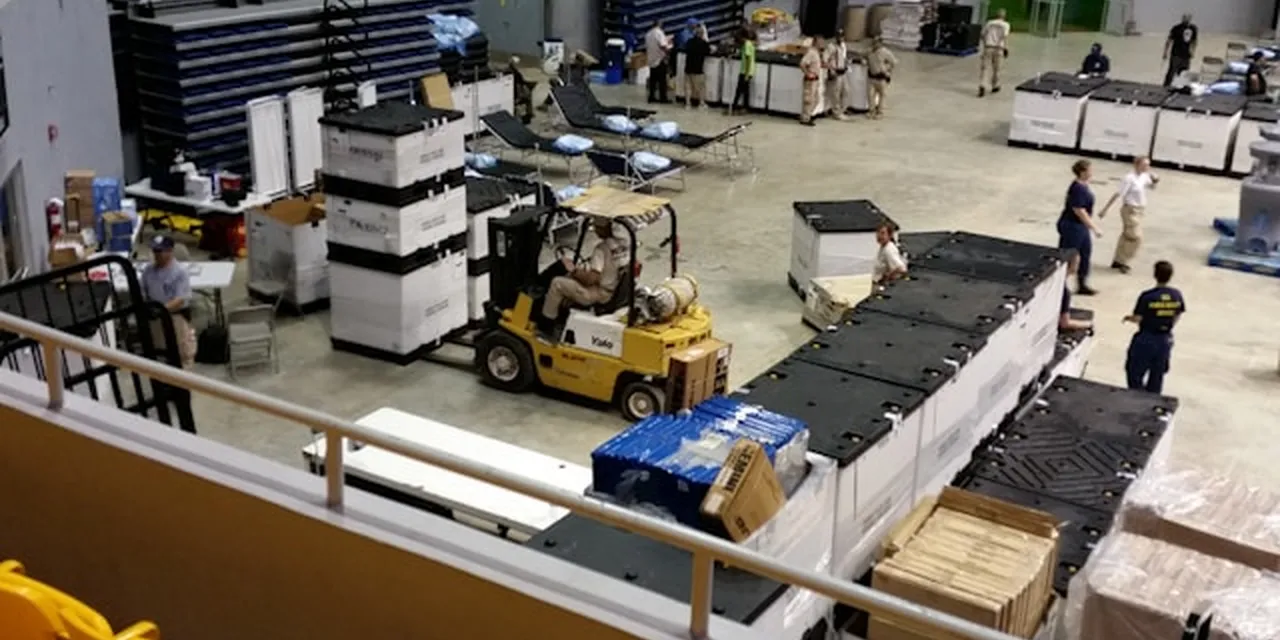
The Port of Albany spent $29.5 million reinforcing quays, building heavy-load laydown areas, and preparing a 32-acre staging facility for offshore wind turbine components. As of early 2026, that infrastructure sits at roughly 85% utilisation for wind energy staging. The physical capacity is real. The workforce to sustain it is not.
This is a market defined by a specific paradox. The Capital Region has invested heavily in becoming a critical node for renewable energy logistics along the upper Hudson River, while simultaneously facing acute shortages in the three categories of worker required to operate that node: certified heavy-lift crane operators, Class A CDL drivers with oversize load endorsements, and project logistics managers with offshore wind experience. The cancellation of Empire Wind 2 in October 2024 reduced projected wind-specific cargo throughput by an estimated 40%, creating a false impression that labour pressure had eased. It had not. The workers who remain employed in this niche are more sought-after than ever, and the pipeline to replace them does not exist at sufficient scale.
What follows is a detailed analysis of where Albany's port-centric manufacturing and logistics sector stands in 2026, why the talent shortages threatening it are unlike those in conventional freight markets, and what hiring leaders operating in this corridor need to understand about sourcing, compensation, and competitive dynamics before their next search fails.
The Port of Albany's Dual Identity and Why It Matters for Talent
The Port of Albany, operated by the Albany Port District Commission, is the only deep-water port on the upper Hudson River. That geographic fact shapes everything about its talent market and the hiring challenges within it. The facility maintains two distinct operational identities. The first is traditional bulk commodity handling: road salt for the New York State Department of Transportation (650,000 tons during the 2023-2024 season alone), cement through Lafarge's terminal, aggregates for regional infrastructure, and grain exports through Cargill's facility. This activity is stable, generates the majority of current revenue, and is projected to grow between 0% and 2% through 2026.
The second identity is newer and far more volatile. Since 2022, the Port has ramped up as a specialised logistics node for offshore wind energy components, with Titan Wind Energy International leasing 28 acres for turbine component staging and pre-assembly. This operation supports the Empire Wind 1 project, a joint venture between Equinor and BP with first power delivery expected in 2026. But Empire Wind 2's cancellation and the financial difficulties surrounding the Sunrise Wind project (Ørsted/Eversource) have cast long shadows over what comes next.
For hiring executives, this dual identity is the central complication. The bulk commodity side of the Port requires steady, experienced operators and managers who understand seasonal cycles and union labour coordination. The wind energy side requires a fundamentally different profile: project logistics professionals who can coordinate heavy civil construction, navigate renewable energy regulatory requirements, and manage specialised equipment that barely existed in this region five years ago. Both sides compete for the same limited pool of ILA-certified longshoremen and crane operators. Neither side can afford to lose.
Where the Shortages Are Most Acute
Crane Operators Who Do Not Exist in Sufficient Numbers
The most severe bottleneck in Albany's port operations is the shortage of mobile harbour crane operators certified on Liebherr LHM 600 equipment. This is not a general crane operator shortage. Operators with NCCCO certification and standard construction experience are findable, though not plentiful. What the Port needs are operators with that certification plus maritime-specific rigging experience and direct time on the equipment used for offshore wind component lifts. Nacelles weighing over 150,000 pounds require a handling precision that most industrial crane operators have never encountered.
The passive candidate rate for operators with 10 or more years of experience and specific Liebherr LHM 600 time is approximately 70%. These individuals do not apply for jobs. They move between employers through union hall dispatch or direct solicitation during contract renewals. A search conducted through conventional job advertising will miss the vast majority of them. This is a market where understanding how to identify and engage passive talent is not a competitive advantage. It is a prerequisite for having any candidates at all.
Compensation for these operators runs between $38 and $52 per hour under the ILA Local 1294 master agreement, translating to $79,000 to $108,000 annually before overtime and hazardous weather premiums. That rate represents a 35% to 45% premium over non-union regional warehouse workers. Under standard labour market assumptions, this premium should attract sufficient supply. It has not. The certification pipeline is simply too narrow, and the number of professionals who hold both the NCCCO credential and the maritime-specific experience is too small relative to demand across the entire Northeast wind corridor.
Heavy Haul Drivers and the 10-to-1 Problem
Class A CDL drivers with heavy haul endorsements for oversize loads represent the second critical shortage. Regional trucking contractors serving the Port report that positions requiring oversize load experience (loads up to 150,000 pounds for nacelles, with escort vehicle coordination) remain open for 90 to 120 days on average. Standard freight CDL positions fill in 45 to 60 days. The gap is not trivial. It represents operations that cannot move at the pace the Port's clients require.
According to data cited by the Albany Business Review, for every ten applicants for standard flatbed positions, approximately one possesses the oversized load experience required for wind turbine blade transport. This 10-to-1 ratio means that the Port and its contractors are fishing in a pool one-tenth the size of the general freight driver market, while competing with every other wind staging facility on the Eastern Seaboard for the same candidates.
Project Logistics Managers Who Keep Getting Poached
The third shortage is at the management level, and it is driven less by training pipeline constraints than by competitive poaching. Offshore wind project logistics managers combine maritime logistics knowledge, heavy civil construction coordination skills, and familiarity with renewable energy regulatory compliance. This hybrid profile barely existed as a career path before 2020. The professionals who have assembled this combination of skills through direct project experience are extraordinarily valuable and extraordinarily mobile.
Industry sources indicate that experienced Project Logistics Managers with offshore wind credentials are routinely recruited by competitors in New York City and Boston at salary premiums of 20% to 35% above Albany rates. The pattern is consistent across the sector: an Albany-area stevedoring contractor loses a Director of Operations to a South Brooklyn Marine Terminal logistics provider, triggering a six-month replacement search and requiring interim outsourcing of safety compliance functions in the meantime.
The cost of that single departure extends well beyond the replacement search fee. It includes the interim outsourcing costs, the productivity loss during the transition, and the institutional knowledge that walks out the door. For organisations already operating in a market where the cost of a failed or delayed executive hire compounds rapidly, this pattern demands a fundamentally different approach to both recruitment and retention.
The Infrastructure Paradox: Why $29.5 Million Did Not Solve the Problem
Here is the analytical claim that sits at the centre of Albany's talent challenge and is not visible from any single data point alone: the Port of Albany's infrastructure investment and its workforce crisis are not separate problems occurring simultaneously. The infrastructure investment actively deepened the workforce crisis by creating demand for roles that the regional labour market was never equipped to supply.
Before NYSERDA's $29.5 million grant funded reinforced laydown areas and heavy-load bearing quays, the Port operated primarily as a bulk commodity facility. The workforce it required was experienced but conventional: longshoremen, terminal managers, equipment operators trained on standard port cargo. The infrastructure buildout created an entirely new category of demand, one that requires certifications, experience sets, and industry knowledge that the Capital Region had no mechanism to produce. The region's vocational training programmes, community colleges, and apprenticeship pipelines were built around traditional freight and warehousing. They were not redesigned to produce NCCCO-certified crane operators with maritime rigging specialisms or project logistics managers fluent in offshore wind regulatory frameworks.
The result is a market where physical capacity has outrun human capacity. The Port can handle the components. It cannot consistently staff the operations that handle them. And because the offshore wind projects that were supposed to generate sustained demand (Empire Wind 2, potentially Sunrise Wind) have either been cancelled or remain in financial limbo, there is insufficient long-term demand certainty to justify the multi-year training investments that would eventually close the gap.
This is not a temporary mismatch. It is a foundational design flaw in how the region approached its energy transition. Infrastructure dollars flowed years ahead of workforce development dollars, and the lag has become the binding constraint.
Compensation Realities Across the Port's Talent Tiers
Understanding what it costs to hire in this market requires distinguishing between three distinct compensation tiers, each governed by different dynamics.
At the operational specialist level, union wage scales set the floor. ILA Local 1294's master agreement provides crane operators with $38 to $52 per hour, with overtime and hazardous weather premiums pushing total annual compensation toward $108,000 or higher during peak wind component operations. These rates are not negotiable at the individual level. They are collectively bargained and apply uniformly. The implication for hiring is that you cannot outbid a competitor for a union crane operator by offering more money. You must offer something else: schedule certainty, project duration guarantees, or the prospect of upward mobility.
At the management level, Terminal Operations Managers in the Albany MSA command $95,000 to $125,000 in base salary with a 10% to 15% performance bonus. Project Logistics Managers in renewable energy roles sit slightly lower, at $88,000 to $115,000 base. These figures are competitive within the Capital Region (cost of living at 98.5% of the national average) but are sharply undercut by offers from New York City and Boston competitors. A compensation benchmarking exercise that looks only at the Albany MSA will produce misleading results, because the relevant competitive set includes employers in markets where identical roles pay 25% to 40% more.
At the executive level, Vice Presidents of Operations at port-scale facilities earn $165,000 to $210,000 base with 25% to 35% bonus potential and long-term incentive plans. Directors of Renewable Energy Logistics at tenant firms like Titan Wind or comparable organisations command $145,000 to $190,000 base, sometimes with equity participation tied to project success fees. These ranges are derived from similar-sized port authorities and logistics firms nationally, adjusted for Albany's cost structure.
The competitive tension is clearest at the management and executive tiers. A senior logistics professional in Albany earning $120,000 can be approached by a South Brooklyn Marine Terminal employer offering $155,000 to $165,000. The Albany employer's counter-proposition must rely on factors other than base compensation: quality of life, cost of living advantage, reduced commute, project variety. This is a market where the risks of counteroffers and the dynamics of candidate retention play out with particular intensity.
The Competitive Geography Squeezing Albany's Talent Pool
Albany does not operate in a vacuum. It competes for specialised maritime and logistics talent against at least three other port facilities in the Northeast, each with distinct advantages.
The South Brooklyn Marine Terminal in New York City is the most aggressive competitor. SBMT offers proximity to Long Island offshore wind project sites, access to New York City's deeper general talent pool, and compensation premiums of 25% to 40% above Albany rates. For a senior project manager considering two offers, the SBMT proposition is straightforward: more money, closer to the project site, broader career network. Albany's counter-argument (lower cost of living, shorter commute, less congestion) is real but less immediately compelling, particularly for professionals in their thirties and forties who prioritise career acceleration over lifestyle.
New London, Connecticut's State Pier is a more direct competitor. It pursues the same offshore wind staging contracts and therefore requires the same specialised stevedoring and project management talent. New London offers a similar cost-of-living profile to Albany but with newer infrastructure following its pier reconstruction in 2023. According to regional staffing analyses, New London has successfully attracted mid-level logistics coordinators from Albany-based firms with offers of 15% to 20% salary increases and guaranteed project duration contracts. The duration guarantee is a particularly effective tool in a market where project cancellations have made workers anxious about continuity.
Providence, Rhode Island and Newark, New Jersey compete for bulk commodity and general maritime logistics talent. These ports offer larger-scale operations and more diverse career trajectories, including paths into international shipping lines. Providence has specifically targeted Albany's ILA-trained crane operators with direct recruitment campaigns. When a crane operator with 15 years of experience and Liebherr LHM 600 certification leaves Albany for Providence, that is not one vacancy. That is a capability gap that may take a year or more to fill.
For organisations considering how to source executive-level talent across multiple competing geographies, the lesson is clear. Albany-based employers cannot rely on local candidate pools alone. They must be prepared to recruit nationally and to articulate a value proposition that extends beyond compensation.
Regulatory and Structural Risks That Compound the Hiring Challenge
The talent shortage does not exist in isolation. It operates within a regulatory and structural environment that constrains how quickly the Port can adapt.
Federal policy uncertainty is the most consequential risk factor. The current administration's review of offshore wind permitting creates visibility gaps that ripple directly into workforce planning. If Empire Wind 1 maintains its revised timeline, Albany will see sustained demand for heavy-lift operations through mid-2026. But the absence of committed follow-on projects creates what the Port's own strategic planning documents describe as a potential "air pocket" in renewable logistics demand beginning in late 2026. According to S&P Global's analysis of US offshore wind pipeline risks, this uncertainty is not Albany-specific. It affects every staging port on the Eastern Seaboard.
The Hudson River's designation as a federally protected spawning ground for endangered sturgeon imposes seasonal restrictions on dredging and infrastructure maintenance. These restrictions are not new, but they interact with the talent challenge in a specific way: they compress the available construction and maintenance windows, which concentrates labour demand into shorter periods and intensifies competition for certified workers during those windows.
Rail capacity constraints with CSX Transportation, the Port's primary rail link, add logistical cost. The Port lacks direct on-dock rail for heavy wind components, requiring drayage to off-site transloading facilities at an additional cost of $800 to $1,200 per component. This is an infrastructure limitation, not a talent limitation. But it makes the talent shortage worse indirectly, because it increases the number of heavy haul truck movements required per wind component, which in turn increases the demand for the Class A CDL drivers with oversize load endorsements who are already in critically short supply.
The ILA labour structure itself presents a double-edged dynamic. Union representation ensures a skilled, certified workforce and provides wage stability that benefits long-term retention. But work rules requiring minimum gang sizes of six to eight workers for heavy lift operations make Albany less cost-competitive for smaller break-bulk cargoes compared to non-union ports. This limits the Port's ability to diversify its revenue base in ways that might attract a broader range of workers and provide more consistent year-round employment.
What This Means for Hiring Executives Operating in Albany's Port Corridor
The implications for organisations hiring in this market are specific and consequential.
First, speed matters disproportionately. The Capital Region's warehousing and transportation sector posted 2,847 open positions in Q4 2024, a 12% year-over-year increase. Specialised freight and heavy equipment operation roles showed a median time-to-fill of 68 days. In a market this tight, a search process that takes four months to produce a shortlist is not just slow. It is strategically damaging. The strongest candidates, particularly at the management and executive level, are being approached by competitors in New York City, New London, and Providence simultaneously. A process that moves in weeks rather than months is the difference between hiring the candidate you want and watching them accept an offer elsewhere.
Second, the passive candidate dynamic is not optional information. At the director and VP level in offshore wind logistics, 85% to 90% of professionals with relevant experience are passively employed, with average tenure exceeding 4.2 years. They are not on job boards. They are not responding to LinkedIn InMail from internal recruiters. Reaching them requires direct headhunting methodology and AI-enhanced talent mapping that identifies where they sit, what would motivate a move, and what competing offers they are likely to receive.
Third, the value proposition must be explicit and differentiated. Albany's cost-of-living advantage (98.5% of the national average versus 189% for Manhattan/Brooklyn) is genuine but insufficient on its own. Candidates considering Albany against a New York City or Boston offer need to see a clear career trajectory, project pipeline certainty (or at least honest transparency about pipeline risks), and a compensation package that closes enough of the gap to make the lifestyle argument viable. Organisations that understand how to structure an executive offer beyond base salary have a material advantage in this market.
Fourth, the diversification question looms. The Port's strategic plan includes exploration of decommissioning logistics for ageing onshore wind farms and hydrogen fuel cell component handling. These are early-stage opportunities, but they signal the direction of future talent demand. Hiring leaders who are filling roles today should be thinking about whether the candidates they hire have the adaptability to pivot as the Port's cargo mix evolves. A Terminal Operations Manager hired solely for bulk commodity expertise may not be the right leader if hydrogen logistics becomes a meaningful revenue stream within three to five years. Building a talent pipeline that accounts for this evolution is not premature. It is prudent.
How KiTalent Approaches Markets Like Albany's Port Corridor
Albany's port-centric manufacturing and logistics sector presents a challenge that conventional recruitment cannot solve. The candidates are passive. The certifications are rare. The competing geographies are aggressive. And the search window is shorter than most organisations realise.
KiTalent's approach to executive hiring in industrial and manufacturing sectors is built for exactly this type of market. Using AI-powered talent mapping, KiTalent identifies the passive professionals who hold the specific combination of certifications, project experience, and industry knowledge that Albany's employers require. Interview-ready candidates are delivered within 7 to 10 days, with a pay-per-interview model that eliminates the upfront retainer risk. Clients pay only when they meet qualified candidates.
The results speak through retention. KiTalent maintains a 96% one-year retention rate across over 1,450 executive placements, with an average client relationship exceeding eight years. In a market where a single departure can trigger a six-month replacement search and interim outsourcing costs, that retention rate is not a statistic. It is the difference between operational continuity and operational disruption.
For organisations competing for heavy manufacturing leadership, port operations executives, and renewable energy logistics talent in Albany's corridor, where the strongest candidates are invisible to job boards and the cost of delay is measured in idle infrastructure and lost contracts, start a conversation with KiTalent's executive search team about how we identify and deliver the leaders this market demands.
Frequently Asked Questions
What types of roles are hardest to fill at the Port of Albany?
Three categories present the most acute shortages: mobile harbour crane operators with NCCCO certification and Liebherr LHM 600 experience, Class A CDL drivers with heavy haul and oversize load endorsements, and project logistics managers with offshore wind credentials. Crane operators and logistics managers at the senior level are predominantly passive candidates who do not respond to job postings. Heavy haul driver positions remain open 90 to 120 days on average, compared to 45 to 60 days for standard freight roles. The common thread is that each role requires a specific certification or experience set that the regional training pipeline does not produce at scale.
How does Albany's port talent market compare to other Northeast ports?
Albany competes directly with South Brooklyn Marine Terminal, New London (Connecticut), Providence, and Newark for specialised maritime and logistics talent. SBMT offers 25% to 40% salary premiums above Albany rates, while New London attracts mid-level coordinators with 15% to 20% increases and project duration guarantees. Albany's advantage is cost of living at 98.5% of the national average, significantly below New York City's 189%. However, this advantage alone is insufficient at the senior level, where career trajectory and project pipeline certainty carry equal weight. Effective talent mapping across these competing geographies is essential for any serious search.
What is the salary range for senior port operations executives in Albany?
Vice Presidents of Operations at port-scale facilities in the Albany MSA command $165,000 to $210,000 in base salary with 25% to 35% bonus potential and long-term incentive plans. Terminal Operations Managers earn $95,000 to $125,000 base with 10% to 15% performance bonuses. Directors of Renewable Energy Logistics at tenant firms earn $145,000 to $190,000 base, sometimes with project-linked equity participation. These ranges are competitive within the Capital Region but sit materially below equivalent roles in New York City and Boston.
How does offshore wind project uncertainty affect hiring at the Port of Albany?
The cancellation of Empire Wind 2 in October 2024 reduced projected wind-specific cargo throughput by an estimated 40%. Sunrise Wind remains in financial and regulatory uncertainty. If Empire Wind 1 maintains its revised timeline, heavy-lift demand should sustain through mid-2026, but the absence of follow-on project commitments creates a potential gap in renewable logistics demand beginning late 2026. This uncertainty makes it harder to recruit senior professionals who want career stability. It also makes the executive search process more complex, because candidates must be assessed not only for current project needs but for adaptability as the Port's cargo mix potentially shifts.
Why do traditional recruitment methods fail in Albany's port sector?
At the senior and executive level in port operations and offshore wind logistics, 85% to 90% of qualified professionals are passively employed with average tenure exceeding 4.2 years. They do not apply to posted vacancies. Crane operators with the required maritime certifications move through union dispatch or direct solicitation, not job boards. The 10-to-1 ratio of standard freight applicants to heavy haul qualified candidates means that volume-based recruitment strategies produce almost no viable results. Success in this market requires direct identification and engagement of passive candidates through targeted search methodology, not advertising.
What should hiring leaders know about union labour dynamics at the Port of Albany?
ILA Locals 1294 and 1318 control the skilled labour supply for vessel operations at the Port of Albany. The union structure ensures certified, experienced workers and provides wage stability. However, work rules requiring minimum gang sizes of six to eight workers for heavy lift operations affect cost competitiveness. Wage scales are collectively bargained and not individually negotiable, which means employers cannot differentiate on compensation alone. Retention strategies must focus on schedule certainty, career development, and project continuity. Understanding these dynamics before entering a search prevents common executive recruiting failures that stem from misreading how labour supply actually functions in unionised port environments.