Albuquerque's Billion-Dollar Film Boom Has a Workforce It Cannot Fill
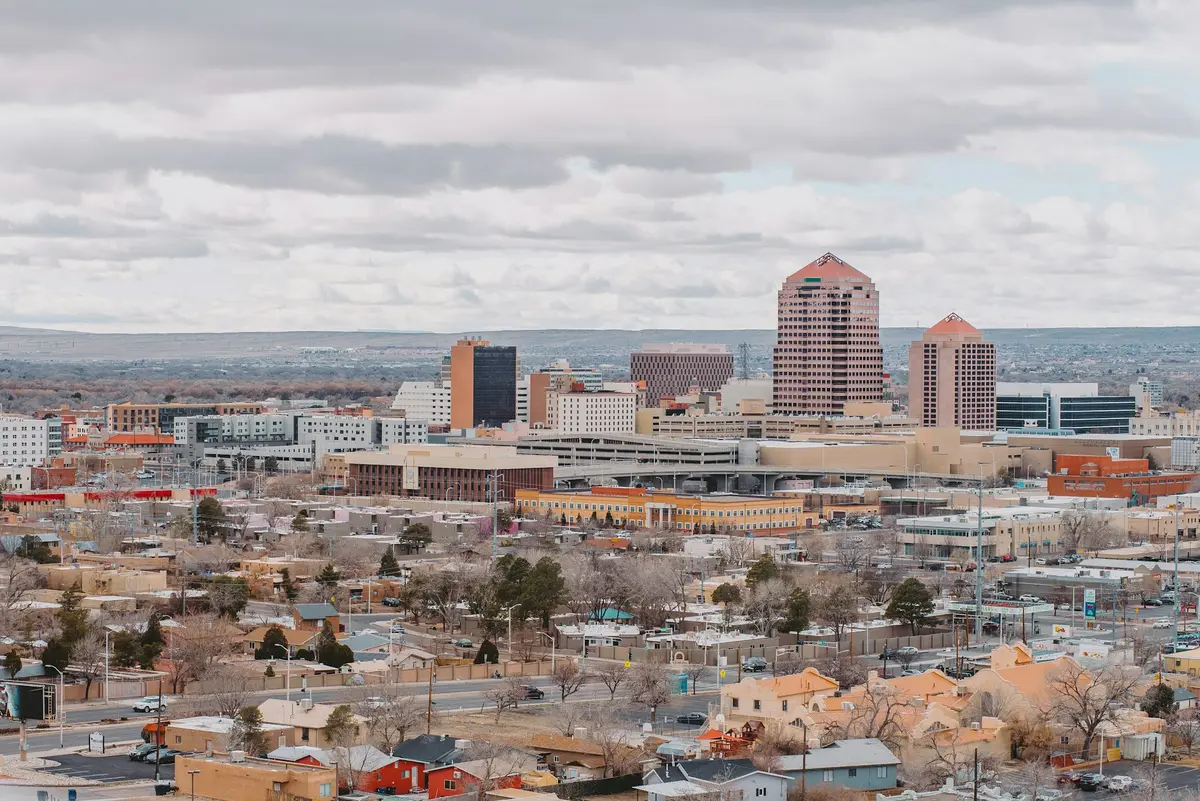
Albuquerque's film and television production sector crossed $1 billion in direct spending in Fiscal Year 2024. That figure represented a 12% year-over-year increase and cemented the city as the fastest-growing major production hub in the United States outside of Atlanta. Netflix operates nine sound stages at ABQ Studios at near-full occupancy. NBCUniversal is building a $500 million complex at Mesa del Sol. The infrastructure story is unambiguous: capital is flowing into Albuquerque's creative economy at a pace that would have been unthinkable a decade ago.
The talent story tells the opposite. The New Mexico Film Office confirmed that it declined or deferred an estimated $200 to $300 million in potential productions during FY2024 because it could not secure sufficient crew. IATSE Local 480, the union that supplies the vast majority of the market's trained technicians, has approximately 2,000 members. NBCUniversal's facility alone projects the creation of 1,000 jobs. The arithmetic does not work. Albuquerque is building a production market that requires roughly twice the workforce it currently has, and the professionals it needs most are already employed on existing productions with no reason to move.
What follows is a ground-level analysis of the specific roles driving this shortage, the compensation dynamics that are quietly eroding New Mexico's tax credit advantage, and the reasons why traditional hiring methods consistently fail in a market where 90% of qualified candidates are already working. For hiring executives responsible for staffing productions or filling permanent studio roles in this market, the implications are immediate and consequential.
A Record Year That Exposed the Ceiling
The $1.06 billion in direct production spending the New Mexico Film Office reported for FY2024 was not simply a milestone. It was a stress test. Albuquerque accounted for approximately 78% of that total, concentrating the state's production activity into a single metropolitan area with a labour pool that was built for a fraction of the current demand.
Netflix's ABQ Studios is the centre of gravity. The facility operates 170,000 square feet of sound stage space and employs approximately 400 full-time equivalent workers in technical and administrative roles. During concurrent productions, seasonal peaks push that number above 1,200. Stranger Things Season 5 alone absorbed a meaningful share of the market's most experienced department heads. According to Variety's industry analysis in December 2024, Netflix has secured multi-year exclusive retainers with approximately 15 senior department heads at ABQ Studios, including key grips and gaffers. That arrangement keeps these professionals off the available market entirely.
The effect is a zero-sum labour environment. When one major production locks up the most experienced electricians and grips, competing productions do not face a harder search. They face an impossible one. The New Mexico Film Office publicly confirmed, as reported by The Hollywood Reporter in April 2024, that it declined three major streaming series with budgets exceeding $50 million each in Q2 2024 because key departments could not be crewed. The lost direct spending from those three projects alone was approximately $150 million.
This is not a temporary bottleneck caused by an unusually busy quarter. It is the structural condition of a market where facility investment has outrun workforce development by several years.
NBCUniversal's Arrival Doubles the Demand Without Doubling the Supply
NBCUniversal announced its $500 million investment in October 2024. The Mesa del Sol complex is projected to offer four sound stages when partial operations begin in Q4 2026, with full build-out extending to 2028. The company has committed to hiring 200 permanent staff by end of 2026, with the remaining 800 positions contingent on production volume.
The Arithmetic That State Projections Ignore
The scale of the gap becomes clear when you set the numbers side by side. IATSE Local 480's total membership is approximately 2,000 technicians. Netflix's ABQ Studios absorbs between 400 and 1,200 of those workers at any given time, depending on production schedules. NBCUniversal's facility, at full capacity, would require staffing equivalent to 50% of the current available workforce. These two anchor employers alone would need more workers than exist in the entire local union.
The New Mexico Economic Development Department's Strategic Plan for 2025 to 2027 projects $1.2 to $1.4 billion in direct spending for FY2026, contingent on resolving crew shortages. Yet neither the state's economic projections nor NBCUniversal's public impact statements account for the fundamental constraint: the workers do not exist in sufficient numbers, the housing stock cannot absorb rapid in-migration, and the training pipeline operates on a timeline measured in years, not quarters.
What This Means for Production Schedules
The practical consequence for hiring leaders is straightforward. Any production planning to shoot in Albuquerque during 2026 or 2027 will compete with two anchor studios for the same finite pool of qualified crew. The City of Albuquerque has allocated $15 million in infrastructure bonds for film corridor improvements, including enhanced road access to the Mesa del Sol production zone. Roads, however, do not solve the problem. Stage space without electricians is a warehouse.
For studios and production companies evaluating Albuquerque as a location, the decision now involves a labour strategy, not just a facilities strategy. The organisations that secure crew early will be the organisations that shoot on schedule. The rest will defer, relocate, or accept delays that erode the financial advantage that brought them to New Mexico in the first place.
The Roles That Are Hardest to Staff
The shortages are not evenly distributed. Three categories of roles account for the majority of the constraint, and each operates under different labour market dynamics.
Set Lighting Technicians and Electricians
Demand for set electricians exceeds supply by approximately 40% during peak production windows, according to the New Mexico Film Office's 2024 Workforce Analysis. These are not entry-level positions. A qualified set electrician on a major streaming production needs years of on-set experience, familiarity with union protocols, and increasingly, training in LED volume operation for virtual production stages. The training pipeline for these roles runs through IATSE Local 480 apprenticeships, which produce new technicians at a pace calibrated for a market that was half its current size.
Local wages for key grips and electricians have risen 18% since 2022, according to IATSE Local 480 wage records. Atlanta, by contrast, has seen wages remain relatively flat over the same period. The wage inflation is a direct symptom of scarcity, but it also carries a secondary consequence explored later in this article.
VFX Supervisors and Post-Production Leadership
VFX supervisors sit at the intersection of technical expertise and creative leadership. The Visual Effects Society's 2024 Salary Survey places facility-based roles at $150,000 to $250,000 annually, with executive-level positions commanding $300,000 to $500,000. Albuquerque-based roles are offering 10 to 15% premiums over historical New Mexico rates to compete with Atlanta, according to recruiting firm reports cited in Animation Magazine.
Approximately 80% of qualified VFX supervisors are passive candidates, already employed on current productions and recruited through direct outreach rather than job postings. Los Angeles retains 85% of U.S. VFX supervision roles, meaning Albuquerque productions must either persuade LA-based talent to relocate or pay premium location rates. Most choose the latter, which increases per-production costs without building the local talent base.
Line Producers With New Mexico Tax Credit Expertise
This is the most constrained category in the market. Only an estimated 50 to 75 line producers in the United States possess deep expertise in New Mexico's specific tax credit application process and local vendor networks. Virtually all of them are employed at any given time. The passive candidate ratio for this role is 95%.
According to The Hollywood Reporter's reporting in April 2024, studios are offering retention bonuses of $25,000 to $50,000 to prevent these specialists from being recruited away. The tax credit itself is the draw for productions, but the credit is complex enough that it requires a specialist to administer efficiently. A line producer unfamiliar with the New Mexico process risks leaving millions of dollars on the table through filing errors or missed deadlines.
The scarcity of these specialists is, in a meaningful sense, the bottleneck behind the bottleneck. Without an experienced line producer, a production cannot fully capture the financial advantage that justified choosing Albuquerque over Atlanta.
New Mexico's Tax Credit Advantage Is Quietly Shrinking
New Mexico's incentive structure is the primary economic engine behind Albuquerque's production growth. The state offers a 30% refundable tax credit for television series and 25% for feature films, with an additional 5% available for productions using Qualified Production Facilities. The effective maximum of 35% is the most generous refundable credit among major U.S. production states.
But the headline number is misleading when considered without labour cost dynamics.
The 35% credit competes directly with Georgia's 30% transferable credit. That five-percentage-point advantage has historically been the decisive factor for productions choosing Albuquerque over Atlanta. The calculation, however, assumed stable labour costs. Local wages for key technical positions have been rising at 6 to 8% annually. If this trajectory continues, the labour cost differential will effectively consume three to four percentage points of the tax credit advantage by 2027.
This is the original synthesis this article presents: Albuquerque's tax credit advantage is being consumed from within by the very scarcity that the credit was designed to exploit. The credit attracts productions, which creates demand for crew, which drives up wages, which erodes the cost advantage that attracted the productions in the first place. State economic development materials continue to market the 35% credit as a static competitive edge. It is not static. It is a wasting asset whose real value decreases with every year that the workforce gap remains unresolved.
The tax credit cap adds another layer of fragility. New Mexico maintains an annual aggregate cap of $110 million on film tax credits. In FY2024, applications exceeded this cap by June, forcing productions to defer credits to FY2025. Legislative proposals to raise the cap to $150 million remain pending but unenacted. A production that plans around the credit and then cannot access it in the fiscal year it shoots faces a material budget shortfall. The credit's reliability, not just its generosity, is becoming a planning risk.
The Competitive Market for Mobile Crew
Albuquerque does not exist in isolation. It competes for the same mobile below-the-line crew as Atlanta and Austin, and the competition is sharpening.
Atlanta's IATSE membership exceeds 12,000, roughly six times the size of Albuquerque's local. Georgia's 30% transferable credit is less generous than New Mexico's refundable credit, but Atlanta offers something Albuquerque cannot match: depth. A production company staffing a major series in Atlanta has access to a bench of experienced crew that allows for substitution, scheduling flexibility, and contingency planning. In Albuquerque, a single key grip's illness can cascade into a production-wide delay because there is no replacement available locally.
Atlanta also offers 15 to 20% higher wages for equivalent electric and grip positions, according to IATSE's 2024 Comparative Wage Analysis. Albuquerque's cost of living is 12% lower than Atlanta's, which narrows the net compensation gap for workers. But the net calculation includes a factor that does not appear on any rate card: career continuity. Atlanta offers more continuous work across more concurrent productions. Albuquerque's project-based peaks create employment gaps that experienced technicians increasingly choose to avoid.
Austin presents a different kind of competition. Texas's 22.5% cash grant is the lowest among the three markets, but the state imposes no income tax, creating an effective 5 to 8% compensation advantage for high-earning department heads. Austin also offers more diverse commercial, music video, and branded content work, providing the year-round employment stability that Albuquerque's seasonal production cycles cannot guarantee.
For production companies planning to staff a major project in Albuquerque, the competitive reality is this: the crew members you need are receiving offers from markets that pay more, offer more continuity, and require less disruption. Persuading them to come to Albuquerque requires a proposition that addresses all three factors simultaneously.
Structural Constraints Beyond the Labour Shortage
The crew shortage is the most visible constraint on Albuquerque's film sector, but it operates alongside several other factors that hiring leaders and production executives must account for.
Housing and Cost of Living Pressure
Film industry migration has contributed to a 9.8% year-over-year increase in Albuquerque rental rates, according to CBRE's Q3 2024 New Mexico Multifamily Report. Production companies are increasingly renting entire apartment complexes for crew housing, a practice that removes residential units from the general market. The influx of workers earning $80,000 to $150,000 annually for technical roles is pricing out local service workers, creating secondary labour shortages in the hospitality and construction sectors that support film infrastructure.
This is not an abstract equity concern. It is a practical hiring constraint. A production that brings 200 crew members to Albuquerque for a six-month shoot needs those crew members to find housing they can afford. If the housing market is too tight, the production either subsidises accommodation directly, adding cost, or loses candidates to markets where relocation is simpler.
Water Scarcity and Permitting Risk
Albuquerque's production infrastructure operates under water use restrictions governed by the Colorado River Compact. Productions requiring high water usage for practical effects face permitting delays during drought conditions. Fifteen percent of FY2024 productions were affected by water-related scheduling disruptions, according to the Albuquerque Bernalillo County Water Utility Authority. For period-piece productions, which are among the highest-budget projects the market attracts, this represents a planning risk that does not exist in Atlanta or Los Angeles.
The Dual Labour Market
New Mexico's "right-to-work" status creates jurisdictional friction with IATSE Local 480's exclusive jurisdiction claims. Non-union productions, including commercials and reality television, sometimes utilise non-Local 480 crew. This creates a dual labour market that fragments the training pipeline. Workers trained on non-union commercial shoots do not accumulate the union hours required for IATSE membership, which means they remain invisible to major studio productions that hire exclusively through the union referral system. The dual market makes the available workforce appear smaller than it actually is, while simultaneously preventing non-union workers from gaining the credentials needed to fill the gap.
What This Market Requires From Hiring Leaders
The pattern across every role category in Albuquerque's film production sector is the same: the professionals who can do the work are already working. Ninety percent of qualified department heads are employed on existing productions. The most critical specialists, line producers with New Mexico tax credit expertise, are 95% passive. Job postings for department head positions on public boards remain active for 45 to 60 days with few qualified applicants, according to industry data reported by Variety.
This is not a market where better job advertising solves the problem. The 80% of senior talent that never appears on a job board represents an even higher proportion in entertainment production, where relationships and referral networks have always been the primary hiring mechanism. What has changed is that those referral networks are now saturated. IATSE Local 480's referral lists point to the same overcommitted professionals that every other production is trying to book.
The organisations successfully staffing productions in Albuquerque in 2026 share a common approach. They begin crew recruitment months before a production is greenlit, not after. They treat crew planning as a strategic function with the same rigour applied to executive talent pipeline development in any other sector. They invest in relationships with specific department heads years before they need them.
For permanent studio roles, the challenge is different but equally acute. NBCUniversal's 200 permanent positions by end of 2026 include facilities management, engineering, and production operations roles that require both technical expertise and the ability to operate within a studio environment that runs multiple productions concurrently. These are executive and senior specialist searches that require identification and engagement of passive candidates, most of whom are currently employed at competing studios in Atlanta or Los Angeles with no active intention to relocate.
The cost of making the wrong hire in this environment is not measured in recruitment fees. It is measured in production days lost, schedule overruns, and the downstream financial impact of a delayed shoot in a market where every week of delay represents six-figure cost escalation.
How KiTalent Approaches This Market
Albuquerque's film production hiring challenge is defined by a specific set of conditions: an exceptionally high passive candidate ratio, a small and geographically concentrated labour pool, compensation structures that vary by project rather than by company, and a competitive environment where the same candidates are being pursued by multiple employers simultaneously.
KiTalent's AI-enhanced direct headhunting methodology is built for precisely this type of market. Rather than waiting for candidates to appear on job boards, our talent mapping process identifies the specific professionals who match a role's requirements, maps their current employment status, and engages them directly. In a market where 90 to 95% of qualified candidates are passive, this is not one approach among many. It is the only approach that works.
Our pay-per-interview model means production companies and studios pay nothing until they meet a qualified candidate. In an industry where budgets are managed to the day and unplanned expenditures cascade through production schedules, this structure eliminates the financial risk of a search that does not deliver. KiTalent delivers interview-ready candidates within 7 to 10 days, with a 96% one-year retention rate across 1,450 completed executive placements.
For organisations competing for senior leadership in entertainment and creative industries, where the candidates you need are employed on someone else's production and the window to engage them may last only days, start a conversation with our executive search team about how we identify, reach, and move the talent this market cannot surface through conventional methods.
Frequently Asked Questions
Why is there a film crew shortage in Albuquerque in 2026?
Albuquerque's film production spending exceeded $1 billion in FY2024, but IATSE Local 480's membership of approximately 2,000 technicians has not grown at the same pace. Netflix's ABQ Studios absorbs up to 1,200 workers during peak production, and NBCUniversal's new facility projects an additional 1,000 jobs by full build-out. The training pipeline produces new technicians too slowly to close this gap. The result is a market where facility investment has outrun workforce capacity, forcing the New Mexico Film Office to turn away an estimated $200 to $300 million in productions during FY2024 alone.
What are the hardest film production roles to fill in Albuquerque?
The three most acute shortages are set lighting technicians and electricians, where demand exceeds supply by 40% during peak windows; VFX supervisors, who command $150,000 to $500,000 annually and are 80% passive; and line producers with New Mexico tax credit expertise, of whom only an estimated 50 to 75 exist nationally with a 95% passive ratio. These roles cannot be filled through job postings because qualified candidates are already employed on existing productions.
How does New Mexico's film tax credit compare to Georgia's?
New Mexico offers a 30% refundable tax credit for television and 25% for features, with an additional 5% for productions using Qualified Production Facilities, creating a 35% maximum. Georgia offers a 30% transferable credit. However, Albuquerque's 18% wage inflation since 2022 is narrowing the effective cost advantage. At current escalation rates of 6 to 8% annually, labour costs will consume much of the tax credit differential by 2027, making the headline comparison misleading without factoring in local compensation trends.
How does KiTalent recruit passive film production executives?
KiTalent uses AI-powered talent mapping to identify passive candidates who are not visible on job boards or applicant tracking systems. In Albuquerque's production market, where 90 to 95% of qualified department heads are currently employed, this direct identification approach is essential. KiTalent delivers interview-ready candidates within 7 to 10 days and operates on a pay-per-interview model, meaning clients pay nothing until they meet a qualified candidate.
What is NBCUniversal building in Albuquerque?
NBCUniversal announced a $500 million investment in October 2024 to develop a 300,000+ square foot production complex in Albuquerque's Mesa del Sol area. The facility is projected to begin partial operations with four sound stages in Q4 2026, with full build-out extending to 2028. The company has committed to 200 permanent staff by end of 2026 and projects 1,000 total jobs over ten years, though staffing this facility will require significant talent acquisition from outside New Mexico given local workforce constraints.
Why do film production searches fail in Albuquerque?
Most production searches in Albuquerque fail because they rely on methods designed for active candidate markets. Public job postings for department head roles remain active for 45 to 60 days with few qualified applicants. The local referral network through IATSE Local 480 points to the same overcommitted professionals every production is pursuing. Successful searches in this market require direct engagement with passive candidates who are currently employed, often under exclusive retainer arrangements with competing studios.