Albuquerque's Semiconductor Talent Crisis: Why $3.5 Billion in Investment Cannot Fill Critical Roles
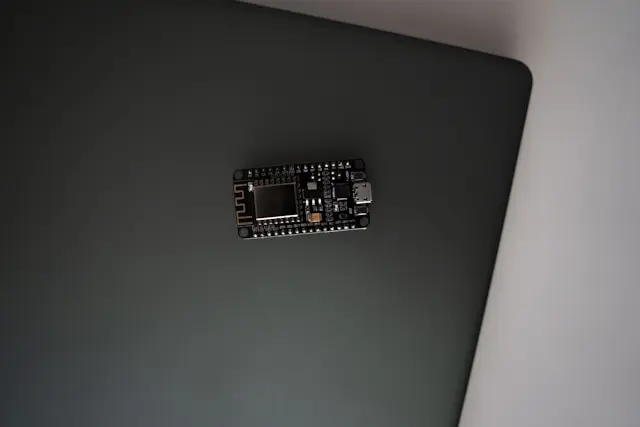
Intel has committed $3.5 billion to transform its Rio Rancho campus into an advanced packaging hub for Foveros and EMIB technologies. The facility is ramping toward volume production. Hiring demand for 400 to 600 additional technical staff is accelerating through 2026. And the local talent market cannot supply what is needed. Advanced packaging process engineers in Albuquerque take 120 to 180 days to hire, roughly double the timeline for comparable roles in Phoenix.
The core problem is not a general labour shortage. It is a mismatch between what Albuquerque's semiconductor ecosystem produces and what its largest employer now requires. For decades, the University of New Mexico and the national laboratories trained engineers for RF design, radiation-hardened electronics, and mixed-signal work. Intel's investment demands something different entirely: 3D integration specialists, chiplet architects, and yield engineers fluent in machine learning. The educational infrastructure and the capital investment are pointed in different directions.
What follows is a detailed analysis of where the Albuquerque semiconductor talent market stands in early 2025, which roles are most acutely short, what is driving the shortage beyond headline numbers, and what hiring leaders in this market need to understand about sourcing strategies that actually work when the candidates they need are not looking.
The Shape of Albuquerque's Semiconductor Workforce in 2025
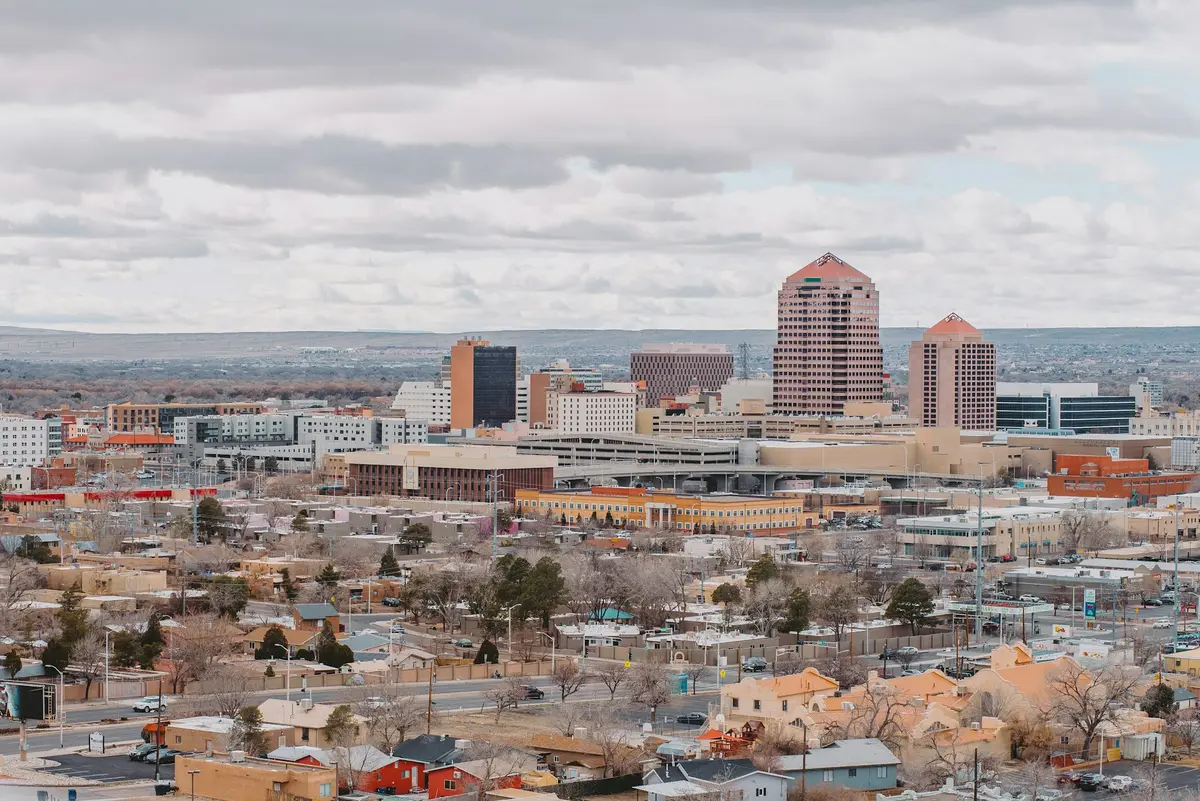
Direct semiconductor manufacturing employment in the Albuquerque metropolitan area stands at approximately 4,200 to 4,500 jobs. An additional 2,800 to 3,200 people work in related R&D at Sandia National Laboratories and the Air Force Research Laboratory at Kirtland AFB. Including indirect employment, the sector supports roughly 12,000 jobs across the region, according to the Semiconductor Industry Association's state economic data.
Intel is the dominant private employer at approximately 1,900 staff. Microchip Technology follows with around 850 employees focused on flash memory, FPGAs, and mixed-signal ICs. Applied Materials operates a smaller technology centre with roughly 175 people. SolAero Technologies, now a Rocket Lab subsidiary, contributes about 250 employees in space-grade solar cells. Optomec rounds out the notable private employers with approximately 80 staff working on 3D printed electronics.
This is not a large ecosystem by national standards. Phoenix has TSMC's $65 billion investment programme and Intel's Ocotillo campus expansion. Austin has Samsung's $25 billion fab and major operations from Texas Instruments and NXP. Albuquerque's private semiconductor workforce is roughly one-tenth the size of either competing market. That scale difference matters when employers attempt to source specialised talent locally, because the pool of experienced professionals circulating within the metro area is correspondingly thin.
The federal anchor institutions add depth but also create competition for the same talent. Sandia employs approximately 1,800 people in microsystems sciences and photonics R&D alone. AFRL's Directed Energy and Space Vehicles directorates add roughly 6,500 personnel. These institutions draw from identical engineering disciplines and offer the pull of mission-driven work, federal benefits, and security clearances that the private sector cannot easily replicate. For executive hiring across industrial and manufacturing sectors, this dual-market dynamic creates a bidirectional talent drain that few other US semiconductor cities experience at the same intensity.
Intel's Advanced Packaging Pivot Changes Everything
The story of Intel in Rio Rancho is a story of transformation, not continuity. The campus was historically a flash memory production site under the Fab 11X designation. The $3.5 billion investment announced in May 2021 redirected the facility toward heterogeneous integration: 3D stacking, chiplets, through-silicon vias, micro-bumping, and the thermal management challenges that come with layering multiple die into a single package.
This is not an incremental shift. Advanced packaging and front-end wafer fabrication require fundamentally different skill sets. A process engineer who spent a decade optimising lithography steps for planar transistors does not automatically become competent in Foveros bonding alignment or EMIB interconnect routing. The specialisation premium confirms this: roles specifically citing Foveros, EMIB, or chiplet integration command 20 to 30 percent salary premiums above standard process engineering compensation, reflecting the national scarcity of professionals with hands-on experience in these technologies.
The Skills That Do Not Exist Locally
Here lies the central tension. UNM's School of Engineering produces 350 to 400 graduates annually across electrical, computer, and mechanical engineering. But the curriculum has historically been optimised for the employers who dominated the local market for decades: Sandia, AFRL, and Microchip. That means RF design, mixed-signal circuits, and radiation-hardened electronics. These are valuable skills. They are not the skills Intel now needs.
UNM launched a Semiconductor Processing and Design certificate programme in autumn 2024, projected to produce 50 to 75 job-ready graduates annually by 2026. Intel's projected demand is for 300 or more new technical roles in the same timeframe. The gap between pipeline output and employer demand is not closing. It is widening.
This is why the article's central argument matters: Albuquerque's semiconductor talent crisis is not fundamentally a hiring problem. It is a knowledge-transfer problem. The skills required for advanced packaging at scale do not yet exist in sufficient quantity in this geography. You cannot recruit experience that the local ecosystem has never produced. Intel knows this. Its Rio Rancho operations have maintained continuous job postings for Advanced Packaging Integration Engineers since Q2 2023, paired with relocation packages targeting candidates in Arizona, California, and Texas. The recruitment cycle for these roles runs 120 to 180 days, compared to 60 to 90 days for equivalent positions in Phoenix.
When the people you need are not in your city and are not looking for a new role, traditional job advertising fails. The search becomes a direct sourcing exercise by definition.
Three Roles Driving the Shortage
The Albuquerque semiconductor market shows critical shortages in three specific categories. Each carries distinct sourcing challenges.
Advanced Packaging Process Engineers
This is the highest-demand, lowest-supply category. The emergence of high-volume 3D packaging is recent enough that the global talent pool remains small. Professionals with hands-on Foveros or CoWoS experience number in the low thousands worldwide. In Albuquerque, the pool is effectively zero for candidates not already employed at Intel's own facility. The passive candidate ratio in this category is extreme. Nearly the entire qualified population is employed, not looking, and concentrated in Arizona, Oregon, and California.
A senior process engineer with seven or more years of experience earns $110,000 to $135,000 base salary in Albuquerque. The equivalent role in Phoenix commands $130,000 to $160,000. In the Bay Area, the premium exceeds 60 percent. Moving a candidate from Chandler or Hillsboro to Rio Rancho requires more than a competitive offer. It requires a relocation case that addresses spousal employment, career trajectory, and the reality that Albuquerque's semiconductor ecosystem is orders of magnitude smaller than the one being left behind.
Semiconductor Equipment Technicians at Level 3 and Above
Equipment technicians at the senior end of the classification operate in a market where regional unemployment is below 2 percent. These professionals transition through referral networks and recruiter outreach, not job boards. Microchip's Albuquerque facility experiences annual turnover of 12 to 15 percent among senior equipment technicians. Replacement hires typically take four to six months to source locally, forcing reliance on contract staffing at 1.5x to 1.8x base wage premiums.
The base salary range for a senior equipment engineer in Albuquerque sits at $105,000 to $128,000. A director of equipment engineering commands $165,000 to $210,000. These figures sit 15 to 25 percent below Phoenix equivalents, creating a persistent gravity that pulls experienced technicians eastward along the I-10 corridor.
Yield Engineers With Machine Learning Integration
This is the hybrid role category that defines the intersection of semiconductor manufacturing and AI-driven process optimisation. Traditional yield engineers analyse defect patterns and wafer maps. The new requirement adds ML model development, statistical learning, and predictive analytics to that foundation. The passive-to-active candidate ratio in this category runs 4:1. For every yield engineer with ML skills who is actively looking for work, four others are employed and not considering a move.
Job postings for semiconductor process engineers in Albuquerque increased 34 percent year-over-year in Q3 2024. Qualified applicant pools decreased 18 percent over the same period. The region now exhibits a 4.2:1 ratio of open positions to unemployed qualified workers in semiconductor production occupations. These numbers describe a market where conventional hiring methods produce diminishing returns with each passing quarter.
The Compensation Paradox and the Outmigration Problem
Albuquerque's cost-of-living index is 92.5 against a national average of 100. Phoenix sits at 104.2. The median home price in Albuquerque is $315,000; in Phoenix, $450,000. On paper, this creates a quality-of-life arbitrage. A semiconductor engineer earning $120,000 in Albuquerque has more purchasing power than one earning $145,000 in Phoenix, particularly on housing.
The data says this arbitrage does not work.
Approximately 42 percent of UNM engineering graduates with semiconductor-relevant degrees leave New Mexico within two years of graduation. Net migration data for 25-to-34-year-old semiconductor professionals shows persistent outflow to Phoenix and Austin despite higher living costs in both cities. The salary differential of 18 to 25 percent in those competitor markets outweighs the cost-of-living benefit for early-career professionals who are optimising for career trajectory, not mortgage payments.
This pattern has a compounding effect that senior hiring leaders need to understand. Each cohort of departing graduates weakens the local mid-career pipeline five to ten years later. An employer searching for a packaging engineer with eight years of experience in 2025 is drawing from a pool that was already depleted by the outmigration of 2017's graduates. The problem does not announce itself until the search begins. When it takes 120 days to fill a senior role that Phoenix fills in 60, the accumulated cost of a decade of talent leakage becomes visible.
Phoenix also offers something Albuquerque cannot easily replicate: dual-career depth. A senior engineer's spouse is far more likely to find professional employment in a metro of five million people than in one of 900,000. According to the Greater Phoenix Economic Council's talent migration study, spousal employment opportunity is a critical factor in senior semiconductor hiring decisions. This is not a compensation issue. It is a career marketability issue that affects the entire household.
VP-level roles illustrate the gap at the executive tier. A VP of Fab Operations or Site Director earns $180,000 to $240,000 base in Albuquerque, with total compensation reaching $250,000 to $350,000 including equity. The same role in Phoenix or Austin ranges from $220,000 to $300,000 base. For candidates evaluating these opportunities, the calculus extends well beyond the offer letter.
Federal Dependency and the Risk It Creates
Sandia National Laboratories and AFRL together account for roughly 40 percent of the region's semiconductor R&D employment. This concentration creates a distinctive risk profile.
Federal budget sequestration or a strategic reallocation of defence spending away from microelectronics hardware toward hypersonics or AI software could release 600 to 800 technical workers into the local private-sector market simultaneously. In isolation, that sounds like a supply windfall. In practice, it would create a short-term displacement event followed by rapid outmigration, as displaced workers with security clearances and national laboratory experience would be aggressively recruited by defence contractors in Huntsville, Colorado Springs, and the greater Washington area.
The CHIPS and Science Act has allocated $30.8 million to New Mexico for workforce development and small supplier grants. As of Q4 2024, this funding was allocated but not fully deployed. Implementation delays through the NIST funding pipeline could slow the supplier ecosystem development projected for 2026, which the New Mexico Economic Development Department estimates at 8 to 12 new supplier entrants. Each of those entrants, while individually small at 20 to 100 employees, would add cumulative depth to a talent pipeline that currently depends on a handful of anchor employers.
The intersection of CHIPS Act dependency and federal budget exposure creates a scenario where Albuquerque's semiconductor growth is leveraged to two different political funding streams simultaneously. Neither is guaranteed beyond the current appropriation cycle.
The Infrastructure Constraints Employers Rarely Discuss in Offers
Two physical infrastructure challenges shape the long-term viability of semiconductor expansion in Albuquerque. Neither appears in job postings, but both affect the confidence of senior candidates evaluating relocation.
Water Scarcity in the Chihuahuan Desert
Semiconductor manufacturing consumes 4 to 8 million gallons of water daily for a mid-size fab. Albuquerque sits in one of the most water-stressed regions in the continental United States. Intel has invested over $30 million in water reclamation systems, achieving 95 percent recycling rates at the Rio Rancho campus. This is an industry-leading figure. But it applies to current operations. Future expansion beyond the advanced packaging plans already underway may face hydrological constraints from the Albuquerque Bernalillo County Water Utility Authority, which has implemented aggressive conservation mandates.
For a senior candidate weighing a long-term career commitment, the question is not whether Intel can operate today. It is whether the site has growth headroom for the next decade. Water availability is part of that calculation in a way it is not in Ohio or New York.
Power Grid Reliability
Semiconductor fabs require 99.9999 percent power reliability. The Public Service Company of New Mexico faces grid stability challenges during peak summer loads. Upgrading infrastructure to support additional high-load industrial expansion would require over $200 million in capital investment. This does not prevent current operations. It does constrain the pace at which new capacity can come online, and it shapes the risk assessment that any executive evaluating a site leadership role must conduct before accepting.
New Mexico's Hazardous Waste Act, which is more stringent than federal RCRA standards, adds 12 to 15 percent to compliance costs for chemical handling and waste disposal compared to Arizona or Texas. This is not a barrier to operation. It is a cost differential that accumulates over time and influences corporate capital allocation decisions at the board level.
What This Market Demands of Hiring Strategy
The Albuquerque semiconductor talent market in 2025 is defined by a single structural reality: the candidates who can fill the most critical roles are not in Albuquerque, are not actively looking, and will not respond to job postings.
Advanced packaging engineers are concentrated in a small number of locations where high-volume 3D integration is already operational. Senior equipment technicians circulate through referral networks in a market with sub-2-percent unemployment. Yield engineers with ML capabilities command multiple competing offers before a slow-moving search produces a shortlist.
This is a market where the reasons executive searches fail are predictable and avoidable. The 120-to-180-day hiring cycle that characterises advanced packaging roles in Albuquerque is not an inherent feature of the market. It is a consequence of search methodologies that rely on applicant flow rather than direct identification. When the applicant pool shrinks 18 percent year-over-year while postings grow 34 percent, the methodology itself becomes the bottleneck.
The firms that fill these roles fastest are those that treat every senior semiconductor hire as a direct headhunting exercise. They map the specific individuals with Foveros or EMIB experience at competing sites. They understand the relocation calculus, including the spousal employment question and the cost-of-living narrative. They approach passive candidates with a proposition built on the specific problems the role will solve, not on a generic job description.
KiTalent delivers interview-ready executive candidates within 7 to 10 days by applying AI-powered talent mapping to precisely this kind of constrained market. In a sector where 70 percent or more of qualified candidates are passive, the ability to identify, reach, and engage the right people before competitors do is not an advantage. It is a prerequisite.
The pay-per-interview model means organisations are not committing retainer fees while waiting months for a shortlist. They pay when they meet qualified candidates. In a market where the cost of a vacant senior packaging engineer role compounds daily in delayed ramp schedules and yield losses, speed is not a convenience. It is a financial imperative.
For semiconductor manufacturers and suppliers hiring senior technical and executive talent in the Albuquerque market, where the candidates you need are building 3D packages in Chandler or running yield models in Hillsboro and have no reason to check a job board, start a conversation with our semiconductor and industrial search team about how we approach passive candidate markets at this level of specialisation.
Frequently Asked Questions
Why is it so hard to hire semiconductor engineers in Albuquerque?
Albuquerque's semiconductor talent shortage stems from a mismatch between local pipeline output and employer demand. UNM produces 350 to 400 engineering graduates annually, but curricula historically focus on RF design and radiation-hardened electronics for Sandia and AFRL. Intel's advanced packaging expansion requires 3D integration, chiplet, and heterogeneous packaging skills that the local system does not yet produce at scale. Job postings for process engineers grew 34 percent year-over-year in Q3 2024, while qualified applicant pools shrank 18 percent. The result is a 4.2:1 ratio of open roles to available qualified workers, forcing employers into direct headhunting from competing markets.
What semiconductor roles are hardest to fill in the Albuquerque market?
Three categories are most acute. Advanced packaging process engineers with Foveros or EMIB experience face 120-to-180-day recruitment cycles. Senior equipment technicians at Level 3 and above operate in a sub-2-percent unemployment environment. Yield engineers with machine learning integration skills exhibit a 4:1 passive-to-active candidate ratio. All three categories require sourcing strategies built around passive candidate identification rather than job advertising.
How does Albuquerque semiconductor compensation compare to Phoenix and Austin?
Albuquerque salaries run 15 to 25 percent below Phoenix and 25 to 30 percent below Austin for equivalent semiconductor engineering roles. A senior process engineer earns $110,000 to $135,000 base in Albuquerque versus $130,000 to $160,000 in Phoenix. At the executive level, a VP of Fab Operations earns $180,000 to $240,000 base locally compared to $220,000 to $300,000 in Phoenix or Austin. The cost-of-living advantage (median home price $315,000 versus $450,000 in Phoenix) partially offsets this gap but has not prevented persistent outmigration of early-career talent.
What impact does the CHIPS Act have on Albuquerque semiconductor hiring?
New Mexico received $30.8 million in CHIPS and Science Act funding for workforce development and small supplier grants. However, as of late 2024, this funding was allocated but not fully deployed. The state projects 8 to 12 new supplier entrants by end of 2026, each employing 20 to 100 people. UNM's new Semiconductor Processing and Design certificate programme, funded partly through this initiative, targets 50 to 75 graduates annually by 2026, still well short of the 300-plus new technical roles projected for the same period.
How does KiTalent approach semiconductor executive search in a passive candidate market?
KiTalent uses AI-powered talent mapping and market benchmarking to identify and engage passive candidates who are not visible through job boards or applicant tracking systems. In markets like Albuquerque, where over 70 percent of qualified semiconductor professionals are employed and not actively seeking roles, this approach is essential. KiTalent delivers interview-ready candidates within 7 to 10 days on a pay-per-interview basis, eliminating the upfront retainer risk. The firm maintains a 96 percent one-year retention rate across 1,450-plus executive placements, reflecting the depth of candidate assessment that precedes every introduction.
What are the biggest risks to Albuquerque's semiconductor sector growth?
Four risks stand out. Water scarcity in the Chihuahuan Desert constrains future fab expansion despite Intel's 95 percent recycling achievement. Power grid reliability from PNM requires over $200 million in upgrades to support additional high-load industry. Federal budget dependency through Sandia and AFRL exposes 40 percent of R&D employment to appropriation cycles. And persistent outmigration of UNM graduates, with 42 percent leaving New Mexico within two years, steadily erodes the mid-career pipeline that employers will need in five to ten years.