Semarang's Heritage Tourism Boom Is Creating a Talent War Its SMEs Cannot Win Alone
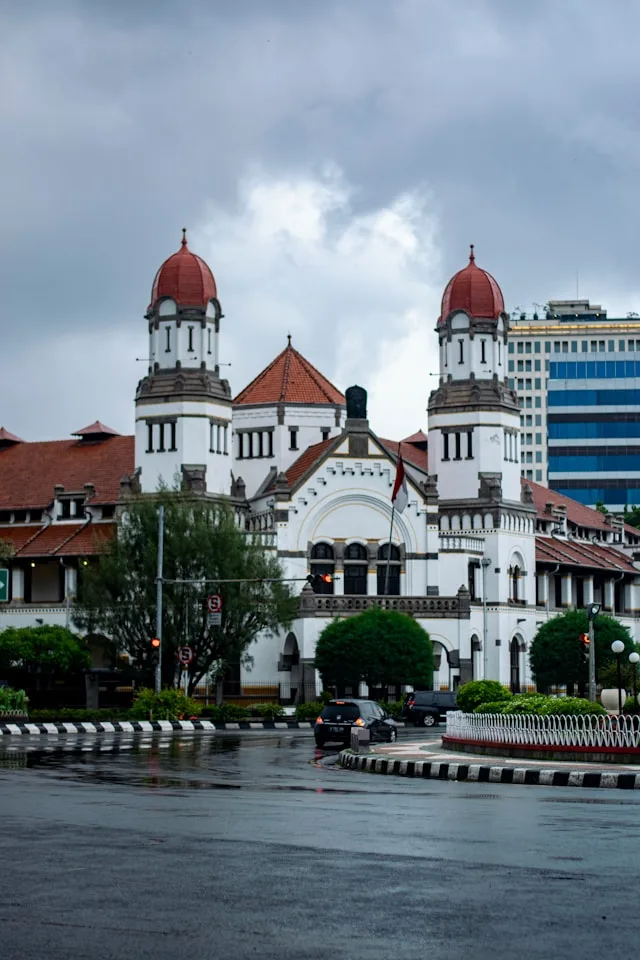
Semarang's heritage tourism and hospitality sector contributed IDR 4.2 trillion in direct revenue in 2024, lifting its share of the city's gross regional domestic product from 9.8% in 2022 to 12.3%. Visitor numbers to the heritage triangle of Kota Lama, Lawang Sewu, and Semawis Night Market reached 4.1 million in 2024. The city's investment in its colonial past is paying off in present-day economic terms, and the trajectory has only steepened into 2026.
But the growth numbers obscure a problem that is becoming harder to ignore. Semarang is building a tourism economy that requires heritage conservation architects, food safety managers, bilingual digital marketers, and hospitality general managers. The city does not have enough of any of them. Job postings across hospitality and culinary SMEs rose 34% year-on-year in 2024, but the professionals needed to fill the most consequential roles are not looking for work, not living in Semarang, and in several categories, not present in Central Java in sufficient numbers to meet demand at any price.
What follows is a ground-level analysis of the forces reshaping Semarang's heritage tourism and hospitality sector, the specific talent gaps that threaten to stall its next phase of growth, and what organisations operating in this market need to understand before they attempt their next senior hire.
A Heritage Economy Growing Faster Than Its Workforce
The numbers behind Semarang's heritage tourism expansion are unambiguous. Total tourist visits reached 12.4 million in 2024, with 285,000 international arrivals concentrated from Malaysia, Singapore, the Netherlands, and China. The city's Phase 3 revitalisation of Kota Lama, backed by an IDR 450 billion allocation from the city government for 2025 and 2026, is projected to increase heritage zone visitor capacity by 35%. The anticipated opening of a Yogyakarta-to-Semarang high-speed rail feeder line in Q2 2026, cutting travel time to 45 minutes, will expand the tourist catchment area materially.
Direct employment in heritage tourism and hospitality SMEs is projected to reach 28,000 by the end of 2026, up from 24,500 at the close of 2024. That represents roughly 3,500 new positions in a sector where 2,400 vacancies were already active on platforms like JobStreet and KitaLulus at the end of 2024.
The challenge is not demand. It is supply. Semarang's heritage tourism economy sits on a paradox: the very investment driving growth is intensifying competition for a talent pool that was already inadequate. The city is pouring capital into heritage infrastructure while the professionals required to operate, conserve, and commercialise that infrastructure remain scarce enough to stall individual projects by months.
The IDR 450 Billion Bet That Needs People to Work
Heritage restoration contractors working on Kota Lama projects have reported delays of four to six months attributable to an inability to source certified heritage building experts. According to Bappeda Kota Semarang's evaluation of the revitalisation programme, 40% of restoration tenders in 2024 received single bids or no bids at all due to a shortage of qualified contractors. Central Java has approximately 120 certified heritage conservation technicians against a demand for more than 400 positions. That is not a gap that advertising can close. The people do not exist in sufficient numbers.
A pending regional regulation, expected in late 2025, will require heritage zone businesses to employ certified conservation officers. This creates an entirely new role category at a moment when the existing talent pool cannot cover current project needs. For hiring leaders in Semarang's heritage tourism organisations, the regulatory clock is ticking toward a compliance requirement that most will struggle to meet.
The forward-looking question is not whether investment will continue. It will. The question is whether the human capital pipeline can keep pace, or whether the gap between infrastructure spending and operational readiness will widen through 2026.
The Zero-Sum Talent Competition That Policy Has Missed
This is the analytical tension that sits beneath every hiring challenge in Semarang's heritage tourism and hospitality sector, and it is one that the city's own policy documents have not addressed.
Semarang's culinary export ambitions and its heritage conservation mandates are drawing from the same limited pool of technically educated graduates. Biology, chemistry, and architecture departments at UNDIP and UNNES produce a finite number of graduates each year. The export sector needs them for HACCP certification, halal compliance, and cold chain logistics. The heritage sector needs them for structural assessment, conservation compliance, and adaptive reuse architecture. Policy documents treat these two sectors as parallel growth engines. In practice, they are competing for the same human capital.
The culinary export sector targets 15% growth in lumpia and bandeng exports for 2026, requiring food safety and production management talent that barely exists locally. At the same time, the heritage conservation sector is about to mandate new certified roles. Both demands are legitimate. Both are urgent. And both land on the same narrow talent base.
This is not a hiring problem. It is a resource allocation failure at the policy level, experienced as a hiring problem by every individual SME trying to fill a critical role. The organisations that recognise this dynamic will approach their talent strategies differently. Those that do not will lose candidates to whichever sector moves faster.
Where the Shortages Are Most Acute
Heritage Conservation Specialists
The numbers are stark. One hundred and twenty certified heritage conservation technicians in Central Java. More than four hundred positions requiring that certification. Unemployment among certified conservation professionals sits below 3%. Average tenure in government or private heritage projects runs five to seven years.
Roughly 85% of qualified candidates are employed and not actively seeking new roles. Recruitment in this category requires direct identification of passive talent from government heritage agencies, academic departments, or international conservation projects. Heritage restoration tenders in Semarang frequently specify individual expert names rather than requesting CVs, which is a clear indicator of a known, closed talent pool where conventional job advertising is functionally irrelevant.
Culinary Export Operations Leaders
The culinary export SME sector faces a vacancy rate of 65% for hybrid technical-commercial roles requiring HACCP and BPOM certification. Only fifteen to twenty individuals in all of Central Java possess the combined food safety certification, export licensing experience, and SME scaling track records that these positions require. More than 90% of them are passive. They are retained through equity participation or multi-year contracts in family-owned businesses. They do not appear on job boards.
According to industry reporting in Solopos.com, Lumpia Ny. Swan recruited a Food Safety Manager from a competing SME in Yogyakarta in Q2 2024, offering a 40% salary premium and relocation support after a six-month search failed to produce a qualified local candidate. That single data point illustrates the broader pattern: when these roles are filled in Semarang, they are filled by pulling talent from other cities, at a premium, after extended search periods.
Bilingual Digital Marketing and Experience Design
Semarang's international tourist recovery remains incomplete. Chinese arrivals in 2024 were still 40% below 2019 levels, creating commercial urgency for Mandarin-speaking digital marketers. Job postings for digital marketing managers with Mandarin capability increased 78% in 2024. Average time-to-fill for these roles reached 89 days, compared with 34 days for standard marketing positions.
The gap extends to heritage interpretation. Dutch and English-speaking guides and content creators are essential for the heritage diaspora market from the Netherlands, but the creative tourism sub-sector remains underdeveloped, with most heritage interpretation services run by informal operators lacking formal business registration. There is demand for experience design professionals. There is almost no supply pipeline for them.
Compensation in a Secondary City With Primary Ambitions
Semarang's compensation levels for hospitality and tourism executives sit 25 to 30% below Jakarta benchmarks. This is well understood by anyone operating in both markets. What is less well understood is where the gaps create the most friction in specific role categories.
Hotel General Managers for multi-property or 200-plus room operations command IDR 28 to 40 million monthly in Semarang, with international chain GMs at the upper range. In Jakarta, equivalent roles offer 40 to 50% premiums plus proximity to chain headquarters and clearer vertical mobility. The result is predictable: Semarang hotels experience 25 to 30% annual turnover in department head positions as professionals move to Jakarta after two to three years, a pattern that mirrors retention challenges in other secondary-city hospitality markets.
For culinary export operations directors, the picture is different. Compensation of IDR 22 to 30 million monthly, plus export performance bonuses, is competitive within the Central Java context. But Surabaya offers 15 to 20% higher base salaries for equivalent export management roles, combined with superior port infrastructure at Tanjung Perak and a deeper logistics talent pool. The competition is not only about pay. It is about the commercial infrastructure that makes the role itself more viable.
Heritage conservation management presents perhaps the most unusual compensation dynamic. Conservation project managers earn IDR 10 to 14 million monthly. Heritage site directors and multi-site conservation leads command IDR 18 to 25 million. These figures are constrained by the public and quasi-public nature of most heritage projects. The talent, however, is so scarce that the effective market rate for certified professionals with 15-plus years of experience and international training from institutions like ICCROM bears little relationship to listed salary bands. When the pool is this small, compensation becomes a negotiation between two parties who both know the alternatives are minimal.
The compensation data suggests that Semarang can compete for mid-level hospitality talent within Central Java but consistently loses senior leaders to Jakarta, Surabaya, and Bali. Bali's pull is particularly damaging at the culinary leadership level. International exposure and dollar-based income opportunities drain top culinary school graduates from UNDIP and UNNES within eighteen months of graduation.
The Forces That Make Traditional Hiring Methods Fail Here
Three features of Semarang's heritage tourism talent market render conventional recruitment approaches structurally inadequate.
First, the passive candidate ratios are extreme. In heritage conservation, 85% of qualified professionals are employed and not actively searching. In culinary export leadership, the figure exceeds 90%. Hotel General Managers in local chain properties show 70% passivity, with average tenure of 4.2 years compared to 2.8 years in Jakarta. These are not people who will see a job posting on JobStreet. They are not refreshing their CVs on LinkedIn. They must be identified, approached, and persuaded individually.
Second, the informality of the SME sector creates opacity. Approximately 65% of the 280 hospitality SMEs in the Kota Lama conservation area are informal or lack full TDUP registration. This means the hiring organisations themselves are often invisible to conventional talent market analysis. When the employer does not appear in formal databases, its vacancies do not appear in formal channels. The talent mapping required to understand who works where in this market goes well beyond what any job board can provide.
Third, the geographic talent competitors are highly specific and well understood by candidates. A heritage conservation architect considering Semarang knows that Yogyakarta offers stronger international tourist volumes, a higher concentration of tourism education institutions, and a lower cost of living. A culinary operations director knows that Surabaya offers better port access. A hotel GM knows that Jakarta offers a 40 to 50% salary premium. These are not abstract competitive forces. They are specific calculations that every senior candidate in this market has already made. The proposition required to move them must address those calculations directly, not simply offer a higher number.
For organisations that rely on posting roles and waiting for applications, the mathematics are unfavourable. The people they need are not looking. The employers they are competing with are offering structural advantages, not just pay. And the market intelligence required to identify, approach, and engage these candidates does not exist in any publicly accessible database.
Structural Risks That Compound the Hiring Challenge
The talent shortages described above do not operate in isolation. They intersect with several systemic risks that affect the viability of SMEs in Semarang's heritage tourism sector.
Land Speculation and SME Displacement
The revitalisation of Kota Lama has triggered land price increases of 120 to 150% between 2019 and 2024. Fifteen percent of heritage zone culinary SMEs have closed or relocated since 2022 due to rent pressure. The IDR 450 billion in government infrastructure investment is simultaneously creating the conditions for tourism growth and destroying the affordable commercial space that heritage SMEs require to operate. This is not a theoretical tension. It is a measurable displacement that reduces the number of employers and the stability of the employment relationships they offer. A talent pipeline strategy that assumes static employer demand in the heritage zone is building on sand.
Seasonality and Cash Flow Fragility
Hotel occupancy in Semarang fluctuates between 45% in February and 78% in July. Culinary SMEs experience 40 to 50% revenue drops during Ramadan, followed by export peaks for bandeng and ketupat products around Lebaran. Working capital gaps force reliance on informal lending. For talent retention, this means that many SMEs cannot offer the employment stability that would keep a qualified Food Safety Manager or heritage specialist in place through the full annual cycle. Seasonal cash flow gaps become retention gaps.
Supply Chain Vulnerability
Dependence on bandeng fish supply from Demak and Kendal coastal areas exposes culinary export SMEs to climate risk. Saltwater intrusion, a consequence of broader environmental pressures on Java's north coast, threatens the raw material availability that underpins the entire bandeng presto export proposition. An operations director evaluating a role with a bandeng exporter is evaluating not just the company but the long-term viability of its supply chain. Sophisticated candidates assess this risk. Less sophisticated recruitment processes fail to address it.
These structural factors do not make Semarang's heritage tourism sector unviable. The growth projections remain strong. But they do make the cost of a wrong executive hire disproportionately high for SMEs that lack the financial reserves to absorb a failed appointment and start again.
What Semarang's Heritage Tourism Sector Needs From Its Next Search
The market conditions outlined in this analysis point to a consistent conclusion. Semarang's heritage tourism and hospitality SMEs are competing for scarce, predominantly passive talent across multiple specialisms, against better-resourced cities, with structural constraints that make every failed search more expensive than the last.
The conventional hiring playbook does not work here. Posting on JobStreet reaches the 10 to 15% of candidates who happen to be active. It misses the conservation architects who are embedded in government projects. It misses the food safety managers retained through equity in family-owned businesses. It misses the hotel GMs who will only move for a proposition that addresses Semarang's specific competitive disadvantages against Jakarta and Bali.
What this market requires is direct headhunting that identifies and engages passive candidates before they enter any visible job market. It requires market intelligence on compensation, competitor retention structures, and candidate motivation that goes beyond published salary bands. And it requires speed. In a market where qualified heritage conservation technicians are outnumbered more than three to one by the positions that need them, the organisation that reaches a candidate second has already lost.
KiTalent delivers interview-ready executive candidates within seven to ten days through AI-enhanced talent identification that maps passive professionals across markets where conventional search methods fail. With a 96% one-year retention rate across 1,450-plus executive placements and a pay-per-interview model that eliminates upfront retainer risk, the approach is designed for exactly the kind of market conditions Semarang's heritage tourism sector presents: thin talent pools, high passivity, and zero margin for slow searches.
For organisations hiring heritage conservation leaders, culinary export directors, or senior hospitality managers in Semarang's heritage tourism market, speak with our executive search team about how KiTalent approaches candidate identification in markets where the talent you need is not visible through any conventional channel.
Frequently Asked Questions
What are the biggest hiring challenges in Semarang's heritage tourism sector in 2026?
The most acute shortages are in heritage conservation specialists, where only 120 certified professionals exist in Central Java against demand for over 400. Culinary export SMEs face a 65% vacancy rate for roles requiring HACCP and BPOM certification. Bilingual digital marketers with Mandarin capability take 89 days to fill versus 34 for standard marketing roles. These shortages are compounded by Semarang's position as a secondary city competing for talent against Jakarta, Surabaya, and Bali, all of which offer higher compensation or stronger career infrastructure.
What do heritage tourism and hospitality executives earn in Semarang?
Hotel General Managers for properties with 200-plus rooms earn IDR 28 to 40 million monthly. Culinary export operations directors command IDR 22 to 30 million plus performance bonuses. Heritage site directors earn IDR 18 to 25 million. Semarang salaries sit 25 to 30% below Jakarta benchmarks, though they are competitive within Central Java. The compensation gap narrows for culinary export roles, where market benchmarking reveals that performance-linked bonuses and equity participation reduce the effective differential.
Why is it so hard to hire heritage conservation specialists in Central Java?
Certified heritage conservation professionals in Central Java have unemployment below 3% and average tenure of five to seven years. Approximately 85% are passive candidates who do not appear on job boards. Heritage restoration tenders in Semarang frequently name specific individuals rather than requesting open CVs, indicating a closed, known talent pool. Upcoming regulations requiring heritage zone businesses to employ certified conservation officers will further tighten supply.
How does Semarang compete for hospitality talent against Jakarta and Bali?
Semarang loses 25 to 30% of hotel department heads annually to Jakarta, which offers 40 to 50% salary premiums and clearer vertical mobility. Bali draws top culinary graduates within eighteen months of graduation through international exposure and dollar-based income. Successful hiring in Semarang requires propositions that address these competitive dynamics directly, not just salary. Community ties, lower cost of living, and meaningful leadership responsibility in growing SMEs are the retention tools available. KiTalent's direct headhunting methodology helps organisations build these propositions into their candidate approach.
What is the outlook for Semarang's heritage tourism employment market?
Direct employment is projected to reach 28,000 by late 2026, up from 24,500 at the end of 2024. Growth drivers include the IDR 450 billion Kota Lama Phase 3 revitalisation, the anticipated Yogyakarta-to-Semarang high-speed rail link, and targeted 15% growth in culinary exports. Digital transformation is accelerating, with 60% of heritage zone SMEs expected to adopt integrated POS and reservation systems by 2026. The employment growth is real. The constraint is whether the talent pipeline can expand fast enough to meet it.
How can SMEs in Semarang find passive executive candidates?
Over 85% of heritage conservation professionals, 90% of culinary export operations leaders, and 70% of hotel GMs in Semarang are passive candidates. Reaching them requires direct identification through professional networks, academic institutions, government agencies, and competitor analysis. Job boards reach only the small active fraction of the market. Firms specialising in executive search for hospitality and heritage-adjacent sectors use AI-powered talent mapping to identify and approach professionals who are not visible through conventional recruitment channels.