Ålesund's Maritime Engineering Cluster Has Record Orders and Not Enough Engineers to Deliver Them
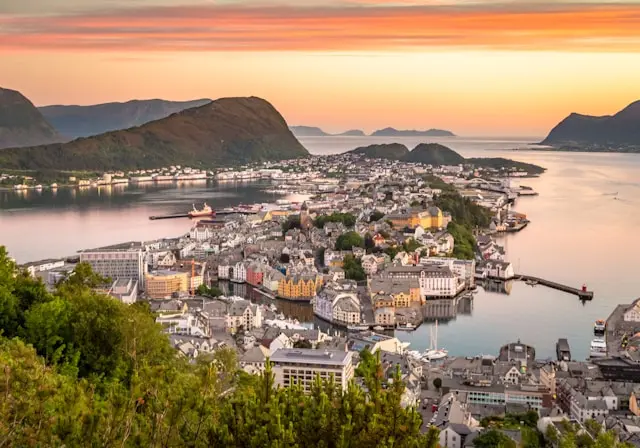
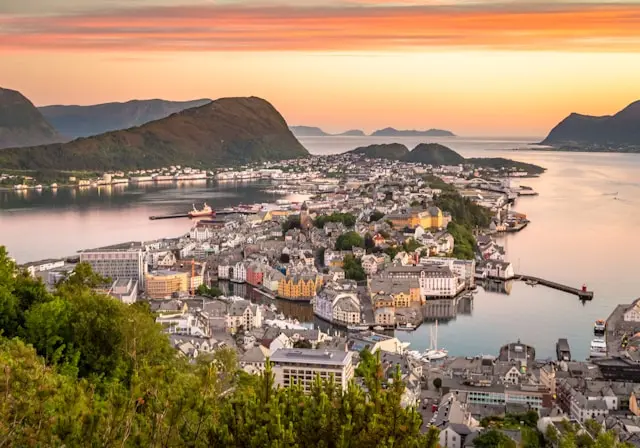
The GCE Blue Maritime Cluster, headquartered in Ålesund, coordinates roughly 200 companies employing 25,000 people across Norway's Møre og Romsdal county. Annual revenue runs at NOK 75 billion. By any measure, this is one of the most concentrated maritime engineering ecosystems on Earth. It designs and builds the vessels that install offshore wind turbines, service subsea infrastructure, and harvest the North Atlantic. And in 2026, it is running into a problem that no amount of capital investment can fix on its own.
The orderbook is full. Contracts stretch into 2027 and 2028. Offshore wind installation vessels and commissioning service operation vessels account for the bulk of current work. Yet several of the cluster's largest employers have simultaneously imposed selective hiring freezes, citing margin compression from fixed-price contracts signed during the 2022 and 2023 inflation troughs. The result is a market that is both capacity-constrained and talent-starved at the same time, in different functions and at different skill levels.
What follows is an analysis of how Ålesund's maritime cluster arrived at this bifurcation, which roles are genuinely impossible to fill through conventional methods, and what the green transition's acceleration means for the type of engineer this market needs versus the type it produces. The gap between those two categories is where the real hiring challenge sits.
A Cluster Built on Geography, Now Constrained by It
Ålesund's role within the Møre og Romsdal maritime ecosystem is often misunderstood by outsiders. The city itself is not where the ships get built. The yards and heavy manufacturing facilities sit in surrounding municipalities: Ulsteinvik, Fosnavåg, Hareidlandet, spread across a 100km coastal radius. What Ålesund concentrates is the knowledge-intensive layer. Ship design studios. System integration centres. Equipment manufacturer headquarters. The campus of Høgskulen på Vestlandet, which trains the next generation of maritime engineers. SINTEF Ocean's research facility for fishing vessel efficiency and maritime digitalisation. The Maritime Knowledge House incubator, housing 15 maritime SMEs and startups.
This geographic structure worked well when the cluster's primary activity was designing and building fishing vessels and offshore supply ships. The distances were manageable. The talent pool was local and self-replenishing. But the shift toward offshore wind service vessels and green propulsion systems has changed the skill requirements faster than the local talent base can adapt. The cluster now needs marine electrical engineers who understand battery-hybrid propulsion, software architects who can build autonomous navigation systems, and cybersecurity specialists who can protect maritime industrial control systems. These are not the same people who designed trawlers twenty years ago.
Ålesund sits four hours by road from Bergen. International flight connections improved in 2024 with direct routes to Amsterdam and Copenhagen, according to Avinor traffic statistics, but the city remains difficult to reach compared to Oslo, Bergen, or Stavanger. For an international specialist weighing a relocation, this matters. Housing costs in Ålesund have increased 34% between 2020 and 2024, according to Eiendomsverdi's regional housing data. That erodes the cost-of-living advantage that Norwegian regional cities once held over the capitals. The isolation that once protected the cluster's talent pool by limiting outward mobility now works in reverse: it limits inward mobility at exactly the moment the cluster needs external talent most.
The Orderbook Paradox: Full Capacity, Selective Freezes
Norwegian-owned shipyards within the Ålesund orbit held contracts for 45 offshore wind service vessels scheduled for delivery between 2025 and 2027, representing a 340% increase in order value compared to the 2020 to 2022 trough, according to the Norwegian Shipowners' Association. The design houses, principally VARD Design with its 280-person naval architecture team in Ålesund and affiliated entities, operated at near-full capacity through 2025.
Fixed-Price Margin Compression
The paradox is that full orderbooks have not translated into free-spending hiring. As reported by DN.no in January 2025, several major employers in the cluster implemented selective hiring freezes for mid-2025, driven by margin pressure from contracts signed at fixed prices during a period of lower input costs. Steel, energy, and component prices rose after those contracts were locked. The margins compressed. The work must still be delivered, but the budget for additional headcount tightened.
This creates a specific bifurcation in the talent market. Roles tied to delivering current contracts in green transition technologies, particularly marine electrical engineers and software architects, remain acutely scarce and actively sought. Roles in traditional structural naval architecture, where the newbuild pipeline is softening, face hiring caution or outright pauses. The same cluster is simultaneously desperate for one type of engineer and reluctant to hire another.
The Cycle Peak and What Follows
DNB Markets estimated a 0.7 to 0.8 correlation between the cluster's revenue and North Sea offshore energy investment cycles. The current activity reflects investment decisions made in 2022 and 2023. Inquiry levels for new contracts starting in 2026 and 2027 were already declining as of early 2025. Menon Economics projects a 5 to 8% revenue contraction for the Møre og Romsdal maritime cluster in 2026 compared to 2025 peaks, driven by the completion of current offshore wind vessel batches without sufficient replacement orders.
Net employment is projected to remain broadly stable, within a 2% range, but the composition of that employment is shifting. The cluster is redistributing headcount toward retrofit and hybridisation engineering teams as newbuild activity moderates. This is not a cyclical downturn in the traditional sense. It is a structural reallocation that demands different skills from the same workforce.
The Three Shortages That Cannot Be Recruited Through Job Boards
Engineering unemployment in Møre og Romsdal stood at 2.1% in late 2024, compared to a 3.4% national average for engineers, according to Statistics Norway. The aggregate figure masks three specific shortages that are qualitatively different from general labour market tightness.
Naval Architecture for Offshore Wind Vessels
Senior naval architect positions requiring offshore wind vessel stability analysis typically remain unfilled for 9 to 14 months in this market. Industry consultation data compiled by Tekna in November 2024 indicated that 40% of senior naval architect postings across tier-one designers in 2024 were either withdrawn entirely or filled by international contractors when no domestic candidate could be found. The estimated passive candidate ratio for this specialism runs between 85% and 90%. Average tenure exceeds eight years. Functional unemployment is effectively zero.
The 35% of Ålesund-trained naval architects who migrate to Oslo within five years of graduation, documented in HVL's graduate tracking survey, compounds the problem. Oslo offers 12 to 18% salary premiums, proximity to DNV's classification headquarters, and the critical mass of shipping company head offices. For a young naval architect building a career, the gravitational pull of the capital is strong. Singapore represents a different kind of competition: tax-equalised packages 40 to 60% above Norwegian levels for senior specialists on two to three-year rotations, according to Menon Economics' talent mobility analysis.
Marine Electrical Engineering for Hybrid Propulsion
This is where the hidden majority of candidates are employed and not looking. The hybrid propulsion specialism commands a 15 to 25% salary premium over standard electrical engineering, according to both the Tekna Salary Survey and Rambøll HR Consulting's maritime sector report. A senior marine electrical engineer earns NOK 850,000 to 1,050,000 in base salary. The premium reflects scarcity, not complexity alone.
According to Finansavisen's reporting in October 2024, Kongsberg Maritime recruited three senior electrical systems engineers from a competing design firm in the Ålesund region with packages including 18 to 22% base salary premiums and guaranteed bonus structures totalling NOK 350,000 to 450,000 annually above standard scales. In a cluster of 200 companies spread across a 100km coastline, a move like this is felt immediately. Everyone in the market knows who left and where they went. The poaching creates a compensation ratchet that smaller firms cannot match.
Maritime Cybersecurity Architecture
The smallest and most acutely scarce specialism. The total pool of professionals in Norway with relevant maritime industrial control systems experience is estimated at fewer than 200 individuals, according to the Norwegian National Cyber Security Centre. A 2024 search for a lead cybersecurity architect at a major equipment manufacturer reportedly stalled after six months with zero qualified Norwegian applicants and only three European candidates, all requiring substantial relocation packages. The passive ratio exceeds 90%. This is not a market where traditional search methods can produce results.
The implications extend beyond individual searches. As vessels become more connected, more autonomous, and more dependent on integrated software systems, cybersecurity becomes a design discipline rather than an IT afterthought. The cluster's inability to recruit in this area is not a staffing inconvenience. It is a constraint on the sophistication of what these yards and designers can offer.
The Education Pipeline Produces Volume Without Alignment
Here is the analytical claim that sits at the centre of this market's challenge: the Ålesund cluster's education system and its employer base are accelerating in the same direction but at different speeds, and the gap between them is widening fastest in the one discipline that matters most.
Høgskulen på Vestlandet reported record graduation rates in maritime technology in 2024, up 15% compared to 2020. On paper, this looks like progress. In practice, employers report that 40% of graduate applicants lack practical competency in integrated energy system design, specifically hybrid and electric propulsion, according to NHO Maritime's 2024 competence survey. The cluster's primary growth area, the green transition, requires a very specific combination of electrical systems knowledge, battery safety certification (DNV ST-E273 compliance), and fuel cell integration experience. The university is graduating more maritime engineers than ever. But the curriculum has not kept pace with the technological trajectory.
The result is simultaneous graduate underemployment in generic disciplines and critical shortages in specialised hybrid engineering. A junior marine engineer with a generalist degree and zero to three years of experience is actively searching for work; 40 to 45% of HVL graduates apply broadly across sectors, according to LinkedIn Talent Insights data. Meanwhile, the senior specialist with hybrid propulsion expertise is fielding approaches from Kongsberg, from Bergen's subsea engineering firms, from Danish maritime tech startups in Copenhagen and Aalborg, and from Singapore's offshore wind projects. The pipeline exists. It is just producing the wrong output for the market's highest-priority needs.
NCE Maritime CleanTech's strategic plan calls for NOK 2.3 billion in green technology R&D investment across cluster companies, focused on hydrogen fuel cells and battery-hybrid systems. That capital needs engineers who understand the technology it funds. The investment is moving faster than the human capital can follow.
Compensation Is Diverging Within the Cluster, Not Just Against Competitors
The compensation data reveals a market that is splitting internally. Senior naval architects with offshore wind specialisation earn NOK 950,000 to 1,150,000 in base salary, reaching NOK 1,300,000 with bonuses. VP Engineering and Technical Director roles in ship design and equipment command NOK 1,800,000 to 2,400,000, with long-term incentives of 20 to 40% of base at publicly listed entities such as Kongsberg Maritime and through VARD's parent Fincantieri structures.
Maritime software architects working on autonomous systems now earn NOK 1,000,000 to 1,400,000, approaching Oslo tech sector parity. This last figure is the most telling. When a maritime software role in Ålesund must match fintech compensation in Oslo to attract candidates, the conventional salary benchmarks for the region no longer apply. The cluster is no longer competing only with other maritime employers. It is competing with the entire Norwegian technology sector for a subset of its workforce.
For smaller firms in the cluster, those 30% of SMEs already reporting margin pressure from EU ETS and FuelEU Maritime certification costs according to NHO Maritime's survey, this compensation inflation is existential. They cannot match the guaranteed bonus structures that Kongsberg or VARD can offer. They cannot offer the equity participation that a Bergen subsea startup or a Copenhagen maritime tech firm might. The risk is that the cluster's SME layer, the 200 companies that give it its density and innovation capacity, gradually loses its ability to recruit the engineers who drive the green transition. The anchor institutions absorb the talent. The periphery hollows out.
Structural Risks Beyond the Talent Gap
The Aging Workforce
Twenty-eight percent of maritime engineering employees in Møre og Romsdal are over 55, according to Statistics Norway's 2024 employment data. Generation Z replacement rates are insufficient to offset the coming retirements. The tacit knowledge embedded in these senior engineers, the understanding of how vessels behave in real sea states that no digital twin fully captures, does not transfer automatically. When a VP-level technical director with five-plus years in role retires, the replacement search enters a market where 95% of qualified candidates are passive and average tenure exceeds five years. These transitions take planning that starts years before the departure date.
Regulatory Pressure on SMEs
The removal of Norway's skattefunn R&D tax incentive reduction for pure software development in 2024, as documented by Innovation Norway, constrained the digital twin startups in the Maritime Knowledge House incubator. FuelEU Maritime compliance engineering has become a critical skill category, but the monitoring, reporting, and verification systems required are expensive to develop and certify. The regulatory burden falls disproportionately on smaller firms. The talent required to manage that burden is the same talent everyone else in the cluster is trying to hire.
Copenhagen's Growing Pull on Younger Engineers
Danish maritime tech clusters in Copenhagen and Aalborg now draw engineers under 35 from the Ålesund ecosystem at rates 15% above historic norms, according to Innovation Norway's 2024 analysis of talent mobility. The EU mobility advantage matters. The startup ecosystem is stronger. The lifestyle proposition for a 28-year-old engineer is more compelling in Copenhagen than in a Norwegian coastal town of 50,000 people, regardless of how interesting the engineering problems are. This is not a trend that a salary increase alone can reverse. It requires the cluster to articulate a career proposition that goes beyond the immediate role and compensation package.
What This Means for Organisations Hiring in This Market
The Ålesund maritime cluster in 2026 presents a hiring environment where the most critical roles exist at the intersection of green transition engineering and software-defined vessel systems. These roles cannot be filled through job postings. The passive candidate ratios, 85% for senior naval architects, 90% or higher for cybersecurity specialists, 95% for VP-level technical leadership, confirm that direct identification and approach is the only viable method for the positions that matter most.
The competition is not only from within the cluster. Oslo, Bergen, Stavanger, Singapore, and Copenhagen all draw from the same talent pool, each offering different advantages. A search strategy that begins and ends within Møre og Romsdal will miss the majority of viable candidates. The search must be international in scope, specific in its value proposition, and fast enough to reach candidates before a competing approach does.
For organisations filling senior engineering and technical leadership roles in industrial and manufacturing sectors, a market this small and this specialised rewards firms that can map the full candidate universe before the search formally begins. KiTalent's AI-enhanced talent mapping methodology identifies the passive candidates who make up 85 to 95% of the qualified pool in these roles, delivering interview-ready shortlists within 7 to 10 days. With a 96% one-year retention rate across 1,450 completed executive placements, the focus is on candidates who stay, not just candidates who accept.
The cost of a failed senior hire in a market this thin is not just the recruitment fee. It is the 9 to 14 months that role sat empty, the project milestones missed, and the institutional knowledge that walked out the door to a competitor offering a NOK 350,000 bonus premium. For hiring leaders in Ålesund's maritime cluster facing exactly this challenge, start a conversation with our industrial and engineering search team about how we identify and reach the candidates conventional methods cannot.
Frequently Asked Questions
What is the average salary for a senior naval architect in Ålesund in 2026?
A senior naval architect with 10 or more years of experience and offshore wind vessel specialisation earns a base salary of NOK 950,000 to 1,150,000 in the Ålesund maritime cluster. Total compensation including bonuses reaches NOK 1,050,000 to 1,300,000. VP Engineering and Technical Director roles in ship design command NOK 1,800,000 to 2,400,000 with additional long-term incentives of 20 to 40% at publicly listed entities. These figures reflect the 2025 Tekna Salary Survey for the maritime sector. Compensation for hybrid propulsion specialists runs 15 to 25% above standard electrical engineering rates due to acute scarcity.
Why is it so hard to hire maritime engineers in Møre og Romsdal?
Engineering unemployment in Møre og Romsdal stands at just 2.1%, well below the 3.4% national average. In specialised disciplines like offshore wind vessel naval architecture and hybrid propulsion engineering, unemployment is effectively zero. The passive candidate ratio exceeds 85% for senior naval architects and 90% for maritime cybersecurity specialists. Average tenure for senior specialists exceeds eight years. The cluster also faces outward talent migration to Oslo, Singapore, and Copenhagen. Most qualified candidates must be identified through direct search methods rather than job advertising.
What is the GCE Blue Maritime Cluster?
The GCE Blue Maritime Cluster is headquartered in Ålesund and coordinates approximately 200 maritime companies across Norway's Møre og Romsdal county. These companies collectively employ around 25,000 people and generate NOK 75 billion in annual revenue. The cluster ranks among the three largest maritime clusters globally by revenue per capita. It encompasses ship designers, equipment manufacturers, yards, and technology companies spread across a 100km coastal radius, with Ålesund serving as the knowledge and design hub.
How does the green transition affect maritime hiring in Ålesund?
The green transition has shifted the cluster's most critical hiring needs from structural hull design toward electrical system integration, battery-hybrid propulsion, hydrogen fuel cell engineering, and EU regulatory compliance technology. DNV's Maritime Forecast projects a continued move from newbuild-heavy work to retrofit and conversion. NOK 2.3 billion in green technology R&D investment is planned across cluster companies. The education pipeline has not yet aligned with this shift: 40% of graduates lack practical competency in integrated energy system design, creating simultaneous graduate unemployment and specialist shortages.
How can KiTalent help with maritime engineering executive search in Norway?
KiTalent uses AI-enhanced talent mapping to identify passive candidates in highly specialised markets where 85 to 95% of qualified professionals are not actively searching. In the Ålesund maritime cluster, this means reaching senior naval architects, hybrid propulsion engineers, and technical directors who will never appear on a job board. KiTalent delivers interview-ready candidates within 7 to 10 days on a pay-per-interview model with no upfront retainer. The firm has completed over 1,450 executive placements with a 96% one-year retention rate.
What cities compete with Ålesund for maritime engineering talent?
Oslo draws approximately 35% of Ålesund-trained naval architects within five years of graduation, offering 12 to 18% salary premiums and proximity to DNV's headquarters. Bergen and Stavanger compete for hybrid propulsion engineers with comparable salaries and lower housing costs. Singapore recruits senior Norwegian specialists with packages 40 to 60% above domestic levels for two to three-year rotations. Copenhagen and Aalborg are increasingly attractive to engineers under 35, drawing them at rates 15% above historic norms through EU mobility advantages and stronger startup ecosystems.