Ålesund's Seafood Sector Is Automating Faster Than It Can Hire: The Talent Paradox Behind Norway's Aquaculture Capital

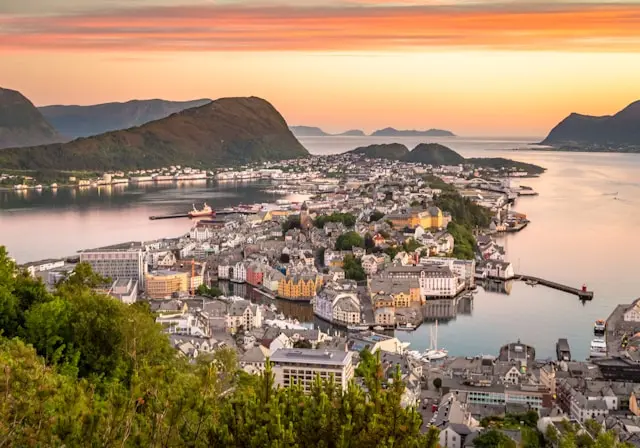
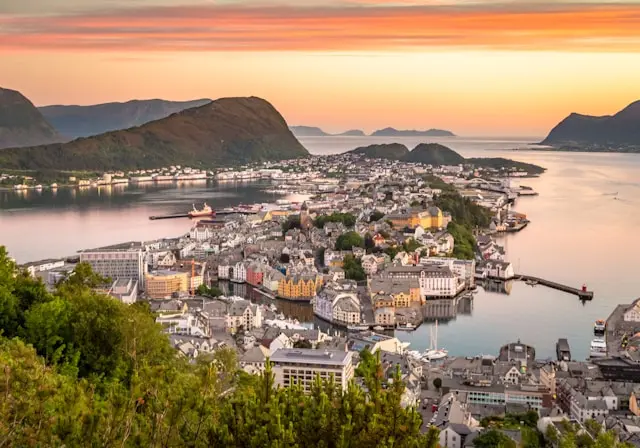
Ålesund processed 1.2 million tonnes of seafood through its port in 2023, representing 15% of Norway's total seafood exports by volume. The city hosts Norway's official innovation cluster for aquaculture, the corporate headquarters of major producers and service providers, and NTNU's leading aquaculture engineering faculty. By every visible measure, this is the centre of gravity for Norwegian seafood technology and services.
Yet the market that sits at the heart of Norway's aquaculture future is splitting in two. Primary processing employment within Ålesund municipality fell 8% between 2019 and 2024, even as it grew 14% in neighbouring municipalities and 22% in Poland and Eastern Europe for Norwegian-owned processors. The corporate brain of the industry remains in Ålesund. The operational body is migrating elsewhere. And the talent required to bridge the gap, the automation engineers, process specialists, and quality directors who can run a modern, technology-driven processing operation, is in critically short supply.
What follows is an analysis of the forces reshaping Ålesund's seafood and aquaculture services sector, what they mean for the leaders running these businesses, and why conventional hiring methods are structurally incapable of filling the roles that matter most in this market in 2026.
The Decoupling: Why Ålesund's Prestige and Its Production Are Moving in Opposite Directions
The NCE Seafood Innovation Cluster coordinates over 120 member companies from its Ålesund base. Lerøy Seafood Group maintains approximately 450 full-time employees in the region. Mowi ASA operates around 320 FTEs in regional processing and logistics coordination. AKVA Group and ScaleAQ together account for nearly 380 FTEs in aquaculture technology and digital solutions. The corporate density is genuine.
But corporate density and production employment are no longer the same thing. The 25% ground rent tax on aquaculture, introduced as the Ressursskatt, has reduced investment appetite for processing expansion in high-cost regions. According to EY Norway's Seafood Tax Impact Analysis, the tax has tilted the economics toward lower-cost locations in Northern Norway and increasingly toward Poland. Industrial electricity rates in Møre og Romsdal rose 35% between 2022 and 2024, further eroding processing margins and constraining the 24/7 operations that high-volume facilities require.
The result is a city that designs and coordinates the future of Norwegian aquaculture but increasingly does not perform the processing itself. This creates a specific talent challenge that has no parallel elsewhere in Norway. The roles Ålesund needs filled are not production line operatives. They are the engineers, quality directors, and technology specialists who sit at the intersection of aquaculture science and industrial automation. These are the roles where the market is thinnest, and where the consequences of a failed search are most severe.
The question for hiring leaders across this sector is not whether Ålesund remains important. It does. The question is whether the talent this market needs can be found using the methods that worked five years ago. The evidence strongly suggests it cannot.
Capital Moved Faster Than Human Capital Could Follow
This is the original analytical claim of this article, and it underpins every hiring challenge described in the sections that follow.
The Sintef Ocean report on the future of fish processing, published in 2024, projected that investment in robotic filleting and AI-based quality control would reduce manual processing headcount by 15% by 2026 while simultaneously increasing demand for automation technicians and process engineers by 25%. That trajectory has now arrived. The automation capital is deployed or being deployed. The humans who can operate, maintain, and improve those systems have not materialised in equivalent numbers.
The investment did not eliminate the need for people. It replaced one category of worker with another that does not yet exist in sufficient quantity. NTNU Ålesund graduates 120 BSc and MSc students annually in aquaculture engineering. The cluster needs multiples of that figure in automation-ready engineers alone. The pipeline is producing graduates trained in aquaculture biology and traditional engineering disciplines. The market needs professionals who combine those foundations with competence in industrial robotics, machine vision, and autonomous feeding systems.
This mismatch explains why vacancy rates for processing operatives remain at historic highs, at 12.3% in Q3 2024 compared to a 6.1% national average, even as automation investment accelerates. The automation is augmenting production in high-value product segments rather than replacing labour wholesale. Both the old roles and the new roles are unfilled simultaneously. The capital that was supposed to solve the labour problem has, in the short term, compounded it.
Where the Specific Talent Gaps Bite Hardest
Production Management: 11 Months and Still Looking
The clearest illustration of Ålesund's hiring difficulty comes from a concrete case. According to a confidential briefing cited by Intrafish Norway in October 2024, a leading whitefish processor in the Ålesund region kept a Production Manager role open for 11 months during 2023 and 2024. The salary on offer was NOK 950,000 base. The role ultimately went to an internal promotion because no external candidate combined the required HACCP certification with team leadership experience in automated processing lines.
This is not a compensation problem. NOK 950,000 sits at the upper end of the senior specialist band for production management in seafood processing. It is a supply problem. The specific combination of food safety expertise and automated line management experience exists in a population so small that conventional job advertising cannot surface it. The candidates who hold this combination are employed, performing well, and not reading job boards.
Plant Operations Directors present an even more extreme picture. According to Michael Page Norway's executive search analysis for the seafood sector, 85% of qualified candidates for these roles are employed and not actively seeking new positions. The active-to-passive ratio sits below 1:4. For aquaculture technology engineers specialised in subsea robotics or closed-containment systems, the ratio drops to approximately 1:5.
Quality and Compliance: The Six-to-Nine Month Standard
Plant Quality Directors with BRC/IFS auditor qualifications and seafood-specific microbiology experience typically remain unfilled for six to nine months in Ålesund-based operations. The same role fills in three to four months in Bergen. The data from FINN.no's Job Market Report for 2024 and ManpowerGroup's analysis shows a 47% year-over-year increase in days-to-fill for quality management roles in Møre og Romsdal seafood processing.
This gap between Ålesund and Bergen is not explained by compensation alone. Quality and Compliance Director salaries at executive level range from NOK 950,000 to NOK 1,200,000 in Ålesund, tracking 5-8% below Bergen for equivalent roles. The gap is real but not large enough to explain a doubling of time-to-fill. The deeper issue is that Bergen offers broader industry diversification across offshore energy and financial services, superior international schooling for families, and dual-career opportunities for partners. For a senior executive weighing relocation, the salary difference is secondary to the question of what their spouse will do for work and where their children will go to school.
Regulatory Affairs Directors present the stickiest retention challenge. With average tenure exceeding seven years and specialisation in EU and third-country export regulations, these professionals turn over at extremely low rates. When one does leave, the replacement search enters a market where almost no one is actively looking.
The Compensation Picture: National Parity in Specialisms, Regional Discount Everywhere Else
Ålesund's executive compensation data reveals a two-tier market that complicates every hiring conversation.
For generalised management and corporate leadership roles, Ålesund tracks 10-15% below Oslo and 5-8% below Bergen. A Supply Chain or Logistics Director in seafood can expect NOK 1,000,000 to NOK 1,300,000 at executive level, compared to materially higher packages in the capital for roles of equivalent scope. This discount reflects Ålesund's lower cost of living relative to Oslo, but it creates a structural drag on executive recruitment from larger cities.
For specialised aquaculture technical roles, however, the picture inverts. Senior aquaculture engineers command national parity because the sector concentration in Møre og Romsdal means the employers competing for this talent are almost all in the same region. The compensation benchmarks show NOK 900,000 to NOK 1,100,000 at executive level for aquaculture engineers, with equity participation increasingly standard at service providers like AKVA Group and ScaleAQ.
The tension between these two tiers creates a specific problem for hiring leaders. A corporate role in Ålesund must compete with Bergen and Oslo on lifestyle and compensation. A technical role must compete with other Ålesund-area employers who all know exactly what the others pay. According to Dagens Næringsliv, AKVA Group recruited senior automation engineers from competitor ScaleAQ in Q2 2024, reportedly offering packages 25-30% above market median, with base salaries of NOK 850,000 compared to the NOK 650,000 median. This triggered a defensive retention bonus cycle among service providers across the region.
The implication is clear. When the talent pool is this small and this geographically concentrated, any aggressive move by one employer sends a compensation shockwave through the entire cluster. The cost of losing a search is not just the cost of the vacancy. It is the cost of the retention bonuses you will pay across your existing team when the market learns what the winning bidder offered.
Three Competitors Pulling Talent Away from Ålesund
Understanding where Ålesund loses talent is as important as understanding what it needs. The city faces three distinct competitive fronts, each draining a different category of professional.
Bergen: The Lifestyle and Career Breadth Advantage
Bergen draws quality managers and supply chain executives with salary premiums of 12-18% and, critically, with the promise of broader career optionality. A quality director in Bergen's seafood sector can move laterally into offshore energy, food manufacturing, or logistics without relocating. A quality director in Ålesund's seafood sector has one industry and a narrow set of employers. For mid-career professionals weighing long-term career resilience, Bergen's diversification is a powerful draw. NHO Bergen's Competitiveness Report for 2024 identifies superior international schooling and dual-career opportunities as the decisive factors for executive retention, a finding that directly explains why Ålesund's searches for senior leadership stall where Bergen's do not.
[Stavanger](/stavanger-norway-executive-search): The Oil Premium That Seafood Cannot Match
Stavanger competes not for seafood professionals specifically but for the automation engineers and robotics specialists who could work in either sector. The oil and gas sector offers salary premiums of 30-40% above seafood processing for equivalent engineering skills. According to NAV's Arbeidslivsbarometer for 2024, 22% of engineers leaving Ålesund aquaculture firms relocate to Stavanger's energy sector within three years. This is a structural leak. The engineering skills that Ålesund's automation push demands most urgently are exactly the skills that Stavanger's energy sector values most highly and pays most generously for. Ålesund is training engineers and losing them to a wealthier industry in a more connected city.
[Tromsø](/tromso-norway-executive-search): The R&D and Remote Work Draw
Tromsø's emergence as an Arctic aquaculture hub introduces a third competitive vector, targeting research and development talent with government-funded innovation incentives. Marine biologists and geneticists who might otherwise anchor at NTNU Ålesund or within the NCE Seafood Innovation Cluster are drawn north by research grants and remote work flexibility that Ålesund's more traditional corporate employers have been slow to match. The talent flow is small in volume but concentrated in exactly the specialisms where Ålesund's innovation cluster needs depth.
Each of these three competitors exploits a different weakness. Bergen exploits Ålesund's lifestyle limitations. Stavanger exploits its compensation ceiling. Tromsø exploits its working model rigidity. Addressing any one of these in isolation leaves the other two channels open.
The Succession Cliff Beneath the Automation Ambition
The talent challenges described above are compounding against a demographic reality that makes them materially worse. SSB employment and wage statistics show that 28% of processing plant managers in the Møre og Romsdal region are eligible for retirement within five years. The succession pipeline is insufficient to replace them.
This is not a future problem. It is a present one. The professionals who understand how to run a traditional seafood processing plant and who could, with the right support, transition to managing an automated facility, are leaving the workforce faster than they are being replaced. The 11-month vacancy for a Production Manager described earlier is a symptom of a market where internal promotion is often the only viable path because the external market contains so few candidates with the right combination of experience.
The processing employment model makes this worse. Processing employment fluctuates 40-60% between Q1 and Q3 due to seasonal patterns. Thirty-five percent of processing roles are temporary or seasonal contracts. This seasonality is manageable for operative-level staff. It is corrosive for management-level retention. A senior production manager wants career stability. A sector that cannot guarantee consistent utilisation of their skills twelve months a year loses them to industries that can.
Norwegian processing operates at 92-95% utilisation during peak season from September through November, creating systemic bottlenecks. Ålesund-based service providers report that primary processing facilities in the region reject contract volumes due to labour shortages and energy constraints. The bottleneck is not equipment. It is people. And the people who could resolve the bottleneck are precisely the hidden 80% of passive candidates who will not appear on any job posting.
What Hiring Leaders in Ålesund's Seafood Sector Need to Do Differently
The conventional approach to hiring in this market follows a predictable pattern: advertise on FINN.no, wait for applications, screen, interview, offer. This approach reaches the active candidate pool. In a market where 85% of qualified Plant Operations Directors and 80% of aquaculture technology engineers are not actively seeking roles, that approach is structurally limited to 15-20% of the available talent.
The production capacity constraints, regulatory pressure from the Ressursskatt, traffic light system limitations on growth, and 35% energy cost increases are not going to ease in 2026. The Norwegian Directorate of Fisheries has capped production growth at 1-2% annually through 2026, meaning processors must increase value-added product margins rather than volume. That strategy requires precisely the senior quality, automation, and production leadership that the market cannot fill through conventional methods.
For organisations in this cluster competing for automation engineers, quality directors, and production leadership, three changes are essential.
First, accept that national and international search is not optional for senior roles. The Ålesund talent pool for these specialisms is exhausted. The candidates exist in Bergen, Stavanger, Oslo, Denmark, Scotland, and Iceland. Reaching them requires direct headhunting methodology that identifies, approaches, and engages professionals who are not looking.
Second, build the relocation proposition before the search begins. Ålesund's housing price-to-income ratio of 9.2:1 creates a tangible barrier for mid-level technical talent relocating from other Norwegian regions. Employers who address housing support, partner career assistance, and schooling options as part of the initial approach, not as an afterthought during offer negotiation, will convert passive candidates at materially higher rates. The counteroffer risk in a market this concentrated is severe. If a candidate's current employer learns they are considering a move, the retention bonus cycle documented in 2024 will repeat.
Third, treat succession planning for the retirement cohort as a live search programme, not a future project. Twenty-eight percent of plant managers eligible for retirement within five years means the first wave of departures is already occurring. Every month without a successor in development is a month closer to a forced internal promotion into a role the promoted individual may not be ready for, and the cost of a wrong appointment at this level compounds rapidly in a high-utilisation, high-regulation processing environment.
For organisations competing for senior production, quality, and technology leadership across Norway's seafood and industrial manufacturing sector, where the candidates that matter are not visible on any job board and the cost of a prolonged vacancy is measured in rejected contract volumes and missed margin improvement, start a conversation with KiTalent's executive search team about how a direct search built for this specific market can deliver interview-ready candidates within 7 to 10 days. KiTalent's AI-enhanced talent mapping identifies the passive professionals that conventional advertising cannot reach, with a 96% one-year retention rate on placed candidates and a pay-per-interview model that eliminates upfront retainer risk.
Frequently Asked Questions
Why is it so difficult to hire senior seafood processing managers in Ålesund?
Ålesund's senior processing management talent pool is extremely shallow. Eighty-five percent of qualified Plant Operations Directors are employed and not actively seeking roles. The combination of HACCP certification, automated line experience, and team leadership required for modern processing plants exists in a very small population. One documented search for a Production Manager ran 11 months before being filled internally. The market's seasonal employment model, concentrated employer base, and competition from Bergen and Stavanger's higher-paying sectors further constrain supply. Effective hiring at this level requires executive search that reaches passive candidates directly rather than relying on advertised vacancies.
What do senior aquaculture and seafood executives earn in Ålesund in 2026?
Executive compensation varies by specialism. Production Directors at VP level earn NOK 1,100,000 to NOK 1,400,000 base plus long-term incentives. Quality and Compliance Directors earn NOK 950,000 to NOK 1,200,000. Supply Chain Directors command NOK 1,000,000 to NOK 1,300,000. Aquaculture engineers at executive level earn NOK 900,000 to NOK 1,100,000 with equity increasingly standard. Ålesund tracks 10-15% below Oslo for generalised roles but reaches national parity for specialised aquaculture technical positions due to sector concentration.
How does the Norwegian salmon tax affect seafood hiring in Møre og Romsdal?
The 25% Ressursskatt ground rent tax on aquaculture has reduced investment appetite for processing expansion in high-cost regions like Ålesund. Combined with strict environmental production caps under the traffic light system and a 35% increase in industrial electricity costs between 2022 and 2024, the tax has shifted processing investment toward lower-cost locations in Northern Norway and Eastern Europe. For hiring leaders, this means Ålesund's processing roles increasingly focus on high-value, technology-intensive production rather than volume, raising the skill threshold for every senior appointment.
What roles are hardest to fill in Norway's aquaculture technology sector?
Three categories present the most acute shortages. Automation technicians and process engineers with combined aquaculture and robotics expertise face a 25% demand increase against a pipeline that produces far fewer graduates than the market requires. Regulatory Affairs Directors specialised in EU and third-country export compliance average over seven years in post and rarely become available. Quality Directors with BRC/IFS auditor qualifications and seafood microbiology experience take six to nine months to fill in the Ålesund region, nearly double the Bergen average.
How does KiTalent approach executive search for Norway's seafood and aquaculture sector?
KiTalent uses AI-powered talent mapping to identify the 80-85% of qualified candidates who are not actively seeking roles, the professionals who will never appear on FINN.no or conventional job boards. The direct headhunting approach delivers interview-ready candidates within 7 to 10 days under a pay-per-interview model with no upfront retainer. With over 1,450 executive placements completed globally and a 96% one-year retention rate, the methodology is built for concentrated, specialist markets where the talent pool is small and overwhelmingly passive.
Is Ålesund losing its position as Norway's aquaculture capital?
Not in terms of corporate and innovation leadership. The NCE Seafood Innovation Cluster, major producer headquarters, and NTNU's aquaculture faculty remain firmly anchored in Ålesund. What is shifting is primary processing employment, which declined 8% in the municipality between 2019 and 2024 while growing in neighbouring regions and offshore locations. Ålesund is becoming more of a brain than a body for the sector. This increases the premium on the specific senior talent it retains: technology leaders, R&D directors, quality specialists, and the executives who coordinate a supply chain that now spans multiple countries.