Antalya's Coastal Construction Boom Is Outpacing the Workforce That Builds It
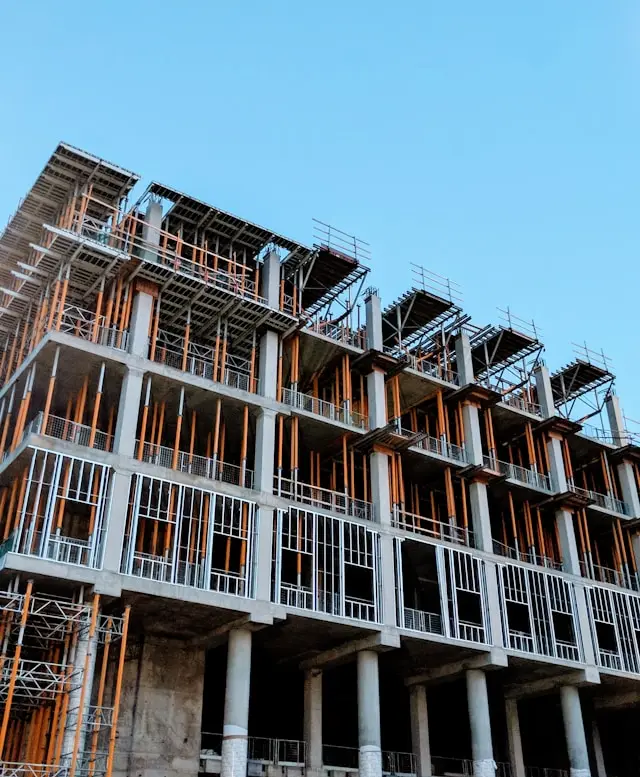
Antalya issued 28,400 residential construction permits in 2024, a 15% increase year-over-year. Foreign buyers acquired roughly 14,000 residential units in the province that same year, representing approximately 35% of all foreign property purchases in Turkey. Dubai-based developers, Russian joint ventures, and Istanbul-headquartered majors committed billions to luxury projects across the Lara, Konyaaltı, and Belek corridors. The capital is flowing in. The people who know how to build what that capital is buying are not.
The disconnect between investment volume and specialist talent availability is now the defining constraint on Antalya's construction and real estate market. Structural engineers with current TEC 2024 seismic certification take 90 to 120 days to hire. BIM Manager roles go almost entirely unfilled through conventional postings. International sales directors who speak Russian or Arabic and understand cryptocurrency compliance frameworks are functionally invisible on Turkish job boards. The hiring challenge is not at the labourer level. It is concentrated at exactly the specialist and executive tier that determines whether a project launches on time, passes inspection, and sells to the buyers funding it.
What follows is a ground-level analysis of why Antalya's construction sector cannot staff its most critical roles despite record investment, where the talent is going instead, and what hiring leaders in this market need to understand before they commit to another search that stalls at 78 days.
A Market Running on Foreign Capital and Specialist Scarcity
The economic structure of Antalya's coastal construction sector in 2026 is defined by a single paradox. Record investment is entering the market while the workforce capable of delivering on that investment is shrinking relative to demand.
Through 2024, residential construction permits reached 28,400 units in Antalya province, concentrated in luxury segments priced above the USD 300,000 equivalent. Russian citizens comprised 40% of foreign buyers, followed by Ukrainians, Germans, and Middle Eastern nationals. Sobha Realty, the Dubai-based developer, entered the Antalya market in late 2024 with a USD 500 million mixed-use project in Konyaaltı. Moscow-based Etalon Group established a joint venture with Antalya-based Özaltın İnşaat for luxury villa construction in Belek. Domestic developers Ege Yapı and Sur Yapı maintained active pipelines of 3,200 and 1,800 units respectively in the Lara-Konyaaltı corridor.
Yet total formal employment in the construction sector grew only 3.2% year-over-year in 2024, according to TURKSTAT. That figure lagged the 15% permit growth by a factor of nearly five. The gap reveals something important about the shape of this market. Capital-intensive luxury projects require fewer labour inputs per square metre than traditional mid-rise residential construction. Fewer workers build more expensive buildings. But those fewer workers need to be more highly skilled, more specifically certified, and harder to find.
The trajectory established through 2025 has continued into 2026. GYODER and REIDIN projected a 5-8% volume decline in new luxury residential permits as the foreign demand cycle matures and Turkish authorities implement stricter purchase restrictions. Meanwhile, the mid-market renovation segment is projected to grow 25% as TEC 2024 compliance deadlines approach for buildings constructed between 1990 and 2000. The demand is shifting, but the talent pipeline constraints are intensifying across both segments.
Three Roles That Define the Bottleneck
The specialist shortage in Antalya's construction sector is not a generalised labour problem. It is concentrated in three distinct categories, each with its own supply dynamics and competitive pressures.
Structural Engineers with TEC 2024 Certification
The revised Turkish Earthquake Code, implemented in 2024, requires structural engineers to demonstrate competency in nonlinear analysis methods and base isolation design. Fewer than 200 professionals in the Antalya region hold current certification, according to the Turkish Chamber of Civil Engineers' Certification Registry. Contractors surveyed by ATSO report that site engineer roles requiring TEC 2024 certification and a minimum of seven years' seismic retrofitting experience typically remain unfilled for 90 to 120 days. General civil engineers, by comparison, fill in 30 to 45 days.
The mandatory nature of the Urban Transformation Programme compounds this pressure. Approximately 18,000 buildings in Antalya's Muratpaşa and Kepez districts require structural reinforcement or demolition-reconstruction. Inspection backlogs already extend 8 to 10 months. Every certified engineer hired by a private developer is one fewer available for the public compliance programme.
BIM Specialists
Building Information Modelling Manager roles have seen a 300% increase in demand since 2022. Antalya's labour market contains fewer than 120 certified BIM professionals against estimated demand exceeding 350 positions. According to HR consultancy data, 85% of BIM Manager appointments involve poaching from competitors or design consultancies rather than hiring from active applicant pools. The compensation premium required to relocate a BIM specialist with five or more years of Revit and Navisworks experience from Istanbul to Antalya ranges from 35% to 50% above Antalya market rates.
This is not a training gap that closes over time. It is an expertise gap sustained by the fact that the same skills command even higher premiums in Istanbul and Dubai.
Multilingual International Sales Directors
The third shortage is less technical and more commercially specific. Foreign buyers, particularly Russian and Middle Eastern nationals, expect to transact through sales professionals who speak their language, understand cryptocurrency payment structures, and can handle Central Bank of Turkey foreign currency transfer regulations. These are not junior sales staff. Top performers in this category earn 400,000 to 600,000 TRY annually, and they move between developers based on commission structures and project prestige. The pool of professionals combining language capability, regulatory knowledge, and closing track records above USD 5 million annually is extremely thin.
The common thread across all three categories is that the strongest candidates are not actively looking. LinkedIn Talent Insights data from Q4 2024 showed that only 18% of Antalya-based construction professionals with BIM certifications had activated "Open to Work" status. The remaining 82% are employed, performing well, and recruitable only through direct approach.
Why the Money Flowing in Has Not Solved the People Problem
The original analytical claim this article rests on is this: Antalya's construction sector is experiencing a market where capital denominated in foreign currencies and talent denominated in Turkish Lira are operating on entirely different economic planes. The currency arbitrage that makes Antalya property cheap for a Russian or Emirati buyer simultaneously makes Antalya salaries uncompetitive for the Turkish professionals those buyers need to build and sell their properties.
Turkish Lira volatility increased construction input costs by 68% year-over-year as of Q3 2024. Property values in USD terms are expected to stabilise or appreciate 5-7% annually due to limited coastal land availability. For a foreign buyer, Antalya real estate became 30-35% cheaper in their home currency. For a Turkish structural engineer, the same currency movement means their salary buys less each month while their skills become more valuable to employers in Dubai, Riyadh, and Baku who pay in dollars.
The result is a market where investment capital and human capital are moving in opposite directions. Foreign money enters Antalya. Specialist talent leaves it.
An estimated 400 to 500 Turkish construction professionals migrated to UAE projects in 2024 alone, according to the Turkish Contractors Union's Overseas Contracting Services Report. Antalya's resort-experienced hotel construction specialists were particularly targeted. Saudi megaprojects offered 40-50% premiums over Turkish rates for earthquake engineering specialists, creating what amounts to a brain drain in exactly the certification category Antalya needs most.
Istanbul also draws heavily on Antalya's talent. It offers 30-40% salary premiums for project managers and 50% higher compensation for BIM specialists, although the cost of living gap partially offsets the headline figures. The competitive dynamic is consistent: every market paying in stronger currencies or offering higher nominal TRY packages is a more attractive destination for the professionals Antalya cannot afford to lose.
For hiring leaders managing construction pipelines in this environment, the implication is direct. The hidden cost of a failed executive hire is not just the recruitment spend. It is the project delay, the compliance deadline missed, and the foreign buyer whose patience runs out before the building does.
The Regulatory and Environmental Pressures Compressing the Timeline
The talent shortage would be serious even in a stable regulatory environment. Antalya does not have a stable regulatory environment.
The Ministry of Environment's Circular 2023/15 enforced stricter 50-metre coastal setback zones, halting approximately 12 planned high-rise projects in Konyaaltı and Lara. Pending "Coastal Buffer Zone" legislation in Parliament threatens to devalue 15-20% of planned development land in Konyaaltı. Roughly 4,200 existing building permits face legal challenges from environmental NGOs regarding coastal erosion. Each of these regulatory actions requires legal, engineering, and environmental expertise that the same overstretched professional pool must provide.
Seismic Compliance Deadlines
The Urban Transformation Programme's deadlines for buildings constructed between 1990 and 2000 are not negotiable. These are mandatory structural assessments with demolition-reconstruction orders for buildings that fail. The 18,000-building backlog in Muratpaşa and Kepez creates a demand floor for certified structural engineers that does not fluctuate with market sentiment. Even if luxury development slowed to zero, the renovation and retrofitting requirement alone would consume the available specialist workforce.
Climate and Infrastructure Constraints
Coastal erosion rates of 1.5 to 2 metres annually at Lara Beach and Konyaaltı Beach require continual nourishment projects, increasing common area maintenance costs for beachfront developments by 25-30%. Water scarcity in the Antalya basin, with reservoir levels at 35% capacity in summer 2024, threatens construction schedules through its impact on water-intensive concrete curing and dust suppression.
The Konyaaltı Beach renovation project alone represents a EUR 50 million municipal investment, according to the Antalya Metropolitan Municipality's 2024-2026 Strategic Plan. The anticipated completion of the Antalya High-Speed Rail connection to Konya, projected for 2027, has already triggered speculative land acquisition in the Aksu and Serik corridors. Each infrastructure project adds to the aggregate demand for civil engineers, project managers, and environmental compliance professionals.
What this means for any organisation hiring into this market is that the competition for specialist talent is not only between private developers. It is between private developers, mandatory public compliance programmes, and government infrastructure projects, all drawing from the same undersized pool.
Compensation Reality: What Roles Pay and Why It Is Not Enough
Understanding what roles actually pay in Antalya's construction sector explains much of the retention and recruitment difficulty. The numbers are material in TRY terms but lose their competitiveness the moment they are compared to what the same professional earns elsewhere.
A senior Construction Project Manager with 10 or more years of experience and TEC certification earns 55,000 to 85,000 TRY monthly base salary, plus project completion bonuses equivalent to three to six months' salary. A BIM Manager earns 65,000 to 95,000 TRY monthly, with software certification premiums adding 10-15%. An International Sales Manager with Russian or Arabic language capability earns 45,000 to 70,000 TRY monthly base plus 1.5-2.5% commission on gross sales.
At the executive tier, a VP of Construction or Country Manager for a foreign developer commands 150,000 to 250,000 TRY monthly base plus equity participation of 0.5-1.5% in project SPVs, along with housing and vehicle allowances. A General Manager of a contractor with more than 500 employees earns 120,000 to 180,000 TRY monthly plus profit-sharing. A Director of Sales and Marketing for luxury resort residential earns 80,000 to 120,000 TRY monthly with performance bonuses tied to foreign sales velocity.
These figures represent 2024 data from Korn Ferry, Mercer Turkey, and PwC Turkey compensation studies. When benchmarked through a market compensation analysis, the aggregate construction sector wage growth in Antalya through 2024 was only 18% year-over-year. Construction input cost inflation was 68%. The gap between what materials cost and what workers earn is widening, not closing.
BIM specialists represent the starkest case. Their salaries rose roughly 40% above 2023 levels. Yet general construction wages failed to keep pace with inflation, creating a two-tier market. Digital construction skills carry extreme scarcity premiums. Traditional construction skills are losing purchasing power against competing sectors such as manufacturing and logistics that offer more stable compensation.
For candidates evaluating whether to stay in Antalya or move to Istanbul or Dubai, the arithmetic is straightforward. A candidate weighing a counteroffer from a Dubai employer against an Antalya retention package is not comparing like with like. One is denominated in dollars. The other depreciates monthly.
The Geopolitical Risk Embedded in the Buyer Base
Antalya's 40% dependency on Russian buyers for foreign property sales introduces a risk that has nothing to do with construction quality or talent availability but affects both.
The Financial Action Task Force's Turkey Mutual Evaluation Report in 2024 raised concerns about compliance infrastructure for foreign-origin capital. Reuters reporting in September 2024 documented scrutiny from the UK and EU regarding Turkish property sales to sanctioned Russian individuals. For developers accepting Russian-origin capital, the compliance requirements are tightening. For the multilingual sales directors who manage these relationships, the role is becoming more complex and the personal regulatory exposure is increasing.
This geopolitical sensitivity has a direct talent implication. Sales professionals who previously operated in a relatively informal transaction environment now need compliance expertise alongside language skills. The profile of the ideal international sales director has changed. Developers who recognised this shift in 2024 hired accordingly. Those who did not are now searching for a hybrid commercial-compliance profile that barely exists in Antalya's labour market.
The dependency also creates demand volatility. Any diplomatic friction between Turkey and Russia, or any expansion of Western sanctions regimes that touches Turkish property transactions, would create an immediate knock-on effect on employment. Average construction worker tenure in Antalya is 14 months compared to 31 months in Istanbul, according to the Social Security Institution's employment duration statistics. A 40% seasonal fluctuation in construction employment already discourages skilled tradespeople from permanent relocation. Adding geopolitical demand uncertainty on top of seasonal uncertainty makes permanent talent attraction even harder.
Developers building a long-term talent pipeline in this market need to plan for demand scenarios that are not entirely within their control. The organisations that retain specialist staff through a downturn are the ones that can restart fastest when investment resumes. Those that treat specialist hiring as a just-in-time activity will face the same 90-day search cycle every time conditions improve.
What This Means for Hiring Leaders in Antalya's Construction Sector
The picture that emerges from this data is of a market where the volume of work available exceeds the capacity of the specialist workforce to deliver it, where the professionals best qualified to fill the gap have strong incentives to leave, and where the regulatory environment is simultaneously increasing the complexity of every role and the urgency with which it must be filled.
For organisations operating in this market, three principles should guide every senior hire.
First, conventional recruitment channels reach a small fraction of the available talent. With 82% of certified BIM professionals in Antalya in passive employment, and with seismic engineering specialists being actively recruited by Gulf state megaprojects, a posted vacancy on Kariyer.net or Eleman.net is reaching the 18% who are already looking. The 82% who are not require direct identification and approach. This is the gap between advertising a role and actually filling it.
Second, speed is a material competitive advantage. When time-to-fill for a TEC-certified structural engineer has extended from 34 to 78 days, every week saved in the search process is a week gained on a project timeline. For a sector where phased construction models already require 40-50% pre-payments before slab completion, project delays carry financial consequences that cascade through the entire development schedule.
Third, the compensation conversation must be had in the context of international competition. Antalya employers are not competing only with each other. They are competing with Istanbul, Dubai, Riyadh, and Baku. A package that looks competitive against the Antalya market average may look uncompetitive against a USD-denominated offer from a Gulf developer. Understanding what a salary negotiation looks like from the candidate's perspective is essential when the candidate's alternative is not another Antalya firm but another country.
KiTalent delivers interview-ready executive candidates within 7 to 10 days through AI-enhanced talent mapping that identifies the passive specialists conventional channels miss. With a 96% one-year retention rate across 1,450 completed executive placements, and a pay-per-interview model that eliminates upfront retainer risk, this is executive search built for markets where the strongest candidates are not visible and the cost of a slow hire is measured in project delays.
For organisations competing for seismic engineering, BIM, and international sales leadership in Antalya's construction market, where the talent pool is small, the competition is international, and the compliance deadlines do not wait, speak with our executive search team about how we approach specialist construction hiring in Turkey.
Frequently Asked Questions
What are the hardest construction roles to fill in Antalya in 2026?
The three most difficult categories are structural engineers with TEC 2024 seismic certification, BIM Managers with ISO 19650 competency, and international sales directors with Russian or Arabic language skills combined with foreign currency compliance expertise. TEC-certified structural engineer roles take 90 to 120 days to fill, more than double the timeline for general civil engineers. BIM Manager roles have seen a 300% demand increase since 2022, with fewer than 120 certified professionals available against demand exceeding 350 positions. These shortages are driven by both domestic regulatory deadlines and international competition for the same talent.
Why is Antalya losing construction talent to Dubai and Saudi Arabia?
Gulf state megaprojects offer USD-denominated compensation packages 2.5 to 3 times higher than Antalya equivalents in TRY terms, plus tax advantages. Saudi Arabia's projects offer 40-50% premiums specifically for earthquake engineering specialists. An estimated 400 to 500 Turkish construction professionals migrated to UAE projects in 2024 alone, with Antalya's resort-experienced hotel construction specialists particularly targeted. The Turkish Lira's depreciation makes the gap wider each quarter, and Antalya's seasonal employment cycle reduces the incentive for permanent relocation.
How much do senior construction executives earn in Antalya?
A VP of Construction or Country Manager for a foreign developer earns 150,000 to 250,000 TRY monthly base salary plus 0.5-1.5% equity participation in project SPVs. BIM Managers earn 65,000 to 95,000 TRY monthly. Senior Construction Project Managers with TEC certification earn 55,000 to 85,000 TRY monthly plus project completion bonuses. Executive compensation data from market benchmarking studies shows digital construction skills carry 35-50% premiums over general construction roles at equivalent seniority levels.
What regulatory changes are affecting construction hiring in Antalya?
Two major regulatory forces are reshaping demand. The revised Turkish Earthquake Code (TEC 2024) requires structural engineers to demonstrate nonlinear analysis and base isolation design competency, narrowing the qualified pool to fewer than 200 professionals in the Antalya region. Simultaneously, mandatory Urban Transformation Programme deadlines require approximately 18,000 buildings in Muratpaşa and Kepez to undergo structural reinforcement or demolition-reconstruction. The Ministry of Environment's coastal setback enforcement has also halted 12 planned high-rise projects, creating legal and environmental compliance demand.
How does KiTalent approach construction executive search in markets like Antalya?
KiTalent uses AI-powered direct headhunting to identify and approach passive candidates who are not visible on job boards or recruitment platforms. In a market where 82% of qualified BIM professionals are not actively job-seeking, this direct approach methodology reaches the full candidate pool rather than only the 18% who are actively looking. KiTalent delivers interview-ready candidates within 7 to 10 days, operates on a pay-per-interview model with no upfront retainer, and maintains a 96% one-year retention rate across more than 1,450 completed placements.
What makes Antalya's construction talent market different from Istanbul's?
Antalya's market is shaped by three forces absent in Istanbul: extreme seasonality creating a 40% employment fluctuation between peak and trough quarters, direct international competition from Gulf megaprojects specifically targeting resort construction expertise, and mandatory seismic retrofitting demand from the Urban Transformation Programme. Istanbul offers 30-40% salary premiums for project managers and 50% higher BIM specialist compensation, but its cost of living is 60% higher. The talent flow is predominantly one-directional, from Antalya to Istanbul and the Gulf, making proactive candidate identification essential for any Antalya employer competing for specialist roles.