Arezzo's Antiques Market Generates €150 Million a Year. It Cannot Find the People to Sustain It.
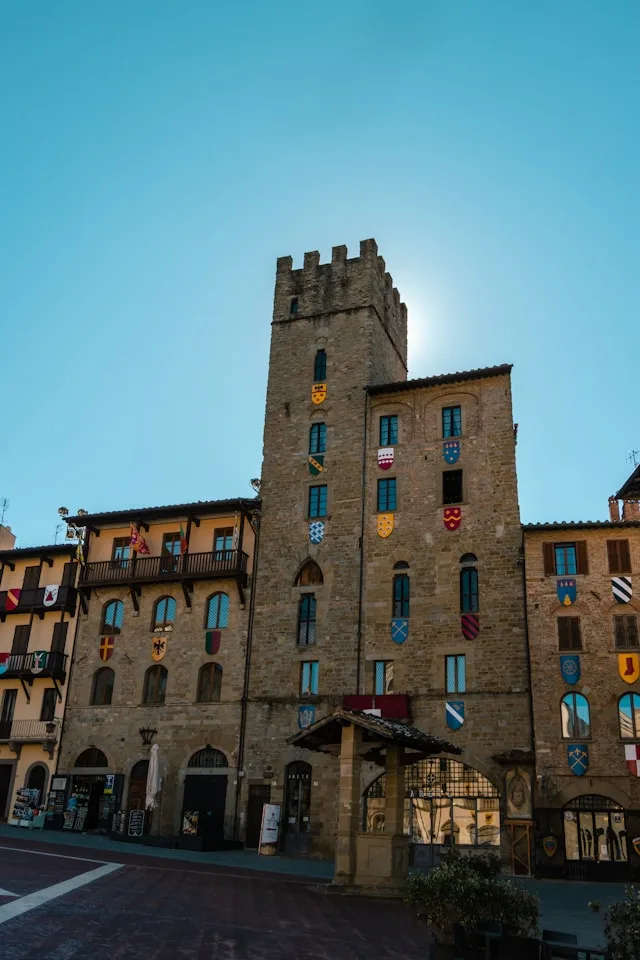
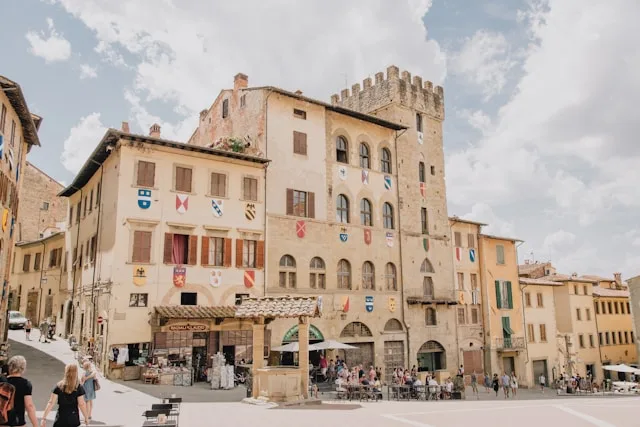
The Fiera Antiquaria di Arezzo drew 3.2 million visitor-days in 2024. Over 250 professional antiquarian exhibitors trade across its 12 annual editions. The fair anchors a provincial supply chain valued at €120 to €150 million annually. By every commercial measure, Italy's largest open-air antiques market is thriving.
Yet beneath that commercial surface, a different picture is forming. The restorers who prepare inventory for sale take six to nine months to recruit. The antiques evaluators who authenticate and price that inventory are retiring faster than they can be replaced. Three four-star hotels near the Fiera kept Director of Revenue positions open for over eleven months in 2024. The cluster's commercial engine is running at full capacity on a workforce that is thinning visibly at its most critical points.
What follows is a ground-level analysis of why Arezzo's talent market has reached this impasse, where the shortages are most acute, and what the businesses that depend on the Fiera must understand before their next critical hire.
The Event-Driven Economy and Its Workforce Contradiction
The term "cluster" implies year-round integration. Arezzo's antiques economy does not function that way. Federalberghi Arezzo data confirms that 68% of annual hospitality revenue concentrates in the 48 hours surrounding each Fiera date. Hotel occupancy averages 54% across the year but spikes to 94% on Fiera weekends, with average daily rate premiums of 340%. For antiques dealers, the concentration is equally extreme: 45% of dealers earn more than 60% of their annual revenue across just four Fiera editions.
This is not a cluster. It is a pulse.
The commercial implications are well understood. The workforce implications are not. A business that earns the majority of its income across four to twelve weekends per year cannot justify permanent senior staff at the salary levels those professionals command elsewhere. Yet the professionals it needs most, senior restorers and experienced evaluators, require years of accumulated expertise that cannot be hired on temporary contracts.
The contradiction is foundational. The Fiera's success creates the revenue. The Fiera's structure undermines the employment stability required to retain the talent that generates that revenue. Hospitality and retail sectors in the province report 35 to 40% staff turnover rates and heavy reliance on temporary contracts, according to INPS labour flow data for 2024. The businesses most dependent on the Fiera's commercial engine are the ones least able to offer the career stability that would keep their best people from migrating to Florence.
This tension extends beyond entry-level hospitality. It shapes every executive search conducted in Arezzo's cultural economy. When the most valuable roles sit inside businesses structured around episodic revenue, the compensation and stability proposition available to candidates is fundamentally different from what institutional employers in Florence or Milan can offer.
The Restoration Talent Gap Arezzo Created and Cannot Close
Arezzo is not a restoration hub. The distinction matters. Unioncamere Toscana's 2023 mapping identified just 47 registered restoration enterprises in the province, compared to 312 in the Metropolitan City of Florence. The city's restorers are highly specialised, with 68% of local restoration revenue concentrated in wooden furniture restoration and gilding, but they operate as satellite workshops serving the antiques trade rather than as an autonomous conservation cluster.
A Workforce That Exists Elsewhere
The pool of qualified senior restorers in the Arezzo-Florence corridor numbers approximately 140 professionals. Forty-seven enterprises compete for them. Annual turnover runs below 5%. Inferred estimates suggest 85 to 90% of qualified senior restorers in this corridor are passive candidates: currently employed, not applying to postings, and reachable only through direct search and headhunting methods.
The average time-to-fill for a maestro restauratore position requiring ten or more years of experience and specific gilding or woodworm remediation expertise runs six to nine months. That figure alone would be challenging. What makes it acute is the pattern that accompanies it: ateliers report losing candidates to Florentine institutions during the final interview stage, where compensation differentials of 20 to 35% for equivalent roles make the decision straightforward.
The Training Pipeline That Feeds Florence
No tertiary-level conservation school exists in Arezzo. The Opificio delle Pietre Dure in Florence and Perugia's restoration programmes train the next generation. Arezzo's contribution to the pipeline is apprenticeship-based, and the apprentices it trains leave. The province sees a net outflow of 12 to 15 qualified restorers annually to the metropolitan Florence market, according to Regione Toscana's 2024 workforce planning data.
This creates what the research describes as a "talent production externality." Arezzo invests in forming artisans who then build their careers in the market that offers institutional salaries, SBAP certification pathways, and museum directorship progression. The city subsidises Florence's restoration workforce and receives commuters in return: 28% of Arezzo's restoration workforce lives in Florence province and commutes south.
The original analytical claim this data supports is this: Arezzo's economic development strategy is investing in the wrong end of the value chain. The province's 2026 plans prioritise expanding hospitality capacity, with 180 new boutique hotel rooms planned for opening, while making no equivalent investment in a conservation school or atelier training centre. The city is building more beds for the tourists who come to see artisan work while neglecting the artisan workforce that gives them a reason to come. If the hidden 80% of passive talent in this market is already employed elsewhere, and the training pipeline feeds competitors, the gap will widen in every year the current strategy continues.
The Generational Crisis in the Antiques Trade
Sixty-eight percent of antiques businesses in Arezzo are family-owned with principals aged over 55. Succession plans are absent in the majority. The average age in the sector is 61. These are not statistics that describe a hiring challenge in the conventional sense. They describe a market that is approaching a cliff.
The role of a senior antiquario or perito d'arte is not one that can be filled through standard recruitment. Expertise in connoisseurship spanning Italian Renaissance to 19th-century works, auction house network management, provenance research, and international shipping logistics accumulates over decades. It is tacit knowledge, embedded in relationships with private collectors and international auction houses. Approximately 80% of experienced antique evaluators with 15 or more years in the field are passive candidates. Recruitment in this segment occurs through word-of-mouth and exclusive dealer network referrals, not public job postings.
The response from the market has been adaptive but not sustainable. SMEs report restructuring as "consortiums" to share evaluator talent across multiple storefronts rather than hiring dedicated staff. This is a workaround, not a solution. It distributes a shrinking resource across more touchpoints without increasing supply.
For gallery directors and managing directors, the compensation picture reflects the scarcity. A Direttore Generale in the Arezzo antiques market earns €75,000 to €110,000 plus profit-sharing. That figure carries a 40% premium above standard retail management compensation, driven by the requirement for combined PhD-level art history expertise and commercial P&L experience. The candidates who hold both qualifications are rare. Those willing to work in a market structured around episodic revenue are rarer still.
The generational succession crisis and the cost of a failed senior hire in this context are compounding risks. A gallery that loses its principal to retirement and then makes a poor replacement hire does not simply lose productivity. It loses the relationships, authentication credibility, and collector trust that took a generation to build.
Regulatory Pressure Is Adding Compliance Cost to a Micro-Enterprise Economy
Two regulatory shifts are increasing the operational burden on Arezzo's antiques dealers at precisely the moment they can least absorb additional complexity.
Export Licensing and Provenance Documentation
The Codice dei Beni Culturali imposes strict export licensing requirements for artworks over 70 years old. Processing delays at the Soprintendenza in Arezzo average 45 to 60 days, according to Ministry of Culture data from 2023. For international transactions, which form a material share of Fiera revenue, these delays deter buyers and compress the already narrow trading windows the event model creates.
The EU Green Claims Directive, now entering enforcement in 2026, imposes new provenance documentation requirements that increase compliance costs further for micro-enterprises. For a sector where 890 entities operate as businesses with fewer than ten employees, the administrative burden is disproportionate.
Anti-Money Laundering Requirements
Enhanced due diligence for antiques transactions exceeding €10,000 took effect in 2024 under updated Banca d'Italia directives. Know-Your-Customer requirements now apply to dealers who previously operated on informal agreements. Estimated administrative cost increases of 15 to 20% for micro-enterprises represent a material hit to businesses already managing cash-flow instability from the Fiera's episodic revenue pattern.
The talent implication is direct. Compliance expertise in provenance research and export documentation for non-EU sales is now a critical skill for antiques businesses. It was previously a nice-to-have. The counteroffer dynamics that already make senior talent retention difficult in this market are now compounded by the need for professionals who combine traditional connoisseurship with regulatory literacy. That combination is exceptionally rare.
Hospitality Leadership in a Pulsed Market
The hospitality segment of Arezzo's cultural economy faces a hiring challenge distinct from the artisan sectors but equally acute. Three four-star properties maintained Director of Revenue positions open for over eleven months in 2024 before filling them with candidates recruited from Perugia and Florence at 25 to 30% salary premiums.
A Revenue Manager in Arezzo earns €35,000 to €45,000. A General Manager of a four- or five-star property earns €70,000 to €95,000 with bonus structures tied to RevPAR metrics. These figures are competitive within Tuscan hospitality norms. They are not competitive against Florence's institutional hospitality market, where career progression opportunities and year-round occupancy stability offer a fundamentally different proposition.
The specific difficulty is the Fiera cycle itself. A Revenue Manager in Arezzo must optimise pricing for a market where occupancy swings from 54% to 94% on a monthly rhythm. Standard hospitality revenue management training does not prepare candidates for this pattern. The candidates who understand cultural event logistics are a subset of an already thin hospitality leadership pool.
One incident from the September 2024 Fiera illustrates the cost. A 50-room historic centre hotel, unable to secure a Food & Beverage Manager with antique fair catering experience, outsourced its F&B operations to external contractors. Margins fell by 18%. The search failure did not simply delay a hire. It changed the economics of the property's most profitable weekend.
For organisations building talent pipelines in cultural hospitality, Arezzo presents a case study in why generic hospitality recruitment fails. The candidates this market needs sit at an intersection of revenue management, event logistics, and cultural sector knowledge that job boards do not index and conventional searches do not reach. Approximately 70% of boutique hotel General Managers with art fair expertise are passive candidates, according to Federalberghi Arezzo's labour market observations.
The Compensation Map and What It Reveals
Arezzo's compensation structure tells a specific story about where talent concentrates and why it leaves.
At the senior specialist level, art restoration pays €38,000 to €48,000 in Arezzo. The equivalent role in Florence pays 20 to 35% more. With private commissions and project bonuses, top restoration specialists in Arezzo can reach €55,000 to €65,000 in total compensation. Executive-level restoration talent, the Direttore Tecnico Conservazione or studio principal, commands €65,000 to €85,000, but these roles rarely exist in Arezzo proper. Most executive restoration professionals commute from Florence or operate as independent consultants billing €800 to €1,200 per day.
In the antiques trade, a senior antiquario earns €32,000 to €42,000 base plus performance commission. High performers at established galleries reach €60,000 to €80,000 total. But Milan's gallery management roles pay 40 to 50% more in total compensation, and for the small number of world-class conservators and provenance researchers with PhD credentials, London and Paris represent an international tier Arezzo cannot approach on salary alone.
The pattern across all three sectors, restoration, antiques, and hospitality, is consistent. Arezzo's base salaries sit 15 to 50% below competitor markets depending on the role and the comparator city. The gap narrows when quality of life, lower cost of living, and the cultural richness of the Fiera ecosystem are factored in. But lifestyle value propositions are persuasive only when candidates are already aware of the opportunity. Passive candidates in Florence who are not actively looking will never encounter Arezzo's proposition unless someone brings it to them directly.
This is where the salary negotiation dynamics of this market diverge from larger centres. In Milan or London, the negotiation centres on total compensation. In Arezzo, the negotiation must articulate a value proposition that salary figures alone cannot express. That requires a different kind of search, one that understands the candidate's motivations before the first conversation.
What Arezzo's Cultural Economy Needs From Its Next Search
Arezzo's antiques and cultural tourism cluster is commercially successful and structurally fragile. The Fiera generates visitor numbers, transaction volumes, and hospitality revenues that any comparable market would envy. But the workforce that sustains that engine is ageing, migrating, and harder to replace with every passing year.
The difficulty rate for artistic craftsmanship and restoration roles in the province runs at 44%, well above the Tuscan average of 28%. The passive candidate ratios in every critical role category, 85 to 90% for senior restorers, 80% for experienced evaluators, 70% for boutique hotel general managers, mean that conventional hiring methods reach a fraction of the viable market.
For businesses in Arezzo's antiques and cultural economy, the strategic question is no longer whether talent is scarce. It is whether the search method matches the market reality. In a province where the best candidates are employed, not looking, and distributed across a corridor stretching from Perugia to Florence, a job posting on a hospitality or arts sector board reaches the 10 to 20% of the market that is already visible. The other 80% requires talent mapping across specific specialisms, direct identification, and a proposition crafted for the individual.
KiTalent delivers interview-ready executive candidates within 7 to 10 days through AI-enhanced direct search methodology built for precisely this kind of market: small pools, high passive ratios, and candidates who must be found rather than attracted. With a 96% one-year retention rate across 1,450 or more executive placements, and a pay-per-interview model that eliminates upfront retainer risk, the approach is designed for organisations that cannot afford a six-month vacancy in a role that drives their most profitable weekend.
For cultural enterprises, hospitality groups, and gallery operators across Arezzo and Tuscany who need leadership talent in a market where the best candidates are not visible on any job board, start a conversation with our executive search team about how we approach this market differently.
Frequently Asked Questions
Why is it so difficult to hire senior art restorers in Arezzo?
The qualified pool of senior restorers in the Arezzo-Florence corridor numbers approximately 140 professionals, with 47 enterprises competing for them. Annual turnover is below 5%, and an estimated 85 to 90% are passive candidates who are currently employed and not applying to postings. Average time-to-fill for a maestro restauratore with gilding or woodworm remediation expertise runs six to nine months. Candidates are frequently lost to Florentine institutions at the final interview stage due to 20 to 35% compensation differentials. Reaching this talent pool requires direct headhunting rather than job advertising.
What does a senior antiques evaluator earn in Arezzo?
A senior antiquario or Responsabile Acquisti in Arezzo earns €32,000 to €42,000 base salary plus performance commission of 2 to 5% on sales. High performers at established galleries reach €60,000 to €80,000 in total compensation. At the executive level, a gallery Managing Director earns €75,000 to €110,000 plus profit-sharing. These figures carry a 40% premium above standard retail management due to the rare combination of art history expertise and commercial P&L experience required.
How does the Fiera Antiquaria affect Arezzo's hospitality hiring market?
The Fiera creates extreme demand volatility. Hotel occupancy swings from a 54% annual average to 94% on event weekends, with 340% average daily rate premiums. Sixty-eight percent of annual hospitality revenue concentrates in the 48 hours around each Fiera date. This pulsed model makes it difficult to justify permanent senior salaries, yet the Revenue Manager and General Manager roles required to optimise these windows demand specialist event logistics experience that standard hospitality candidates lack.
What regulatory changes are affecting Arezzo's antiques dealers in 2026?
Two shifts are increasing compliance costs. The EU Green Claims Directive, entering enforcement in 2026, imposes new provenance documentation requirements. Additionally, enhanced anti-money laundering due diligence for transactions exceeding €10,000, effective since 2024, requires Know-Your-Customer procedures from dealers previously operating informally. Administrative costs have risen an estimated 15 to 20% for micro-enterprises. Export licensing under the Codice dei Beni Culturali adds further complexity, with processing delays averaging 45 to 60 days.
Can KiTalent help recruit specialist cultural sector executives in Italy?
KiTalent's executive search practice across Italian markets is built to reach passive candidates in specialist sectors where conventional recruitment fails. In markets like Arezzo, where 80 to 90% of the qualified talent pool is not actively seeking new roles, AI-enhanced talent mapping identifies and engages candidates who are invisible to job boards. The pay-per-interview model means clients only invest when they meet qualified candidates, and the typical delivery window is 7 to 10 days from search initiation.
What is the succession crisis facing Arezzo's antiques businesses?
Sixty-eight percent of antiques businesses in the province are family-owned with principals aged over 55. The average dealer age is 61. Succession plans are largely absent. The expertise these principals hold, including collector relationships, authentication credibility, and tacit connoisseurship, cannot be transferred through formal training alone. Some businesses are restructuring as consortiums to share evaluator talent, but this distributes a shrinking resource without expanding supply. The gap between retiring expertise and available replacements is widening annually.