Serving hub
Italy is anchored by the real Turin hub and widened through the national executive market as the brief requires.
Italy Executive Search
Published · Last updated
Italy's executive market sits at the intersection of world-leading manufacturing clusters, global luxury brands, and an energy sector undergoing rapid investment. Searches in Italy are managed from KiTalent's Turin hub, with support from our other hubs when the candidate pool crosses markets.
Track record on suitable mandates: 7–10 working days to validated shortlist · 96% one-year retention · NPS 72. How we measure performance.
Italy is not one executive market. It is several dozen, connected by language and culture but divided by economics, regulation, and geography. A search for a VP of Operations in Emilia-Romagna and a Chief Digital Officer in Milan demand different sourcing strategies, different compensation frameworks, and different candidate psychology. Treating Italy as a single talent pool produces slow shortlists and poor-fit hires.
Italy's distretto system clusters specialist capability in highly specific geographies. Motor Valley in Emilia-Romagna houses Ferrari, Lamborghini, Ducati, and Maserati within a 100-kilometre radius. Packaging Valley, also in Emilia-Romagna, dominates global food-processing machinery. Milan's fashion district and Florence's leather-goods cluster operate by similar logic. Executive candidates in these corridors are technically deep but geographically concentrated. Reaching them requires direct, sector-native outreach to the passive majority of senior talent who are not actively looking.
Italy's working-age population is shrinking faster than in most EU peers. Low fertility rates and limited inward migration produce a labour force that gets smaller each year. For executive search, this means the pool of qualified senior leaders in high-demand disciplines, particularly AI, digital transformation, and renewable energy development, is tightening. Employers in Turin and Bologna report that candidates who would have been approachable three years ago now hold multiple counter-offers.
Per-capita GDP in Lombardy and Veneto sits materially above the EU average. In the Mezzogiorno, it sits well below. Employment rates, infrastructure quality, and the density of corporate headquarters all follow this gradient. A national search must account for the fact that relocating a candidate from Milan to Naples involves a different value proposition than moving them from Milan to Frankfurt. KiTalent's European headquarters in Turin sits at the heart of Italy's industrial north, giving our consultants direct access to the executive networks that span these regional economies. Understanding the country's geography is the first step. Knowing who will move, and for what, is the harder one.
Real Hub Coverage
Italy is coordinated through our Turin hub rather than through a patchwork of city-office claims. From Turin we run national searches with mapped coverage across Milan, Bologna, Rome, Venice, Naples, and the wider Italian executive market, while staying close to the industrial and investor ecosystems that shape senior hiring.
That matters because Italy fragments by district, sector, and ownership structure. Machinery, luxury, automotive, energy, and pharmaceuticals each move through different leadership networks. One real hub inside the market is a more credible anchor than pretending every city requires its own office label.
Route Map
Italy fragments by district, sector, and ownership structure, so the search should move through the right hub, sector, role, and commercial path from the start.
Italy is anchored by the real Turin hub and widened through the national executive market as the brief requires.
Choose the sector route that best matches the district, investor, and operator logic behind the search.
Use the role route when the executive function is more decisive than the sector tag.
Use the commercial answer layer to define Proof-First, fees, and process before the full search expands.

Executive talent in Italy distributes across distinct city economies, each with its own sector strengths and leadership dynamics.
Milan is Italy's undisputed economic capital and its most competitive executive market. The city anchors the country's financial services sector, with UniCredit, Intesa Sanpaolo, and Mediobanca headquartered here alongside a growing fintech ecosystem.
Rome combines Italy's largest concentration of public-sector and regulatory institutions with a substantial private-sector presence in aerospace and defence, led by Leonardo. The city's executive market extends into energy, where Enel and Eni maintain major corporate functions, and into…
Turin is the historic heart of Italian automotive engineering and remains a core operational centre for Stellantis. The city's executive market extends into aerospace, with significant Leonardo and Thales Alenia Space operations, and into advanced manufacturing and industrial automation.
Bologna sits at the centre of two globally recognised industrial clusters. Motor Valley's concentration of high-performance automotive brands and Packaging Valley's dominance in industrial machinery create an executive market defined by deep technical specialisation.
Florence anchors Italy's creative and artisan economy. The city and its surrounding Tuscan corridor are home to luxury leather goods, fashion manufacturing, and a growing wine and premium food-export sector.
Executive mobility across Italy's cities is shaped by compensation expectations, relocation appetite, family considerations, and international exposure.
A search that maps where the right leaders actually operate, and understands the conditions under which they would consider a move, is fundamentally more effective than one that treats Italy as a flat national market.
Italy's executive search market is strongest where its economic specialisation is deepest.
remain the backbone of Italian exports and the largest source of executive hiring outside financial services. Italy runs a substantial trade surplus in capital goods. Demand for plant directors, heads of R&D, and international sales leaders concentrates in Lombardy, Veneto, and Emilia-Romagna, where firms like Marchesini Group and IMA supply global production lines.
centre on Motor Valley's cluster of OEMs and Tier-1 suppliers in Emilia-Romagna, alongside Stellantis operations in Turin and broader Piedmont. The shift toward electric and hybrid powertrains is generating new C-suite roles: VP of Electrification, Head of Battery Supply Chain, Chief Sustainability Officer. Ferrari, Lamborghini, and Ducati continue to recruit senior engineering and brand…
anchor Milan's global reputation and extend into Florence's leather and artisan clusters. Prada, EssilorLuxottica, and Ferragamo compete for senior leaders who can bridge creative vision and commercial execution. The sector's executive needs are shifting toward digital commerce, sustainability reporting, and Asian market expansion.
represent one of Italy's most active executive hiring sectors. Enel and Eni are among the world's largest energy companies. Italy reached a 41% share of renewables in energy consumption in 2025, and grid modernisation by Terna is a multi-billion-euro investment programme.
cluster in Lombardy and Veneto, where Italy operates as a significant pharmaceutical exporter. R&D managers, regulatory affairs directors, and heads of manufacturing for biologics are in persistent demand. Healthcare and life sciences mandates compete for a finite pool of bilingual scientific leaders who can operate within EU regulatory frameworks.
Healthcare and Life Sciences · Industrial, Manufacturing, and Robotics
form a high-value export chain running through Parma, Modena, and the broader Emilia-Romagna region. Ferrero, Barilla, and hundreds of mid-sized producers drive demand for operations directors, export managers, and quality assurance leaders. Food, beverage, and FMCG searches in Italy's Food Valley require understanding of supply-chain networks that connect small cooperatives to global…
Companies rarely need only reach in Italy. They need interpretation, calibration, and a search architecture that reflects the real structure of the market.
Our team runs Italy mandates through KiTalent's four regional hubs, combining local market intelligence with cross-border execution across Europe, the Americas, the Middle East, and Asia Pacific.
The strongest executives in Italy are passive. Our direct headhunting approach engages the passive majority of senior talent through discreet outreach rooted in real market knowledge.
Our parallel mapping methodology means we already hold live intelligence on restructuring, transition windows, compensation patterns, and candidate attraction opportunities when a brief arrives.
In Italy, the cost of a wrong executive hire extends far beyond the recruitment fee. Our Proof-First Search model lets clients see real market output and qualified candidates before the bulk of the investment is committed.
A rotating view of the city-level market shifts shaping executive hiring across Italy.
Rome is where Italy's largest energy groups, aerospace headquarters, and public institutions compete for the same senior leaders as a fast-expanding hospitality sector and a…
Milan is Italy's financial engine, its global fashion and design capital, and the country's strongest ecosystem for venture-backed technology. From UniCredit's towers in Porta…
Turin is where Europe's automotive electrification, aerospace engineering, and food innovation converge in a single metropolitan economy. With Stellantis's Mirafiori Battery Hub…
Bologna's executive market sits at the intersection of advanced manufacturing, agri-food innovation, and logistics infrastructure. From Ducati's Borgo Panigale production complex…
These resources provide deeper market intelligence and explain how KiTalent turns insight into a faster, more transparent search process.

Milano is not just Italy’s financial capital—it is the beating heart of European executive talent, a city where corporate ambition meets one of the most complex hiring environments on the continent.
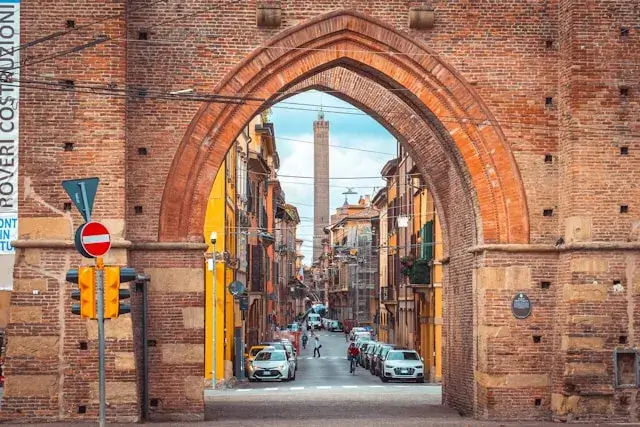
Bologna has long been defined by its three historic nicknames: La Dotta (The Learned), La Grassa (The Fat), and La Rossa (The Red).
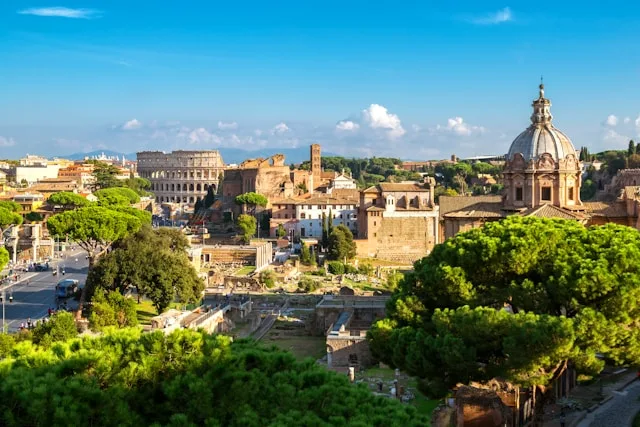
Rome holds a position in Europe's energy transition that no other city replicates. It is the global headquarters of Enel, the world's largest privately held renewable energy...

A source-scoped Milan real-estate hiring brief separating investment, development, delivery, asset management and operator responsibilities.
Use these pages to move between city clusters, sector pages, and supporting articles.
These are the questions most closely tied to how executive search really works in Italy.
Italy's executive talent concentrates in specialised industrial districts where the best candidates are deeply embedded in long-tenure roles. They do not respond to job advertisements. Reaching them requires direct, confidential outreach by consultants who understand the sector and the regional context. For international firms entering the Italian market, a search partner with local presence and compensation expertise reduces the risk of mis-calibrated offers and cultural misalignment.
Three factors distinguish Italy. First, the distretto model means talent clusters in narrow geographies. A search for a packaging machinery executive may involve 15 firms within 50 kilometres of Bologna. Second, demographic decline is compressing the senior talent supply faster than in most EU peers. Third, the north-south economic divide creates compensation and mobility dynamics that vary sharply by region. These factors make sector-specific, regionally informed search essential.
KiTalent is headquartered in Turin, which places the firm's senior consultants within Italy's industrial core. The approach combines continuous talent mapping across key sectors with direct headhunting into passive candidate networks. Every mandate benefits from real-time compensation benchmarking calibrated to the specific region and industry. The firm's structured assessment process, covering technical capability, leadership alignment, and cultural fit, delivers a 96% one-year retention rate.
KiTalent delivers initial shortlists within 7 to 10 days of mandate activation. This speed is possible because the firm maintains pre-mandate talent intelligence across Italy's core industrial corridors. In sectors where KiTalent runs continuous parallel mapping, such as automotive, machinery, and energy, shortlist timelines can be shorter still.
Yes. KiTalent covers all 20 Italian regions, from the industrial north through the central corridor to the Mezzogiorno and the islands. The firm's deepest networks run through Lombardy, Piedmont, Emilia-Romagna, and Lazio, but mandates regularly extend to Veneto, Tuscany, Campania, and Sicily. The full regional directory above links to dedicated pages for every region.
The EU Pay Transparency Directive, ESG reporting requirements under CSRD, and digital services regulation are reshaping executive role design across Italy. Chief Sustainability Officers, heads of regulatory affairs, and data protection leaders are now standard requirements for mid-sized and large firms. Italy's own administrative complexity, including slow permitting and regional regulatory variation, adds a layer that affects hiring timelines for roles in energy, infrastructure, and public-sector adjacent industries.
Whether you need a Chief Digital Officer in Milan, a VP of Supply Chain in Emilia-Romagna, a Head of Renewables in Rome, or a General Manager for an export-oriented manufacturer in Veneto, the starting point is the same: a precise understanding of your market, your competitors, and the candidates who can deliver.
What we bring to Italy executive mandates:
Executive search and direct headhunting · Talent mapping and market intelligence · Compensation benchmarking and mandate calibration · Connection to KiTalent's European headquarters in Turin and international executive search network.
Whether you are running a live mandate or want to pressure-test a brief before going to market, this is the right place to start the conversation.
Use these pieces to turn district, ownership and cross-border operating context into a scoped mandate and an evidence-led shortlist.
Applied research
For Italy, this separates geographic and competitor mapping from the evidence threshold required for an assessed shortlist.
Editorial
For Italy, this sets the circulation standard: mandate-relevant evidence before a profile is introduced to the client.
Author of record: Sonia Sarnataro, Associate Director, Southern Europe. Based on local market intelligence and executive-search data.
Share your CV and a sentence on the mandate types you'd consider. We respond within five working days.