
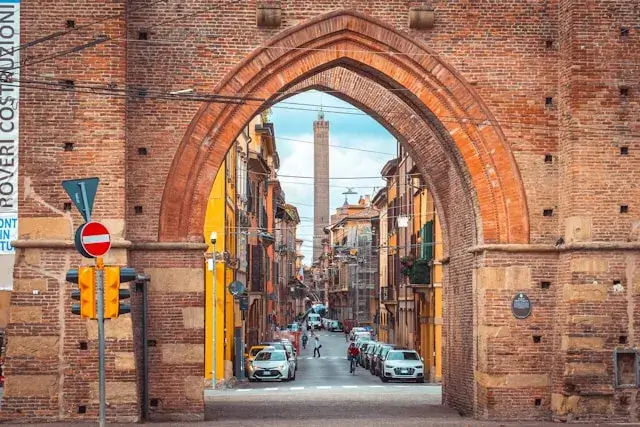
Recruitment Trends in Bologna 2025–2026: What Candidates and Companies Need to Know
Bologna has long been defined by its three historic nicknames: La Dotta (The Learned), La Grassa (The Fat), and La Rossa (The Red).
Emilia-Romagna, Italy Executive Search
with experience in Motor Valley engineering, export-led manufacturing, agri-food, packaging machinery and port-linked logistics. Searches in Emilia-Romagna are managed from KiTalent's Turin hub, with support from our other hubs when the candidate pool crosses markets. The region’s leadership market is shaped by mid-sized family champions, global industrial brands, and a dense corridor of specialised sites between Bologna, Modena and Parma.
Track record on suitable mandates: 7–10 working days to validated shortlist · 96% one-year retention · NPS 72. How we measure performance.
Standard recruitment fails here because the best candidates are already embedded in clusters, often in long tenures, and they respond to transformation briefs rather than job adverts. Search also has to respect local identity, where autonomy and craftsmanship can outweigh marginal salary uplift.
In the Bologna market, leaders sit close to universities, logistics infrastructure and corporate services, which increases demand but reduces visible availability. In the Modena market, Motor Valley supply chains create fast reference cycles, so reputation travels faster than CVs.
Executives often prefer roles within a practical commute, especially along the Bologna to Modena to Parma corridor. That makes relocation a real design constraint, not a late-stage negotiation detail, and it shifts which candidates will engage.
Lombardy, especially Milan, frequently pulls finance, strategy and digital leaders away from regional roles. Emilia-Romagna competes by offering broader mandates, clearer P&L ownership, and transformation scope that appeals to the passive majority of senior talent.
This is why our approach is built around sustained market intelligence, discreet outreach, and candidate assessment that fits regional realities, not generic process steps. KiTalent’s work in Italy is grounded in long-term relationships and consistent mapping, supported by what we publish on who we are.
Emilia-Romagna is not one talent pool. It is a set of specialist markets, each with its own candidate networks, pay norms, and reference points.
The Forlì market often produces executives who combine plant execution with modern automation expectations, which is scarce and therefore heavily competed.
In the Cesena market, leadership searches frequently prioritise operational discipline, quality systems and throughput improvement, with candidates valued for repeatable delivery.
The Faenza market can be relevant for materials-adjacent mandates where industrial process knowledge and export behaviour intersect.
The Imola market is often associated with engineering cadence and supplier coordination, which suits programme directors and industrialisation leaders.
The Mirandola market is widely recognised for regulated manufacturing capability, where leadership assessment needs to test quality systems maturity.
In the Carpi market, succession and modernisation mandates are common in mid-sized organisations, where ownership dynamics shape decision-making speed.
Executive mobility across Emilia-Romagna's cities is shaped by compensation expectations, relocation appetite, family considerations, and international exposure.
A search that maps where the right leaders actually operate, and understands the conditions under which they would consider a move, is fundamentally more effective than one that treats Emilia-Romagna as a flat national market.
Emilia-Romagna's executive search market is strongest where its economic specialisation is deepest.
Motor Valley continues to generate mandates for engineering, programme, manufacturing and supply-chain leaders, shaped by brands such as Ferrari, Lamborghini, Ducati, Maserati and Dallara. Demand concentrates around the Motor Valley corridor, including the Reggio Emilia market, and often requires international experience in the automotive sector.
Automotive & Mobility · Industrial, Manufacturing, and Robotics
Parma remains a core for food leadership needs, spanning product, regulatory, quality systems and export growth, supported by global players such as Barilla and Parmalat. The strongest concentration for these mandates is the Parma market, where senior hiring often sits at the intersection of operations and brand-led internationalisation in food and beverage.
The region’s packaging and automation ecosystem drives recurring searches for digital transformation leaders, after-sales heads, and global service executives, with names such as IMA Group and Datalogic shaping talent expectations. Many of these mandates cluster between Bologna and its industrial hinterland, and require leaders who can bridge OT and software within industrial automation and…
Semiconductors · Industrial Automation · AI, Technology & Digital Infrastructure
The Sassuolo tile district remains globally recognised for ceramic surfaces and industrial design, creating demand for plant general managers and international commercial directors who can manage channels and specification-driven sales. This market is anchored in the Sassuolo market and tends to recruit leaders with operational credibility in industrial manufacturing.
Ravenna’s role as a TEN-T core port and energy logistics node drives executive hiring for terminals, multi-modal supply chains and asset leadership, with growing relevance as investments move towards smart-port capabilities. The centre of gravity is the Ravenna market, where senior roles often combine compliance, operations and stakeholder management in energy and renewables.
Energy, Natural Resources & Infrastructure · Industrial, Manufacturing, and Robotics
Companies rarely need only reach in Emilia-Romagna. They need interpretation, calibration, and a search architecture that reflects the real structure of the market.
Our team runs Emilia-Romagna mandates through KiTalent's four regional hubs, combining local market intelligence with cross-border execution across Europe, the Americas, the Middle East, and Asia Pacific.
The strongest executives in Emilia-Romagna are passive. Our direct headhunting approach engages the passive majority of senior talent through discreet outreach rooted in real market knowledge.
Our parallel mapping methodology means we already hold live intelligence on restructuring, transition windows, compensation patterns, and candidate attraction opportunities when a brief arrives.
In Emilia-Romagna, the cost of a wrong executive hire extends far beyond the recruitment fee. Our Proof-First Search model lets clients see real market output and qualified candidates before the bulk of the investment is committed.
Nearby market moves worth watching across the region.
Bologna's executive market sits at the intersection of advanced manufacturing, agri-food innovation, and logistics infrastructure. From Ducati's Borgo Panigale production complex…
Carpi is one of Italy's most concentrated manufacturing economies: 71,600 residents, a €1.9 billion furniture and upholstery district, and a network of 400+ SMEs collectively…
Cesena sits at the intersection of Emilia-Romagna's packaging machinery corridor, a fast-maturing agri-tech cluster, and a health-tech ecosystem anchored by the Bufalini Hospital…
Faenza is where centuries of ceramic mastery meet advanced materials science, precision agri-food processing, and a dense SME manufacturing network that punches far above the…
These resources provide deeper market intelligence and explain how KiTalent turns insight into a faster, more transparent search process.
Bologna has long been defined by its three historic nicknames: La Dotta (The Learned), La Grassa (The Fat), and La Rossa (The Red).
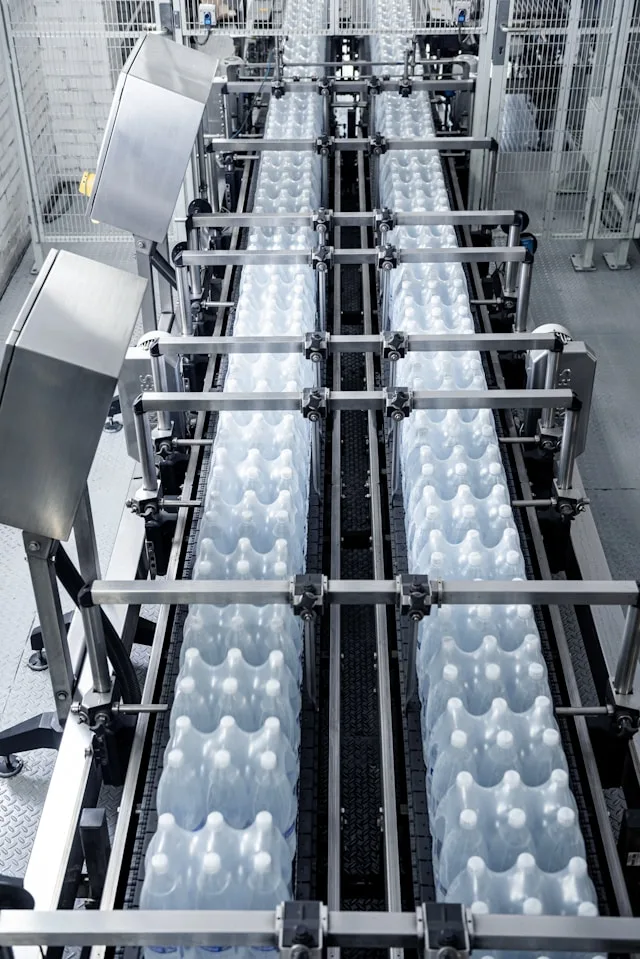
Bologna's Packaging Valley entered 2026 with a paradox that no amount of investment has resolved. The district's anchor companies reported order backlogs stretching beyond...
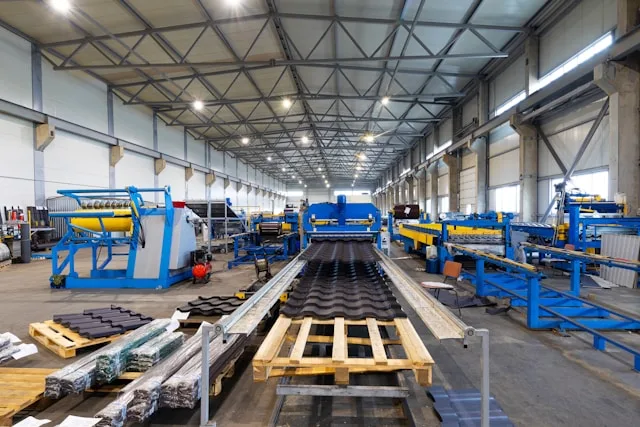
Sassuolo's ceramic machinery cluster generated over €2 billion in turnover in 2023, with 83% of that revenue flowing from export markets spanning the Middle East, Asia, and...
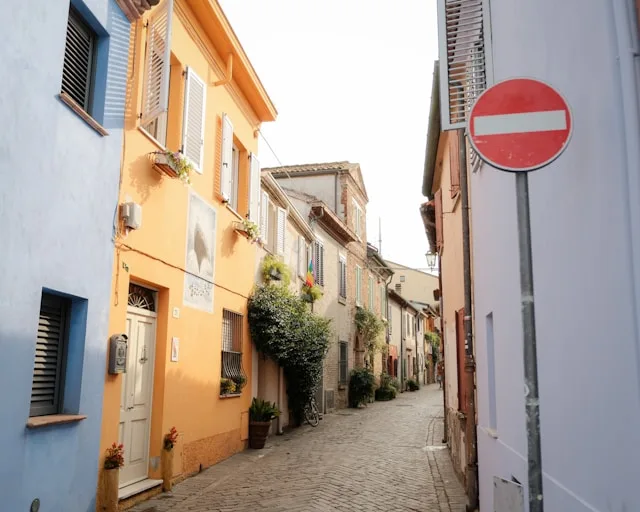
IEG's Rimini Fiera complex generates €1.8 billion in induced economic impact for the province, hosts 1.2 million visitors annually, and anchors an exhibition calendar of 45 or...
Use these pages to move between city clusters, sector pages, and supporting articles.
These are the questions most closely tied to how executive search really works in Emilia-Romagna.
Because many suitable leaders are passive, cluster-embedded, and cautious about confidentiality. Executive search reaches beyond active applicants and tests fit for transformation briefs, not only technical experience. It also reduces time lost on mispriced offers by using current market intelligence, especially when roles compete with Milan or Veneto for the same profiles.
Lombardy tends to offer deeper pools for corporate functions and higher cash compensation, especially around Milan. Veneto shares export intensity and SME dynamics, but Emilia-Romagna is often stronger in high-end automotive engineering and agri-food brand ecosystems. Tuscany competes on design and tourism-led leadership, while Emilia-Romagna is typically deeper for industrial C-suite and plant leadership roles.
We combine parallel mapping, discreet headhunting, and benchmarking so the shortlist is both realistic and closeable. We also design assessment around technical credibility and change leadership, which matters in industrial environments with strong stakeholder expectations. When the mandate needs broader reach, we integrate executive search with international outreach and relocation planning.
Shortlists typically take 7 to 10 days when the role scope and constraints are clear. Speed comes from pre-mandate mapping, not rushed screening. The practical constraint is usually candidate engagement and notice periods, especially for leaders in long-tenure roles within family-owned groups or global OEMs.
We benchmark total reward in a way that reflects Italian norms like TFR and welfare, while still recognising premium pay for hybrid technical and international commercial leaders. We also factor in differences between family-owned mid-caps, which may use equity or LTIPs, and international corporates that compete on total cash.
We support mandates for plant and site leaders, engineering and R&D directors, global supply-chain heads, and export commercial executives, with location realities from Bologna to Ravenna and from Modena to Rimini. Our team runs searches from the European HQ in Turin and can extend reach through international executive search when the required profile is scarce in-region.
What we bring to Emilia-Romagna executive mandates:
Executive search and direct headhunting · Talent mapping and market intelligence · Compensation benchmarking and mandate calibration · Connection to KiTalent's four regional hubs, Proof-First Search, and our international executive search network.
Whether you are running a live mandate or want to pressure-test a brief before going to market, this is the right place to start the conversation.
Author of record: Milena Vitale, Associate Director. Based on local market intelligence and executive-search data.
Share your CV and a sentence on the mandate types you'd consider. We respond within five working days.