The Hidden 80%
Why the strongest candidates never appear on job boards and how direct search reaches them.
Marche, Italy Executive Recruitment
supporting export-led manufacturing, nautical and maritime supply chains, and design-driven consumer goods. Marche is shaped by industrial districts and owner-managed mid-caps, with leadership demand split between coastal hubs and inland specialist towns. Executive hiring is most active around Ancona, Pesaro-Urbino, Macerata, Fermo, and Ascoli Piceno. 7–10 day shortlists · 80% passive talent reached · 42% faster · 96% retention \*Track record and approach: about, services, methodology
days to qualified shortlists in many searches
of relevant passive talent reached through direct headhunting
faster time-to-hire than traditional search benchmarks
one-year retention from KiTalent's broader methodology
These are KiTalent track-record figures referenced across our core about, services, and methodology pages.
Standard recruitment fails in Marche because senior talent is not concentrated in one city, and many leadership transitions sit inside family governance rather than formal succession plans. Advertising reaches the wrong candidates, and it compromises confidentiality in close-knit industrial communities.
Many businesses in Marche are led by founders or long-tenured insiders, even when export exposure is high. The brief is rarely just “find a CEO”. It is often a leadership reset that owners must recognise as safe and value-creating. That is why search design needs reference-led outreach and careful stakeholder alignment, not volume CV screening.
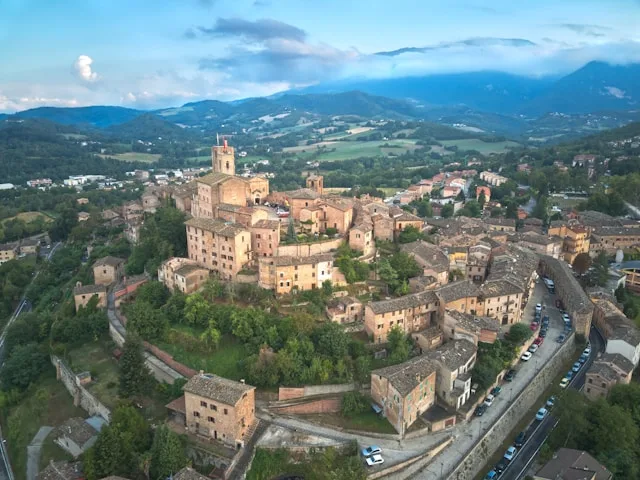
The region’s operating reality is dispersed, with HQs and plants spread across mid-sized towns and industrial corridors. Coastal connectivity concentrates commuting and supplier ecosystems, with the port and institutions around the Ancona executive market acting as a coordinating centre for maritime, logistics, and services. In the north, the Pesaro executive market anchors design manufacturing and export operations.
Marche has depth in specialised middle management, supported by vocational pathways and engineering talent pipelines. The shortage appears at C-level, especially for international P&L leaders, digital and Industry 4.0 change agents, and scalable commercial management. Emilia-Romagna and Lombardy increase the pull on compensation and career optionality, so mandates must be positioned as growth, impact, and governance progression. This is where a Go-To Partner model matters, supported by the hidden 80% and built on long-term market intelligence rather than one-off transactions.

Marche sits outside Italy’s deepest executive pools, so search must be designed to compete with the Milan-Turin-Bologna triangle without pretending Marche is Milan. The pitch needs to be about scope, legacy, and measurable change. Specifications must include governance reality from day one. In family-led businesses, authority, reporting, and decision rights determine whether a transformation leader succeeds. Mapping should be continuous, not reactive, because district competitors share suppliers, managers, and even informal reference chains. That is why talent mapping and talent pipeline development matter even before a mandate becomes urgent. Relocation needs to be engineered. Coastal commuting is easier than inland moves, so packages should combine practical support with a credible growth story, and sometimes equity or phantom equity. Some clients also need bridge leadership while they professionalise. This is where interim management protects delivery without forcing a rushed permanent hire. For mandates that must pull talent from other regions or countries, we align stakeholders early and use international executive search to widen the viable shortlist without losing local fit. Interim leadership solutions
The Ancona executive market concentrates programme leadership, naval engineering governance, and complex procurement profiles connected to shipbuilding and port activity. This work aligns with [maritime and shipbuilding…
In the Pesaro executive market, mandates often blend brand and export discipline with industrialisation, because design-led clusters win on execution as much as creativity. Many of these searches sit inside [industrial…
The Fermo executive market is closely associated with footwear and leather districts where commercial excellence and supplier control decide margins. Leadership briefs often intersect with luxury and retail leadership.
The Macerata executive market supports specialised manufacturing ecosystems that require product direction, quality leadership, and engineering management. Digital leadership demand often appears as manufacturing modernisation, tied to [industrial…
The Ascoli Piceno executive market links to Piceno’s food-processing and coastal fisheries identity, creating selective demand for commercial, export, and operational leadership within food and beverage.
Executive mobility across Marche's cities is shaped by compensation expectations, relocation appetite, family considerations, and international exposure.
A search that maps where the right leaders actually operate, and understands the conditions under which they would consider a move, is fundamentally more effective than one that treats Marche as a flat national market.
Marche's executive search market is strongest where its economic specialisation is deepest.
The strongest corridor runs through Fermo’s executive market and the Macerata executive market, where export pressure drives demand for international commercial leadership, product direction, and supply-chain control. Groups like TOD’S, headquartered in Sant’Elpidio a Mare, anchor executive expectations and…
The Pesaro district, with Scavolini as a flagship, creates recurring hiring for category leadership, export directors, and industrialisation heads who can translate design into repeatable production. Many mandates sit inside industrial manufacturing where operational excellence must keep pace with international delivery commitments.
The Fabriano area’s Merloni and Indesit heritage continues to shape leadership needs for plant performance, engineering governance, and manufacturing transformation. These briefs are typically about reliability, cost, and quality systems, with increasing attention to automation capability in supplier networks. Where buyers require traceability and modern production control, the link to…
The Port of Ancona and nearby coastal yards support a cluster where Fincantieri is a key reference point for project, engineering, and supply-chain executives. Leadership demand often combines programme delivery discipline with supplier development, because the region’s district model produces many niche contributors. This is central to [maritime and shipbuilding…
In the south, the Piceno and coastal economy supports branded and commodity segments tied to processing and distribution, including San Benedetto del Tronto’s fisheries identity. This underpins selective demand for category leadership and export route-to-market capability in food and beverage, especially when companies professionalise governance and reporting.
Companies rarely need only reach in Marche. They need interpretation, calibration, and a search architecture that reflects the real structure of the market.
Our team coordinates Marche mandates from our European headquarters in Turin, with direct access to the talent intelligence, compensation dynamics, and sector developments that drive search outcomes.
The strongest executives in Marche are passive. Our direct headhunting approach engages the hidden 80% of passive talent through discreet outreach rooted in real market knowledge.
Our parallel mapping methodology means we already hold live intelligence on restructuring, transition windows, compensation patterns, and candidate attraction opportunities when a brief arrives.
In Marche, the cost of a wrong executive hire extends far beyond the recruitment fee. Our interview-fee model lets clients see real market output and qualified candidates before the bulk of the investment is committed.
Marche is not one talent pool. It is a network of districts where leadership demand follows product specialisation, supply-chain density, and export routes.
We build a live map of target companies, adjacent sectors, and likely passive candidates, so the shortlist is evidence-led rather than opinion-led. This approach is defined in our methodology.
The strongest candidates are usually performing well elsewhere, often in northern groups or international roles. We use headhunting supported by the logic behind the hidden 80%, with confidential outreach and clear role narratives.
In Marche, “competitive pay” means different things for a family SME versus a scaling exporter. We apply market benchmarking to align pay, TFR structures, benefits, and relocation terms with the reality of peer clusters.
The Ancona executive market concentrates programme leadership, naval engineering governance, and complex procurement profiles connected to shipbuilding and port activity. This work aligns with maritime and shipbuilding leadership.
These resources provide deeper market intelligence and explain how KiTalent turns insight into a faster, more transparent search process.
Why the strongest candidates never appear on job boards and how direct search reaches them.
What a failed senior appointment really costs, and how the right search process prevents it.
How parallel mapping, direct headhunting, and a visible process reduce time-to-hire and improve search outcomes.
Where executive search, talent mapping, compensation benchmarking, and interim solutions fit together.
Use these pages to move between city clusters, sector pages, and supporting articles.
These are the questions most closely tied to how executive search really works in Marche.
Because the best candidates are often not visible, and the region’s district economy makes confidential referencing essential. Many roles also sit inside family governance, where success depends on stakeholder trust as much as technical competence. A search partner should be able to map passive talent, test motivations for relocation, and run assessment that covers both commercial outcomes and cultural fit. For roles tied to export and transformation, a process built on executive search discipline is usually safer than contingent recruitment.
Emilia-Romagna is larger and more diversified, with deeper executive pools in advanced machinery, logistics, and broader services. Lombardy, led by Milan, remains Italy’s command centre for finance, private equity, and large groups, so it attracts many international P&L and digital leaders. Marche competes through sector specialisation, export identity, and owner access, but it often needs stronger mission narratives and carefully calibrated reward to win scarce profiles. Coastal infrastructure like the Port of Ancona also changes how supply chains and leadership mobility work.
We treat Marche as a set of sub-markets, then map targets by district logic rather than city boundaries. We align owners and internal stakeholders early, because role authority and governance define success in family-influenced environments. We use direct outreach to reach passive candidates, then assess using business case work and cultural fit exercises suited to professionalisation transitions. When compensation is sensitive, we bring benchmarking to the table early, including Italian norms like TFR and benefits, and we keep weekly transparency throughout the process.
For well-defined briefs, we typically produce a qualified shortlist within 7 to 10 days, because we start from parallel mapping rather than starting from scratch. Speed does not mean rushing assessment. It means beginning with a precise target universe, using confidential outreach, and validating role fit early. Timing can extend when relocation is complex, when candidates sit in stable northern roles, or when governance stakeholders require additional alignment. In those cases, process clarity and weekly reporting usually protect momentum.
They can, especially for exporters selling into regulated buyer ecosystems. ESG reporting expectations and supply-chain transparency requirements often shape the need for sustainability and compliance leadership, even inside mid-caps. Pay transparency direction at EU level also pushes organisations towards clearer role architecture and compensation logic, which affects senior hiring discussions. Many companies handle this through a mix of CFO, HR, and operational leadership, supported by external counsel for contract design.
Because the best candidates are often not visible, and the region’s district economy makes confidential referencing essential. Many roles also sit inside family governance, where success depends on stakeholder trust as much as technical competence. A search partner should be able to map passive talent, test motivations for relocation, and run assessment that covers both commercial outcomes and cultural fit. For roles tied to export and transformation, a process built on executive search discipline is usually safer than contingent recruitment.
Emilia-Romagna is larger and more diversified, with deeper executive pools in advanced machinery, logistics, and broader services. Lombardy, led by Milan, remains Italy’s command centre for finance, private equity, and large groups, so it attracts many international P&L and digital leaders. Marche competes through sector specialisation, export identity, and owner access, but it often needs stronger mission narratives and carefully calibrated reward to win scarce profiles. Coastal infrastructure like the Port of Ancona also changes how supply chains and leadership mobility work.
We treat Marche as a set of sub-markets, then map targets by district logic rather than city boundaries. We align owners and internal stakeholders early, because role authority and governance define success in family-influenced environments. We use direct outreach to reach passive candidates, then assess using business case work and cultural fit exercises suited to professionalisation transitions. When compensation is sensitive, we bring benchmarking to the table early, including Italian norms like TFR and benefits, and we keep weekly transparency throughout the process.
For well-defined briefs, we typically produce a qualified shortlist within 7 to 10 days, because we start from parallel mapping rather than starting from scratch. Speed does not mean rushing assessment. It means beginning with a precise target universe, using confidential outreach, and validating role fit early. Timing can extend when relocation is complex, when candidates sit in stable northern roles, or when governance stakeholders require additional alignment. In those cases, process clarity and weekly reporting usually protect momentum.
They can, especially for exporters selling into regulated buyer ecosystems. ESG reporting expectations and supply-chain transparency requirements often shape the need for sustainability and compliance leadership, even inside mid-caps. Pay transparency direction at EU level also pushes organisations towards clearer role architecture and compensation logic, which affects senior hiring discussions. Many companies handle this through a mix of CFO, HR, and operational leadership, supported by external counsel for contract design.
We support CEO succession, export leadership, operations and plant leadership, and finance governance roles, with demand commonly anchored around Ancona and the northern Pesaro-Urbino axis, and extending through the footwear and leather corridor. Many briefs require a mix of local district credibility and out-of-region reach, especially for international commercial and digital leadership.
What we bring to Marche executive mandates:
South & Islands Campania · Apulia · Calabria · Basilicata · Sicily · Sardinia
Whether you are running a live mandate or want to pressure-test a brief before going to market, this is the right place to start the conversation.