
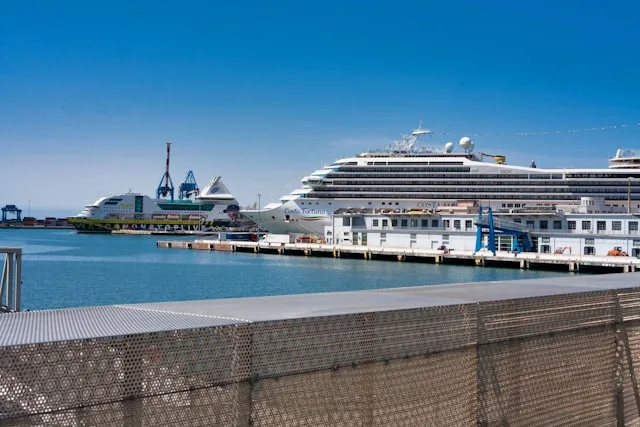
Genoa Shipbuilding: Translate the Orderbook into a Leadership Mandate
A source-scoped Genoa shipbuilding hiring brief connecting documented Sestri Ponente work to programme, systems and yard-leadership evidence.
Liguria, Italy Executive Search
Liguria’s leadership market is shaped by maritime logistics, shipbuilding and super‑yacht manufacturing, advanced engineering in energy and defence, and a fast-developing research-to-industry corridor in Genoa. Searches in Liguria are managed from KiTalent's Turin hub, with support from our other hubs when the candidate pool crosses markets. Demand concentrates along a narrow coastal strip, with distinct sub-markets in Genoa, La Spezia, and Savona/Vado Ligure.
Track record on suitable mandates: 7–10 working days to validated shortlist · 96% one-year retention · NPS 72. How we measure performance.
In Liguria, the hardest roles sit in tight specialist communities where reputation travels quickly, incumbents are often passive, and operational constraints limit “quick win” changes after hiring. Standard recruitment underperforms because it over-indexes on visible candidates and ignores how ports, shipyards, and regulated engineering programmes actually mobilise leadership.
The senior market in Genoa is anchored by the port complex, corporate services, and research institutions, while La Spezia skews to naval industry and yacht production, and Savona is driven by Vado Ligure terminal operations. The geography compresses commuting options, so a “one shortlist fits all” approach misreads mobility and availability.
Port and shipyard environments bring union relations and compliance into the core of the role, not the periphery. This shifts assessment towards credibility with workforce stakeholders, delivery discipline, and measured change management, especially where industrial action risk affects operational continuity.
Liguria competes with Milan and Turin for senior technical and commercial executives, while maritime and logistics leaders can also be pulled towards wider Mediterranean opportunities. That is why searches need the discipline to reach the passive majority of senior talent and the judgement to position the mandate as a credible programme, not just a title. This is where a directly engaged search partnership model helps: continuous mapping, calibrated propositions, and process transparency reduce risk in a market where shortlists are small and counteroffers are common.
Liguria is not one talent pool. It is a set of coastal micro-markets, each with its own employer mix, stakeholder dynamics, and candidate availability.
In Genoa, port-community complexity creates demand for terminal and port services leaders who can combine operational control with regulatory and union fluency. This aligns with maritime and shipbuilding mandates where continuity of operations is a board-level concern.
Around Savona and Vado Ligure, the leadership market favours operators who have run high-throughput environments and can deliver measurable performance while managing labour relations. The strongest overlaps sit within industrial manufacturing style operating models, applied to logistics…
La Spezia concentrates senior production and programme leadership that is rare in Italy, because it sits at the intersection of precision manufacturing, artisan capability, and export customer expectations. These hires often straddle maritime and shipbuilding and complex project delivery…
Genoa-based engineering groups create leadership needs in project governance, systems engineering, and international contracting, with an executive skill set closer to oil, energy and renewables than to generalist manufacturing.
Across Genoa and La Spezia, defence supply-chain leadership requires high-trust assessment, evidence of delivery in regulated contexts, and mature governance. This is where sector-native search in aerospace, defence and space protects both client and candidate confidentiality.
Executive mobility across Liguria's cities is shaped by compensation expectations, relocation appetite, family considerations, and international exposure.
A search that maps where the right leaders actually operate, and understands the conditions under which they would consider a move, is fundamentally more effective than one that treats Liguria as a flat national market.
Liguria's executive search market is strongest where its economic specialisation is deepest.
In Genoa, the Port of Genoa ecosystem and terminal operators such as PSA/SECH sustain repeat demand for terminal leadership, commercial heads, and operations transformation. In Savona, Vado Ligure’s Vado Gateway container terminal drives mandates spanning terminal operations, cold-chain handling leadership, and port-community digital change. This work aligns most closely with the maritime and…
Industrial, Manufacturing, and Robotics · Shipbuilding & Marine
La Spezia concentrates naval and super‑yacht production, with Ferretti Group, Baglietto, and Sanlorenzo’s local footprint reinforcing long-cycle programmes that require production directors, programme leaders, and procurement heads. Given the export orientation and engineering specificity, leadership hiring here often crosses into broader industrial manufacturing requirements.
Genoa’s industrial base, including Ansaldo Energia and its associated supply chain, creates demand for senior engineering, project delivery, and export-commercial leaders who can carry accountability through complex delivery and international contracting. The leadership profile often overlaps with the oil, energy and renewables sector, especially where energy transition programmes reshape…
Liguria’s defence supply chains, including Leonardo’s presence across Genoa and La Spezia sites, reinforce needs for technical programme leadership, security governance, and compliance leadership tied to regulated markets. These mandates map naturally to aerospace, defence and space hiring patterns, where confidentiality and stakeholder alignment are non-negotiable.
Genoa’s Italian Institute of Technology and the University of Genoa, alongside GREAT campus initiatives, are increasing demand for R&D management, tech transfer leadership, and productisation capability in high-performance computing, bioinformatics, and applied AI. This pulls in leaders from AI and technology and, where clinical or translational interfaces matter, healthcare and life sciences.
Companies rarely need only reach in Liguria. They need interpretation, calibration, and a search architecture that reflects the real structure of the market.
Our team runs Liguria mandates through KiTalent's four regional hubs, combining local market intelligence with cross-border execution across Europe, the Americas, the Middle East, and Asia Pacific.
The strongest executives in Liguria are passive. Our direct headhunting approach engages the passive majority of senior talent through discreet outreach rooted in real market knowledge.
Our parallel mapping methodology means we already hold live intelligence on restructuring, transition windows, compensation patterns, and candidate attraction opportunities when a brief arrives.
In Liguria, the cost of a wrong executive hire extends far beyond the recruitment fee. Our Proof-First Search model lets clients see real market output and qualified candidates before the bulk of the investment is committed.
Nearby market moves worth watching across the region.
Italy's primary maritime-logistics gateway, a green hydrogen pioneer, and the testing ground for hard-to-abate sector decarbonisation. Genoa's executive market is shaped by the…
La Spezia is Italy's centre of gravity for underwater defence technology, a container port processing 1.45 million TEU annually, and the testing ground for Europe's next…
Executive Recruiters in Savona, Italy
These resources provide deeper market intelligence and explain how KiTalent turns insight into a faster, more transparent search process.
A source-scoped Genoa shipbuilding hiring brief connecting documented Sestri Ponente work to programme, systems and yard-leadership evidence.
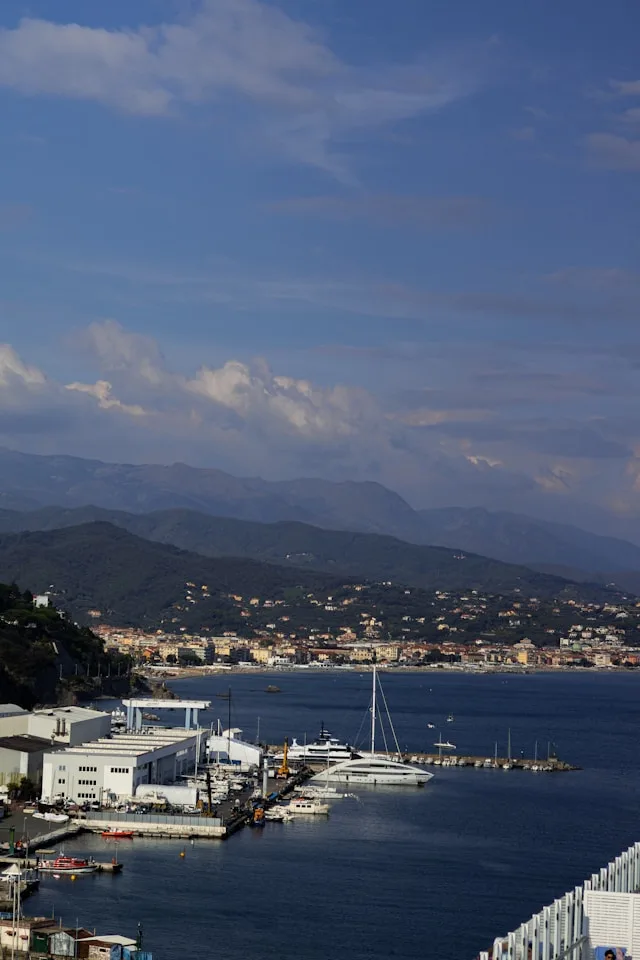
The Vado Gateway container terminal in Savona processed roughly 850,000 TEU in 2024. Automated stacking cranes and remote controlled ship to shore systems run around the clock...
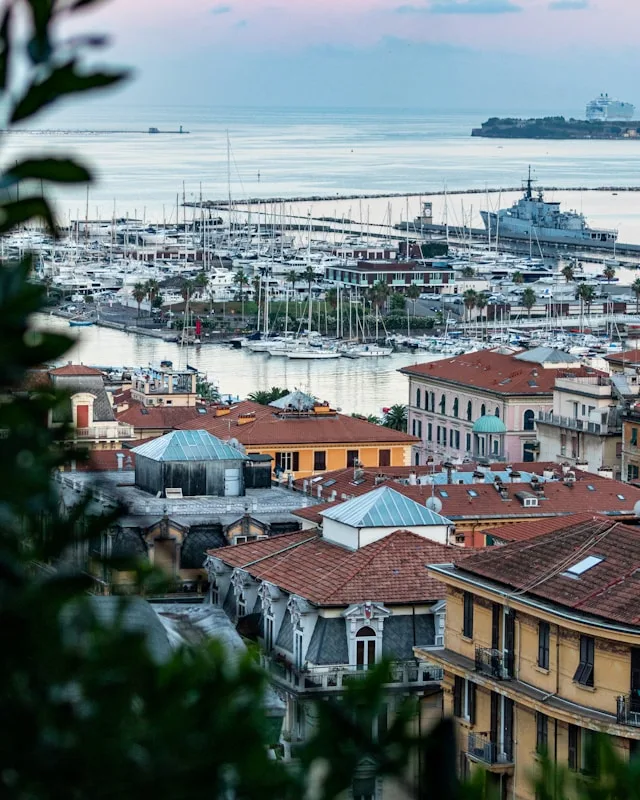
A source-scoped La Spezia brief for cruise, marina, refit and yacht leadership, grounded in the port authority's 2025 reporting.
Use these pages to move between city clusters, sector pages, and supporting articles.
These are the questions most closely tied to how executive search really works in Liguria.
Liguria’s leadership market is concentrated in a few coastal clusters, and the best candidates are commonly employed, well-networked, and cautious about visibility. Executive recruiters add value by combining discreet outreach with evidence-based assessment of delivery credibility in ports, shipyards, and regulated engineering. A good process also reduces acceptance risk by addressing relocation constraints, stakeholder expectations, and union context early, rather than trying to negotiate them after final interview.
Compared with Lombardy, Liguria is more sector-concentrated and less services-diversified, so the shortlist is typically smaller and more specialised. Compared with Piedmont, Liguria leans into maritime logistics and naval-linked industry, which requires domain experience not always present in automotive-heavy talent pools. Compared with Tuscany, Liguria’s yacht activity is closer to naval and port ecosystems, so operations and compliance expectations can be tougher. These differences change both candidate targeting and assessment.
We begin with mapping and role calibration, then run discreet direct outreach to reach passive leaders in ports, shipbuilding, and advanced engineering. We keep clients close to the market with weekly visibility, and we use benchmarking to keep offers credible against Milan and Turin competition. When shortlists are tight, we broaden the search carefully while keeping local stakeholder fit central. The goal is not volume: it is a shortlist that will deliver in Liguria’s operating reality.
Speed depends on role specificity and stakeholder sensitivity, but we typically move quickly because mapping runs in parallel with outreach. For common leadership profiles in port operations, engineering programme delivery, or functional leadership, an initial shortlist is often feasible within 7 to 10 days when the brief is clear and availability for interviews is protected. Where confidentiality is critical, timelines may extend slightly to preserve discretion and protect employer brand.
Yes. Interim coverage is useful when a port, terminal, or shipyard cannot absorb a leadership gap during a programme phase, or when union and communications planning needs time before a permanent hire. Interim leaders can stabilise delivery, protect KPIs, and prepare handover conditions, while the permanent search proceeds with the right governance and market reach.
If you are hiring port and terminal leaders in Genoa or Savona, shipbuilding and programme leadership in La Spezia, or R&D translation leadership in Genoa’s research ecosystem, we can help you define the market and build a credible shortlist.
What we bring to Liguria executive mandates:
Executive search and direct headhunting · Talent mapping and market intelligence · Compensation benchmarking and mandate calibration · Connection to KiTalent's four regional hubs, Proof-First Search, and our international executive search network.
Whether you are running a live mandate or want to pressure-test a brief before going to market, this is the right place to start the conversation.
Author of record: Milena Vitale, Associate Director. Based on local market intelligence and executive-search data.
Share your CV and a sentence on the mandate types you'd consider. We respond within five working days.