Genoa's Energy Transition Is Outpacing the Workforce Built to Deliver It
Genoa has committed billions to an energy transition that now spans three distinct frontiers: the expansion of Italy's largest independent renewable portfolio, the conversion of legacy gas turbine manufacturing to hydrogen-ready technology, and the repositioning of one of the Mediterranean's busiest ports from crude oil logistics to LNG and alternative fuels. The capital is flowing. The infrastructure plans are in motion. But the people required to execute them are not arriving at the speed the investment demands.
The core problem is not a general labour shortage. It is a mismatch between the specific technical competencies this transition requires and the professionals available in the Ligurian market. Permitting specialists who can move a wind farm through Italy's notoriously slow Single Authorisation process in under four years. Battery storage integration engineers who can couple grid-scale systems with hybrid renewable plants. Floating wind structural engineers who, as of the most recent skills assessment, effectively do not exist within the local talent pool. These are the roles where Genoa's transition stalls, and they cannot be filled through conventional recruitment.
What follows is a structured analysis of why Genoa's energy sector is hiring aggressively while simultaneously failing to close its most critical searches, what the compensation dynamics look like across the roles that matter most, and what senior hiring leaders must understand about a market where 90% of the candidates they need are not looking for a new role.
Genoa's Dual-Engine Energy Economy in 2026
Genoa's energy and renewables sector does not conform to the profile of a typical European renewable energy hub. Most cities in this space are dominated by a single employer or a single technology. Genoa runs on two engines that operate in fundamentally different ways, and understanding the distinction is essential for anyone hiring into this market.
The first engine is ERG S.p.A., headquartered at the World Trade Center on Via De Marini. ERG operates approximately 3.2 GW of installed renewable capacity across onshore wind, solar, and hydroelectric assets. Its 2024 to 2027 strategic plan, "Growth Through Sustainability," targets 800 MW of new capacity by 2027, with roughly 200 MW that came online through late 2025 and a further 600 MW scheduled for completion by end of 2026. The critical point: while the generation assets sit across Southern Italy, the development, financing, permitting, and M&A functions are centralised in Genoa. The company employs approximately 750 staff at the headquarters, including 320 technical and engineering professionals focused on asset optimisation and the repowering of legacy 1990s-era wind farms.
The second engine is Ansaldo Energia, operating from its Campi district campus with roughly 3,200 direct staff in the metropolitan area. Ansaldo holds an order backlog of €4.1 billion as of mid-2024 and serves as the global centre for heavy-duty gas turbine design and manufacturing. The company is currently transitioning its GT26 and GT36 turbine lines to hydrogen-ready configurations. This is not a minor product refresh. It is a wholesale re-engineering of combustion systems and materials science, requiring metallurgical expertise in hydrogen embrittlement that barely existed as a commercial discipline five years ago.
The Port's Quiet Transformation
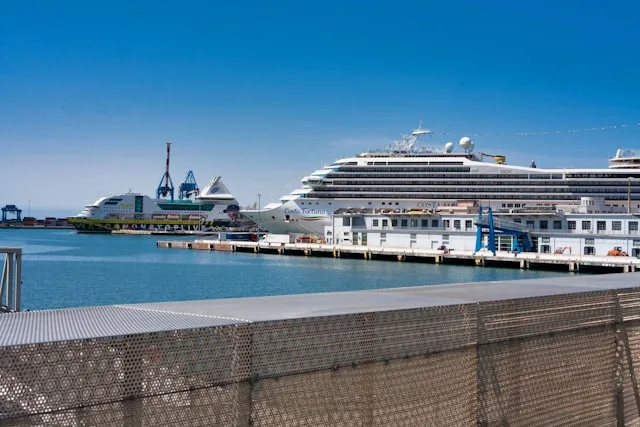
Overlaying both engines is the Port of Genoa itself, which handled approximately 24.5 million tonnes of liquid bulk energy products in 2023. That figure was down 8% year-on-year following the definitive closure of Eni's Multedo refinery in January 2022. But the decline in crude volumes masks a counter-trend: LNG bunkering volumes rose 34% to 420,000 tonnes in the same period. The port is not shrinking its energy footprint. It is replacing one kind of energy with another.
The former Multedo refinery site is now being evaluated as the "Multedo Energy Hub," with Snam and the Port Authority examining feasibility for hydrogen and ammonia import terminal capacity. The feasibility study, co-funded by the EU Innovation Fund, was expected to conclude in 2025. If approved, construction of an ammonia-to-hydrogen cracking facility could commence in 2026, with full operational capacity not anticipated before 2028 to 2029. The timeline matters for hiring leaders because it means the talent pipeline for process engineers and hydrogen safety specialists needs to be built now, years before the facility becomes operational.
The Permitting Bottleneck That Shapes Every Hire
Italy's "Autorizzazione Unica" process for new renewable energy projects averages 3.8 years from application to approval, according to WindEurope's Wind Barriers Report 2024. In Liguria, the timeline runs above the national average due to complex topography and proximity to dense urban areas. This is not background context. It is the single most important factor shaping Genoa's energy talent market.
Here is why. ERG's public commitment to add 800 MW by 2027 implies a need for approximately 120 to 150 new full-time employees in project execution and development. But if the average Italian permitting timeline is 3.8 years, projects scheduled for 2026 commercial operation dates should already be fully permitted. ERG's disclosed pipeline shows a meaningful portion of its projects still in early-stage authorisation. The gap between the corporate hiring signal and the structural execution capacity creates a paradox that defines the market.
What This Means for Talent Demand
ERG and other developers are recruiting aggressively for development and strategy talent. At the same time, the permitting system cannot process authorisations at the velocity required to deploy capital. The likely outcome is a future surplus in strategy and corporate development roles while execution-focused positions face impossible project deadlines. Hiring leaders must recognise that the most valuable professionals in this market are not those who can design a project. They are those who can move a project through a regulatory system that was not built for the speed the energy transition demands.
Permitting and regulatory affairs managers capable of running the Autorizzazione Unica process are the hardest roles to fill in Genoa's energy sector. Average time-to-fill exceeds 120 days. Vacancy rates for senior roles sit at 18%, according to Hays Italy's Energy and Utilities Salary Guide 2024. The bottleneck is not compensation. It is that the competency itself is rare. Italy produces regulatory expertise through years of accumulated project experience, not through university programmes, and the small cohort of professionals who have shepherded multiple projects through the full cycle are in roles they have no incentive to leave.
Three Shortages That Cannot Be Recruited Away
The aggregate demand increase for energy sector professionals in Liguria, up 34% in the first three quarters of 2024 compared to the same period in 2023, obscures the concentration of pressure in three specific verticals. Each shortage has a different root cause, and each requires a different response.
Battery Storage Integration Engineers
The coupling of grid-scale battery energy storage systems with wind and solar installations is moving from pilot phase to standard practice across Italy. ERG's expansion plan incorporates hybrid plant designs that require proficiency in PVSyst, WindPRO, and PSCAD modelling tools. The Ligurian market contains an estimated 45 qualified BESS integration engineers against demand for more than 120, according to Michael Page Italy's Energy Transition Report 2024. The deficit is not cyclical. It reflects the fact that this specialism barely existed as a distinct engineering discipline before 2020, and Italian universities are only now embedding storage systems into their power engineering curricula.
Floating Wind Structural Engineers
Italy has no operational floating wind farms. The 420 MW Nour project off Sardinia and potential Ligurian offshore zones represent the near-term pipeline, with Ansaldo Energia and Saipem acting as consortium partners for floating substructures. Genoa is positioning itself as the engineering hub for Tyrrhenian Sea projects, anticipating first commercial installations by 2026 to 2027. But the DLE Skills Gap Analysis 2024 found effectively zero local supply of engineers with specific competence in semi-submersible and tension-leg platform design. Every hire in this category is an external expatriate or a consultant brought in from Milan or Turin. The market is not tight. It is empty.
Hydrogen Safety and Materials Specialists
Ansaldo's conversion to hydrogen-ready turbine technology and the Multedo Energy Hub's potential ammonia cracking operations both require specialists in metallurgy for hydrogen environments and ammonia handling protocols. This competency sits at the intersection of traditional petrochemical process safety and next-generation fuel systems. The problem is that the professionals with closest adjacency, former Multedo refinery workers, hold competencies in hydrocracking and catalytic reforming that overlap less than 15% with ammonia cracking and hydrogen storage requirements. The political narrative of a "just transition" where former refinery workers staff the new energy hub contradicts the technical reality. The future workforce for these facilities will be recruited externally, most likely from Milan or internationally, rather than reskilled locally.
This is the original analytical claim that this data supports but that the research does not state directly: Genoa's just transition story and its actual talent requirements are moving in opposite directions. The political framework assumes skill transferability from hydrocarbon to hydrogen. The technical data shows the two workforces are almost entirely different populations. Capital moved faster than human capital could follow, and the mismatch is widening because the new roles require competencies that did not exist when the old roles were eliminated. Hiring leaders who plan based on the transition narrative rather than the competency gap will find themselves building teams that cannot execute.
Compensation in Genoa: The Milan Discount and Its Consequences
Executive roles in Genoa's energy sector trade at a 15 to 20% discount to equivalent positions in Milan. The differential is well understood locally and frequently cited as a cost-of-living adjustment. But framing it as a discount understates the problem. It is a structural drain.
At the senior specialist and manager level, renewable project development roles command €75,000 to €95,000 base salary plus 10 to 15% bonus in Genoa. Energy trading and risk management specialists sit higher, at €85,000 to €110,000 base with 20 to 40% bonus potential, reflecting the P&L-linked nature of trading compensation. Operations and maintenance roles for wind and solar assets fall lower, at €55,000 to €70,000 base, where the scarcity in predictive maintenance analytics has not yet forced compensation upward.
At the executive and VP level, the ranges widen considerably. Renewable project development leadership commands €140,000 to €180,000 base plus 30 to 50% short-term incentive and long-term equity. Energy trading heads reach €160,000 to €220,000 base with bonus potential of 60 to 100%, heavily variable with P&L performance. The most senior technology and chief engineering roles, particularly at Ansaldo and ERG, command €180,000 to €250,000 base plus equity participation.
Why the Retention Bonuses Are Not Enough
ERG and Ansaldo have introduced retention bonuses of €30,000 to €50,000 annually with cliff-vesting structures. These are designed to prevent poaching by Milan-based utilities and international OEMs. The mechanism is rational on paper. But it does not address the deeper issue.
Milan offers 20 to 30% higher base compensation for energy trading, corporate development, and finance roles. More critically, it offers superior long-term career mobility within diversified utilities. A2A, Edison's headquarters operations, and Enel all sit in Milan and offer faster progression paths for commercially oriented professionals. Genoa-based trading professionals frequently commute or relocate once they reach senior manager level. The retention bonus keeps them for the vesting period. It does not keep them permanently.
Turin compounds the problem from the engineering side. Stellantis, Ferrari, and Iveco compete aggressively for mechanical, electrical, and control systems engineers, offering 10 to 15% premiums over Ansaldo Energia's industrial salary bands and faster promotion cycles to principal engineer levels. For the hydrogen and floating wind niches, competition extends internationally. Barcelona's offshore wind hub development and Hamburg's Northern European hydrogen corridor both offer English-speaking environments and higher expatriate packages, though Genoa counters with quality of life and lower cost of living. The question is whether quality of life is sufficient to move a specialist who has multiple offers in hand. For the roles that matter most, it increasingly is not.
Anyone responsible for benchmarking senior compensation in this market must account for the fact that the relevant competitor set is not limited to other Genoa employers. It includes Milan, Turin, Barcelona, and Hamburg.
The Passive Candidate Problem
Genoa's energy sector has a passive candidate concentration that makes conventional recruitment methods functionally useless for the roles with the greatest impact.
Among senior energy traders with seven or more years of P&L responsibility, approximately 90% are currently employed and not active in the job market. Their average tenure is 5.2 years and they are incentivised by multi-year bonus deferrals that make mid-cycle departures financially punishing. Among floating wind lead engineers, the roughly 35 qualified individuals nationally are all engaged in feasibility studies or early-phase projects. This is a 95% passive candidate market. Among grid integration specialists for high and medium voltage systems, unemployment in Liguria sits at 2.1% versus 5.8% for general engineering, indicating that transitions happen only when triggered by considerable compensation step-ups or equity participation.
These ratios mean that job postings, career fairs, and inbound applications reach at most the bottom 5 to 10% of the available talent pool. The 80% of executives and specialists who are not actively looking must be identified, mapped, and approached through direct methods. The University of Genoa's DITEN department graduates approximately 280 MSc-level energy engineers annually, and the Istituto Italiano di Tecnologia employs 150 researchers with industrial partnership programmes. These pipelines produce capable graduates. They do not produce the mid-career professionals with 10 to 15 years of execution experience that the current market needs most.
The gap between what the academic pipeline delivers and what hiring leaders need is temporal. It takes a decade to develop a permitting specialist or a senior energy trader. There is no shortcut, and the current demand cannot wait.
Grid Saturation and the Coming Constraint
One risk that does not appear on most hiring leaders' radar is the physical infrastructure ceiling approaching Genoa's energy market. Terna's National Grid Development Plan 2024 identifies the Genoa to Ventimiglia transmission axis as facing saturation risks by 2026. If grid reinforcement does not keep pace with ERG's solar capacity additions, new generation assets may be unable to connect, stranding both capital and the teams hired to deliver those projects.
For hiring leaders, grid saturation introduces a scenario planning dimension that pure demand forecasting misses. If connection delays materialise, project development teams may face a period of enforced inactivity. The cost of that inactivity is not just idle capital. It is the retention risk of holding highly mobile specialists in roles where projects have stalled. A senior project developer sitting through an 18-month connection delay is a candidate who will take a call from a Milan-based competitor.
The intersection of permitting delays and grid saturation is where Genoa's energy hiring challenge becomes genuinely distinct from other European markets. Most renewable energy hubs face talent shortages. Genoa faces talent shortages compounded by systemic delivery constraints that reduce the effective throughput of the talent it does manage to hire. The investment is present. The intent is present. But the physical and regulatory infrastructure cannot move at the speed the capital requires, and the people caught between those timelines are the ones most likely to leave.
What Senior Hiring Leaders Must Do Differently in This Market
The data makes a clear case. Genoa is not a market where conventional search methods produce results for the roles that determine whether the energy transition delivers on its timeline. A senior project developer search in this market typically runs six to nine months. Forty percent of searches for these roles fail to close within the standard 90-day window, forcing employers to relocate Milan-based talent with hybrid working arrangements. Trading and logistics firms operating in the port area command 25 to 35% salary premiums when moving senior operations managers, according to Michael Page Italy's Trading and Risk Management Salary Survey 2024.
Speed matters. But method matters more.
The professionals who can move a wind farm through the Autorizzazione Unica process, who can design a hybrid wind-solar-storage plant, or who can manage a hydrogen turbine conversion programme are not reading job advertisements. They are embedded in roles where they are solving problems that most of the market has not yet encountered. Reaching them requires direct identification and approach, precise talent mapping of where the competency clusters sit, and a proposition that addresses not just compensation but the specific career calculation each candidate faces.
For organisations competing for energy transition leadership in Genoa, where fewer than 50 qualified professionals exist nationally for some of the most critical roles and the cost of a vacant position is measured in project delays that compound for years, start a conversation with our executive search team about how KiTalent approaches this market. KiTalent delivers interview-ready executive candidates within 7 to 10 days through AI-enhanced talent mapping and direct identification, reaching the passive specialists that job boards and conventional agencies cannot access. With a 96% one-year retention rate across 1,450 completed executive placements, the focus is on candidates who stay and deliver, not just candidates who accept.
Frequently Asked Questions
What are the hardest energy sector roles to fill in Genoa in 2026?
Three categories stand out: permitting and regulatory affairs managers with Autorizzazione Unica experience, where average time-to-fill exceeds 120 days; battery energy storage system integration engineers, where local supply covers roughly a third of current demand; and floating wind structural engineers, where the Ligurian market has effectively zero qualified local candidates. Each shortage has a different root cause, ranging from regulatory complexity to the sheer novelty of the specialism, and each requires a targeted direct search approach rather than advertised recruitment.
How does executive compensation in Genoa's energy sector compare to Milan?
Genoa's executive energy roles trade at a 15 to 20% discount to equivalent positions in Milan. At the VP level, renewable project development leadership commands €140,000 to €180,000 base in Genoa versus considerably higher packages in Milan. Energy trading heads can reach €160,000 to €220,000 base with 60 to 100% bonus potential. ERG and Ansaldo Energia have introduced annual retention bonuses of €30,000 to €50,000 to counter Milan-based poaching, but the career mobility advantage Milan offers continues to drive senior talent out of Genoa.
What is the passive candidate ratio for senior energy professionals in Genoa?
Extremely high. Approximately 90% of senior energy traders with seven or more years of P&L experience are passively employed and not active in the job market. For floating wind lead engineers, the figure is closer to 95%. Grid integration specialists in Liguria face just 2.1% unemployment. These ratios mean that conventional job advertising reaches a negligible fraction of the qualified talent pool, making direct headhunting the only viable method for critical hires.
How does Italy's permitting timeline affect energy sector hiring in Genoa?
The average authorisation time for new onshore wind projects in Italy is 3.8 years, with Liguria running above the national average. This directly shapes hiring demand because projects must be staffed years before construction begins, and delays create a mismatch between corporate hiring signals and actual execution capacity. Specialists hired for projects that subsequently stall in permitting become retention risks, as competitors in faster-moving markets offer immediate deployment opportunities.
What is happening with the former Multedo refinery site in Genoa?
Eni ceased refining operations at Multedo in January 2022 after 89 years of operation. The site retains hydrocarbon storage and logistics infrastructure, but is being repositioned as the "Multedo Energy Hub" for potential hydrogen and ammonia import terminal capacity. Feasibility studies were expected to conclude in 2025, with construction potentially commencing in 2026 and full operational capacity not anticipated before 2028 to 2029. The workforce for the new hub will require fundamentally different competencies from those of the former refinery staff.
How can KiTalent help with energy sector executive hiring in Genoa?
KiTalent uses AI-enhanced direct search to identify and approach passive candidates in Genoa's energy market, including the specialised profiles in renewable energy, hydrogen technology, and energy trading leadership that conventional recruitment channels cannot reach. The pay-per-interview model means clients only pay when they meet qualified candidates. With average delivery of interview-ready shortlists within 7 to 10 days, the approach is designed for a market where speed and precision determine whether a critical hire is made or lost to a competitor.