Genoa's Shipyards Hold Record Orders and Cannot Find the Workers to Build Them
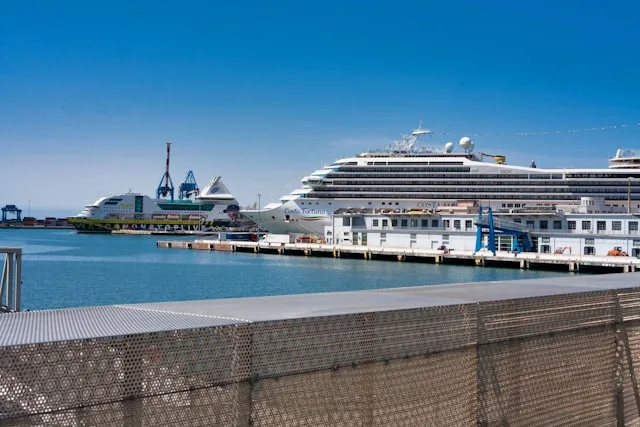
Fincantieri's Genoese yards entered 2026 with four hulls under active construction, a backlog stretching to 2028, and a group-wide order book of €9.2 billion. By any financial measure, the company has not been this busy since before the global financial crisis. The Sestri Ponente facility alone is building ultra-luxury cruise vessels for Regent Seven Seas and Oceania Cruises alongside PPA-class naval patrol ships for the Italian Navy. Investment is flowing. Contracts are signed. The problem is not demand.
The problem is that 32% of the shipbuilding workforce in Liguria is over 55, LNG-certified welders take seven to nine months to recruit, and the region produces roughly 120 naval architecture graduates per year against a market that needs multiples of that figure. Genoa's marine sector sits in a paradox visible across European advanced manufacturing but felt more acutely here than almost anywhere else: capital has moved faster than human capital can follow. The green energy transition requires cryogenic engineers, marine cybersecurity architects, and automation specialists who simply do not exist in sufficient numbers. And the workers who do exist are ageing out of the industry without replacements behind them.
What follows is a ground-level analysis of Genoa's shipbuilding and marine engineering market, the forces pulling it in competing directions, and what organisations competing for talent in this sector must understand before they commit to their next critical hire.
A €9.2 Billion Order Book Built on a Shrinking Workforce
The headline numbers look like a success story. Fincantieri guided for stable group revenue of €7.5 to €7.8 billion in 2026. The Sestri Ponente yard employs approximately 2,500 direct workers. Across the Genoa metropolitan area, Fincantieri's operations account for roughly 4,200 direct employees and an estimated 8,500 indirect jobs in the supply chain, according to Unioncamere Liguria. The order book includes twelve cruise vessels for delivery between 2025 and 2028, plus two additional PPA naval vessels funded under the 2024 naval law cycle.
But production capacity and human capacity are not the same thing. Fincantieri announced plans to recruit 500 technical specialists across its Italian yards in 2026, with approximately 180 allocated to the Genoa complex. Against that target, the University of Genoa's DITEN department graduates approximately 120 naval architects annually. The ITS Tecnologie Marine vocational programme produced 85 welding and CNC machining technicians in 2024 against industry demand for roughly 140. Before accounting for attrition, retirement, or competition from other employers, the local pipeline is already short.
This is the foundational tension the rest of this analysis builds on. The investment is real. The contracts are binding. And the people required to execute them are not available in anything close to sufficient numbers. Organisations hiring into this market in 2026 face a search environment where the aggregate demand signal is strong and the candidate supply is structurally inadequate.
The constraint is not temporary. It reflects a convergence of demographic decline, skills transformation, and geographic competition that will define executive hiring across Genoa's industrial base for years to come.
The Green Transition Is Replacing One Workforce with Another That Does Not Yet Exist
Between 2023 and 2025, Fincantieri invested €45 million at Sestri Ponente in gantry crane upgrades, welding automation, and infrastructure to handle LNG containment systems and ammonia-ready hull designs. Italy's Piano Transizione 5.0 tax credit scheme is projected to drive a further €120 million in supply chain digitalisation investment across Liguria during 2026, according to Confindustria Liguria, targeting IoT-enabled predictive maintenance and digital twinning for ship systems.
From Mechanical Engineering to Digital Maritime Systems
This investment has not reduced headcount requirements. It has replaced one kind of worker with another. The traditional Genoese shipyard demanded mechanical fitters, steel welders, and conventional marine engineers. The yard of 2026 demands cryogenic systems engineers, PLC/SCADA automation specialists with maritime classification experience, and software architects who understand both digital twin platforms and the physical constraints of ship design. These are not transferable skills. A senior mechanical engineer with twenty years on conventional propulsion systems cannot retrain into cryogenic containment without years of additional certification.
The vacancy rate for cryogenic systems engineers in the Ligurian market reached 18% as of late 2024, according to Unionmeccanica. That figure describes roles that are funded, approved, and actively failing to attract qualified applicants.
The Automation Hiring Bottleneck
The automation engineering bottleneck offers a precise illustration of what happens when capital moves faster than human capital. Search processes for PLC/SCADA engineers with maritime classification experience, according to Confindustria Liguria, frequently stall after four to six months due to candidate scarcity. Firms end up hiring from the automotive sector and retraining at a cost of approximately €8,000 per candidate over a six-month interval. The retraining works, eventually. But it means that every automation hire carries a hidden cost and a hidden delay that the order book does not account for.
The original synthesis of this article is here: the green energy transition in European shipbuilding has not automated jobs away. It has created a parallel workforce requirement that did not previously exist, layered on top of the existing one, and the training infrastructure has not caught up to either. Capital expenditure on LNG-ready infrastructure and digital twinning moved on an investment cycle. Human capital development moves on a generational cycle. The gap between those two speeds is where Genoa's hiring crisis sits.
This misalignment will not self-correct through market forces alone. The firms that recognise it earliest will invest in proactive talent pipeline strategies rather than reactive search processes.
The Demographic Cliff Behind the Skills Mismatch
Liguria has the oldest population of any Italian region. According to ISTAT, the median age is 49.2 years. Within the shipbuilding workforce specifically, 32% of workers are over 55. The implications are not abstract. They are actuarial.
A third of the experienced workforce will exit the sector within the next decade. Many of those departures will come sooner. The workers ageing out are not generalists. They are the senior welders, the lead naval architects, the production managers who hold institutional knowledge about how to build a cruise ship hull from keel to delivery. Their expertise was accumulated over decades of project cycles. It cannot be replaced by hiring a fresh graduate and handing them a manual.
Youth unemployment in Liguria stands at 23.4%, according to ISTAT's Labour Force Survey from Q3 2024. The coexistence of a 23.4% youth unemployment rate and an 18% cryogenic engineering vacancy rate in the same regional economy is not contradictory. It is the clearest possible evidence that the problem is a knowledge mismatch, not a labour supply problem. The unemployed young people of Liguria have skills. They do not have the specific skills that the shipyard now requires. And the training infrastructure that could bridge the gap, producing 85 technicians per year against demand for 140, is undersized by design rather than by accident.
This demographic pattern makes every senior hire in Genoa's shipbuilding sector a succession planning decision, whether the hiring organisation frames it that way or not. A Director of Newbuilds hired at 50 will work for perhaps fifteen years. The person behind them must already be in development. Organisations that treat senior appointments as isolated transactions rather than links in a longer-term talent strategy will find themselves repeating the same search every five years, each time in a thinner market.
Where the Candidates Are and Why They Will Not Come to You
The passive candidate dynamics in Genoa's marine engineering market are among the most extreme in any European industrial sector. According to analysis by Hays Italy and the Ordine degli Ingegneri della Provincia di Genova, an estimated 85% of senior naval architects with ten or more years of cruise ship specialisation are passive. They are employed. Their average tenure at their current employer is 6.2 years. Unemployment in this cohort is below 1.5%.
For marine cybersecurity engineers, the passive rate is estimated at 90%. These professionals sit at the intersection of IT security and maritime domain knowledge, a combination held almost exclusively by engineers already employed at RINA, Leonardo, or Fincantieri's systems integration subsidiary Seastema. There is no pool of available candidates browsing job boards. There is no pool at all, in the conventional sense. There are employed individuals who must be identified, assessed, and persuaded one at a time.
LNG containment system specialists show a 75% passive rate, constrained further by certification barriers. GTT membrane system training limits the eligible pool to a small number of professionals typically recruited from competitors or from gas carrier operators.
The practical consequence is that traditional job advertising reaches at most 15 to 25% of viable candidates for the roles that matter most in this market. For cybersecurity architects, the figure is closer to 10%. Any hiring strategy that relies on inbound applications or job board visibility is structurally incapable of reaching the majority of the talent pool. This is not a criticism of any particular platform. It is a description of a market where the qualified candidates are not looking.
The candidates who are actively looking tend to be junior naval architects and standard mechanical engineers, where active mobility runs at 40 to 50%. But quality mismatches persist even in this cohort, according to LinkedIn Talent Insights data and University of Genoa placement statistics. The active candidate market produces volume. It does not produce the specialist profiles that determine whether a hull delivers on schedule.
Compensation: A Two-Speed Market Disguised by National Contracts
Italy's national metalworkers' contract, the CCNL Metalmeccanici, limited base salary increases to 3.5% for the 2024 to 2025 period. Read in isolation, that figure suggests a stable, moderate compensation environment. It is deeply misleading.
What the National Contract Covers
At the senior specialist level, a lead naval architect with eight to twelve years of experience earns a base salary of €68,000 to €85,000, with total compensation reaching €78,000 to €98,000 including project bonuses. A systems integration engineer in cyber-physical systems earns €58,000 to €75,000 base, with a 12 to 15% premium for security clearance holders. An LNG-certified welder serving as a team leader earns €38,000 to €48,000 base, with shift premiums and hazard pay adding 25% to bring total compensation to €47,500 to €60,000.
These figures reflect the national framework. They do not reflect what actually happens when a senior naval architect receives an approach from a competitor.
What the Market Actually Pays
According to Michael Page Italy's Maritime and Offshore Recruitment Trends report, senior project managers with more than ten years of cruise ship newbuild experience are commanding retention bonuses of €15,000 to €25,000 when approached by competitors in Monfalcone or by international consultancies. That represents a 20 to 30% premium over standard Genoa market rates.
At the executive level, a Director of Newbuilds or Chief Engineer commands a base salary of €130,000 to €170,000, with total compensation of €160,000 to €220,000 including long-term incentives. A Head of Digital Ship or Automation earns €115,000 to €150,000 base, with performance bonuses of 20 to 30% replacing the equity participation more common in Anglo-Saxon structures.
The bifurcation between contract-level wage moderation and market-level executive inflation is the defining feature of Genoa's compensation environment. Aggregate wage data underrepresents the acute inflation at precisely the seniority level most critical to project execution. A hiring leader budgeting for a senior appointment based on CCNL benchmarks will lose every competitive offer process. Understanding what the market actually pays, rather than what the contract says it should pay, requires current compensation benchmarking from sources with direct placement data in the sector.
The risk of mispricing an offer is not merely that the candidate declines. It is that the candidate accepts a competing offer from Oslo, Hamburg, or Monfalcone, removing one more name from an already thin candidate list. In a market this tight, every lost offer compounds the problem.
Geographic Competition: Oslo, Hamburg, and the Domestic Drain
Genoa does not compete for maritime engineering talent in isolation. The candidate pool is European, and increasingly global. The destinations drawing talent away from Genoa's yards are specific, and the mechanisms are well understood.
The Oslo Premium
According to Tekna's 2024 Salary Survey, senior naval architects in Oslo earn €110,000 to €140,000 base, a 40 to 60% premium over equivalent Genoa roles. Norway's offshore and subsea sector integration offers career paths that do not exist in Italian shipbuilding. Tax benefits for foreign experts, English-language working environments, and proximity to the offshore energy transition make Oslo the primary drain for Genoa's most experienced naval architects seeking a second career phase.
Hamburg's Management Track
Hamburg offers comparable base salaries to Genoa at the senior specialist level, €70,000 to €90,000, but materially faster progression to management. A Director-level role in Hamburg commands €150,000 or more. The concentration of shipowner headquarters, including Hapag-Lloyd and Unifeeder, creates a demand pull for professionals who want to move from yard-side engineering into commercial or regulatory leadership. For a senior engineer in Genoa weighing their next decade, Hamburg offers a career trajectory that Italian structures do not easily replicate.
Domestic Rivals
Within Italy, Monfalcone offers Fincantieri's largest yard and a 5 to 8% wage premium for project managers. La Spezia's competitors, T. Mariotti and San Giorgio del Porto, offer comparable compensation with superior work-life balance metrics. The domestic competition is less about money and more about role scope and lifestyle. But in a market where every departure creates a vacancy that takes months to fill, even marginal domestic movement has compounding effects.
The geographic competition means that a search strategy for senior maritime talent in Genoa must account for the fact that the best candidates have options outside Italy. The offer must be competitive not merely with the Genoa market but with Oslo and Hamburg. And the approach must reach candidates who are not looking at Genoa-based opportunities, because they have no reason to look unless someone brings a compelling proposition to them directly.
What Hiring Leaders in Genoa's Maritime Sector Must Do Differently
The convergence of demographic decline, skills transformation, and international competition means that the hiring playbook that worked in Genoa's shipyards five years ago will not work now. Five years ago, a senior naval architect search could draw on a local pool supplemented by candidates from La Spezia or Trieste. Today, the local pool is smaller, the La Spezia and Trieste pools face their own shortages, and the candidates with the most critical skills are being courted by employers in three countries simultaneously.
Three changes are non-negotiable for organisations hiring into this market.
First, compensation strategy must be benchmarked against international competitors, not domestic contracts. A retention bonus of €20,000 is less expensive than a seven-month vacancy in a role that gates a €200 million newbuild programme. The counteroffer dynamics in this market are intense, and any search process that does not anticipate them will stall at the offer stage.
Second, search methodology must reach the 75 to 90% of qualified candidates who are not actively looking. Job postings and inbound applications will continue to produce junior mechanical engineers. They will not produce cryogenic systems engineers, marine cybersecurity architects, or senior naval architects with cruise ship specialisation. Those candidates must be found through direct identification and confidential approach, using market intelligence that maps the specific individuals holding the required certifications and experience.
Third, hiring timelines must compress. A search that runs six months in this market does not merely cost time. It costs candidates. The strongest names on any shortlist will receive competing approaches during a prolonged process. Firms that can move from brief to interview-ready candidates in days rather than months hold a decisive advantage.
KiTalent works with organisations across advanced manufacturing and maritime sectors to deliver interview-ready leadership candidates within seven to ten days, using AI-powered talent mapping to identify the passive specialists who do not appear on any job board. With a 96% one-year retention rate across 1,450 executive placements globally, the approach is built for markets exactly like this one: thin candidate pools, high passive rates, and time pressure that punishes slow search processes.
For organisations building leadership teams in Genoa's shipbuilding and marine engineering sector, where the candidates you need are employed, not searching, and the cost of a vacant role is measured in delivery delays on nine-figure contracts, speak with our industrial and manufacturing search team about how we approach this market.
Frequently Asked Questions
What are the hardest roles to fill in Genoa's shipbuilding sector in 2026?
The three most acute shortages are cryogenic systems engineers for LNG and ammonia fuel containment, certified aluminium welders holding EN ISO 9606-2 qualifications, and marine cybersecurity architects with both naval architecture degrees and IEC 62443 certifications. Cryogenic roles carry an 18% vacancy rate in Liguria. Certified aluminium welders take an average of 6.5 months to recruit compared to 2.1 months for standard steel welders. Marine cybersecurity architects are estimated at 90% passive, meaning almost the entire qualified pool is employed and not actively searching. These shortages are driven by the green energy transition and digitalisation requirements that have created demand for specialisms the local training pipeline was not designed to produce.
What does a senior naval architect earn in Genoa compared to other European maritime hubs?
A senior naval architect with eight to twelve years of experience earns a base salary of €68,000 to €85,000 in Genoa, with total compensation reaching €78,000 to €98,000 including project bonuses. In Oslo, the equivalent role commands €110,000 to €140,000 base, a 40 to 60% premium. Hamburg offers comparable base salaries to Genoa but faster progression to Director-level compensation of €150,000 or more. Senior project managers with cruise ship newbuild experience in Genoa are receiving retention bonuses of €15,000 to €25,000 when approached by international competitors, reflecting the intensity of the current talent market.
Why is Genoa's youth unemployment high when the shipyards are hiring?
Liguria's 23.4% youth unemployment rate coexists with acute specialist vacancies because the skills mismatch is deep. The shipbuilding sector's transition to LNG propulsion, digital twinning, and cybersecurity-compliant systems requires qualifications that conventional vocational training does not provide. The ITS Tecnologie Marine programme produced 85 technicians in 2024 against demand for 140. University of Genoa graduates roughly 120 naval architects annually. The gap is not about willingness to work. It is about the distance between existing training programmes and the specific certifications and domain knowledge that employers now require.
How does KiTalent approach executive search in Genoa's maritime engineering market?
KiTalent uses AI-enhanced direct headhunting to identify and approach the 75 to 90% of senior maritime engineering professionals who are not actively seeking new roles. In a market where cryogenic engineers, cybersecurity architects, and senior naval architects are almost entirely employed by a small number of known firms, conventional job advertising reaches only a fraction of the qualified pool. KiTalent delivers interview-ready candidates within seven to ten days, with a pay-per-interview model that eliminates upfront retainer risk. The firm's 96% one-year retention rate reflects a methodology designed for markets with thin, highly passive candidate pools.
What regulatory pressures are affecting Genoa's shipbuilding supply chain?
EU ETS compliance costs and the FuelEU Maritime regulation are increasing newbuild prices and squeezing margins for Genoa's yards and their supply chain. The roughly 400 SMEs in the Val Polcevera and Campi corridors, with average turnover of €4.5 million, report difficulty absorbing certification costs for new hydrogen-ready welding standards. Italy's green taxonomy tax credits require an estimated 120 hours of administrative work per SME application. Sanctions on Russian titanium and nickel have also increased raw material costs for specialised marine alloys by 18 to 22%, forcing dependence on single-source Japanese suppliers.
What is the biggest risk to Genoa's shipbuilding employment outlook?
The concentration risk around Fincantieri is material. According to Prometeia, a 10% reduction in Fincantieri's domestic capital expenditure would eliminate an estimated 1,200 indirect jobs in the Val Polcevera corridor alone. With Fincantieri accounting for the majority of direct shipbuilding employment and anchoring the supply chain, any shift in the company's investment priorities or order book trajectory would ripple through the entire regional economy. Diversification of the employer base remains limited, though RINA, Leonardo, and Wärtsilä provide some counterweight.