La Spezia's €45 Million Superyacht Expansion Has a Problem: There Is Nobody to Run It
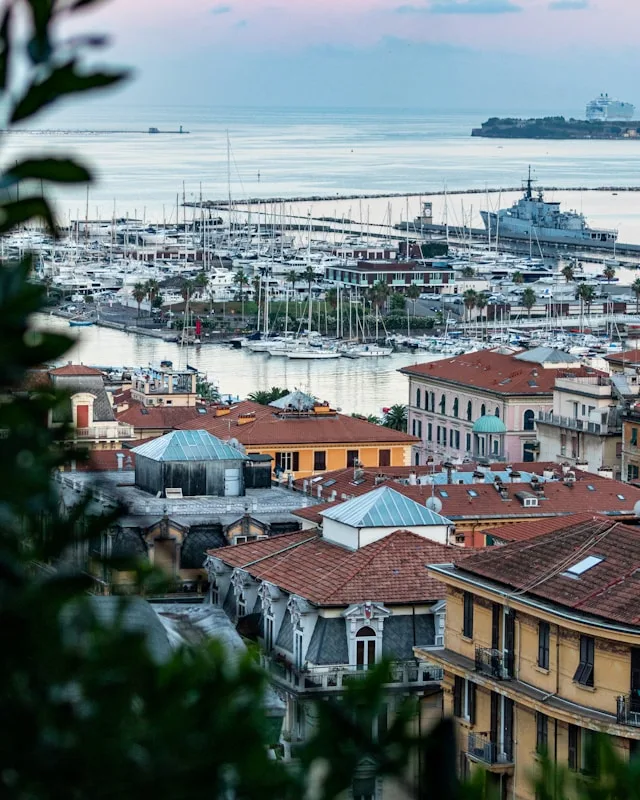
Porto Mirabello's Phase 3 expansion will add 80 berths and a dedicated superyacht maintenance facility to La Spezia's marina by late 2026. The project represents €45 million in private capital and a 35% increase in regional yacht service capacity. On paper, it positions La Spezia as a serious contender in the western Mediterranean superyacht corridor. In practice, it is arriving in a market where a search for a single Marina Superintendent already takes four to six months and 70% of successful placements must be sourced from passive candidates in Monaco or Barcelona.
This is the defining tension of La Spezia's cruise, yachting, and coastal tourism sector in 2026. Physical infrastructure is expanding. The workforce required to operate, maintain, and commercially exploit that infrastructure is not keeping pace. The port system is investing for volume growth at the exact moment when environmental regulation, UNESCO conservation mandates, and Italian labour law are compressing the available talent pool from multiple directions simultaneously.
What follows is an analysis of the forces reshaping La Spezia's maritime and tourism economy, the employers driving that change, and what senior leaders need to understand before making their next hiring or retention decision in this market.
A Secondary Port With Primary Ambitions
La Spezia is not Genoa. It is not Barcelona. It does not host the Mediterranean headquarters of a major cruise line, and its commercial port handles a fraction of the throughput that flows through its Ligurian neighbour 45 kilometres to the west. But what it does handle, it handles at near-total saturation.
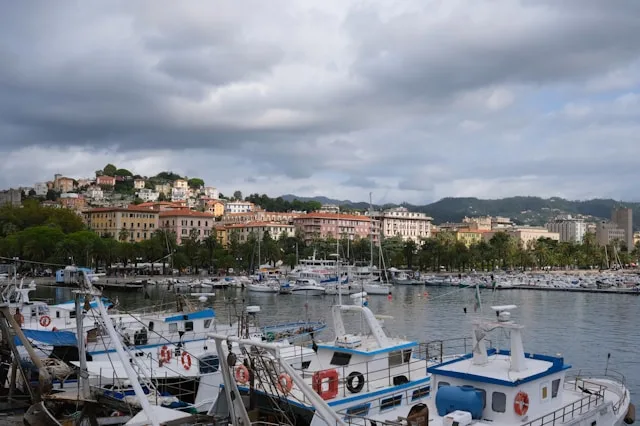
The port's two dedicated cruise berths at Molo Garibaldi and Molo Curtatone accommodated 142 scheduled calls through 2025, maintaining 92% berth utilisation. Terminal Crociere della Spezia processed 185,000 passengers through the first half of last year, tracking consistently against pre-pandemic 2019 baselines. Total annual cruise passenger volume sits at approximately 400,000, generating between €450 million and €500 million in direct annual turnover for the provincial economy.
Porto Mirabello, the superyacht anchor, operates 407 berths including 30 positions for vessels between 60 and 130 metres. Marina occupancy for vessels over 40 metres reached 89% in summer 2024, with 2025 pre-bookings indicating 94% utilisation in July and August. The facility generated €18.2 million in revenue during 2024, primarily from refit services and long-term berthing, while supporting an estimated €32 million in indirect regional economic activity.
Cruise Operations at a Ceiling
No additional cruise berth capacity is scheduled for 2026. The "La Spezia Port 2030" development plan includes dredging and berth extension, but environmental impact assessments remain pending with the Ministry of Environment. Operational commencement is not expected before 2027. This means La Spezia enters 2026 with exactly the same cruise infrastructure it had in 2025, despite the Port System Authority's stated ambition to reach 500,000 annual passengers by 2028.
The Yachting Bet
Porto Mirabello's Phase 3 expansion tells a different story. With €45 million committed to new berths and a dedicated maintenance facility, the operator is betting that La Spezia can capture a larger share of Mediterranean superyacht traffic. But the marina industry's own data complicates this bet. Average length of stay for superyachts has declined from 4.2 days in 2019 to 2.8 days by 2024. Transit-only calls are increasing at the expense of maintenance berthing. The expansion adds physical capacity at a moment when each visiting vessel spends less time, and less money, per visit than it did five years ago. The capital has arrived. The question is whether the revenue model, and the workforce, will follow. That workforce question is where the real constraint lives.
Where the Talent Market Breaks Down
The La Spezia tourism sector posted 1,340 job vacancies in Q1 2025, a 23% increase over Q1 2019. But the aggregate figure conceals a split. Frontline hospitality roles fill in an average of 34 days. Specialised technical roles take 67 days. That gap, nearly double the time to fill, reveals a market operating at two speeds.
For marina technical superintendents, the unemployment rate across the Ligurian province sits below 2%. Average tenure is 4.2 years. According to FEDERNAUTICA's occupational analysis, 85% of placements in this category occur through direct headhunting rather than advertised vacancies. The active candidate pool is, for practical purposes, empty.
Yacht captains for superyachts over 500GT present an even more extreme picture. Near-zero unemployment. Contracts typically locked 12 to 18 months in advance. These candidates respond only to direct outreach through specialised yachting networks. A job advertisement posted on any conventional platform will reach none of them.
Luxury hotel general managers with trilingual capability (Italian, English, French) show an active-to-passive candidate ratio of approximately 1:4. The average search runs 90 to 120 days. Successful recruitment almost always requires poaching from a competing property, with the associated cost premium that implies.
The Grand Hotel Portovenere, managed by CDI Hotels, illustrates the pattern concretely. According to reporting in L'Hôtellerie Restauration, the hotel maintained an open Food and Beverage Director search from January through June 2024. The role required trilingual fluency and superyacht catering coordination experience. The search concluded only after recruiting a candidate from a competing property in Antibes at a 40% salary premium above the original budget. Five months of vacancy. A candidate from another country. A budget overrun of 40%.
That is not an exceptional case. It is the typical experience for any employer in this market seeking leadership talent with the specific combination of marine operations knowledge, luxury hospitality standards, and multilingual capability that La Spezia's economy demands.
The Compensation Arithmetic That Drives Every Search
La Spezia's executive compensation operates at a persistent discount to its Mediterranean competitors. Senior marina technical managers with 8 to 12 years of experience command €65,000 to €78,000 in base salary. At the executive level, a marina director with full P&L responsibility earns €110,000 to €145,000 base, with total compensation reaching €165,000 to €190,000 including performance incentives and housing allowances.
On the cruise and hospitality side, the numbers sit lower. Cruise operations managers earn €55,000 to €68,000 base. A general manager running a luxury property of 150 or more rooms commands €85,000 to €115,000 base, with equity participation rare.
According to Deloitte's Hospitality Industry Executive Compensation Report for Southern Europe, La Spezia's executive pay sits 20 to 25% below equivalent roles in Monaco and 15% below Barcelona. The only direction in which the premium runs in La Spezia's favour is against standard Italian hospitality wages, where the yachting specialisation commands an 8 to 10% uplift.
This discount is not closing. It is widening fastest at exactly the seniority level where the most critical roles sit. A marina superintendent in La Spezia earning €75,000 faces an offer from Monaco at €105,000 to €120,000. A marina director earning €140,000 total faces a Monaco equivalent of €195,000 to €225,000, amplified by Monaco's personal tax regime. The cost-of-living arbitrage that La Spezia employers rely upon (housing costs 45% lower than Monaco, according to Savills' European Residential Research) partially offsets the gap but does not close it for candidates whose career ambition includes Mediterranean flagship facilities.
The consequence is predictable. La Spezia's employers compete for executive talent by emphasising lifestyle: proximity to UNESCO-listed Cinque Terre, lower urban density, shorter commutes. These are genuine advantages. But they are advantages that matter most to candidates who have already reached a career stage where quality of life outweighs title progression. For candidates in their late thirties and early forties, the peak years for marina directors and operations leaders, Monaco and Barcelona still win the arithmetic on pure compensation.
This creates a structural dependency on a specific, narrow candidate profile. The executives who stay in La Spezia, or who can be persuaded to relocate here, are those for whom lifestyle trumps salary. This is a real segment. But it is not large enough to fill every critical role across a market that is simultaneously expanding its superyacht infrastructure by 35%.
The Regulatory Squeeze: Overtourism, Emissions, and Labour Law
The talent constraints facing La Spezia's maritime tourism sector do not exist in isolation. They operate inside a regulatory environment that is simultaneously tightening from three directions.
Overtourism Governance and the Revenue Ceiling
The Cinque Terre National Park implemented the "Cinque Terre Card" access limitation system during 2024, capping daily hiking trail access at 7,500 visitors. Beginning in 2026, the park is introducing dynamic pricing for access cards, with projected 15 to 20% reductions in daily visitor caps during peak periods. The practical effect is a hard revenue ceiling for tour operators whose business model depends on trail access from La Spezia cruise calls.
This directly compresses operator margins. With fewer daily visitors permitted and higher per-visitor access costs, the economics of same-day cruise excursions deteriorate. Proposed regional tourist tax increases of €10 to €15 per capita for cruise passengers compound the pressure. Cruise lines making itinerary decisions for 2027 and beyond will evaluate whether La Spezia's constrained excursion capacity justifies a berth call when competing ports offer uncapped shore programmes.
For hiring leaders, the implication is not abstract. Tour operators facing margin compression do not invest in training. They do not build talent pipelines. They hire cheaply for peak season and release staff in October. The consortium of 15 authorised Cinque Terre tour operators employs approximately 180 guides and logistics staff, concentrated between March and November. This seasonal cycle perpetuates skill shortages because it never produces the career stability that would attract and retain specialised talent.
The Cold Ironing Gap
La Spezia lacks shore power infrastructure at its cruise berths. Installation has been delayed to 2027. Under tightening EU emissions regulations, this subjects the port to potential penalties and, more consequentially, to itinerary adjustments by cruise lines favouring electrified ports such as Barcelona and Marseille. The European Maritime Safety Agency's Port Reception Facilities Report has flagged this gap explicitly.
A port that loses cruise calls loses the economic activity those calls generate. But it also loses something harder to recover: the career logic that makes a cruise operations role in La Spezia attractive compared to the same role in a port with growing call volumes and modern infrastructure. The hidden cost of infrastructure delay is not just commercial. It is reputational in the talent market.
Italian Maritime Labour Law
The Contratto Collettivo Nazionale del Trasporto e della Logistica imposes mandatory permanent conversion after 24 months of fixed-term contracts. In a market with 78% of annual tourism GDP concentrated in six months (May to October), this rule discourages employers from investing in specialised training for peak-season marine technicians. The result, documented by Confetra's analysis of port labour costs, is a self-reinforcing cycle. Employers avoid committing to permanent contracts for seasonal roles. Workers in seasonal roles never accumulate the specialised experience the market needs. The shortage persists not because talent does not exist in Italy, but because the labour framework prevents it from developing in La Spezia.
The Genoa Corridor and the 30% Turnover Problem
La Spezia's most immediate competitor for talent is not Monaco. It is Genoa, 45 kilometres to the west.
Genoa's larger port infrastructure, its concentration of maritime headquarters including MSC Cruises, and its superior public transport connectivity create a persistent gravitational pull on La Spezia's workforce. The Genoa-La Spezia corridor experiences 30% annual turnover among marine operations staff under age 35, according to Regione Liguria's labour observatory.
The dynamic is straightforward. A marine operations coordinator in their late twenties gains two or three years of experience at Porto Mirabello or Terminal Crociere, develops proficiency in superyacht handling or cruise passenger logistics, and then receives an approach from a Genoa employer offering 15 to 20% more and a shorter commute on Liguria's intercity rail network. The counteroffer arithmetic rarely works in La Spezia's favour, and the dynamics of counteroffers in these situations tend to delay rather than prevent departures.
For candidates above age 35, the pull shifts from Genoa to Monaco and the French Riviera. At the marina director and technical superintendent level, Monaco offers 40 to 60% compensation premiums plus personal tax advantages for non-French residents. La Spezia retains senior talent only through cost-of-living arbitrage and the specific lifestyle appeal of the Golfo dei Poeti. This is a defensible proposition for some candidates. It is not a scalable recruitment strategy for an expanding market.
The consequence is a workforce that is perpetually younger and less experienced than the roles demand. Experienced professionals leave. They are replaced by less experienced professionals who, in turn, will leave when they become experienced enough to command external offers. The investment in developing talent accrues to Genoa and Monaco, not to La Spezia.
Capital Outpacing Human Capital: The Core Mismatch
The most important observation about La Spezia's cruise and yachting sector is not contained in any single data point from the research. It emerges from combining two trends that are moving in opposite directions.
Porto Mirabello is investing €45 million to expand superyacht capacity by 35%. The Port System Authority aspires to grow annual cruise passengers from 400,000 to 500,000 by 2028. The hotel market saw 4-star average daily rates rise 12% year-over-year in 2024, signalling investor confidence. Capital is flowing in.
At the same time, average superyacht length of stay has fallen from 4.2 to 2.8 days. Daily visitor caps for Cinque Terre are being reduced by 15 to 20%. Shore power infrastructure is delayed until 2027. The Cinque Terre Express rail line operates at 140% capacity. Marine operations staff under 35 turn over at 30% annually. The conditions required to generate returns on that capital investment are deteriorating.
This is not a hiring problem dressed up as a strategic insight. It is a capital-labour mismatch where physical expansion has preceded workforce availability, and where the regulatory and infrastructure environment is making it harder, not easier, to close the gap. The €45 million in new berths and maintenance facilities will require marina superintendents, refit coordinators, yacht agents, and environmental compliance officers who do not currently exist in sufficient numbers in Liguria. The training pipeline that would produce them is constrained by seasonal labour law. The compensation framework that would attract them from Monaco or Barcelona is constrained by the economics of a secondary port.
Every infrastructure investment decision in La Spezia assumes the talent will follow. The evidence suggests it will not follow automatically. It must be found, approached, and persuaded, one candidate at a time.
What This Means for Organisations Hiring in La Spezia
For any organisation building or expanding maritime, cruise, or luxury hospitality operations in La Spezia, the hiring environment in 2026 demands a specific set of adjustments.
First, conventional job advertising will not reach the candidates who matter most. In a market where 85% of marina technical placements occur through executive search and superyacht captains are contracted 12 to 18 months ahead, the visible, active candidate market represents a fraction of the talent pool. Organisations relying on job postings and inbound applications are competing for the 15 to 30% of candidates who happen to be in transition. The strongest candidates, those currently running marina operations in Monaco, managing cruise terminals in Barcelona, or directing luxury properties in Antibes, will never see a job advertisement for a La Spezia role.
Second, compensation must be structured for the arbitrage, not against it. La Spezia will not match Monaco's cash compensation. It should not try. Instead, the total proposition must make the lifestyle differential explicit and quantifiable. Housing assistance, flexible seasonal scheduling, and non-monetary benefits are not afterthoughts. They are the core of the offer for any candidate considering a move from a higher-paying market. Employers who lead with base salary will lose every comparison. Employers who lead with total cost of living and quality of life can win specific candidates whose personal circumstances align.
Third, search timelines must account for the market reality. A 67-day average time to fill for specialised roles is not a scheduling inconvenience. It is a structural feature of this market. Organisations planning a 2026 facility opening or a peak-season staffing ramp need to begin executive-level searches six to nine months in advance, not three. The assumption that talent can be secured quickly in a small Mediterranean port market is the single most common cause of recruitment failure in this sector.
KiTalent's work in leadership recruitment across luxury, hospitality, and maritime sectors is built for precisely this kind of market: one where the candidates are passive, the compensation requires creative structuring, and the search must extend beyond the local geography to reach professionals in competing Mediterranean hubs.
For organisations competing for marina directors, cruise operations leaders, or trilingual hospitality executives in La Spezia's expanding but constrained market, where four to six months of vacancy is the norm and 70% of successful placements come from passive candidates in other countries, start a conversation with our executive search team about how a search built for this specific market works in practice. KiTalent delivers interview-ready candidates within 7 to 10 days, operates on a pay-per-interview model with no upfront retainer, and maintains a 96% one-year retention rate across 1,450 executive placements globally.
Frequently Asked Questions
What is the average time to fill executive roles in La Spezia's cruise and yachting sector?
Specialised technical roles in La Spezia's maritime tourism sector average 67 days to fill, compared to 34 days for frontline hospitality positions. For senior marina superintendent roles requiring superyacht refit expertise, search duration typically extends to four to six months. Luxury hospitality general manager searches with trilingual requirements run 90 to 120 days. These timelines reflect a market where the majority of qualified candidates are passive and must be identified through direct search methods rather than advertised vacancies.
How does La Spezia executive compensation compare to Monaco and Barcelona?
La Spezia executive pay sits 20 to 25% below equivalent roles in Monaco and approximately 15% below Barcelona for cruise and marina operations leadership. A marina director in La Spezia earns €165,000 to €190,000 in total compensation, compared to €195,000 to €225,000 for a comparable Monaco role before personal tax advantages. La Spezia employers offset this gap through cost-of-living advantages, with housing costs 45% lower than Monaco, and quality-of-life positioning near Cinque Terre.
Why is it difficult to hire marina technical managers in La Spezia?
Unemployment among marina technical superintendents in Liguria sits below 2%. Average tenure is 4.2 years, and 85% of placements occur through executive search rather than job advertisements. The qualified candidate pool is almost entirely passive. Italian maritime labour law, which mandates permanent conversion after 24 months of fixed-term contracts, discourages employers from investing in training seasonal marine technicians, preventing the local pipeline from developing.
What impact will Cinque Terre visitor caps have on La Spezia's tourism employment?
The Cinque Terre National Park's dynamic pricing system, introduced in 2026, reduces daily visitor caps by 15 to 20% during peak periods. This compresses tour operator margins and reduces the economic viability of same-day cruise excursions from La Spezia. The employment effect is indirect but material: operators facing tighter margins invest less in permanent staff and specialised training, reinforcing the seasonal hiring cycle that perpetuates talent shortages at leadership level.
How does KiTalent approach executive search in a passive-candidate market like La Spezia?
KiTalent uses AI-enhanced talent mapping to identify and approach the 70 to 85% of qualified candidates in maritime and hospitality leadership who are employed and not actively seeking new roles. In markets like La Spezia, where the search must extend to passive candidates in Monaco, Barcelona, Genoa, and the French Riviera, this methodology reaches professionals that job postings and conventional recruitment cannot access. The firm delivers interview-ready shortlists within 7 to 10 days and operates on a pay-per-interview model with no upfront retainer.
What are the biggest risks to La Spezia's cruise sector growth in 2026?
Three converging risks constrain growth: the absence of shore power infrastructure (delayed to 2027), which exposes the port to EU emissions penalties and cruise line itinerary shifts; fixed cruise berth capacity with no expansion before 2027; and tightening Cinque Terre access restrictions that reduce the shore excursion appeal that makes La Spezia a commercially viable port call. Each risk independently pressures the talent market by reducing the career progression logic that attracts senior professionals to a secondary port.