La Spezia's Port Is Growing 30% Faster Than Its Talent Pipeline Can Support
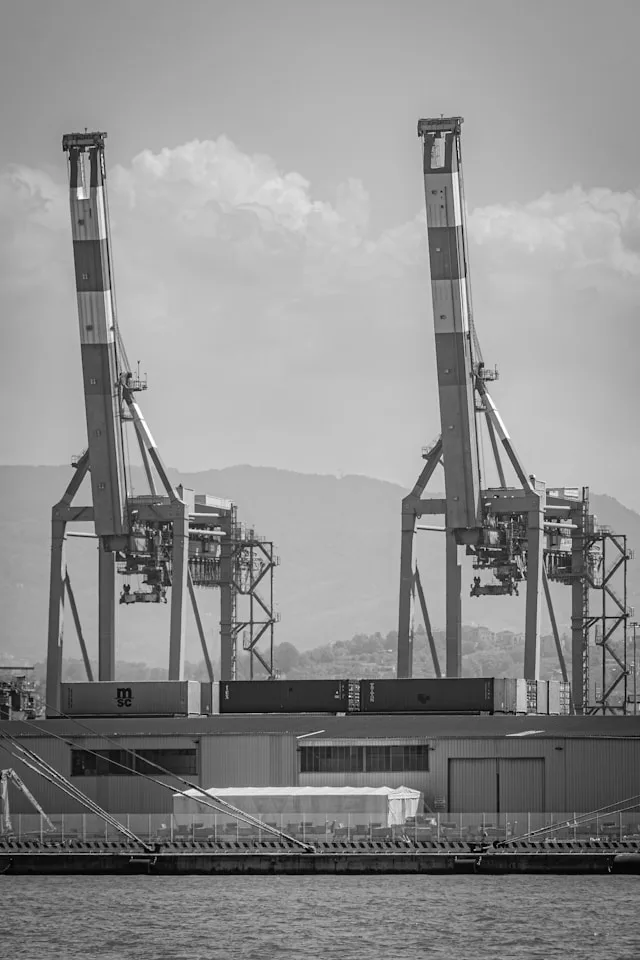
The Darsena Europa expansion reached operational readiness in late 2025, adding 450 metres of quay and 600,000 TEU of annual capacity to La Spezia's container port. The cranes are in place. The berths are deepened. The rail gate connections are live. What is not in place is the workforce capable of running a digitally integrated, environmentally compliant, automation-heavy terminal operation at scale. The investment moved faster than human capital could follow.
This is not a generic labour shortage. Aggregate unemployment in La Spezia's logistics sector runs at 8.2%, above the national average. Traditional dock workers and administrative staff are available. The gap sits in a narrow, critical band of hybrid professionals: terminal operations managers who understand both physical cargo flows and the Terminal Operating Systems that now govern them, port cybersecurity specialists who can protect industrial control systems from the ransomware campaigns increasingly targeting maritime infrastructure, and rail intermodal planners capable of optimising a corridor already running at 92% capacity. These are the roles where vacancy-to-applicant ratios reach 6:1. These are the roles where searches run seven to ten months instead of forty-five days.
What follows is a ground-level analysis of the forces reshaping La Spezia's port operations and maritime logistics sector, the specific talent categories where supply has diverged most sharply from demand, and what organisations operating in this market need to understand before they commit to their next senior hire.
The Eastern Ligurian Sea Port System in 2026: Scale, Structure, and Strain
The Autorità di Sistema Portuale del Mar Ligure Orientale oversees a port system that handled approximately 1.28 million TEU in 2024, a 4.2% decline from the prior year driven by Red Sea rerouting and blank sailings on Asia-Mediterranean services. La Spezia accounts for roughly 85% of the system's container traffic, with the balance distributed across the broader network. Ro-Ro traffic through the Calata Paita terminal and Molo Fiorito holds steady at approximately 220,000 units annually. Bulk cargo through Molo Garibaldi and Darsena Ligure totalled 3.8 million tonnes in 2023.
The port's main channel offers a 14.5-metre draft, accommodating ultra-large container vessels up to 14,000 TEU. This deepwater capability distinguishes La Spezia from shallow-draft Adriatic alternatives and positions it as a natural transhipment and gateway hub for the northern Italian industrial corridor.
Three Terminal Operators, Three Different Talent Models
PSA Italy's La Spezia Container Terminal is the dominant operator, employing 450 direct staff and approximately 1,200 indirect contractors across a facility rated at 1.4 million TEU annual capacity. Contship Italia's CSL employs 320 staff and has carved out a differentiated position through its dedicated rail link to the Interporto di Parma. Terminal Darsena Toscana, the smallest of the three, focuses on breakbulk and Ro-Ro with 80 staff.
Each operator faces a different version of the same problem. PSA's scale means its automation ambitions require dozens of hybrid OT/IT professionals simultaneously. Contship's rail integration strategy demands intermodal planners who are already being poached by competitors at 15 to 20% salary premiums. TDT's smaller workforce means a single unfilled specialist role can stall an entire operational initiative. The local logistics employment base totals approximately 8,500 direct jobs and 12,000 induced positions across the La Spezia and Sarzana labour markets, but the distribution of skills within that base does not match the distribution of demand.
Seasonal Congestion Compounds Every Hiring Delay
Between July and September, La Spezia experiences throughput spikes of 30 to 40%, driven by the overlap of peak container season and cruise ship calls at the Molo Garibaldi passenger terminal. Container vessels incur average wait times of 12 to 18 hours during this window. Every unfilled operations role amplifies this congestion. Every cybersecurity vacancy increases exposure during the period of maximum system stress. Hiring timelines measured in months collide with operational realities measured in hours, and the collision is most visible during the exact weeks when the port can least afford it.
The Automation Paradox: 8.2% Unemployment and a 6:1 Vacancy Ratio
This is the analytical tension that defines La Spezia's talent market in 2026, and it is the one that aggregate employment statistics consistently obscure.
The logistics sector in the La Spezia province reports unemployment above the national average. A hiring leader scanning regional data might reasonably conclude that candidates are available. They are not. Or rather, the candidates who are available possess skills aligned with a port that no longer exists in its previous form. The €180 million Darsena Europa investment, the cold ironing installations, the digital twin for vessel traffic management, and the hydrogen-powered rail corridor all require professionals who sit at the intersection of physical port operations and digital systems engineering. That intersection is sparsely populated.
According to ManpowerGroup's 2024 Talent Shortage Survey for Italy's logistics sector, 68% of La Spezia-based logistics firms cite scarcity of candidates with port automation expertise as the primary constraint on their digitisation projects. Terminal operations roles requiring OT/IT integration skills remain open for seven to ten months. Traditional operations roles fill in 45 days. The gap between those two numbers is not a recruitment efficiency problem. It is a market structure problem.
The investment in automation has not reduced the workforce the port needs. It has replaced one category of worker with another that does not yet exist in sufficient numbers. Capital moved faster than human capital could follow. That sentence describes not just La Spezia but every mid-sized European port attempting to modernise simultaneously, drawing from the same shallow talent pool. The difference in La Spezia's case is the speed and scale of the investment relative to the size of the local professional community. A port with 8,500 direct employees is attempting a digital transformation programme that would challenge the recruitment capacity of Rotterdam.
The Hinterland Bottleneck: Capacity Without Connectivity
La Spezia's rail modal share of 38% is among Italy's highest, a genuine competitive advantage supported by the La Spezia Rail Gate initiative connecting LSCT and CSL to the national network. But that advantage is approaching its physical limit.
The Parma to La Spezia rail corridor operates at 92% capacity during peak season. The Apennine Tunnel through the Giovi Pass creates a single-track chokepoint that limits train frequency to 18 to 20 daily moves. The Terza Fase di Valico project, which would add a third track through the Apennines, has been pushed to 2028. This means La Spezia is expanding physical terminal capacity by 30% through Darsena Europa while the rail infrastructure connecting it to the Po Valley industrial heartland will not expand commensurately for another two years.
The implication for executive hiring in logistics and supply chain roles is direct. The port may soon possess excess quay capacity while remaining unable to move containers inland efficiently. This scenario triggers either congestion pricing or a modal shift back to road transport, both of which contradict the green logistics strategy that justified the expansion in the first place. The professionals who can manage this tension, who can optimise a synchromodal network operating at near-maximum capacity while planning for a capacity step-change that arrives in 2028, are the most sought-after specialists in the system. They are also among the most difficult to find.
The Tyrrhenian Green Corridor Adds Demand Before Supply Arrives
The Tyrrhenian Green Corridor consortium linking La Spezia with Milan and Rotterdam will commence hydrogen-powered rail services in the second half of 2026, according to Ferrovie dello Stato Italiane's 2025 to 2030 business plan. This initiative alone requires 150 new specialised rail logistics profiles. These are not entry-level roles. They require familiarity with alternative fuel supply chains, hydrogen safety protocols, and combined transport optimisation in a regulatory environment that is still forming. Where these 150 professionals will come from is a question no one in the corridor consortium has convincingly answered. The training pipeline does not exist at scale. The adjacent talent pool in conventional rail logistics is already being depleted by competitors offering salary premiums that reflect genuine scarcity.
Compensation in Context: The La Spezia Discount and Its Consequences
La Spezia's compensation structure for senior maritime logistics roles reveals a market caught between its operational complexity and its geographic position.
A Terminal Operations Director at PSA or Contship level earns €125,000 to €155,000 in base salary, with total cash compensation reaching €170,000 to €200,000 including performance bonuses. This represents a 20 to 25% discount to equivalent roles in Rotterdam or Antwerp, where the same profile commands €220,000 or more, according to Hays' Port and Maritime Sector Report for 2024. It also carries a 15% premium over comparable roles in Livorno.
At the senior specialist level, Supply Chain and Intermodal Managers earn €55,000 to €72,000 base, with limited variable pay. Those who bring scarce digital skills, particularly TOS implementation experience or blockchain track-and-trace capability, command premiums of 12 to 18% above that range. Port Engineers at senior level earn €48,000 to €65,000, while Port Engineering Directors with multi-terminal infrastructure oversight reach €95,000 to €120,000.
The Three-Way Talent Drain
The compensation data only becomes meaningful when placed against La Spezia's competitive geography. Three distinct forces pull talent away from the port.
Genoa, the primary competitor within the Ligurian coast, offers 30 to 40% higher compensation for equivalent executive roles. Its 2.6 million TEU throughput and greater operational complexity provide superior career progression paths. Mid-career operations managers are drawn to Genoa with Terminal Director offers of €160,000 to €180,000 and access to regional management tracks within multinational operators.
Milan presents a different challenge. It lacks port infrastructure entirely, but its concentration of logistics corporate centres draws supply chain strategists, procurement VPs, and digital logistics talent with salaries 25% above La Spezia and hybrid working arrangements that are structurally impossible in 24/7 terminal operations. This "functionalisation" of logistics decision-making in Milan has reduced the candidate pool for operational roles in La Spezia by an estimated 18% over five years.
Northern European hubs present the ceiling risk. For senior maritime executives with multilingual capabilities, Rotterdam, Antwerp, and Hamburg offer 50 to 80% compensation premiums and English-speaking working environments, drawing the top 5 to 10% of Italian port management talent out of the country entirely.
The net effect is a funnel that narrows at every stage. La Spezia trains and develops port professionals who are then recruited away by Genoa's scale, Milan's corporate appeal, or Northern Europe's compensation. The professionals who remain are often those with deep personal ties to the region, which makes them loyal but also reduces the replenishment rate when they eventually retire or depart. This dynamic cannot be solved by raising salaries alone. A 20% increase in La Spezia's Terminal Director compensation would still leave it below Genoa's range. The competition is structural, not transactional. Organisations seeking to fill these roles need a recruitment approach that reaches candidates who are not monitoring job boards and are not responding to conventional advertising.
The Passive Candidate Reality: Why Conventional Search Fails in This Market
Every critical role category in La Spezia's port operations functions as a passive candidate market. The data is unambiguous.
Terminal Operations Directors and General Managers operate in a segment where unemployment runs below 2% and average tenure exceeds eight years. According to Korn Ferry's Maritime and Logistics Executive Talent Trends report, 80% of placements at this level occur through direct headhunting rather than application responses. Active job postings attract unsuitable candidates. The people who can run a 400-plus-TEU terminal with P&L responsibility, safety compliance oversight, and automation integration are not looking at job boards. They are solving problems at their current employer.
Licensed maritime pilots represent a 100% passive market by regulatory necessity. All candidates are employed by port authorities or pilot cooperatives. Recruitment occurs only when individuals are willing to relocate between port systems, which happens at a rate of one to two professionals every two years in the Italian market. The Corpo Piloti del Porto di La Spezia has operated at 85% staffing capacity since 2023. The typical time-to-fill exceeds 18 months, driven by a mandatory 36-month training period and limited training berths.
Port cybersecurity specialists present a ratio of approximately 1:9 active to passive candidates. These professionals typically hold secure positions with technology vendors such as Navis or ABB, or at larger ports with more advanced digital infrastructure. Moving them requires not just a compensation uplift but a professional proposition that they cannot access in their current role.
Rail intermodal managers with TOS integration experience receive three to four unsolicited recruitment approaches monthly. They do not monitor job boards. Typical search duration for these roles runs four to six months even through specialist channels.
The implication is clear. An organisation posting a vacancy on LinkedIn or a maritime industry job board reaches, at best, 10% of the viable candidate pool for any senior or specialist role in La Spezia's port system. The other 90% must be identified, approached, and persuaded individually. The firms that have not adapted their search methodology to this reality are losing the same searches repeatedly, and each failed executive search carries costs that compound across quarters.
Regulatory Pressure and the Green Compliance Talent Gap
The regulatory environment adds both urgency and specificity to the talent challenge.
The EU FuelEU Maritime regulation imposes greenhouse gas intensity limits starting in 2025, requiring shore power capability for containerships at berth. Cold ironing is now operational at LSCT's Pier 1, serving 40% of calls, with full fleet coverage mandated by 2030. AdSP MLO estimates €45 million in additional infrastructure upgrades required to meet that deadline. Non-compliance risks port calls shifting to better-equipped competitors in Valencia and Barcelona.
The EU Emissions Trading System extension to maritime transport requires compliance auditing capabilities that most Italian ports have not yet built internally. LNG bunkering coordination, hydrogen supply chain management, and carbon intensity monitoring each require professionals who combine environmental science knowledge with operational port experience. This is a new professional category. It did not exist five years ago in any meaningful numbers. Training programmes are only now emerging, and the graduates of those programmes are being recruited before they complete their qualifications.
Italy's Port Reform of 2016 created an additional structural cost. The dual-track employment system, with legacy dock worker registers coexisting alongside new private contracts, leaves La Spezia reporting 15% higher labour costs than non-reformed Italian ports. This limits the wage flexibility available to terminal operators competing for specialist talent, compressing the premium they can offer precisely at the seniority level where competition is fiercest.
Energy costs for terminal operations remain 35% above 2019 baselines, compressing margins further. The squeeze between rising regulatory compliance costs, elevated energy expenses, and the need to offer competitive specialist salaries creates a narrow operational corridor. The professionals capable of managing within that corridor, who understand both the financial constraints and the technical requirements, are exactly the professionals the market cannot produce fast enough.
What This Market Requires From a Search Partner
La Spezia's port operations talent market in 2026 presents a specific, documentable challenge. The port is expanding capacity by 30%. The rail corridor to its industrial hinterland will not expand until 2028. Green logistics regulation demands specialists who barely exist as a professional category. The compensation structure sits 20 to 25% below the Northern European ports that compete for the same senior profiles. And 80% of the candidates who could fill the most critical roles are not visible on any job board.
This is a market where conventional search methods, job postings, inbound applications, and broad-reach advertising reach the wrong candidates. The right candidates are already employed, already receiving multiple approaches, and already evaluating propositions based on criteria that extend well beyond salary. A talent mapping exercise that identifies who holds the relevant experience, where they sit, and what would need to be true for them to consider a move is not a luxury in this market. It is the minimum viable approach.
KiTalent delivers interview-ready executive candidates within 7 to 10 days through AI-powered identification of passive, high-performing professionals. In a market where 90% of viable candidates for senior port operations roles are invisible to conventional recruitment, the ability to map, identify, and engage those candidates directly is the difference between a search that closes and one that stalls. The firm's pay-per-interview model means organisations only pay when they meet qualified candidates, removing the upfront retainer risk that makes retained search models difficult to justify for mid-sized terminal operators managing compressed margins.
With a 96% one-year retention rate across 1,450-plus executive placements and an average client relationship exceeding eight years, KiTalent's track record reflects the kind of candidate assessment discipline that this market demands. A wrong hire in a terminal operations director role does not just cost a salary. It costs six to twelve months of integration time during a period when the Darsena Europa capacity is coming online and every operational quarter counts.
For organisations hiring terminal operations directors, port engineers, intermodal logistics managers, or maritime cybersecurity specialists in La Spezia's expanding but talent-constrained port system, speak with KiTalent's executive search team about how we identify and engage the candidates this market cannot surface through conventional channels.
Frequently Asked Questions
What is the current container throughput at La Spezia port?
Container throughput at La Spezia declined 4.2% year-on-year in 2024 to approximately 1.28 million TEU, driven by Red Sea rerouting and blank sailings on Asia-Mediterranean services. Traffic forecasts from Drewry Maritime Research project a return to 1.35 million TEU by the end of 2026, assuming stabilisation of Red Sea routes and the activation of the Darsena Europa expansion. La Spezia handles roughly 85% of the Eastern Ligurian Sea Port System's box traffic, maintaining its position as the dominant container facility in the system.
Why is it so difficult to hire terminal operations managers in La Spezia?
Terminal operations roles requiring OT/IT integration skills remain open for seven to ten months in La Spezia, compared to 45 days for traditional operations positions. Unemployment at Terminal Director level runs below 2%, with average tenure exceeding eight years. According to industry data, 80% of placements at this seniority occur through executive search and direct headhunting rather than job applications. The compensation discount of 20 to 25% versus Rotterdam and Antwerp further narrows the pool of candidates willing to consider La Spezia over Northern European alternatives.
What do senior port operations executives earn in La Spezia?
A Terminal Operations Director at a major La Spezia terminal earns €125,000 to €155,000 in base salary, with total cash compensation of €170,000 to €200,000. Supply Chain and Intermodal Managers earn €55,000 to €72,000 base, with a 12 to 18% premium for those with digital skills such as TOS implementation. Port Engineering Directors overseeing multi-terminal infrastructure earn €95,000 to €120,000. These figures carry a 15% premium over Livorno but sit 20 to 25% below equivalent roles in Rotterdam or Antwerp.
What is the Darsena Europa expansion and when will it be operational?
The Darsena Europa expansion is a €180 million infrastructure project adding 450 metres of quay and 12 hectares of yard space to La Spezia's container port. The project reached operational readiness in late 2025, adding approximately 600,000 TEU of annual capacity. However, the full benefit of this expansion depends on rail corridor upgrades through the Apennine Giovi Pass, which are not expected until 2028, creating a temporary mismatch between quayside capacity and hinterland connectivity.
How does KiTalent approach executive search in maritime logistics?
KiTalent uses AI-powered talent mapping and identification to reach the passive candidates who dominate La Spezia's port operations talent market. In a sector where 80% of senior placements occur through direct approaches rather than job applications, KiTalent delivers interview-ready candidates within 7 to 10 days. The pay-per-interview pricing model eliminates upfront retainer risk, and a 96% one-year retention rate reflects rigorous candidate assessment tailored to operationally complex environments.
What regulatory changes are affecting La Spezia port operations?
The EU FuelEU Maritime regulation imposes greenhouse gas intensity limits requiring shore power for containerships at berth, with full compliance mandated by 2030. The EU ETS extension to maritime transport requires new carbon intensity auditing capabilities. AdSP MLO estimates €45 million in infrastructure upgrades to meet these requirements. These regulations are creating demand for green logistics professionals, including LNG bunkering coordinators and hydrogen supply chain managers, in a market where training programmes for these roles are only now emerging.