Ancona's Maritime and Tourism Sectors Are Investing Millions. The Talent to Run Them Does Not Exist Locally.
Marina Dorica is running at 94% occupancy. A €4.2 million shore power upgrade is underway. Phase 3 expansion will add 150 superyacht berths by mid-2026. Ferry volumes through the port sit at approximately 1.5 million passengers annually, and Ancona remains Italy's third-largest Adriatic ferry hub. By every infrastructure and demand metric, this is a market in growth mode.
The problem sits on the other side of the equation. The professionals required to operate, manage, and lead these expanding operations are not available in Ancona. They are not available in the Marche region. In many cases, they are not available in Italy without a direct approach. Marina Technical Director searches run six to nine months. Executive Chef recruitment at four-star properties fails to produce qualified local candidates 60% of the time. Sustainability and ESG specialists, now essential for EU compliance, are 85% passive. The sector-specific vacancy rate for skilled marine and hospitality management roles exceeds 14%, against a regional unemployment rate of 7.8%. The numbers describe a market where the infrastructure is ready and the people to run it are not.
What follows is a ground-level analysis of the forces reshaping Ancona's maritime and tourism economy, where the hiring gaps are most severe, what is driving them, and what organisations operating in this market must do differently to secure the leadership talent their growth plans require.
A Port City With Two Growth Engines and One Stalled Third
Ancona's coastal economy rests on three pillars: ferry operations, recreational boating, and cruise tourism. In 2026, two of those pillars are performing. The third is not.
Ferry traffic remains the dominant revenue generator. In 2023, the port handled 1.47 million ferry passengers and generated €412 million in direct economic impact. Grimaldi Group's Minoan Lines and Anek-Superfast maintain daily rotations to Igoumenitsa and Patras. Jadrolinija expanded summer frequencies to Split through 2024. The 2026 outlook anticipates volumes of 1.5 to 1.6 million passengers annually, contingent on fuel price stability, a reasonable assumption given the route's "short crossing" advantage to Greece (16 hours versus 20 or more from Bari).
Recreational boating tells an even stronger story. Marina Dorica's 1,140 berths reported 94% average annual occupancy for annual contracts in 2024, with a waiting list for permanent moorings. Transient berthing generated €3.8 million in revenue. The yachting services cluster surrounding the marina, including chandlers, brokers, and refit specialists, employs approximately 420 permanent staff and 180 seasonal workers. Phase 3 expansion targeting superyachts of 40 metres and above is expected to create 80 to 100 new direct jobs.
Cruise: The Stalled Engine
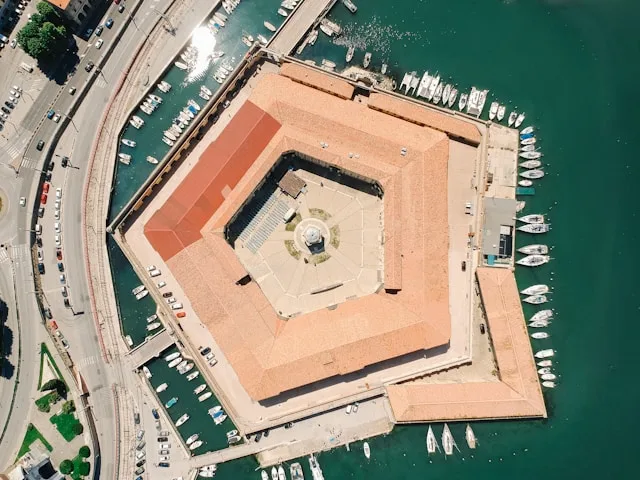
Cruise tourism presents a different picture entirely. Ancona's Palazzo delle Logge cruise terminal handled just 14 ship calls in 2024, a 12% decline from the previous year. This is well below the pre-pandemic peak of 22 calls in 2019. Operators have been reallocating itineraries to Ravenna, which offers deeper alongside berthing and superior airlift connections.
The Port Authority's strategic plan targets 25 to 30 annual calls by 2026 through marketing to ultra-luxury expedition lines such as Silversea and Ponant. The logic is sound: Ancona offers proximity to UNESCO sites including Urbino and the Frasassi Caves, and its port fees undercut Venice. But the €45 million Molo Clementino dredging project required to accommodate post-Panamax vessels has been delayed until 2027, blocked by environmental impact assessments related to Natura 2000 habitat protections for bottlenose dolphins. Without that project, Ancona remains physically unable to receive the new-generation LNG-powered mega-ships entering Mediterranean service.
This creates a strategic tension that any hiring leader in this market must understand. The Port Authority is allocating €120 million toward cruise infrastructure expansion at a moment when actual cruise traffic is declining and operators are explicitly choosing Ravenna for homeporting. The capital is flowing toward the weakest growth vector while the strongest, ferry connectivity and high-end yachting, receive comparatively less attention. The talent implications follow accordingly.
The Talent Market That Infrastructure Investment Cannot Buy
Ancona's maritime and tourism sectors face a paradox visible in the data but rarely articulated: the sector employs thousands of people, yet the roles that matter most for growth are the ones that cannot be filled.
Aggregate tourism employment across the Ancona cluster sits at 8,500 to 9,200 FTEs when seasonal peaks are included. Regional unemployment is 7.8%. During winter months, tourism-sector unemployment spikes to 18 to 22%. By surface metrics, labour is available.
It is not. The available labour and the required labour are fundamentally different populations. Seasonal waitstaff, housekeeping, and junior deckhands constitute an active-candidate market with high turnover (40 to 60% annually) and abundant applicant volumes. The roles driving the sector's growth, marina technical directors, hotel general managers, sustainability specialists, ferry operations executives, sit in a market where 75 to 90% of qualified professionals are passive, employed, and not responding to job postings.
The Passive Candidate Wall
The numbers are precise enough to be alarming. For Hotel General Manager roles at four- and five-star properties, the ratio of active to passive candidates is approximately 1:8, according to HVS research on Italian hospitality executive search. Average tenure among qualified professionals is 4.2 years. Unemployment in this segment sits below 2%.
Marine technical specialists present an even more extreme profile. Over 90% are passive candidates, recruited through yachting industry networks or promoted internally within marina groups. Average time-to-fill for external searches runs five to seven months. For sustainability and ESG specialists, a role category that barely existed in Italian tourism five years ago, 85% of professionals with more than three years of experience are already employed and not actively seeking new positions.
The mismatch is not between supply and demand in the traditional sense. It is between the kind of hiring most employers in this market are equipped to do, posting vacancies and waiting for applications, and the kind of hiring the market actually requires. A job listing for a Marina Technical Director with UNI EN ISO 14001 certification and superyacht handling experience will reach, at best, the 10% of qualified professionals who happen to be looking. The other 90% must be found, approached, and persuaded. Most employers in Ancona's tourism-maritime cluster are not structured to do this, which is why searches that should take three months routinely take eight.
Where Ancona Loses Talent and Why
The competition for senior maritime and hospitality professionals in this region is not abstract. It has names, locations, and compensation figures.
The Northern Pull
Ravenna, 80 kilometres north, offers 12 to 18% higher compensation for Port Operations Managers and 20% more for cruise terminal marketing roles. Ravenna's expanding cruise terminal can accommodate vessels over 330 metres, giving it an infrastructure advantage that translates directly into career trajectory for operations professionals. Its lower cost of living, with housing 15% cheaper than Ancona according to Immobiliare.it data, creates a net compensation advantage that Ancona cannot close with salary alone.
Venice commands an even larger premium. Senior hospitality executives earn 25 to 30% more (Hotel GMs: €95,000 to €130,000 versus Ancona's €78,000 to €105,000 range), and the city offers something Ancona cannot replicate: career access to international hospitality groups including Belmond, Aman, and Hilton. According to Ca' Foscari University's alumni career survey, Ancona loses approximately 15 to 20% of its hospitality management graduates to Venice annually. The draw is not only money. It is brand prestige and year-round employment stability.
Trieste, with its Free Port status and larger container traffic, competes for maritime logistics talent at a 10% salary premium for ferry operations roles. The competition is narrower here, as Trieste offers limited yachting sector opportunities compared to Ancona, but for the specific operations professionals Ancona's port needs, the pull is real.
The Adriatic Drain
The most underestimated competitive threat comes from across the water. Croatian coastal cities, Split and Zadar in particular, offer competitive tax advantages for yachting professionals. Croatia's "Digital Nomad" incentive and yachting crew tax programmes deliver 15 to 20% lower personal income tax rates, attracting Italian-speaking maritime professionals away from Ancona during high season. The opening of the Pelješac Bridge in 2022 reduced road transit times to Dubrovnik, potentially diverting yachting traffic and the professionals who follow it toward Croatian marinas.
For a hiring leader at Marina Dorica or any employer in the Ancona yachting cluster, this means the talent pool is not merely passive but actively being recruited away by competitors who can offer structural tax advantages that no Italian employer can match through salary negotiation alone. The retention proposition must be built on different foundations: year-round contracts, career development, and the quality of the work itself.
Compensation: What the Market Actually Pays
Ancona-specific executive compensation sits in a defined band, typically 10 to 15% below Milan and Turin benchmarks and 8 to 10% above southern Italian regions. The ranges below reflect Marche region data for hospitality and maritime sectors.
A Hotel General Manager at a four- or five-star property in Ancona earns €78,000 to €105,000 base, with performance bonuses of 20 to 25% and housing allowances for international candidates. At operations manager level, the range is €48,000 to €62,000 with 10 to 15% bonus potential.
Marina Directors and Port Operations Directors at executive level command €65,000 to €90,000, with additional benefits including berth allocation and performance incentives tied to occupancy rates. At senior specialist level (operations manager, 200-plus berth facility), the range is €42,000 to €58,000.
Ferry and Cruise Terminal Operations Managers at executive level (Head of Passenger Operations) earn €60,000 to €82,000, typically requiring ISPS Code certification and crisis management experience. Senior specialist level sits at €38,000 to €52,000.
The most notable compensation signal is in sustainability and ESG roles. As a nascent field in Italian tourism, Sustainability and ESG Directors command €85,000 to €110,000 at executive level for portfolio-wide ESG strategy, an 18 to 25% premium over standard F&B Director roles. Even at specialist level, the range is €55,000 to €75,000. This premium exists because the supply of qualified professionals is thin and the regulatory demand, driven by the EU's Fit for 55 package and Mediterranean Emission Control Area requirements, is non-negotiable.
For organisations trying to benchmark what competitive offers look like in this market, the critical insight is that salary alone does not close the gap against Ravenna, Venice, or Croatian competitors. The total proposition, including contract permanence, career pathway, and quality-of-life factors, determines whether a passive candidate engages.
The Regulatory Pressure That Creates Both Cost and Talent Demand
Environmental compliance is reshaping the economics of Ancona's maritime sector in ways that directly affect hiring.
The extension of Emission Control Areas to the Mediterranean, effective from 2025 under EU environmental regulation, imposes new costs across the board. Shore power infrastructure requirements at Marina Dorica and the cruise terminal require an additional €6 to 8 million in investment, with operational cost recovery uncertain given Ancona's modest cruise volume. Ferry operators face 15 to 20% fuel cost increases switching to marine gas oil in ECAs, potentially reducing service frequencies or increasing ticket prices.
Marina Dorica's €4.2 million investment in cold ironing and sewage pump-out facilities is a direct response to EU MARPOL regulations. This infrastructure is necessary. It is also technically complex, requiring operators with specific expertise in shore power systems, environmental certification (Blue Flag, EMAS), and IMO 2020 sulphur regulation compliance.
The talent implication is straightforward. Every piece of environmental infrastructure installed creates a job that did not previously exist in this market. Cold ironing operations. Environmental compliance management. Classification society liaison for RINA and Lloyd's Register. These are not roles that can be filled by redeploying existing seasonal staff. They require professionals with technical certifications and cross-disciplinary expertise in marine engineering and environmental science. The investment in physical infrastructure has outpaced the development of the human capital required to operate it. Capital moved faster than talent could follow.
This is the original synthesis that makes Ancona's hiring challenge different from a standard shortage narrative. The city is not simply experiencing high demand for existing role types. It is building new categories of infrastructure that require new categories of professionals who do not yet exist in sufficient numbers within the local or even regional labour market. You cannot recruit experience that has not yet been created in adequate supply. You can only find the few professionals who have it and persuade them to come to Ancona.
What Hiring Leaders in This Market Must Do Differently
The conventional hiring playbook in Ancona's tourism-maritime sector follows a predictable pattern. An employer posts a vacancy on industry job boards and regional platforms. Applications arrive from active candidates, mostly local, mostly junior. After weeks of reviewing unsuitable profiles, the employer either compromises on seniority or extends the search indefinitely. For seasonal operational roles, this works. For the roles that determine whether a €4.2 million infrastructure investment generates returns, it fails consistently.
Building a Search Strategy for a 90% Passive Market
When 90% of marine technical specialists and 80% of senior hospitality managers are passive, the search methodology must start from a different premise. The question is not "who is looking for a job in Ancona?" The question is "who, anywhere in Italy or the broader Adriatic, has the specific combination of certifications, language skills, and operational experience this role requires, and what would it take to move them?"
This requires talent mapping before a vacancy opens, not after. It requires understanding which competitor organisations employ the professionals you need, what their contract situations are, and what their career motivations look like. It requires a direct approach to candidates who are not visible on any job board.
For the specific executive roles driving growth in this market, Marina Directors, Hotel General Managers, ESG Directors, Ferry Operations Heads, the search must also contend with the fact that Ancona is competing against higher-paying markets. The value proposition must be constructed before the approach is made. A candidate currently earning €95,000 in Venice will not respond to a generic recruiter message about an opportunity in Ancona. They will respond to a specific, compelling narrative about the role, the growth trajectory, and the quality of the professional challenge.
The Year-Round Contract as a Competitive Weapon
One of the most powerful tools available to Ancona employers is also one of the least used. In a market where 78% of tourism demand concentrates between June and September and only 34% of seasonal workers return to the same employer annually, a permanent, year-round employment contract carries material weight as a recruitment differentiator.
For a senior hospitality professional weighing Ancona against Venice, the calculus changes if Ancona offers genuine year-round engagement, professional development during the off-season, and the stability that Italian labour market norms otherwise deny most tourism workers. This is not a salary increase. It is a structural advantage that higher-paying competitors locked into their own seasonal patterns may not be able to offer.
KiTalent works with organisations facing exactly this kind of structurally constrained hiring market, where the cost of a failed executive search is measured not in recruitment fees but in delayed infrastructure projects, missed regulatory deadlines, and lost competitive position against better-staffed rivals. With a methodology that delivers interview-ready candidates within 7 to 10 days and a pay-per-interview model that eliminates upfront retainer risk, KiTalent reaches the passive, senior professionals that conventional approaches consistently miss.
The firm's executive search approach to leadership roles in hospitality and maritime services is built for markets where 80% of viable candidates are invisible to traditional sourcing. With a 96% one-year retention rate across 1,450-plus executive placements, the approach is designed to produce hires who stay, not just hires who accept.
For organisations building senior teams in Ancona's expanding maritime and tourism sector, where every critical role sits in a passive-candidate market and the competition for qualified professionals spans three countries and four competing port cities, start a conversation with our executive search team about how we approach searches in markets like this.
Frequently Asked Questions
What types of executive roles are hardest to fill in Ancona's maritime and tourism sector?
Marina Technical Directors, Hotel General Managers at four- and five-star properties, and Sustainability/ESG Directors consistently present the longest time-to-fill, typically five to nine months. These roles require niche certifications (UNI EN ISO 14001, ISPS Code, EMAS), multilingual capability in German, English, and Croatian, and operational experience with seasonal demand fluctuations. Over 80% of qualified candidates are passive and must be identified through direct headhunting approaches rather than job postings.
How does Ancona's compensation for maritime and hospitality executives compare to other Italian cities?
Ancona executive compensation sits 10 to 15% below Milan and Turin and 25 to 30% below Venice for equivalent hospitality roles. Hotel General Managers earn €78,000 to €105,000 versus €95,000 to €130,000 in Venice. Marina Directors earn €65,000 to €90,000. However, Ancona's lower cost of living, combined with year-round contract opportunities and the quality of marina infrastructure, creates a total proposition that can compete with higher-salary markets when presented effectively.
Why is Marina Dorica expanding when the cruise sector is declining?
Marina Dorica's Phase 3 expansion targets the superyacht charter market, not cruise tourism. Superyacht services and recreational boating represent Ancona's strongest growth vector, with 94% berth occupancy and a waiting list for annual contracts. Cruise calls declined 12% in 2024 and face infrastructure constraints. The two segments of Ancona's maritime economy are moving in opposite directions, and the expansion reflects investment following demand rather than aspiration.
What regulatory changes are affecting hiring in Ancona's port and marina operations?
The EU's Fit for 55 package and the extension of Mediterranean Emission Control Areas from 2025 have created new compliance requirements across shore power, fuel standards, and environmental certification. Marina Dorica invested €4.2 million in cold ironing and sewage infrastructure. These investments create demand for professionals with environmental compliance expertise, a role category with very limited local supply, where KiTalent's talent pipeline methodology helps organisations identify qualified specialists before vacancies become urgent.
What is driving talent away from Ancona to competing Adriatic markets?
Three factors drive outward talent movement. Ravenna offers 12 to 18% higher compensation and deeper cruise infrastructure. Venice provides 25 to 30% salary premiums plus access to international hospitality brands. Croatian coastal cities offer 15 to 20% lower personal income tax rates through yachting crew tax incentives. Ancona employers must compete on non-salary factors including contract permanence, professional development, and quality of life to retain and attract senior professionals.
How long does it typically take to fill a senior maritime or hospitality role in Ancona?
External searches for Marina Technical Directors average five to seven months. Executive Chef recruitment at four-star properties takes four to six months, with 60% of searches failing to produce qualified local candidates. Hotel General Manager searches in the four- and five-star segment regularly extend beyond six months. These timelines reflect the passive nature of the qualified candidate pool, where traditional job advertising reaches fewer than 10% of viable professionals.