The Hidden 80%: Why the Best Candidates Are Not Looking
How direct search reaches the passive professionals who define Croatia's thin senior talent pool.
Croatia Executive Recruitment
A eurozone economy where electrification pioneers, globally scaled SaaS platforms and a new Adriatic logistics corridor are reshaping demand for senior leaders across Zagreb, Rijeka, and Split. KiTalent brings sector-specific intelligence and direct headhunting capability to senior leadership searches across Croatia
days to qualified shortlists in many searches
of relevant passive talent reached through direct headhunting
faster time-to-hire than traditional search benchmarks
one-year retention from KiTalent's broader methodology
These are KiTalent track-record figures referenced across our core about, services, and methodology pages.
Croatia's executive market is smaller than those of its EU neighbours but considerably harder to read from outside. The country adopted the euro in 2023 and has posted real GDP growth above 3% for two consecutive years. Those headline figures attract investment. They do not, however, reveal how concentrated senior talent is, how competitive the retention environment has become, or how decisively the country's economic profile is shifting away from tourism dependence.
Croatia's population is declining. Long-term ageing and emigration to higher-wage EU markets have compressed the available pool of experienced managers and technical leaders. In Zagreb, where finance, technology and advanced manufacturing converge, a senior hire at one firm is almost certainly known to three others. Discretion in outreach is not a courtesy; it is a precondition. Reaching the hidden 80% of professionals who are not actively seeking roles demands direct, confidential engagement rather than job-board advertising.
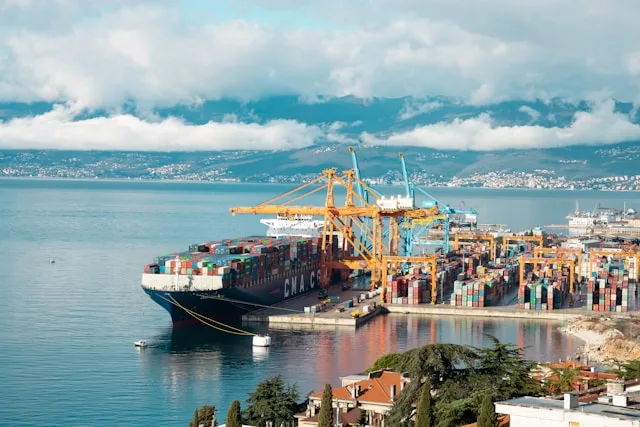
Croatia's economy is no longer defined solely by tourism and food processing. Rimac Group has built a globally recognised electrification cluster. Infobip has scaled cloud communications to over 190 countries from its base near Zagreb. The Rijeka Gateway container terminal began commercial operations in 2025, creating an entirely new logistics corridor to Central Europe. Each of these developments generates demand for leadership profiles that did not exist in the Croatian market five years ago: heads of battery systems engineering, intermodal logistics directors, SaaS product executives. The local supply of these leaders is extremely thin.
Euro accession eliminated currency risk for multinational employers but also accelerated wage convergence. Croatian salaries for senior technical and managerial roles have risen sharply since 2023, and employers competing for power-electronics engineers or supply-chain directors now benchmark against Slovenian and even Austrian packages. Without current, role-specific compensation intelligence, mandates risk either overpaying relative to local norms or losing shortlisted candidates to counter-offers.
KiTalent operates as a Go-To Partner for organisations building leadership teams in markets exactly like this: tight, relationship-driven and undergoing rapid sectoral change. Our European headquarters in Turin coordinates Croatia mandates with consultants who understand the Adriatic corridor, Central European manufacturing networks and the specific dynamics of Zagreb's professional community.

Croatia is not one talent pool. It is a series of concentrated clusters where sector expertise, language skills and personal networks intersect differently depending on whether the search centres on Zagreb's technology corridor, Rijeka's emerging logistics hub or the Adriatic coast's hospitality economy.
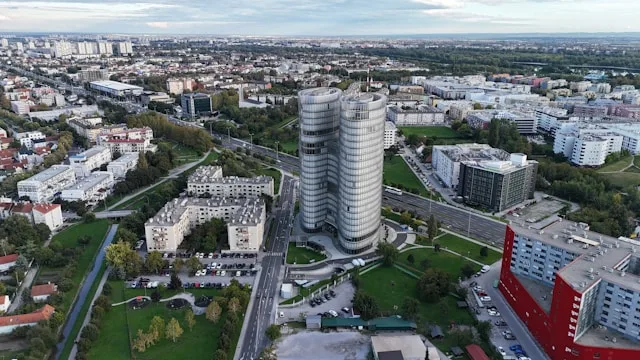
Zagreb dominates Croatia's technology sector. Infobip, Rimac's software divisions and dozens of smaller SaaS firms compete for engineering directors, product leaders and commercial executives.
Rimac Group's campus near Zagreb has created a distinct automotive and electrification talent market. Battery systems architects, e-powertrain programme managers and embedded-software leads are scarce locally and must often be sourced internationally.
Rijeka's new container terminal and the broader Adriatic corridor are generating demand for maritime and logistics leaders with intermodal and rail-freight experience. This is a newly formed leadership market.
Solar, wind and battery-storage project pipelines across Croatia need directors of project finance, permitting specialists and grid-integration engineers. The energy and renewables talent pool overlaps heavily with the electrification cluster in Zagreb, creating direct…
Croatia's banking sector, anchored by subsidiaries of major European groups, and the growing number of tech scale-ups preparing for international expansion both require CFOs, heads of FP&A and M&A directors. The banking and wealth management market in Zagreb is…
Split, Dubrovnik and Istria form the core of Croatia's travel and hospitality leadership market. General managers, revenue directors and commercial heads with international hotel or resort experience are sought by operators looking to extend the season and upgrade service…
Executive mobility across Croatia's cities is shaped by compensation expectations, relocation appetite, family considerations, and international exposure.
A search that maps where the right leaders actually operate, and understands the conditions under which they would consider a move, is fundamentally more effective than one that treats Croatia as a flat national market.
Croatia's executive search market is strongest where its economic specialisation is deepest.
Infobip's latest funding round of $520 million confirmed Zagreb's status as a serious SaaS hub. The company employs thousands and competes for engineering and product leadership with Western European and American tech firms. Around it, a cluster of smaller software exporters and scale-ups in Zagreb generates steady demand for CTOs, VP Engineering and…
Rimac Group's operations near Zagreb, now encompassing battery systems, e-axles and the Bugatti Rimac joint venture, have turned Croatia into a global node for high-performance EV components. The firm attracts international private equity and OEM partnerships, and the surrounding supplier ecosystem needs leaders with deep power-electronics and battery-management expertise. This demand extends…
The Rijeka Gateway terminal, developed by APM Terminals and ENNA Group, launched in 2025 with initial capacity of 650,000 to 730,000 TEU and expansion plans exceeding one million TEU. Private 5G connectivity, heavy rail focus and a targeted 60% rail modal share make this a transformative project for maritime and logistics leadership. Rijeka now needs country…
Croatia's Krk LNG terminal provides short-term energy security while solar, wind and battery-storage projects scale under EU Green Deal and RRF funding. Project directors, PPA specialists and grid-integration engineers are in high demand, drawing on a talent pool that overlaps with the electrification sector. The oil, energy and renewables leadership market is small…
Coastal Croatia from Dubrovnik to Istria remains a significant employer and foreign-exchange earner. Seasonal volatility and the push to diversify tourism products have created demand for senior commercial leaders who can extend the season, develop new hospitality concepts and professionalise operations. Zagreb and…
AI & Technology · Food, Beverage & FMCG · Travel & Hospitality
Companies rarely need only reach in Croatia. They need interpretation, calibration, and a search architecture that reflects the real structure of the market.
Our team coordinates Croatia mandates from our European headquarters in Turin, with direct access to the talent intelligence, compensation dynamics, and sector developments that drive search outcomes.
The strongest executives in Croatia are passive. Our direct headhunting approach engages the hidden 80% of passive talent through discreet outreach rooted in real market knowledge.
Our parallel mapping methodology means we already hold live intelligence on restructuring, transition windows, compensation patterns, and candidate attraction opportunities when a brief arrives.
In Croatia, the cost of a wrong executive hire extends far beyond the recruitment fee. Our interview-fee model lets clients see real market output and qualified candidates before the bulk of the investment is committed.
Croatia's combination of a small professional community, rapid sectoral change and eurozone wage dynamics requires a methodology built for precision rather than volume. KiTalent's European headquarters in Turin coordinates Croatia mandates, drawing on consultants with direct experience in Adriatic and Central European markets.
Our parallel mapping approach means we are often already tracking leadership movements in Croatian technology, manufacturing and logistics before a client formalises a brief. This pre-mandate intelligence shortens time-to-shortlist and ensures candidates are assessed against real market conditions, not assumptions formed in a different geography.
In a market where senior professionals know each other and monitor who is being approached, direct headhunting must be discreet, well-informed and precisely positioned. Our consultants contact passive professionals with a clear articulation of the opportunity, the employer's value proposition and the career logic of the move. In Croatia, where a poorly handled approach circulates through a professional network within days, this discipline is non-negotiable.
Every Croatia search includes a compensation and market benchmarking component. We advise clients on total-cost-to-employer calculations including Croatian social charges, competitive equity structures in the tech sector and relocation packages for international hires. This intelligence converts shortlisted candidates into signed contracts.
These resources provide deeper market intelligence and explain how KiTalent turns insight into a faster, more transparent search process.
How direct search reaches the passive professionals who define Croatia's thin senior talent pool.
What a misaligned senior placement actually costs in a compact market where reputation effects compound quickly.
Explore 24 in-depth analyses across 8 cities covering talent gaps, hiring dynamics, and executive recruitment trends in Croatia.
The parallel mapping, direct outreach and three-tier assessment process behind every Croatia mandate.
Executive search, talent mapping, compensation benchmarking and interim management for the Croatian market.
Use these pages to move between city clusters, sector pages, and supporting articles.
These are the questions most closely tied to how executive search really works in Croatia.
Croatia's senior talent pool is small and heavily concentrated in Zagreb. Most experienced leaders are employed, not searching. Publicly advertising a role risks alerting competitors in a market where professional networks overlap extensively. A specialist search firm reaches the hidden 80% of passive candidates through confidential, direct outreach and assesses them against role-specific criteria before presentation. For newly emerging sectors such as electrification, logistics infrastructure and SaaS, the required leadership profiles often do not exist in the domestic market at all, making structured international search essential.
Compared with Slovenia or Serbia, Croatia's market combines eurozone wage dynamics with a smaller and more rapidly evolving sector mix. Slovenian executive markets are similarly tight but more industrially mature. Serbian markets offer larger candidate volumes but lower compensation benchmarks. Croatia sits between these poles: euro-denominated salary expectations, acute competition for technical leaders driven by Rimac and Infobip, and a logistics sector that is only now creating its first generation of senior intermodal roles. Search methodology must account for all three dynamics simultaneously.
We begin with parallel mapping of the relevant sector and geography, often before a formal mandate is signed. This gives clients immediate access to pre-qualified intelligence on available leaders. Our consultants then conduct direct, confidential outreach to shortlisted professionals, positioning the role with sector-specific precision. Every search includes compensation benchmarking calibrated to Croatian employer costs, equity norms and competitive dynamics. Our interview-fee model means clients invest only when candidates reach the interview stage.
Our standard commitment is a first shortlist within 7 to 10 days. In Croatia, where the target population for most senior roles is measured in dozens rather than hundreds, pre-existing mapping and active sector monitoring are what make this speed possible. For roles requiring international sourcing, such as battery-systems engineers or intermodal logistics directors, initial domestic and international candidate pools are developed in parallel.
Yes. While Zagreb is the primary executive market, we conduct searches for roles based in Rijeka, Split, Osijek and the Adriatic coast. Our Zagreb city page provides deeper intelligence on the capital's sector dynamics. For roles outside Zagreb, we draw on our understanding of regional employer ecosystems and candidate mobility patterns, often identifying leaders in Zagreb or internationally who are willing to relocate for the right opportunity.
Whether you need a CTO for a Zagreb-based scale-up, a terminal operations director for Rijeka, a renewables project lead or a country manager to build a Western Balkans platform, this is where the conversation starts.
What we bring to Croatia executive mandates:
Executive search and direct headhunting · Talent mapping and market intelligence · Compensation benchmarking and mandate calibration · Connection to KiTalent's European headquarters in Turin and our international executive search network.
Whether you are running a live mandate or want to pressure-test a brief before going to market, this is the right place to start the conversation.