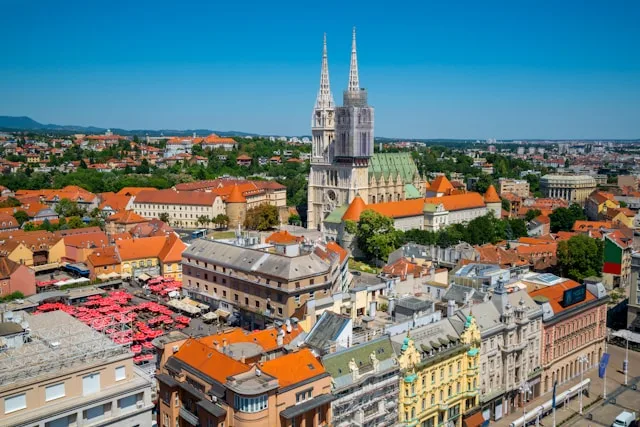
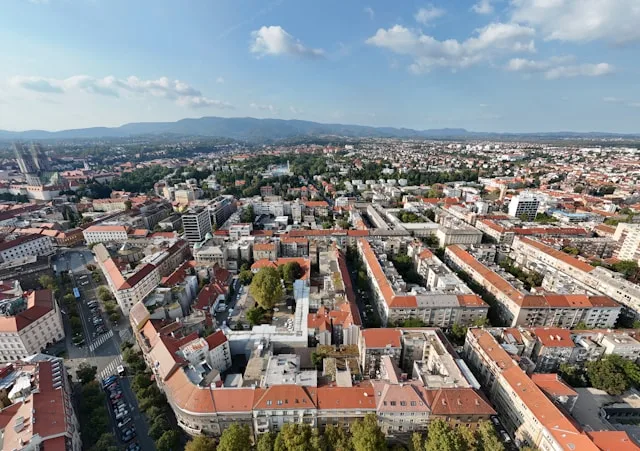
Zagreb, Croatia Executive Recruitment

Executive Search in Zagreb

Zagreb generates roughly one-third of Croatia's economic output and concentrates the country's highest density of corporate headquarters, R&D centres, and financial institutions. From Rimac's €120 million EV campus to Ericsson Nikola Tesla's telecoms development hub and the fast-scaling startup ecosystem anchored by ZICER, this is a city where executive hiring decisions shape entire sectors.

7-10

days to qualified shortlists in many searches

80%

of relevant passive talent reached through direct headhunting

42%

faster time-to-hire than traditional search benchmarks

96%

one-year retention from KiTalent's broader methodology

These are KiTalent track-record figures referenced across our core about, services, and methodology pages.

Why Zagreb is a deceptively difficult market for executive hiring

Zagreb is Croatia's undisputed commercial capital. Its employment rate approaches 75%, its corporate base is deep, and its tech sector is growing faster than the available talent pool. On paper, this is a market full of opportunity. In practice, it is a market where a senior hire can take six months through conventional methods. The executives who could fill the most critical roles are already employed, well-compensated, and not responding to job postings.

With roughly 773,000 residents and a disproportionate share of Croatia's corporate and R&D activity, Zagreb's executive population is finite. Bugatti Rimac, Ericsson Nikola Tesla, Hrvatski Telekom, Zagrebačka banka, and the city's growing startup ecosystem all compete for the same pool of senior engineers, commercial leaders, and operational directors. When Infobip hosts innovation labs in Zagreb and ZICER accelerators push dozens of startups toward scale-up, the demand for experienced CTOs, product leaders, and R&D directors rises. The supply does not rise with it. A conventional recruiter posting roles on Croatian job boards will reach the same small group of active candidates that every other firm is already talking to.

Croatia's long-term demographic contraction is not an abstract policy concern. It is a live constraint on executive hiring in Zagreb. The OECD's 2025 review of Croatia's labour market documents the shrinking and ageing workforce as a systemic challenge. Younger professionals leave for Western European salaries. Those who stay are promoted quickly, creating mid-career leaders with limited peer competition but also limited incentive to move. This makes the hidden 80% of passive talent even harder to reach. The executives you need are not just passive. They are in roles where retention efforts are already intense.

Zagreb's business community is tightly networked. A poorly managed search process, an indiscreet approach to a candidate, or an offer withdrawn at the last stage will be discussed across boardrooms within days. This is not a market where firms can afford the reputational cost of a failed or clumsy search. It is also why the Go-To Partner approach matters here more than in larger, more anonymous cities. Executive search in Zagreb requires a firm that treats every candidate interaction as a reflection of the client's employer brand, and that understands which conversations can happen and which cannot.

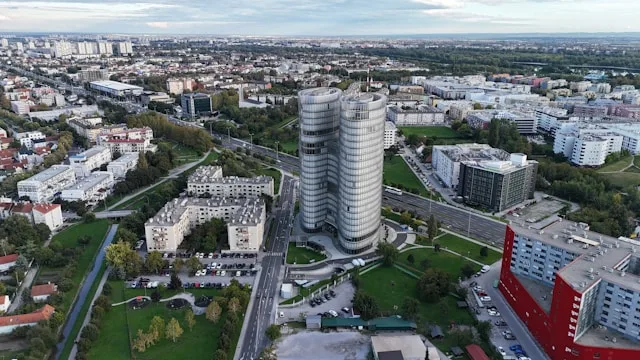
What is driving executive demand in Zagreb

Several structural forces are converging to shape executive demand across Zagreb.

Information and communications technology

is Zagreb's most active executive hiring sector. Ericsson Nikola Tesla employs several thousand staff in telecoms R&D and integration work. Infobip has positioned Zagreb as a European innovation hub for enterprise communications platforms. The University of Zagreb's Faculty of Electrical Engineering and Computing (FER) produces a steady flow of engineering graduates, but the demand for senior technical leadership outstrips what the education pipeline can deliver. CTOs capable of scaling cloud architectures, R&D directors with 5G/6G experience, and product managers who can bridge engineering teams and commercial strategy are consistently in short supply. KiTalent's AI and technology executive search practice and our telecommunications and media sector expertise are directly relevant to mandates in this cluster.

Advanced manufacturing and electrified mobility

centre on the Rimac Group. Bugatti Rimac's campus in the Zagreb metropolitan area represents a first-phase investment of approximately €120 million, anchoring EV powertrain R&D, battery engineering, and small-series hypercar production. This is not just one company. It is a cluster effect. Suppliers, engineering service firms, and component manufacturers are scaling in the metro area to serve the campus. The executive roles generated here are highly specialised: battery engineers, systems integration directors, supply-chain leaders with automotive-grade quality experience, and production directors who understand low-volume, high-precision manufacturing. Our automotive sector practice and industrial manufacturing search capabilities address exactly this talent profile.

Financial and professional services

remain a bedrock of Zagreb's executive market. Zagrebačka banka, part of the UniCredit group, is Croatia's largest bank and a major employer of risk, compliance, treasury, and corporate finance professionals. The insurance sector, consulting firms, and legal practices all headquarter in Zagreb. Euro adoption has reduced currency risk and eased cross-border transactions, but it has also raised expectations for regulatory sophistication. Fintech activity, supported by ZICER's new fintech hub and accelerator programmes, is creating demand for product leaders and compliance specialists who can operate at the intersection of technology and financial regulation. KiTalent serves this market through its banking and wealth management and insurance sector practices.

Pharmaceuticals and life sciences

use Zagreb as a commercial headquarters and R&D base. Legacy producers, multinational affiliates, and university-linked biotech spinouts create a modest but growing demand for regulatory affairs directors, clinical operations leaders, and commercial heads who can manage Central European portfolios. Digital health startups emerging from university incubators add a layer of hybrid roles that require both scientific credibility and commercial execution capability. Our healthcare and life sciences practice covers these mandates.

Cross-border complexity is embedded in most senior roles

Croatia's EU membership means that many Zagreb-based executives report into regional structures headquartered in Vienna, Munich, Milan, or London. A country manager for a multinational bank, a regional R&D director for a telecoms group, or a supply-chain head serving Rimac's European supplier network will all operate across borders daily. This makes international executive search capability essential, not optional. Coordinated from our European headquarters in Turin, KiTalent runs cross-border mandates that connect Zagreb's talent pool to the wider European executive market.

What this means for search design

Zagreb's high employment rate and demographic constraints mean that any search relying on inbound applications will underperform. The visible candidate pool is too small. Search design must begin with proactive intelligence gathering and direct outreach, not with a job posting and a hope that qualified leaders will apply. The interconnected nature of Zagreb's business community demands absolute discretion. Candidate approaches must be precise and confidential. A senior leader at Hrvatski Telekom or Zagrebačka banka cannot be approached through mass outreach or generic LinkedIn messaging without risking exposure. Every touchpoint must be individually managed by a consultant who understands the local professional dynamics. Timing is compressed. When a strong candidate enters conversations, they will often receive counter-offers within days. KiTalent's ability to deliver interview-ready candidates in 7 to 10 days, enabled by talent mapping conducted before the mandate begins, ensures that clients engage the best candidates before competitors can react. In a market where the same 50 senior engineers or finance directors appear on every firm's target list, speed is not a luxury. It is the difference between making a hire and watching your preferred candidate accept elsewhere. For roles that cannot wait for a permanent search to conclude, interim management solutions provide experienced leaders on a bridge basis. This is particularly relevant in Zagreb's EV and tech sectors, where project timelines are dictated by investor milestones and product launch dates, not by recruitment calendars. Cross-border search design is standard for most Zagreb mandates. Candidates may need to be sourced from Germany, Austria, or Slovenia for specialised automotive engineering roles, or from wider CEE markets for financial services leadership. KiTalent's multi-hub structure and multi-language capability make this a matter of execution, not a separate project. Cross-border search capability | Interim leadership solutions

Sector strengths that define Zagreb executive search

Zagreb's executive search market is strongest where its economic specialisation is deepest.

Why companies partner with KiTalent for executive search in Zagreb

Companies rarely need only reach in Zagreb. They need interpretation, calibration, and a search architecture that reflects the real structure of the market.

We operate across Croatia

Our team coordinates Zagreb mandates from our European headquarters in Turin, with direct access to the talent intelligence, compensation dynamics, and sector developments that drive search outcomes.

We reach the candidates that matter

The strongest executives in Zagreb are passive. Our direct headhunting approach engages the hidden 80% of passive talent through discreet outreach rooted in real market knowledge.

We do not start from scratch

Our parallel mapping methodology means we already hold live intelligence on restructuring, transition windows, compensation patterns, and candidate attraction opportunities when a brief arrives.

Our model de-risks the investment

In Zagreb, the cost of a wrong executive hire extends far beyond the recruitment fee. Our interview-fee model lets clients see real market output and qualified candidates before the bulk of the investment is committed.

Zagreb's leadership markets by sector

Zagreb is not one talent pool. It is a series of distinct professional communities that overlap at the edges but operate with different compensation norms, career expectations, and competitive dynamics.

1. Parallel mapping before the brief is live

KiTalent does not start research when a client signs a mandate. Through parallel mapping, we continuously track career movements, organisational changes, and compensation trends across Zagreb's key sectors. When Rimac expands its engineering leadership team, when Ericsson Nikola Tesla restructures its R&D division, or when a ZICER-backed startup appoints its first C-suite, we are already aware. This pre-existing intelligence is why we deliver qualified shortlists in 7 to 10 days rather than the 8 to 12 weeks that traditional firms require.

2. Direct headhunting into the hidden 80%

The executives who define the quality of a headhunting outcome are not active candidates. They are the R&D director who built Ericsson Nikola Tesla's latest platform, the CFO who led Zagrebačka banka through euro adoption, or the operations leader who scaled Rimac's production line. Reaching them requires direct, discreet, individually crafted outreach from a consultant who can articulate why this specific opportunity merits their attention. This is what separates a strong shortlist from an available one.

3. Market intelligence as a search output

Every Zagreb mandate produces more than a candidate shortlist. Clients receive comprehensive documentation of the talent market they are hiring into: who holds comparable roles at which organisations, what compensation levels the market supports, how candidates are responding to the proposition, and where adjustments might strengthen the offer. This intelligence has value well beyond the immediate hire. It informs workforce planning, succession strategy, and competitive positioning for years.

Information and Communications Technology

Enterprise software, cloud communications, telecoms R&D, and SaaS platforms. Technology executive search

Frequently asked questions about executive search in Zagreb

These are the questions most closely tied to how executive search really works in Zagreb.

Why do companies use executive recruiters in Zagreb?

Zagreb's employment rate is among Croatia's highest, approaching 75%. The pool of available senior leaders is small, and the executives capable of filling the most critical roles are already in well-compensated positions at firms like Ericsson Nikola Tesla, Zagrebačka banka, or Rimac. Standard recruitment channels reach only the fraction of professionals actively seeking new roles. An executive search firm applies direct outreach, sector-specific intelligence, and established relationships to access the passive majority that job postings never touch. In a market this concentrated, that access determines whether a search succeeds or stalls.

What makes Zagreb different from other Croatian cities for executive hiring?

Zagreb accounts for roughly one-third of Croatia's GDP and concentrates the vast majority of the country's corporate headquarters, R&D centres, and financial institutions. Split and Rijeka have meaningful economic activity, but neither approaches Zagreb's density of senior leadership roles across technology, financial services, automotive engineering, and professional services. The practical implication is that Zagreb's executive market operates more like a mid-sized Central European capital than a secondary Croatian city. Compensation expectations, competitive intensity, and the sophistication of candidates all reflect this.

How does KiTalent approach executive search in Zagreb?

Every Zagreb mandate begins with pre-existing market intelligence. Through continuous talent mapping, KiTalent tracks career movements and compensation dynamics across the city's key sectors before a client defines a need. When the mandate activates, this intelligence translates into a qualified shortlist delivered in 7 to 10 days. Direct, discreet outreach to passive candidates replaces job postings. Comprehensive market documentation accompanies every shortlist, giving clients full visibility into the talent environment they are hiring in.

How quickly can KiTalent present candidates in Zagreb?

Interview-ready candidates are typically delivered within 7 to 10 days of mandate activation. This speed comes from parallel mapping, not from cutting corners on assessment. Every candidate undergoes technical competency evaluation and a personal career-storytelling meeting to assess cultural fit and genuine motivation. The result is a shortlist of candidates who are qualified, motivated, and realistic about the role, rather than a list of names assembled under time pressure.

How does Croatia's demographic challenge affect executive hiring in Zagreb?

Croatia's working-age population is shrinking. The OECD's 2025 review identifies this as a systemic constraint on the labour market. For executive hiring in Zagreb, the practical effect is that mid-career and senior professionals have exceptional bargaining power. They are promoted faster, retained more aggressively, and courted by multiple employers simultaneously. Building a proactive talent pipeline before the hiring need becomes urgent is no longer a strategic luxury. It is the only way to avoid competing for the same small group of candidates as every other employer in the city.

Why do companies use executive recruiters in Zagreb?

Zagreb's employment rate is among Croatia's highest, approaching 75%. The pool of available senior leaders is small, and the executives capable of filling the most critical roles are already in well-compensated positions at firms like Ericsson Nikola Tesla, Zagrebačka banka, or Rimac. Standard recruitment channels reach only the fraction of professionals actively seeking new roles. An executive search firm applies direct outreach, sector-specific intelligence, and established relationships to access the passive majority that job postings never touch. In a market this concentrated, that access determines whether a search succeeds or stalls.

What makes Zagreb different from other Croatian cities for executive hiring?

Zagreb accounts for roughly one-third of Croatia's GDP and concentrates the vast majority of the country's corporate headquarters, R&D centres, and financial institutions. Split and Rijeka have meaningful economic activity, but neither approaches Zagreb's density of senior leadership roles across technology, financial services, automotive engineering, and professional services. The practical implication is that Zagreb's executive market operates more like a mid-sized Central European capital than a secondary Croatian city. Compensation expectations, competitive intensity, and the sophistication of candidates all reflect this.

How does KiTalent approach executive search in Zagreb?

Every Zagreb mandate begins with pre-existing market intelligence. Through continuous talent mapping, KiTalent tracks career movements and compensation dynamics across the city's key sectors before a client defines a need. When the mandate activates, this intelligence translates into a qualified shortlist delivered in 7 to 10 days. Direct, discreet outreach to passive candidates replaces job postings. Comprehensive market documentation accompanies every shortlist, giving clients full visibility into the talent environment they are hiring in.

How quickly can KiTalent present candidates in Zagreb?

Interview-ready candidates are typically delivered within 7 to 10 days of mandate activation. This speed comes from parallel mapping, not from cutting corners on assessment. Every candidate undergoes technical competency evaluation and a personal career-storytelling meeting to assess cultural fit and genuine motivation. The result is a shortlist of candidates who are qualified, motivated, and realistic about the role, rather than a list of names assembled under time pressure.

How does Croatia's demographic challenge affect executive hiring in Zagreb?

Croatia's working-age population is shrinking. The OECD's 2025 review identifies this as a systemic constraint on the labour market. For executive hiring in Zagreb, the practical effect is that mid-career and senior professionals have exceptional bargaining power. They are promoted faster, retained more aggressively, and courted by multiple employers simultaneously. Building a proactive talent pipeline before the hiring need becomes urgent is no longer a strategic luxury. It is the only way to avoid competing for the same small group of candidates as every other employer in the city.

Start a conversation about your Zagreb search

Whether you are hiring a CTO for a telecoms R&D centre, an operations director for an EV manufacturing programme, a country manager for a multinational subsidiary, or a CFO for a fast-scaling fintech venture, this is the right starting point.

What we bring to Zagreb executive mandates:

Dubrovnik · Osijek · Pula · Rijeka · Split · Varaždin · Zadar

Tell us about your Zagreb hiring challenge

Whether you are running a live mandate or want to pressure-test a brief before going to market, this is the right place to start the conversation.

OTHER CITIES IN Croatia
DubrovnikOsijekPulaRijekaSplitVaraždinZadar